
Richard Kreitner’s book potentially has a very short shelf life. If Joe Biden wins in November, the arguments of this left-wing pro-secession book will never get any traction.
On the other hand, if President Trump wins reelection, the reaction against him will be even more fevered than after his first victory, and talk of splitting from the Union — or at least defying federal authority in significant ways — will get taken more seriously in progressive circles.
Kreitner, a contributing writer to The Nation, has written a readable, if stilted and hostile, account of the American union that would please old John C. Calhoun — assuming the notorious South Carolina statesman could look past Kreitner’s woke politics.
Kreitner maintains that “paradoxically, disunion has been one of our only truly national ideas,” and it’s one that he finds highly attractive.
“Does living in such an incomprehensibly massive country,” he asks, “make each of us more or less significant, our lives more or less meaningful, our rights to life, liberty, and the pursuit of happiness more or less secure?”
He is inclined to answer “Less,” and largely because we are failing, in his view, to tackle systemic racism. According to Kreitner, “Americans must choose between joining together to build a truly inclusive, unified country — a multiracial democracy, politically and economically — or going our separate ways. We can’t put it off much longer. We must finally finish the work of Reconstruction or give up on the Union entirely.”
This is a contention that he never really supports, instead attempting to redefine American history as a long near-exercise in disunion.
He has a point about the difficulty of tethering the colonies into a collective unit prior to the Revolution, and even afterward. Adopted only after years of wrangling, the Articles of Confederation were notoriously weak and insufficient to the task of creating a true national government. If the Articles had defined post-independence America instead of being a brief interlude, Kreitner would have an unimpeachable case for his thesis. Unfortunately for his argument, in relatively short order, we got the Constitution.
Kreitner tries to discredit and minimize the constitutional project. He rehearses the dusty old Charles Beard argument that a cabal of the wealthy pushed through the Constitution to protect its economic interests, an interpretation that didn’t withstand serious historical scrutiny. He also hits the Federalists for staging a coup against the Articles and using sharp practices to get their way. But it was the Confederation Congress that authorized what would become the Constitutional Convention, whose handiwork went to special conventions in the various states for ratification, in an open and democratic process. If Federalists used every advantage at hand, this was high-stakes politics, not beanbag.
To make the point that the Union has always been in doubt, Kreitner proceeds to tick through every time a state, region, or disaffected movement has agitated for independence. Since every one of these forays failed or was abandoned, one would think the catalogue really makes the opposite point — that despite turbulence, the Union has proven remarkably durable.
The Whiskey Rebellion didn’t break up the country and dissolved when George Washington arrived with a force of more than 10,000 troops.
Other states didn’t rally to the Virginia and Kentucky Resolutions during the contention over the Alien and Sedition Acts, instead ignoring or denouncing them.
The inadvertent tie between Thomas Jefferson and Aaron Burr in the Electoral College in 1800, exploited by Jefferson-hating Federalists, didn’t rip the country apart but was peaceably resolved.
Aaron Burr’s scheme to create a separate republic in the West collapsed in ignominy.
The Federalist-led dalliance with disunion in the Northeast during the War of 1812 came to nothing and pushed the Federalist Party toward the ash heap of history.
Do you detect a pattern?
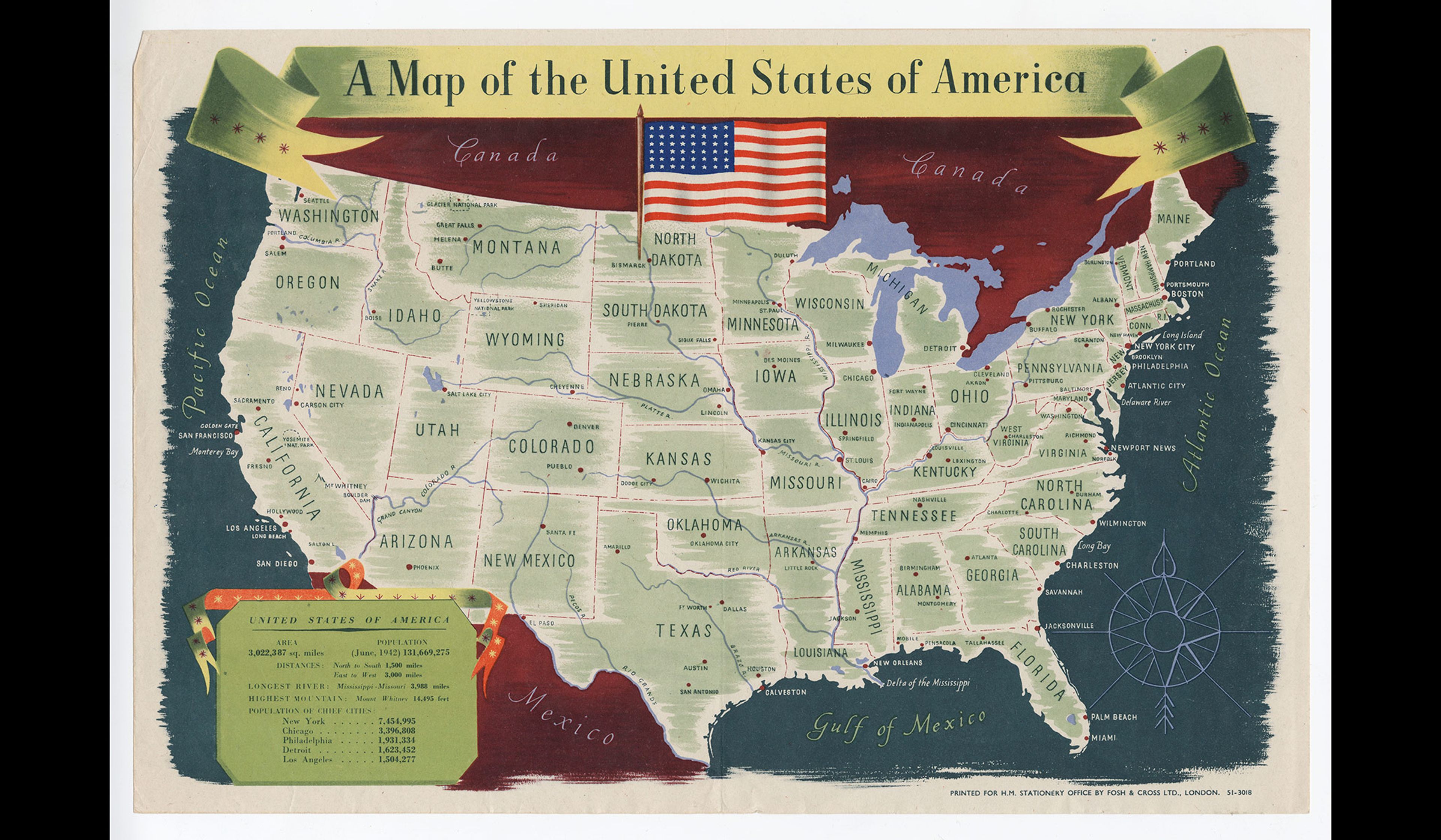
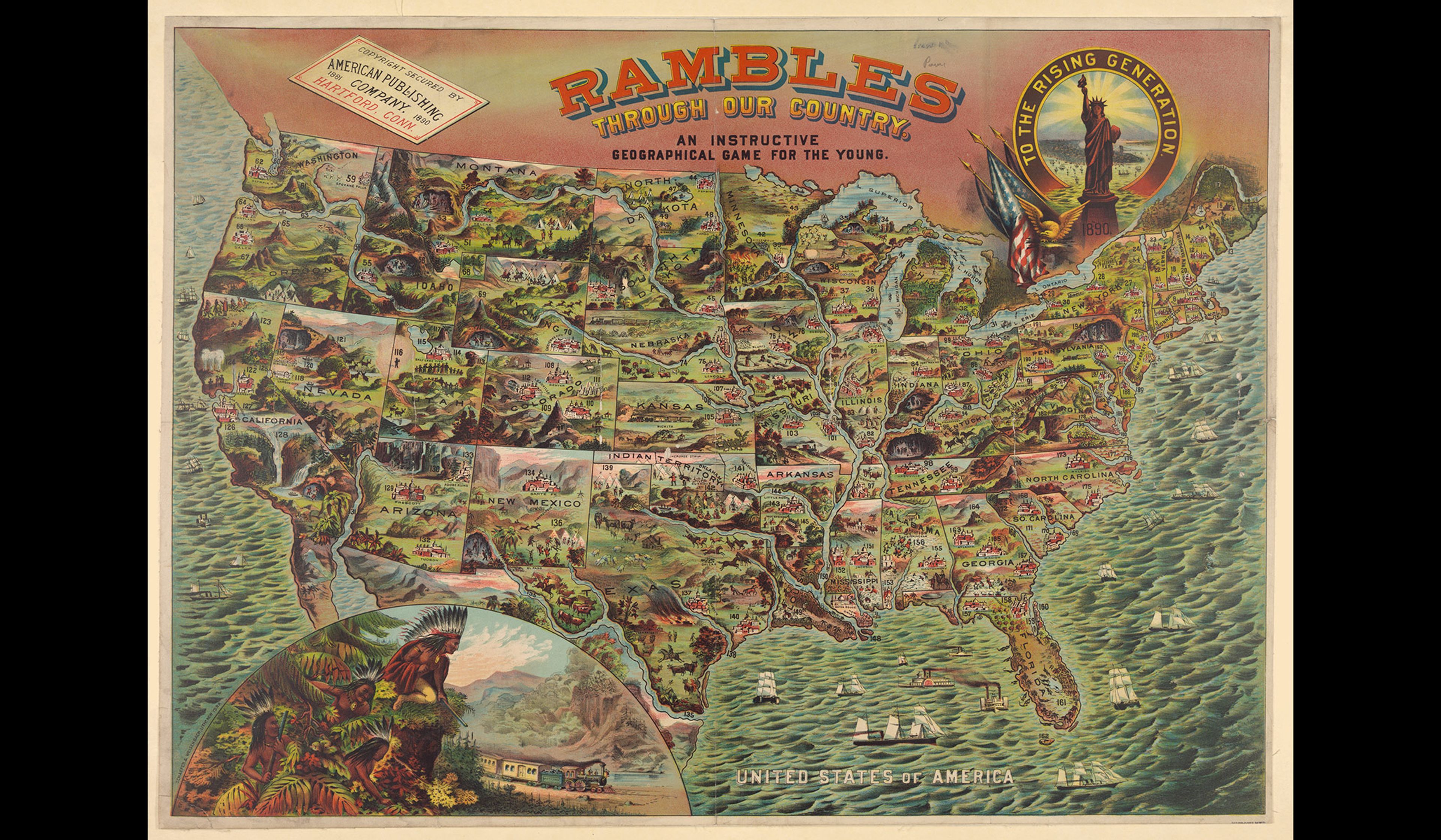

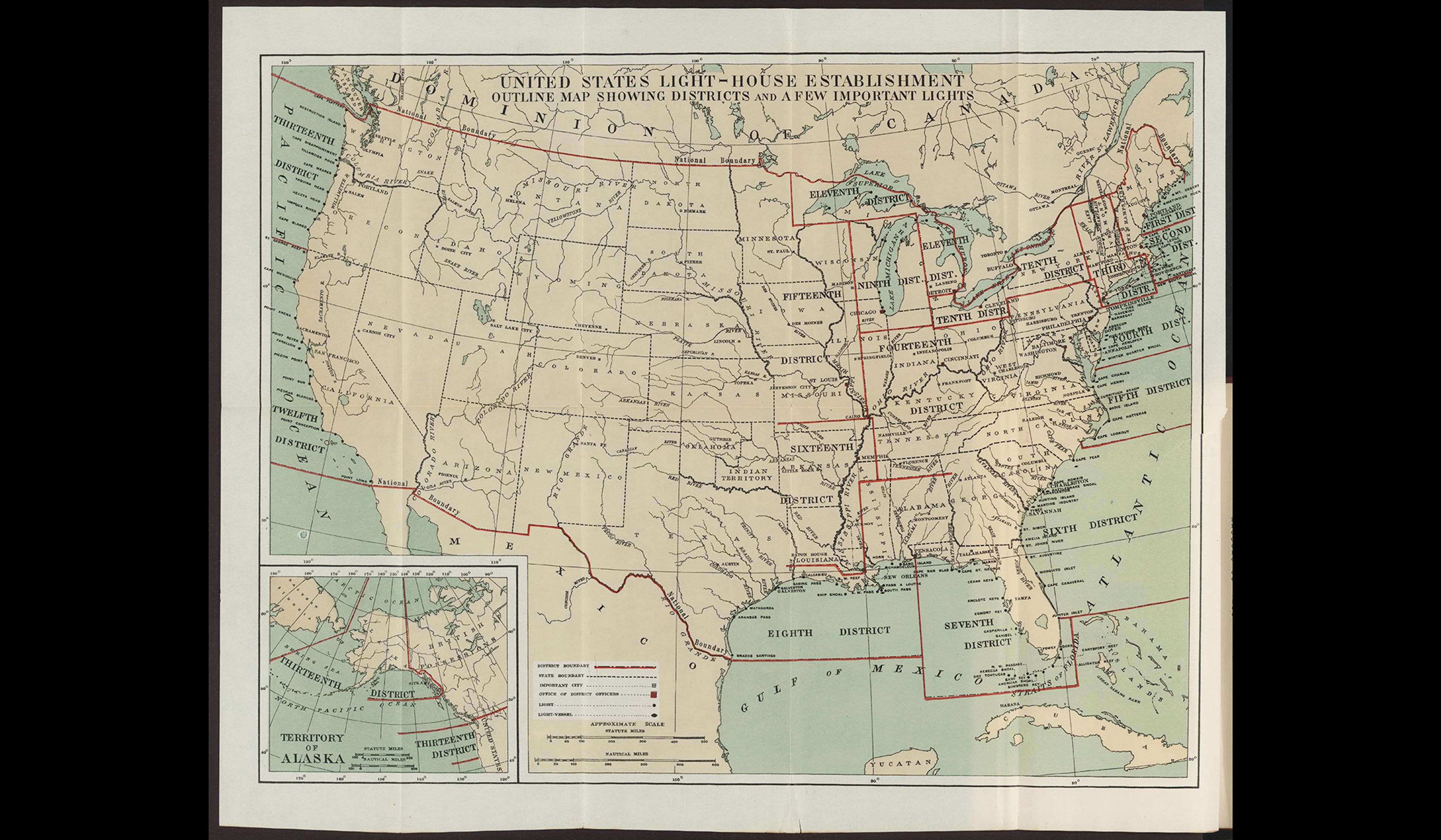

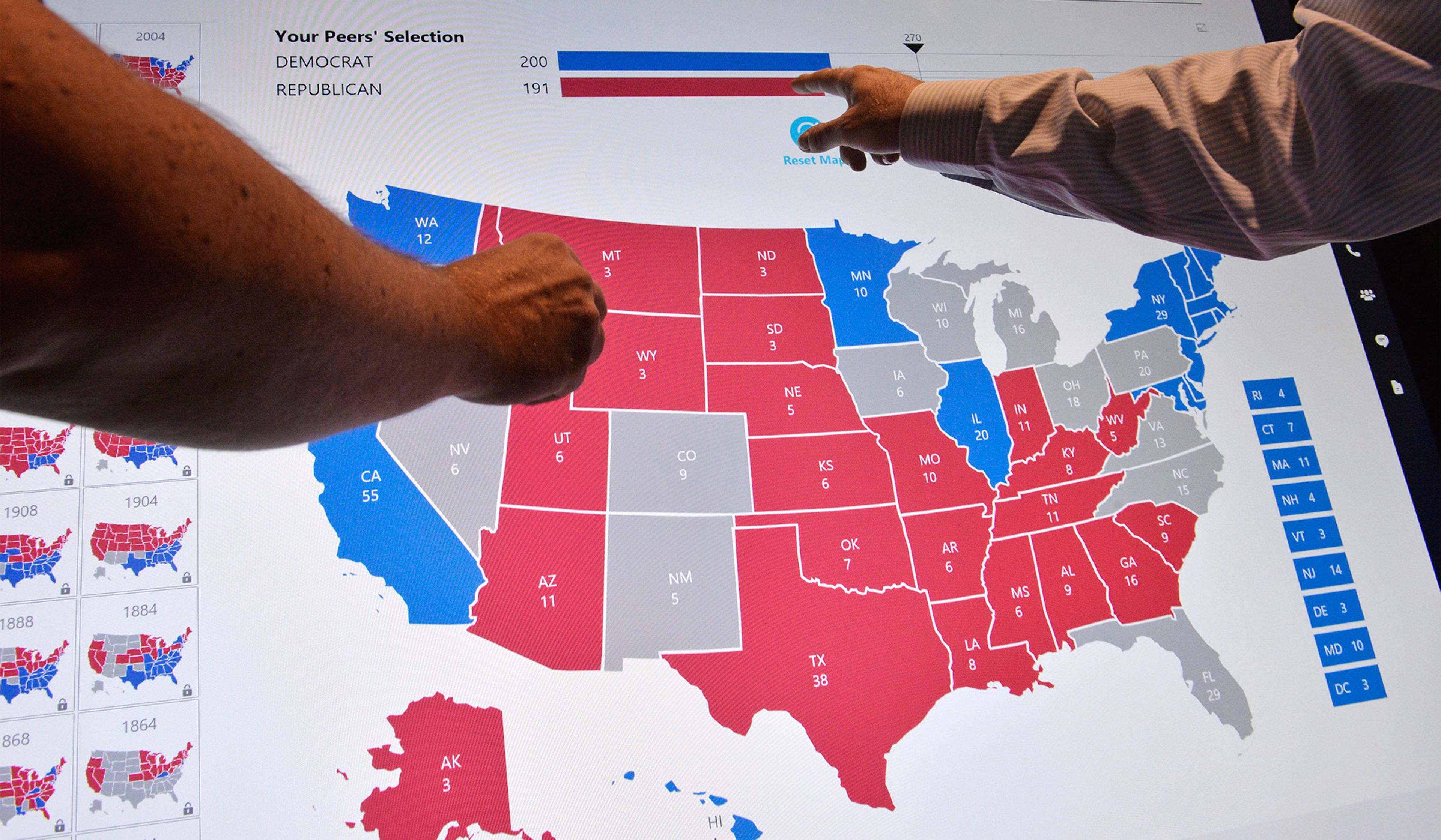
Map created by the Office for Emergency Management, c. 1942-45.
National Archives
Of course, after Lincoln’s election, the South did really secede. This, too, ended in failure, although only at the end of a years-long war that cost 700,000 lives. This would seem to suggest two things: one, that the Union was dead-set on its own preservation, and two, that secession was impossible even for a breakaway region that had the resources and wherewithal to make a real go of it. The Confederacy had a land mass comparable to that of Western Europe, controlled the most important commodity in transatlantic trade, cotton, and fielded a substantial army led by capable military men.
Kreitner concludes that “the Union’s victory didn’t resolve the bitterly contested constitutional issue that had precipitated the war in the first place,” an otherworldly claim.
He doesn’t grapple with Lincoln’s extensive arguments against secession. As he explained in his July 4, 1861, address to Congress, Lincoln believed that the states had not existed prior to the Union and had no legal status outside it. He pointed out that even the Articles of Confederation referred to a perpetual union. Yes, the states have powers and rights under the Constitution, but destroying the government can’t be one of them. If secession is permissible under the U.S. Constitution, then it’s permissible under the Confederate version, too. “The principle itself,” Lincoln said, “is one of disintegration, and upon which no government can possibly endure.”
Even if you don’t agree with every jot and tittle of Lincoln’s arguments, there’s no doubt that the war settled the question as a practical matter, and, a few years later, the Supreme Court pronounced on it as a constitutional matter. In a case involving the status of bonds sold by Texas after it had seceded, Texas v. White, a majority of the Court said that Texas had entered “an indissoluble relation” upon joining the United States and its ordinance of secession had been a nullity.
Naturally, Kreitner has no use for Texas v. White and puffs up all the post-war threats of disunion down to the present day.
He says, for instance, that the fact that two Oregon legislators offered a proposal for independence after Trump’s election in 2016 and then quickly withdrew it shows that the idea had resonance, when clearly the harebrained proposal was a complete nonstarter.
There’s really nothing to be said for disunion at any point in American history. If we hadn’t managed to stick together at the outset, we would have been pitifully picked apart by European empires, which weren’t more liberal or democratic than we were. If the Constitution hadn’t forged a compromise between the sections, the slave states would have gone their own way, untethered to a North that would eventually become anti-slavery and abolish slavery in the South. If we had let the South go in 1861 or lost the war, an independent American slave republic with expansionist designs would have been a disaster for North America, and world history.
Today, secession is a stupid fantasy. Let’s say California wants to leave. Is the United States just going to hand over its military bases and federal lands? If not, are we supposed to believe that California would win a fight for these things? With what army? And does California really want to be compelled to have a military budget, to enforce its borders with Nevada, Arizona, and Oregon, and to negotiate a trade deal with the rest of the United States, among other obligations of sovereign states?
The watered-down Calhounism that runs through Kreitner’s book is akin to the way the New York Times’ 1619 Project essentially picks up the theory of the Founding held by slavery’s apologists — it was for the white man, and the white man only. The only thing that the long-ago fire-eaters and contemporary woke activists and intellectuals have in common is a hostility toward the United States of America. This enmity nearly destroyed the nation 150 years ago, and if the likes of Richard Kreitner follow the logic of this book, it will once again.












Comments