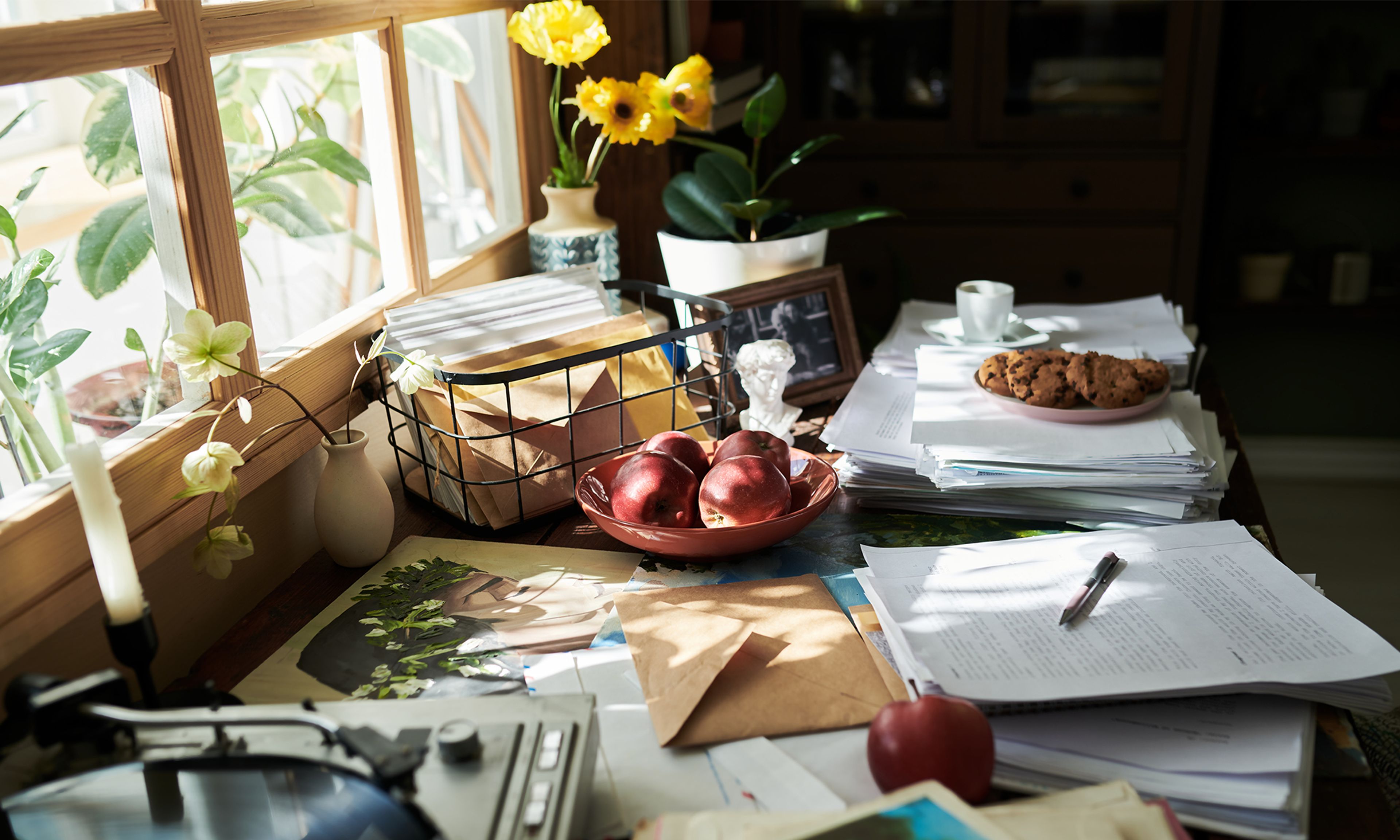
Stuff on desks accumulates two ways, horizontally and vertically. The horizontal spread accommodates uneven three-dimensional creatures and objects: animals (on my desk, eight turtles, two frogs, and a shark); Founders (a Hamilton/Burr snow globe, a John Marshall bobblehead, a Madison Pez dispenser); a porcelain box shaped like a miniature manual typewriter; a ceramic We Are Happy To Serve You Greek-diner coffee cup; pill bottles; sunglasses; a lamp. Papers and books, which are only bound papers, being flat, lend themselves to the vertical. On three corners of the desktop (the lamp insists on the fourth) they rise heavenward, aspiring all the while to form new towers in the mid-desk space they contest with their bulbous rivals. Piles.
A pile of papers is a complex thing. It exists in space, where basic principles of construction must be observed: larger items should lie below smaller ones; each layer should consist of only one item. If these principles are ignored too often or too flagrantly — a tome on top of an address book, two books lying paperback to paperback — instability ensues and, in time, disaster. But a pile of papers also represents time. The top is now, or now-ish; as you descend you encounter, like an archaeologist or a fossil hunter, evidence of earlier days — acquisitions, demands, interests, urgent once or even fleeting but now preserved in the strata of a pile.










Comments