
Time was when the cannabis dispensary in the city was the neighborhood park. These were the days when the lawn was like a dance floor of dirt, and the plantings were bushes too scraggly to be pleasing but thick enough to screen businessmen from the eyes of a cop on the chance (slim) that one passed by. The entrepreneurs lounged about, murmuring Smokes, smokes. If I cannot describe them more fully it is because I no more wished to make eye contact with them than with the other hustlers that infested the city then.
Years passed. Eyes became watchful, city and parks bloomed. At the same time, a movement of which this magazine was a part argued that the nation’s drug laws were both onerous and inefficient. Pot seemed the drug most likely to be a candidate for reprieve. The federal government relaxed enforcement, states experimented with their own laws, and one day a pot store opened in the row of businesses out my window.
The shop was narrow but deep. Its wares were sequestered in the back (as they had been by the scraggly bushes of yore). On the wall was a mural of a moonwalking astronaut, a retro druggie metaphor: Outer space equals inner space. The customers were youngish. Not an ornament to the neighborhood but better, one sometimes thought, than an empty storefront. There is one of those a few steps down, in a short little brick building, which looks like the oldest on the block, that housed a burger joint until some years ago but now yawns vacant. At night you might have seen customers of the pot store sampling their purchases outside there. Shop and stop.

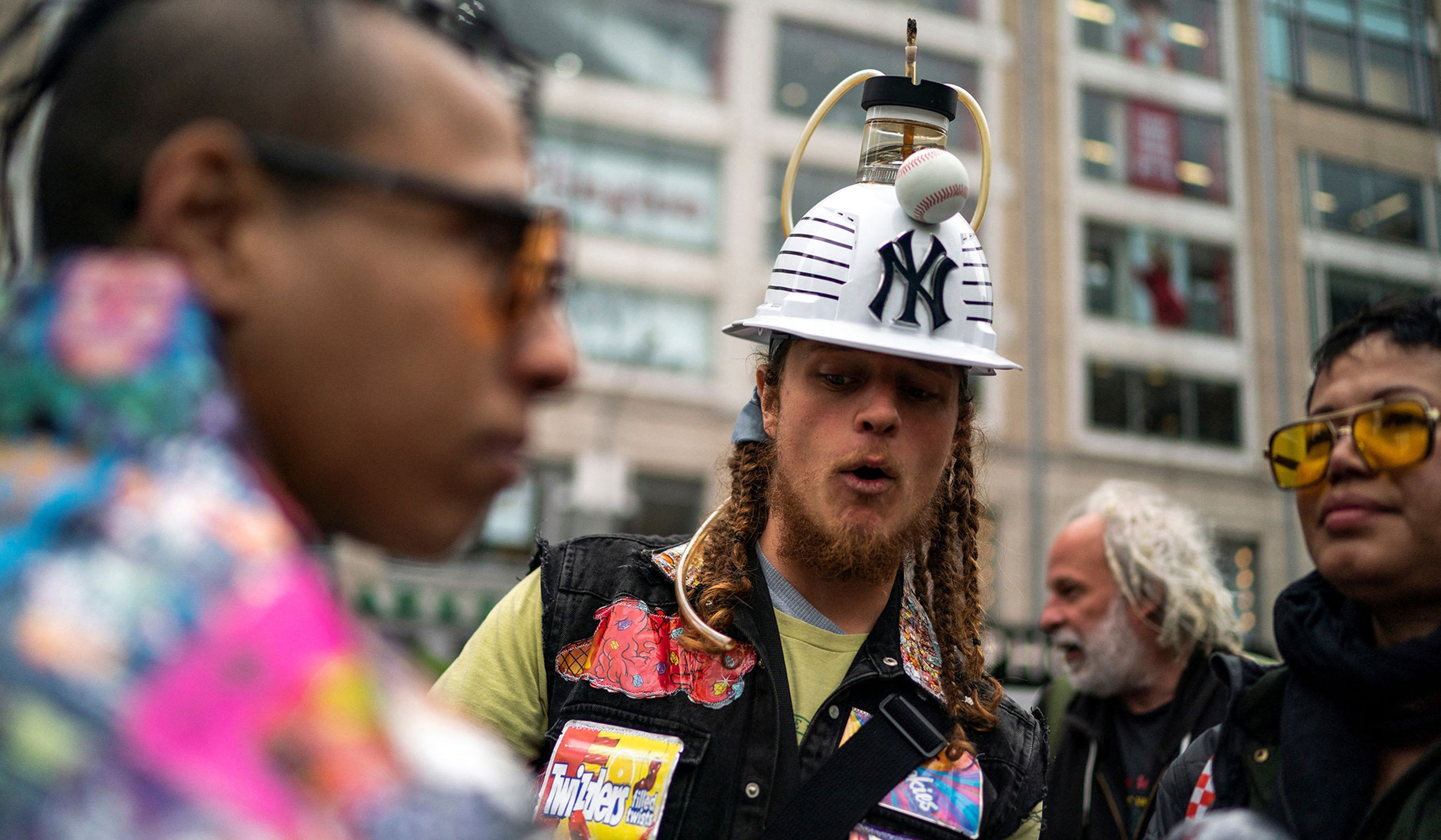

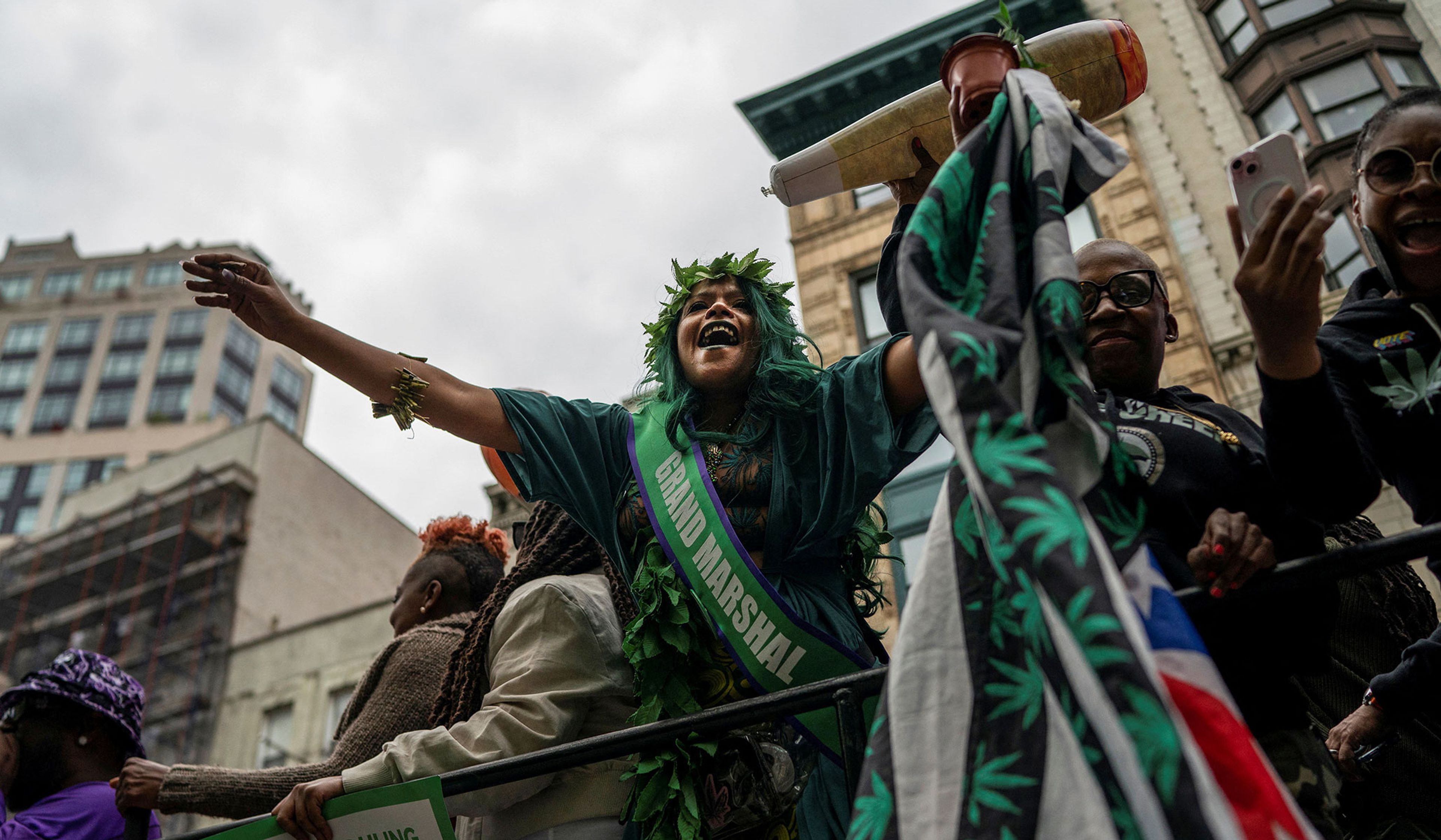
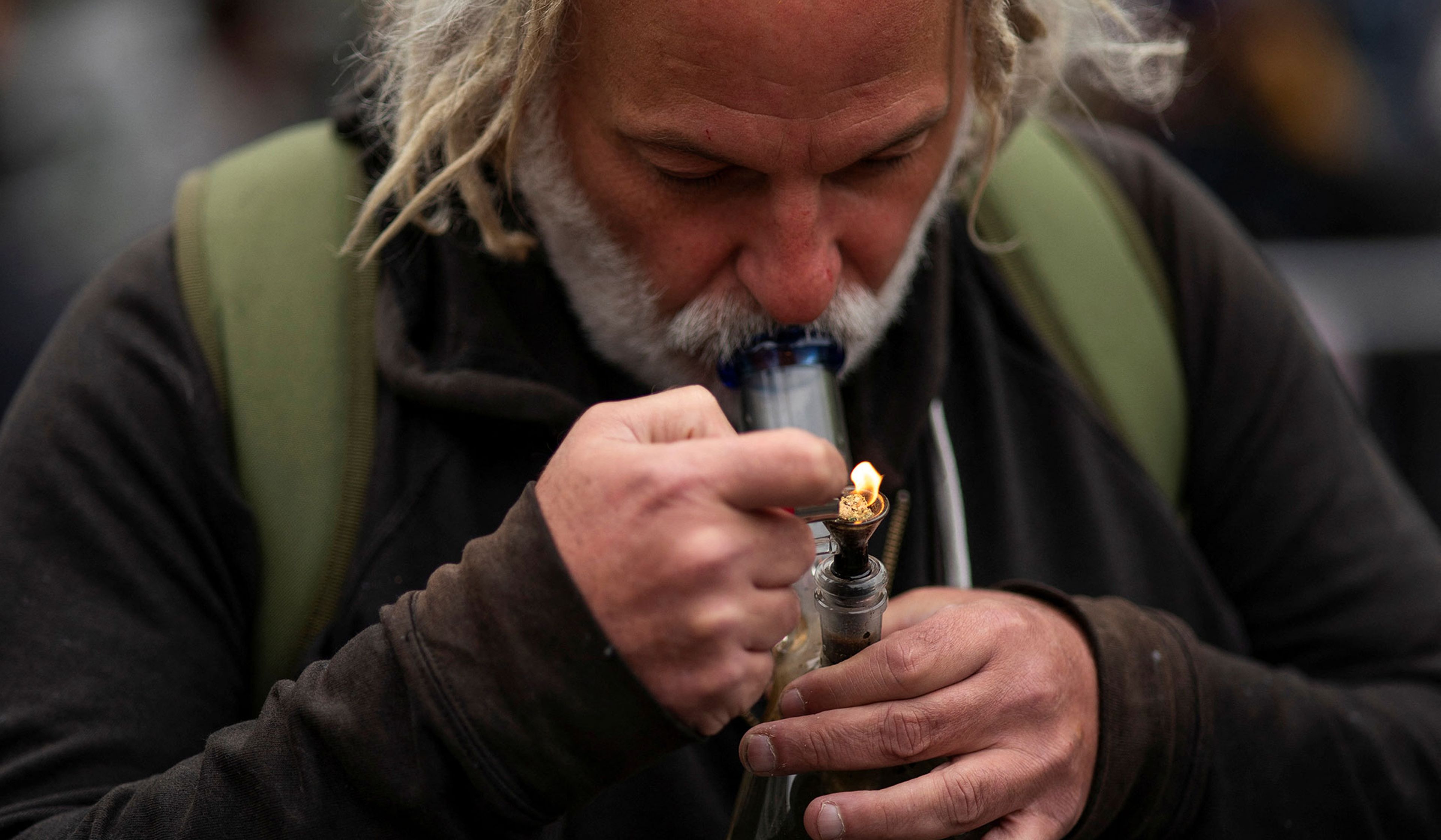



Enthusiasts mark the informal annual cannabis holiday, 4/20 at the Dazed Cannabis dispensary in New York City, April 20, 2024.
Adam Gray/Reuters
Then one day the pot store was gone. A metal rollup door, rolled down, blocked the view of the moon. Posted notices said the establishment had been closed for want of a license. The notices also indicated that it had been too close to a school or church. The Eagle had taken off.
The shop fell victim to a crackdown on unlicensed vendors city- and statewide. (The most noteworthy scofflaw, owner of several such establishments in the western reaches of the state, had been so successful that he had sponsored a community Easter-egg roll.) The language about proximity to a school or church recalled the tactics of the centurion mayor who swept porno shops into remote urban corners by zoning them away from educational or religious venues. The unlicensed vendors are suing to — well, they can’t get their licenses restored because they never had any, but they want to be back in business. Meanwhile the licensed vendors report an uptick in sales.
One argument anti–drug warriors used to make was that, under legalization, the potency of drugs would decline. Criminals and covert buyers needed a bang for the buck; sober merchants and their regular customers could go lightly. This has not happened with marijuana. Smell alone tells you that these are not your father’s joints. Doctors report psychotic reactions among habitual users. Potheads will derisively recall yesteryear’s scare stories about reefer madness. The stories were meant to scare, and they were as lame as all propaganda. But there was some madness, even then: The director of one pro-pot organization complained to me that it was hard holding board meetings when half the members chain-smoked joints.
A block away from the former pot store is a liquor store. It is large, bright, and well stocked. No concealment here — a neon Johnnie Walker strides across the window. Without question it is licensed. I go there for splits of champagne; the owner and I have a nodding acquaintance. Alcohol and man have lived together a long time. When my Rhenish wine I tope, why then I’ll think I am the pope. And yet alcohol remains, as it has always been, one of the deadliest drugs in common use. Also in this neighborhood was a hospital in which a friend of ours died of it. He was a gracious man, under the care of a good therapist, but his insurance would not cover 24-hour stays in a treatment facility, so even in the home stretch he drank at night, until he ended in a bed, hooked to a ventilator, heaving and blowing like a sea creature cast on a beach. Reformers saw (correctly) that this was an evil; society saw (correctly) that prohibition was the wrong solution.
Pain wherever you look, the best you can do is trim the edges.












Comments