Nearly every story about the diminishment of the movie business contains some discussion of how Hollywood’s star-making capacities have dwindled. A recent study, surfaced by the New Yorker’s Inkoo Kang for her own recent decline-of-Hollywood lament, found that of the 20 actors most likely to draw filmgoers to the multiplex, the average age is 58. The phenomenon of 1990s-era leading men being repurposed as “I’m too old for this” action stars increasingly feels like a desperate exercise in life extension, squeezing Liam Neeson and Keanu Reeves and Denzel Washington for every last penny because none of the younger men playing superheroes can ever hope to draw a crowd.
But with the wild success of Barbie and Oppenheimer, both director-driven projects, being followed by the death of William Friedkin, one of the underappreciated lights of Hollywood’s 1970s auteur era, maybe we need to think about the eclipse of important directors as well. Or, with Christopher Nolan and Greta Gerwig as examples, what it might take to bring them back.
I knew Friedkin as the filmmaker who made The Exorcist and The French Connection, but the appreciations after his passing brought home just what an outsize, eccentric, difficult, and fascinating figure he really was. And most of these appreciations doubled as laments that our more corporate and cautious and uncreative Hollywood would never allow such a difficult talent to flourish.
This is true enough; indeed, Friedkin himself didn’t flourish once the 1970s were over. At the same time, I wonder if some of the forces undermining corporate Hollywood could make more space for Friedkin-esque figures. Think of the attempts at outlaw cinema from moviemakers like S. Craig Zahler, or even the way established directors like Steven Soderbergh and Clint Eastwood have managed to make a lot of modest but still ambitious movies on the cheap. There are opportunities with new technologies and fragmenting audiences to reclaim a little of the auteur spirit.
But Soderbergh and Eastwood are also examples of how the directing trend mirrors the actorly trend: You still have ageing filmmakers who can draw an audience on the basis of their name alone, but the path to developing that kind of brand is murkier than ever. Wes Anderson can probably make Wes Anderson movies forever, but how many directors have emerged fully as household names in the 2010s or 2020s? Not many.
Instead, the pathway seems to be either to let your early work become a calling card that gets you into superhero-land, or else to make movies on your own terms but make them exceedingly infrequently. Tár, probably last year’s best film, was the work of Todd Field, whose last movie came out 16 years before. That’s an extreme example, but take a much-lauded figure like Bong Joon-ho, whose Parasite won Best Picture in 2019: Four years later we’re still waiting for his next movie, which with luck will appear in 2024.
This is where the impresarios of our Barbenheimer summer, Nolan and Gerwig, offer models worth studying. Nolan is the more established of the two, and his longevity suggests a couple of lessons for would-be imitators. First, if you’re going to do the superhero thing, make it work for you rather than the other way around. Nolan took up the Batman saga at a moment when he was established but not yet famous, and then leveraged that success to make a series of hits on his own terms. (Contrast with Sam Raimi, who had parallel success with Spider-Man but never found his footing afterward and has ended up back in the Marvel vortex.)
Second, if you want people to come out for your movies, you have to keep making them. Since Memento in 2000, there has never been more than three years between Nolan films, and often just one or two. His push to get Tenet into theaters mid-pandemic should be understood in that context: The man knows that an easily distracted audience remembers you only if you keep on delivering.
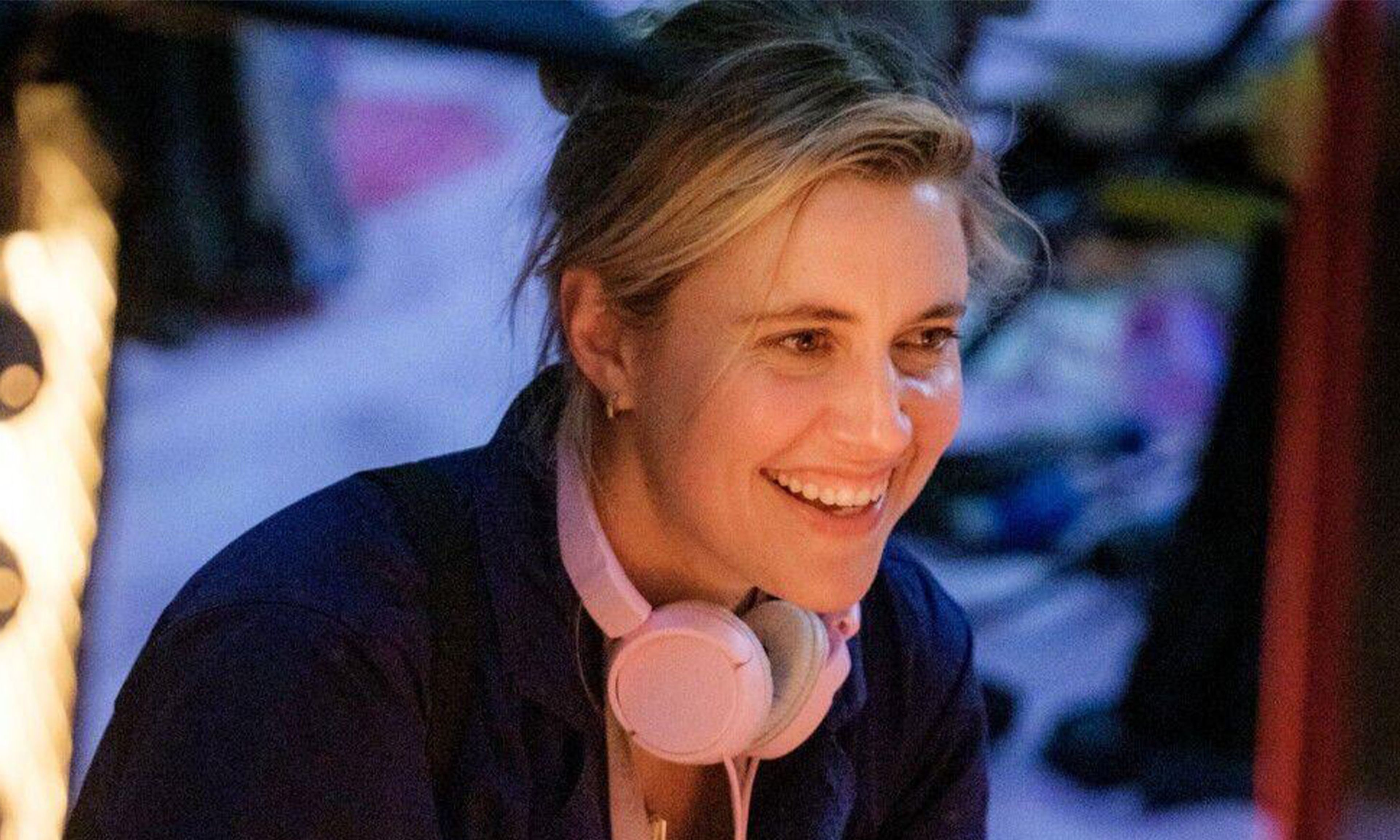
Gerwig doesn’t have this track record, but her choices are also instructive. After her breakout with 2017’s Lady Bird, she has made two big movies, Little Women and now Barbie, that both sit neatly poised between originality and the Hollywood-tentpole-franchise factory. From the factory’s perspective, they embody or exploit widely loved properties, drawing audiences that wouldn’t turn out for a director’s name alone. But from Gerwig’s perspective they offer much more room for the personal touch, the director’s creative vision, than simply surrendering her talents to Black Widow Meets Black Panther (not a real movie, to be clear).
Which in turn has the potential to turn moviegoers who liked both Little Women and Barbie — mostly female moviegoers, let’s be honest — into Gerwig moviegoers, who will show up someday for a project just because it has her name on it, in the way that Nolan can draw a crowd of fans — mostly male fans, let’s be honest — for any story he would care to tell.
Gerwig may not be quite there yet, but that’s the model that any talented director should be seeking. And after this summer’s successes, who’s to say it can’t be done more often?












Comments