
What was funniest to me about the news that Slate has been publishing advice-column responses to fake letters was the room-temperature reaction. “Well, duh,” said everyone. “Did you think being published in Slate was some sort of imprimatur of truth?” Slate is a unit of the Graham Holdings Company, which is what was left after the Washington Post Company sold its namesake newspaper to Jeff Bezos and is controlled by the newspaper scion Donald Graham, son of Katharine Graham. Slate enjoys the media equivalent of a listing in Debrett’s Peerage. Yet nobody thinks it is any kind of stickler for truth.
The fakery was generated by a struggling gay YA novelist, Bennett Madison, who decided to write outlandish letters describing made-up distress to “Dear Prudence,” the Slate advice column. He sensed, correctly as it turned out, that “Prudence” shared many of his obsessions, which include “Disney monomania, semantic disputes in queer relationships, and paralyzing anxieties around Brooklyn-style social mores.” He says he wrote 13 such fake missives that earned publication and responses in Slate. As far as I can tell, Slate hasn’t apologized, admitted error, or even mentioned Madison’s claims, which he made in September on the recently revamped gossip site Gawker.
Prudence replied to Madison in such columns as “Help! My Friend Thinks I Am Stealing Vaccines from African-American Grandmothers to Attend Sex Resorts.” (Madison pronounces this one an artistic disappointment because “it needed another flourish of insanity to justify its existence.”) Occasionally, Madison says, he worked at cross-purposes to the advice column, which is to political correctness what Hiroshima was to a firecracker. He is annoyed that Prudence overlooked the tender solicitude in his letter “Help, My Daughter Is Pretending to Be Demonically Possessed . . . and I Can’t Take It Anymore!” Actually, Madison writes, his character was extremely concerned about stifling the young offspring’s creativity by opposing her habits of “crab-walking around the house and spitting on her family members.” Prudence, in the column and especially in a follow-up podcast, had the effrontery to cast the fictitious parent as judgmental for opposing his fictitious child’s fictitious Linda Blair act. “I don’t have a child, much less one who’s a vessel for a demon; nevertheless, I felt misunderstood,” grouses Madison.

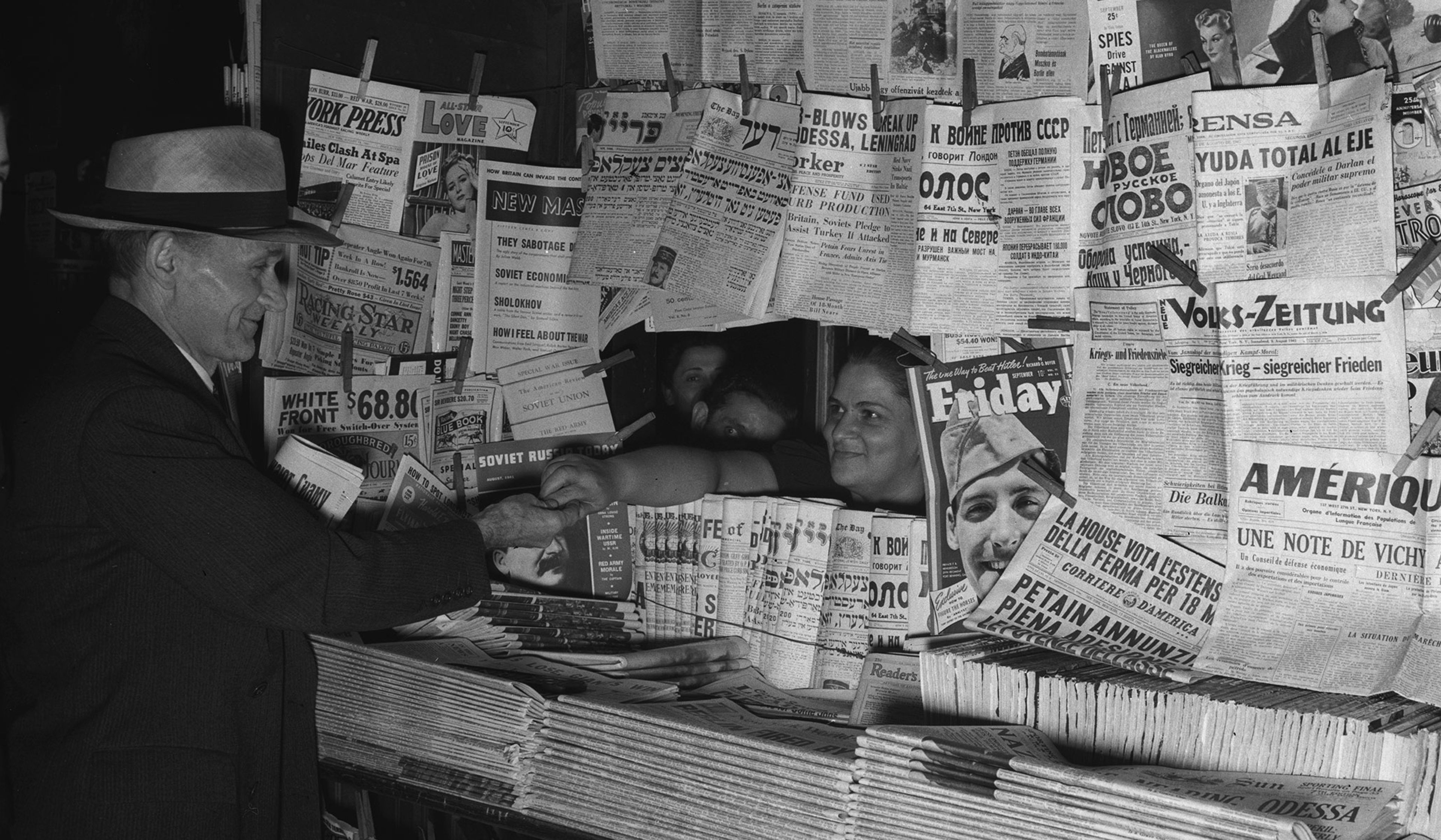
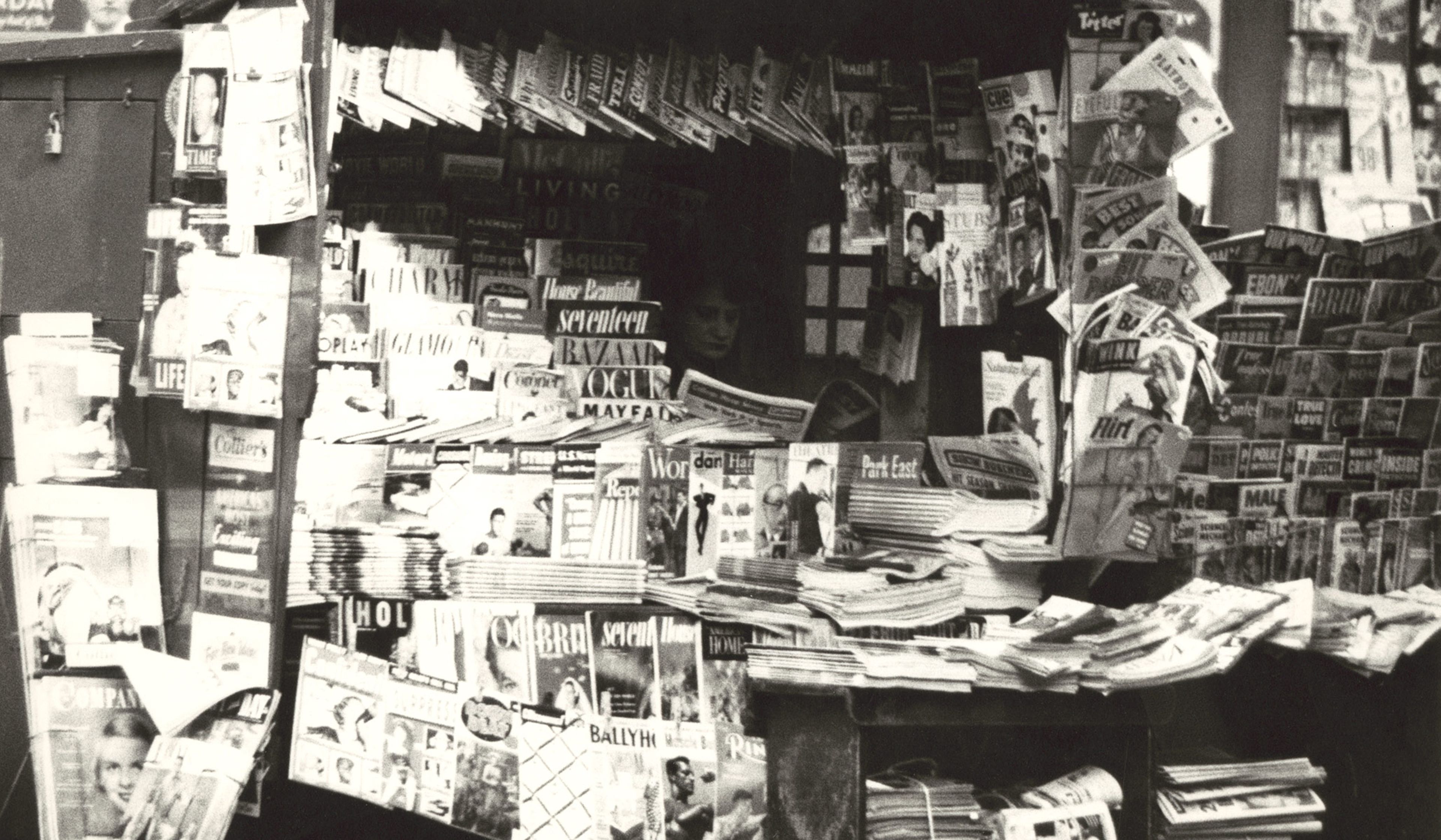
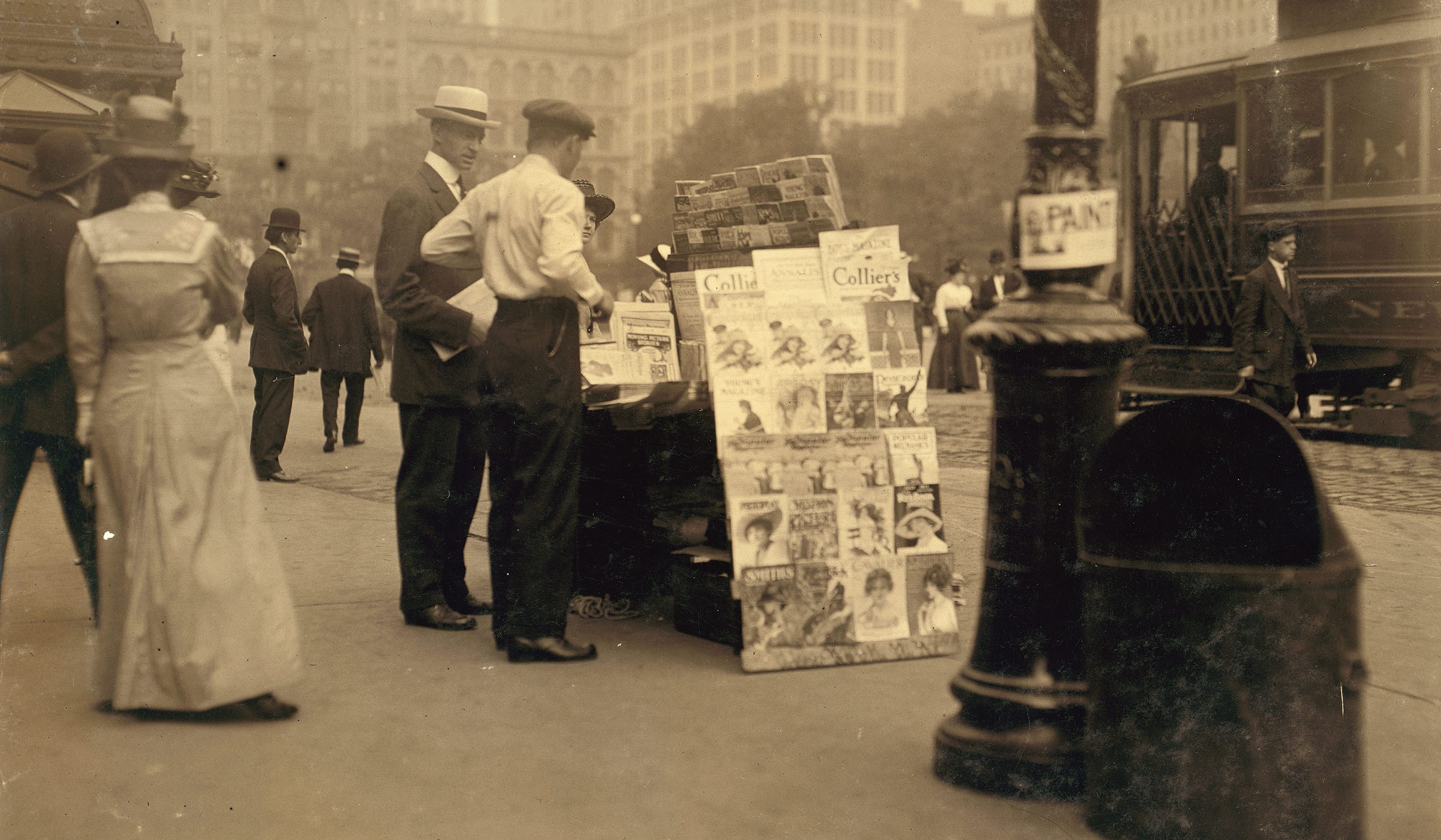
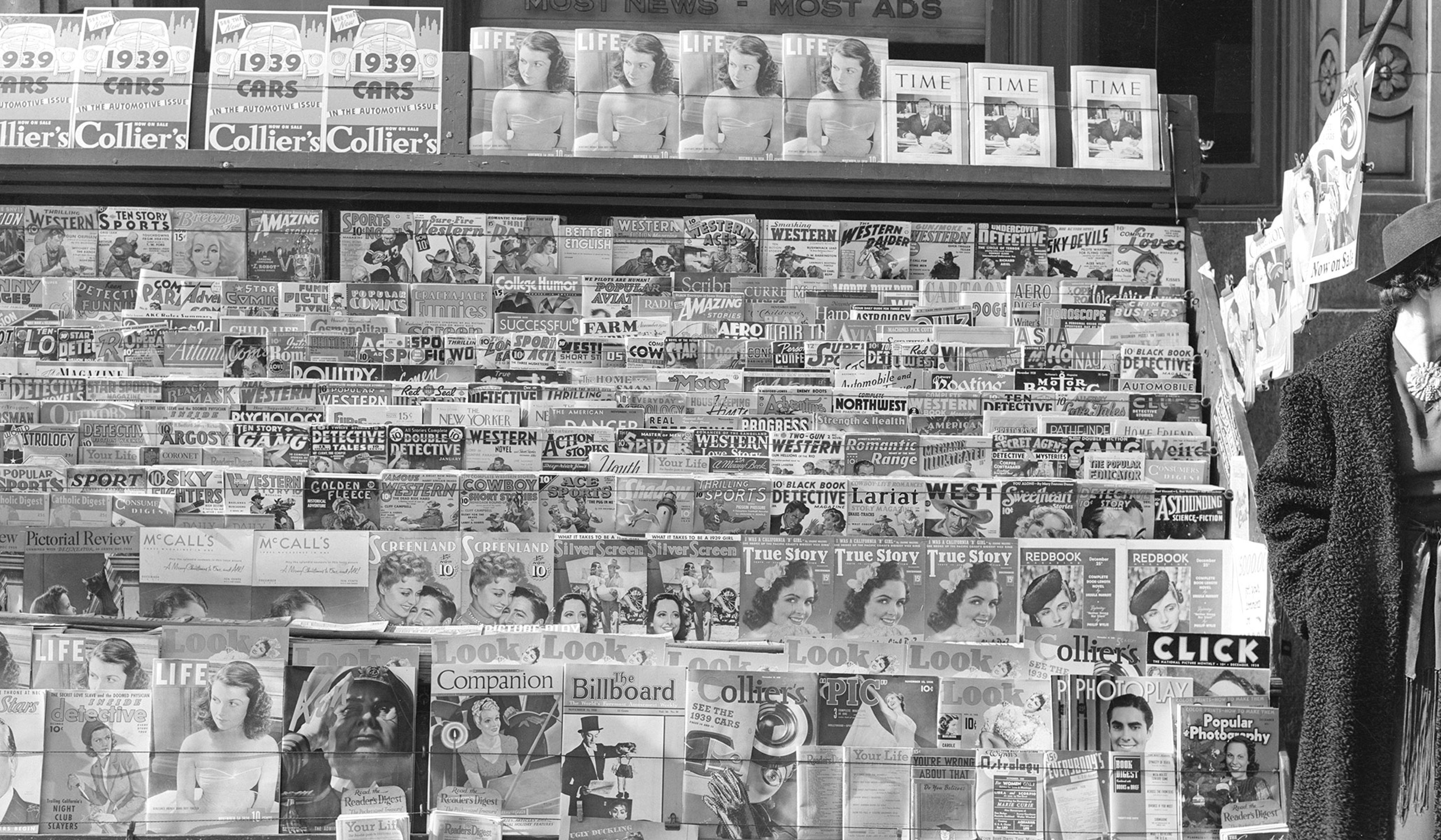

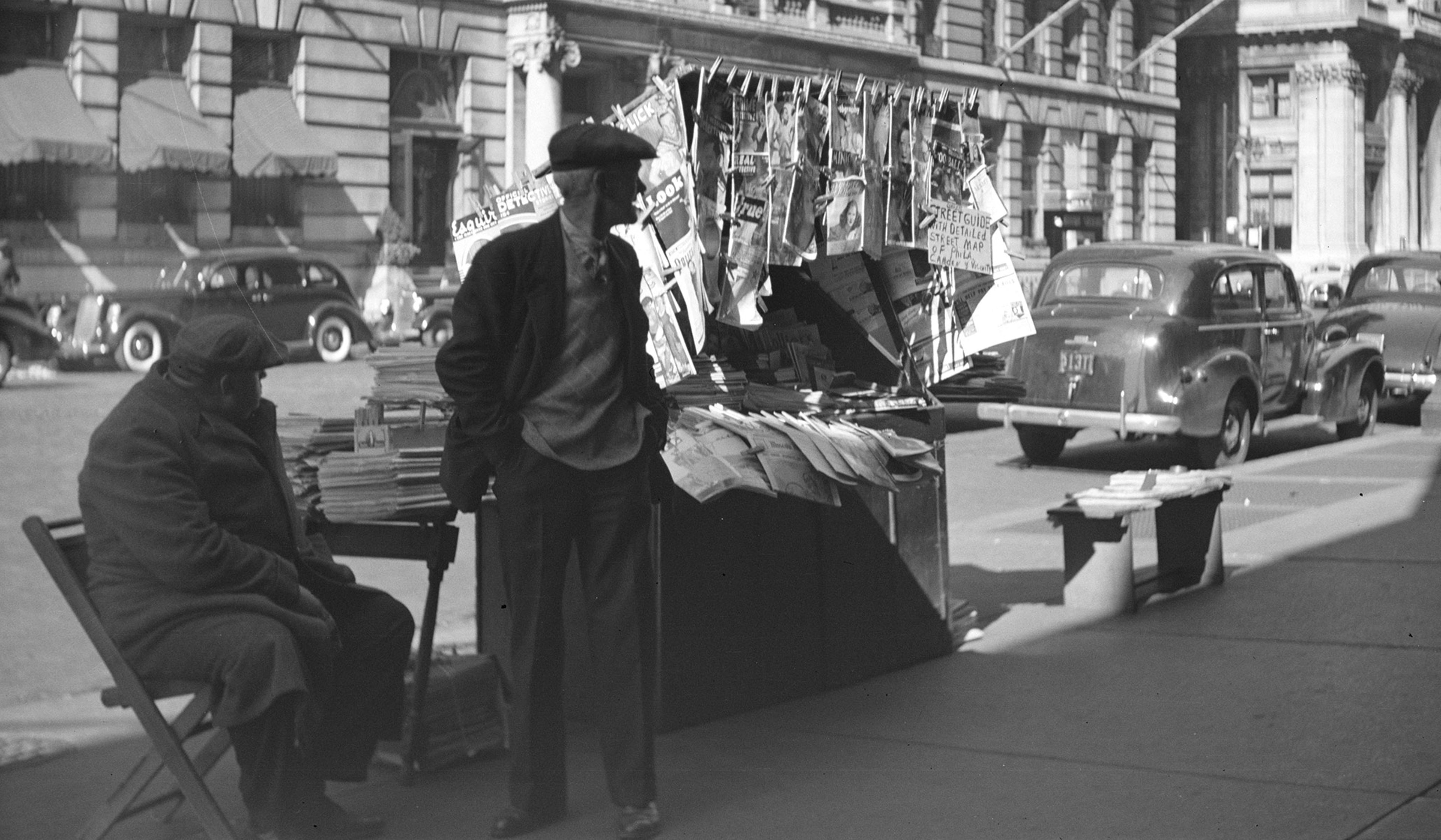
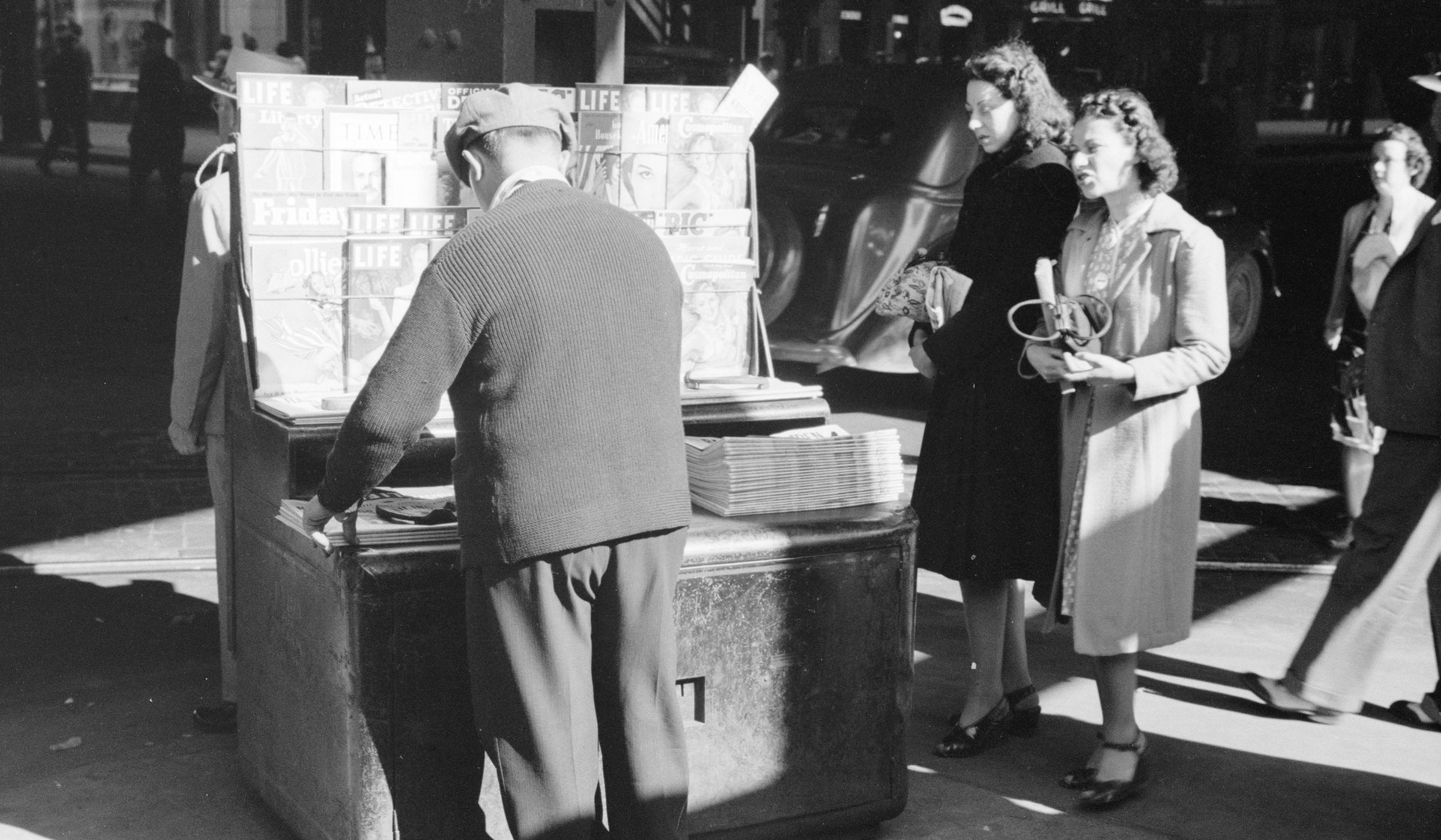
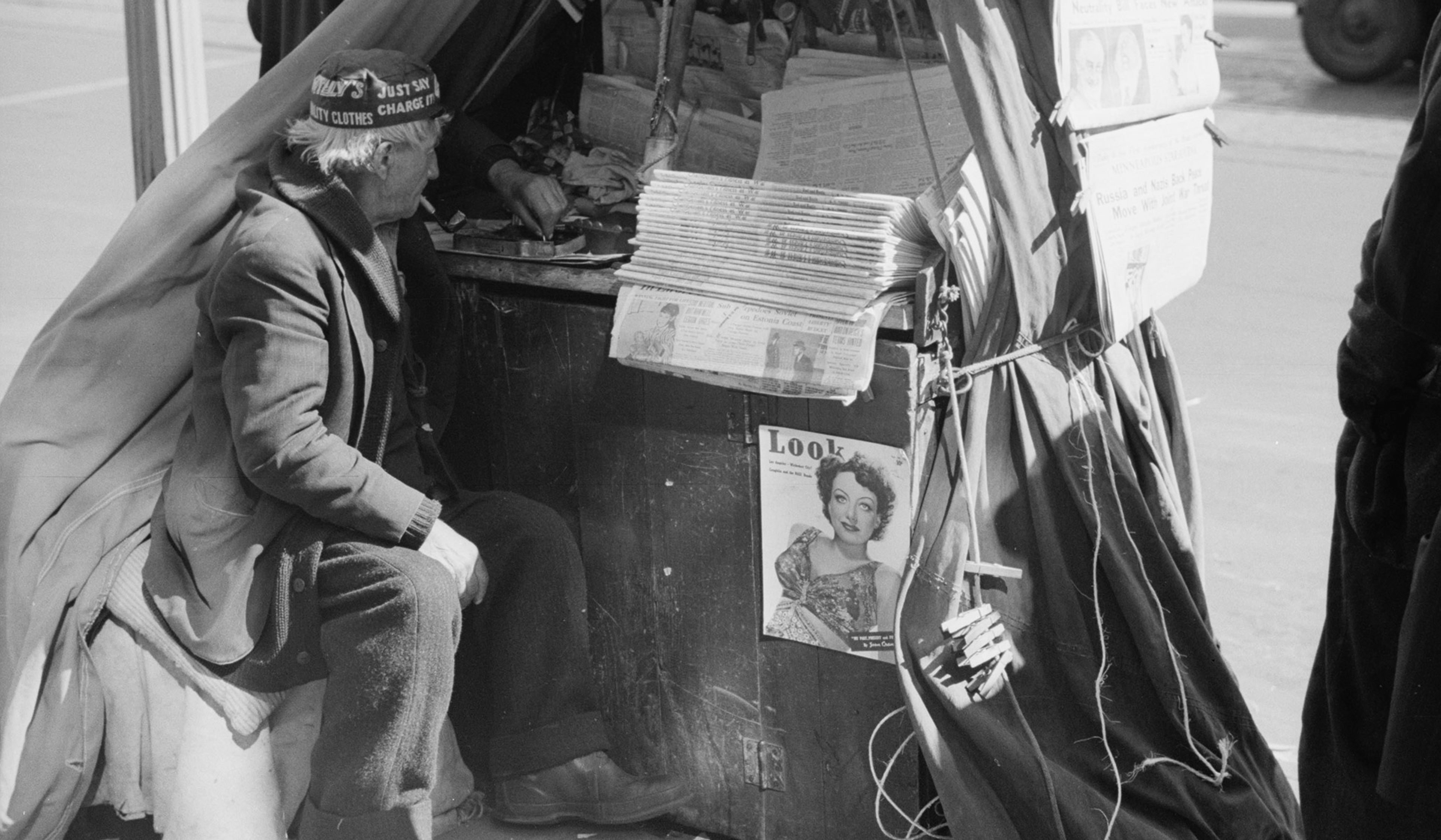

Newsstand in Norfolk, Va., 1941.
John Vachon/Farm Security Administration-Office of War Information Photograph Collection/Library of Congress
What caused Madison to re-evaluate his choices was attracting the notice of Tucker Carlson. “Help! My Husband Won’t Remove His Mask, Even for Sex!” proved to be such a juicy plea that it earned prime-time attention from Carlson, who cited the column as evidence that progressive maskophilia was getting out of hand. Madison, who was on his first margarita at a Mexican restaurant when he learned of the disquieting development, was overcome by regret. Slate was and is a safe space for anxious progs of the species Brooklynis nervosa maximosa. “I was disturbed to have provided chum for the pro-Covid, bleach-drinking lunatics in [Carlson’s] audience,” he says. Wait, you’re pro-COVID if you drink bleach? That sounds like a hostile step to take if you’re trying to give a warm welcome to the coronavirus. The point of this remark is that Madison was fine with damaging the progressive brand by polluting one of its leading sites with fiction, but he draws the line at damaging the progressive brand by giving the Right another reason to mock its excesses.
When I was a teen in the early Eighties, there were two primary punchlines you could go with if you wanted to indicate a story was not to be believed. “Where’d you read that, the Weekly World News?” was one. Or, if the dubious claim was smutty, the effective riposte was “Where’d you read that, Penthouse Forum?” The Weekly World News was a supermarket tabloid renowned for its stories about Hitler being reincarnated, demons being released from the bowels of the earth during oil-drilling, and predictions of imminent apocalypse. WWN is still going, by the way, as an occasionally updated jokey website. On November 5, 2016, it reported, under a fake picture of a bare-chested Donald Trump on horseback, riding double behind a similarly stripped-to-the-waist Vladimir Putin, that the two would be campaigning together over the weekend in battleground states.
But back then those two outlets were pretty much all we had for made-up stories presented as fact. Nowadays when you say “fake news,” you could be referring to front-page items from any major news outlet in the country. And the made-up stories aren’t just dispatches from within anxiety-ridden progressive skulls. We’re told, in the pages of the New York Times, The New Yorker, and the Washington Post, that Hitler has indeed been resurrected (in the person of Donald Trump), that climate-change demons will be unleashed by oil-drilling (so we should maybe just blow up the pipelines to stymie those nasty spirits), and apocalypse is always just around the corner. When WWN did end-of-days stories, it would famously credit the claim simply to “a scientist,” making mockery of all appeals to authority. When the Times or The New Yorker borrows a habit from WWN and prints news of the future, it relies heavily on actual scientists, but the predictive skills of career doomsayers seem not to have improved in the interim.
In short, nobody expects anything they read to be overly attached to facts, and the media are happy to run stories that cater to readers who value above all else that which is interesting, entertaining, or flattering to their sensibilities, no matter how factually wrong. Sure, the New York Times claimed falsely for seven months that “one of the primary reasons” for the American Revolution was “to protect the institution of slavery.” But what’s a news outlet without an ongoing story of satanic influence undermining everything?












Comments