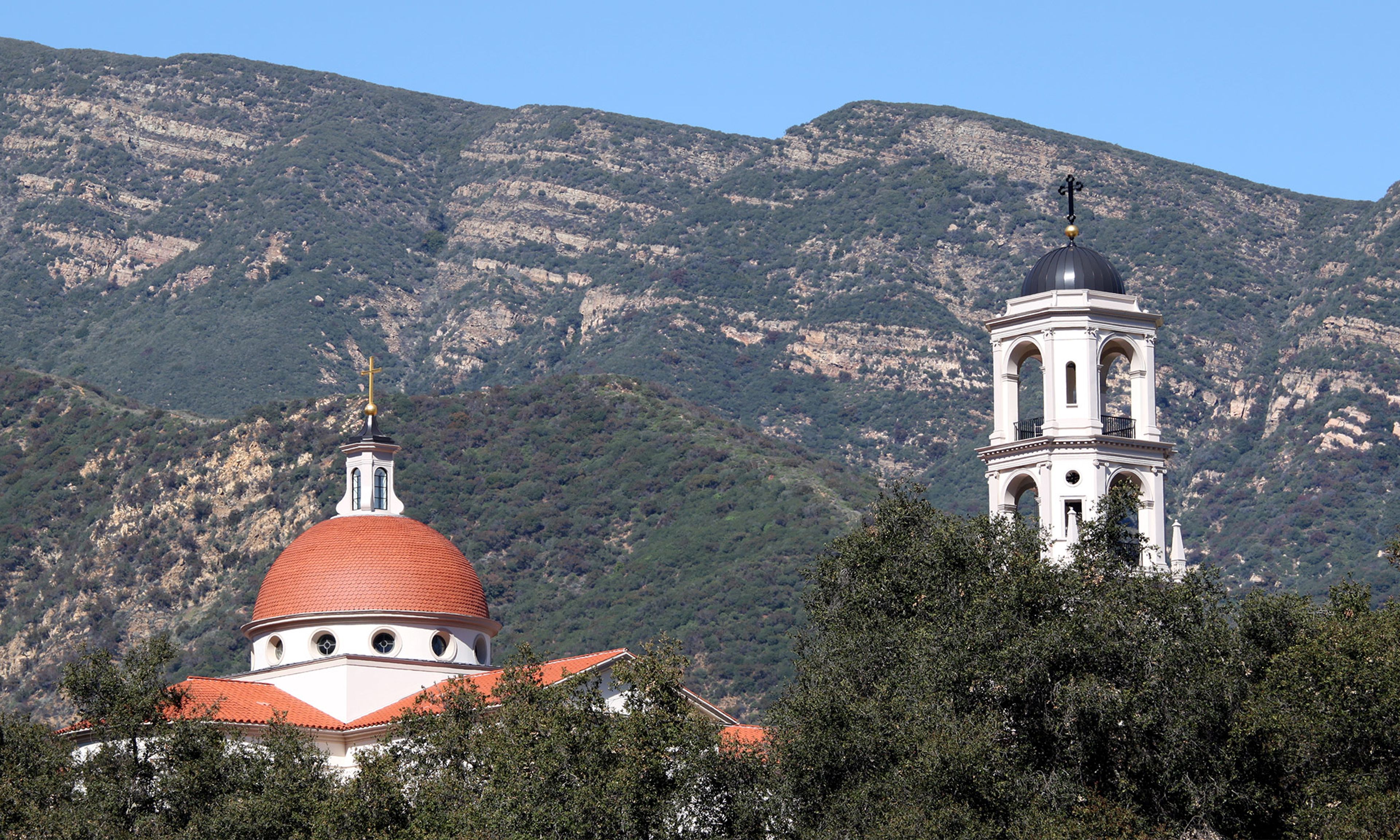
Northfield, Mass.
Fifty years defines a golden anniversary, and a long time. And speaking of time . . .
Early on a splendid September morning, in a stately brick building on the New England campus of Thomas Aquinas College (affectionately known by its acronym, “TAC”), sunshine pours through room 109’s massive windows, lighting up a gathering of students — not a bleary eye in the lot — who are doing just that: speaking of time.
Actually, they’re discussing it. Under the soft-touch guidance of tutor (one finds no “professors” here) Josef Froula, the assembled scholars cheerfully and respectfully (the etiquette is “Mr.” and “Miss,” plus surnames) mix dialogue with reading aloud from their textbook, first published in 350 b.c.: Aristotle’s Physics.
It’s heady, Socratic stuff for the crack of dawn, but all of the dozen-plus studious students in this Philosophy IV-2 course are willingly participating in teasing out meaning and understanding as they contemplate “now” — can it be defined? — and time’s nature — is it independent of measurement or is it a thing unto itself?
Fun is had, so the 60 minutes of discernment fly by. More tomorrow . . . if such exists!
Next up, in room 305, is Natural Science I-3. As with all classes at this decidedly traditional, unwavering Roman Catholic institution, the proceedings commence with a prayer in Latin. And then it is on to the matter at hand: the collection of insects.
Among the project displays of pinned bugs and butterfly nets awaiting the capture of tiny winged things stands the same tutor, Dr. Froula. Himself a TAC graduate — who experienced these very lessons a generation earlier, at the school’s home campus in Santa Paula, Calif., northwest of Los Angeles in the beautiful Topatopa Mountains — Froula, an amiable and orthodox man, is the ideal representative of TAC’s unorthodox faculty. Each is a higher-ed version of the “five tool” baseball star: Having taken the “Oath of Fidelity” and made the “Profession of Faith,” every tutor is up to the duty of ably engaging, proctoring, and steering — dare one say “teaching”? — TAC students in all subjects once considered the essence of education, when the word was modified by “classical”: in philosophy and natural science, in mathematics and language, and of course, theology.
Here, in the small, old Yankee town of Northfield, located a few stone’s throws from the nexus of Massachusetts, Vermont, New Hampshire, and the bucolic banks of the Connecticut River, this faculty multitasking makes holistic sense: Becoming educated — broadly and faithfully — is precisely what this school, purposefully named after Roman Catholicism’s greatest scholar and theologian, has expected of its charges for a half century. Why not of its tutors?
In this place predominated by “Great Books,” it’s not all about books: Armed with nets and bottles, their task defined, Dr. Froula’s charges are released. Setting out across campus in entomological teams of two and three, the students are intent on capture but for a purpose — of intimately understanding, gnat by bug by spider, the actual creation and glory of the God they worship.
* * *
Dr. Thomas Kaiser has seen this four-year, undergraduate, coeducational, laity-run institution, financially beholden to neither government nor diocese, in all its complex facets. Few know Thomas Aquinas College as does this cheerful biologist by training, who has straddled its alphas and omegas. A member of its first class — organized in 1971 in California and situated in a roughing-it, makeshift, trailer-bedecked campus — and its first graduating class, he returned to his alma mater in 1982 to join the faculty.
As the decades marched on, as the school began to reach enrollment capacity in California, as the rickety trailers gave way to beautiful, whitewashed, red-tiled mission architecture, an institutional desire emerged: for TAC to bring its Catholic, Great Books–centered education eastward.
And then something very special happened: An incredible opportunity knocked. A Massachusetts site — chockablock with class buildings, dorms, and even a church — that had been home to a prestigious prep school became available. Here was the place, idyllic and ideally located, for the expansion of its mission. TAC grabbed what would become its New England campus. Eastward ho!
But, who to run it? Given the institution’s practice of selecting leadership from within its tutor ranks, who better than the first person to have taught all 23 courses in TAC’s intensive, classical curriculum?
Relocated and newly titled, Dean Kaiser will see the school’s golden anniversary coincide with the first graduating class from the New England campus. The class of 2022 will share a near-identical experience with that of 1975. How many colleges can make that claim? One at least: TAC, says Kaiser, remains “unique in having one fully integrated, four-year Great Books program of studies where students see the compatibility between math and science, philosophy and theology.” And while the curriculum has undergone “minor changes” over two generations — carried out “for the sake of perfecting the integration of the various disciplines and a deepening and development of the mathematics and science program” — Kaiser says that TAC “has remained faithful to its mission as described in its founding document, ‘A Proposal for the Fulfillment of a Catholic Education.’”
Now that is some document. Still highlighted and boasted about on the TAC website, it is a deeply analytical examination that indicts secularizing Catholic education — in 1969. Echoing a critique that preceded it by two decades, the proposal’s authors could easily have titled it “God and Fallen Away at Georgetown.”
They explained, in detail, the “crisis in the Catholic college,” and offered a solution: a four-year college, one that eschewed majors and minors, that was anchored in God, church doctrine, and the Great Books, and to be named after the Angelic Doctor.
Thomas Aquinas College has seen little deviation since its launch: Over 50 years, thousands of TAC students have learned from books that matter — many of which have mattered for millennia. No imitations are accepted in this bastion of original texts, which span the ages, from the ancient (Euclid’s Elements, Ptolemy’s Almagest, Plato’s Apology, Sophocles’ Antigone) to the relative present (Jung’s Analytical Psychology, Tocqueville’s Democracy in America, Freud’s Introductory Lectures on Psychoanalysis) and plenty in between (Saint Thomas’s Summa Theologica, Descartes’s Principles of Philosophy, Newton’s Mathematical Principles of Natural Philosophy, Saint Augustine’s De Trinitate).
Has there been a “fulfillment of a Catholic education”? Even secular observers salute the specialty and quality of what TAC does and delivers. Among the many accolades is that from Kiplinger, which in 2019 gave the “pint-size liberal arts school” the top-in-the-nation ranking, claiming that Thomas Aquinas College offered the “best value” — defined as a “high-quality education at an affordable price” — of any American educational institution. Tuition, room, and board (totaling just $36,000 annually) is about half that charged by most private schools. Its comparative graduation and student-retention rates dwarf those of other schools, and U.S. News & World Report has ranked TAC’s alumni as the second-most loyal and generous in the nation, giving at five times the rate of typical college alumni.
And there’s this: Ten percent of TAC alumni have entered religious life.
One who has entered journalism life is Katrina Trinko, class of 2009 and editor in chief of The Daily Signal. She sees her alma mater as “a true respite from the world, a place where a student hungry to learn and think and really study can do so, in the company of others who share the same goals.”
Describing herself as a “rare alum who actually had to talk my parents into letting me attend,” the then-teenager was quite eager to experience the unique education TAC promised:
I was excited for the prospect of discussion-style classes, where I could bring up my arguments and perspectives and have to engage in a real debate about them, not just dutifully listen to an unchallenged professor drone on. As someone who was prone to sentimentality, I thought four years of math classes would be a good exercise in forcing my brain to work differently, to be more grounded in logic than feelings. . . . And lastly, I was excited to dive into Western civilization. I wanted to read for myself the great thinkers of the past, and actually wrestle with their ideas and see why those ideas were rejected or accepted over time. It gives you true intellectual humility to read the great thinkers; you realize how many geniuses had a lot (or all of it) wrong, and it gives you a good skepticism toward the accepted ideas of today.
From its humble and pious beginnings, Dr. Michael McLean, tutor and president since 2010 — he will pass the leadership baton to Dr. Paul O’Reilly in 2022 — believes the college has delivered on its promise, surpassing even the “most optimistic expectations.” In a mid-September address in New England, McLean declared: “We are meeting our enrollment goals here, and we continue to recruit excellent faculty, staff, and chaplains to implement our academic program, provide for the health and welfare of our students, and tend to the spiritual needs of this growing community.”
Giving credit, where due, for “our 50 years of success,” he recognized “the many friends and benefactors of TAC, without whom the College would not exist.”
And yes: “God has indeed blessed our efforts.”
There will be much official celebrating of all these blessed efforts, nationally, over the course of this golden anniversary year. O’Reilly pledges that, when it is done, Thomas Aquinas College will continue to do what it has always done — to commit to “an uncompromising approach to forming students in the fullness of Catholic wisdom. . . . We offer an education that engages young people who are active in their own learning. These young people are, as St. Peter says, always ready ‘to give a reason for the hope that is within them.’”
Good for them. After all, time is on their side.










Comments