
In theory, it should be perfectly possible for a modern society not only to maintain prosperity but to increase it steadily in the face of pervasive population aging and demographic stagnation or depopulation. Whether the United States can in practice continue to flourish in the face of such trends is another question.
The formula by which the U.S. ascended to its current status of the world’s wealthiest society and sole superpower was predicated on over two centuries of continuous and exceptional population growth, unique among Western countries in tempo and scale. Today, America’s population is two and a half times larger than on the eve of World War II (1940), three and a half times larger than in the lead-up to World War I (1910), ten times larger than just before the Civil War (1860), and 300 million persons more populous than that antebellum nation. But that old familiar formula is in trouble today. It is no longer clear that the U.S. can count on indefinite geometric population growth to power its way into the future. Sooner or later, continuing American population growth of any kind may not be in the cards, either.
As the figures come in for 2020 and 2021, it is likely that the U.S. will see its slowest years of demographic growth ever officially recorded. But this is an aberrant blip, a demographic shock from the terrible COVID pandemic, which caused deaths to spike and also temporarily depressed birth rates.
Far more important for America’s population prospects are long-term trends in fertility, since births to date have accounted for the overwhelming majority of new entrants into our population each year, America’s famously robust immigration patterns notwithstanding. Over the past decade and more — since the crash of 2008 and the Great Recession, really — America’s birth trends have taken a fateful turn, veering well below the replacement level. That regimen, if continued indefinitely, would eventually lead to a peaking of population followed by indefinite population decline, barring only offsetting immigration.
America has experienced sub-replacement fertility before — for a number of years during the Great Depression, then again for most of the Seventies and the Eighties. But U.S. fertility levels have never before fallen as low as they are today. In 2019 — before the coronavirus pandemic — America’s total fertility rate (TFR — a measure of births per woman per lifetime) was 1.71, roughly 18 percent lower than the roughly 2.1 births per woman required for long-term population stability. By then, U.S. fertility levels were so low that even Mormon Utah had gone sub-replacement. And U.S. fertility levels were even lower in 2020. With a TFR of 1.64, America was well over 20 percent below replacement. Initial reports for the first quarter of 2021, furthermore, indicate that the U.S. general fertility rate (a measure similar to TFR, but simpler and thus easier to calculate immediately) was about 5 percent lower than the previous year’s. Some post-pandemic rebound may be expected, of course. But fertility forecasts are notoriously unreliable, since demographers lack any robust and accurate methods for anticipating future childbearing. And there are reasons to suspect that U.S. fertility could actually decline even further in the years ahead.
The 2010s saw the second-slowest pace of population growth in U.S. history — fractionally faster than for the Depression decade of the 1930s — but it is quite possible that the U.S. will come yet closer to zero population growth in the 2020s and beyond. And the nearest thing to demographic certainty in U.S. population projections is that our population will age markedly in the decades ahead: The senior citizens of 2050, after all, are already alive. Over the coming three decades, by the Census Bureau’s reckoning in its “main series” projections, America’s 65-plus population will grow much faster than its younger age groups and in fact would account for over half of the country’s total population growth between now and then.
By comparison with most other rich democracies — or leading would-be geopolitical rivals — America’s demographic fundamentals remain favorable. Just before COVID (2019), America’s low fertility level was significantly higher than the rate in Russia (1.50 births per woman) or the EU-27 (1.53), to say nothing of Japan (1.36) and China (accurate figures for 2019 are still lacking, but it was down to 1.3 in 2020 by official reports, notwithstanding Beijing’s official shelving of its notorious one-child policy at the end of 2015). Working-age manpower (ages 20–64) continues to grow in the United States, while it has been falling for years in Russia, the European Union, Japan, and China. In contrast to America’s slow but continuing demographic growth, population is already in decline in Japan and Russia; the EU projects its depopulation will begin in 2027, and China’s could commence even sooner. Furthermore, the U.S. is by key measures a more youthful society than any of these competitors and is on track to age more slowly than they will over the decades ahead (except possibly Russia, where old people do not seem to last so long).
Yet gazing at ourselves in a mirror framed by countries in more-advanced stages of demographic decline should afford only a modicum of comfort. If we look at our own circumstances plainly, we should recognize that we are not nearly prepared to capitalize on the opportunities for material advance that could await a society such as ours: a rich but aging population with weak, still decelerating demographic growth, the latter increasingly due to immigration.
For a stationary or shrinking population with high incomes, long lives, and small families, the path to continuing enrichment entails advances in research and knowledge creation, deepening of “human capital,” and an auspicious “business climate,” with incessant innovation in the business sector, labor markets, and the policy realm. These desiderata could generate new human potential and assiduously unlock its economic value, even as a society gets grayer and smaller. “Healthy aging” and a “live longer, work longer” principle would figure prominently in productivity gains in such a world, as would improvements in general education and skills, more business and labor-market dynamism, and increased budget discipline. Ongoing social-policy reforms would also surely figure prominently in the scheme.
But while maintaining and increasing prosperity in an aging and shrinking society is certainly possible, it is by no means guaranteed. Decades of accumulating social and political dysfunction have left America less favorably poised for, and perhaps also less capable of seizing, the advantages of the new demographic era ahead of us than we were a generation ago — when, ironically enough, we happened to enjoy a more youthful population structure and more-vibrant demographic growth than we do today.
On the bright side: Knowledge creation may still be proceeding apace in the United States — it is devilishly difficult to measure — and wealth creation, which is much easier to reckon, continues at a remarkable pace (earlier this year American private wealth topped $140 trillion), although that achievement admittedly reflects a decade and more of easy-money policies by America’s central bank, the Federal Reserve.
Yet dynamism in our economy and society is on the wane in some significant and easily verifiable respects: Simply put, America’s vitalizing “churn” is heading down. The ratio of start-ups and new enterprises to total establishments has been declining for decades, as has the net rate of new jobs created by these new businesses. So too the mobility of the population as a whole. On the eve of COVID, the percentage of Americans who changed residence was barely half as high as it was 30 years earlier. Assessments of a country’s overall “business climate” are inescapably subjective, but some of these suggest that America’s has palpably worsened over our new century. The Heritage Foundation/Wall Street Journal “Index of Economic Freedom,” for example, has dropped the U.S. to 20th place in its rankings (below Canada, Denmark, and the Netherlands), down into the category of “mostly free” economies.
American health progress and educational advances have gone badly off course. The 2010s were a lost decade for health in the U.S.: Between 2010 and 2019, according to official figures, life expectancy at birth rose by a grand total of 0.1 years; the opioid disaster and the attendant “deaths of despair” calamity erased any prospective gains that those years might otherwise have promised. By 2019, America’s life expectancy was two years short of Portugal’s (Western Europe’s poorest country), over five years below Japan’s, and almost six years below Hong Kong’s, the world’s leader in life expectancy. Three decades earlier, in 1989, the gap between Hong Kong and the United States was less than two years.
As for educational attainment: America’s astonishing system for racking up the top global ranking in adult years of schooling throughout the 19th and 20th centuries seems to have broken down. Between the end of the Civil War and the late 1970s, the U.S. was almost always the global leader in educational attainment, maintaining its edge because our population’s years of schooling were rising faster than anywhere else, generation after generation. In the early post-war era, educational attainment for American men and women was increasing by about one year each decade. Alas, over the past two decades, adult educational attainment has been advancing at scarcely a third of that historical pace, even as other countries manage to surpass us. Just why this sharp slowdown occurred is still a puzzle, but the consequences are clear enough: Among other things, flagging U.S. adult-education attainment means less economic potential, and that slowdown is already constraining our national income by trillions of dollars each year.
In an aging society with slowing population growth, making the most of existing manpower, including older workers, is of the essence. But America is also failing at this task. The most recent Bureau of Labor Statistics monthly jobs numbers (August 2021) put the country’s work rate (employment-to-population ratio) almost six percentage points below its year-2000 level; that would work out to a notional 14-million-job deficit. Despite the rebound from the depths of the COVID emergency, overall U.S. work rates today remain below their very lowest level from the Great Recession. And as it happens, the most severely affected component of the labor market is precisely the group an aging society will increasingly depend upon, the 55-plus contingent.
Work rates for older Americans were one of the few bright spots in the U.S. labor-force tableau in the recent past. From 1993 to 2008, these rose by more than a third. But 55-plus work rates stagnated during the long recovery that followed the Great Recession, gaining just a percentage point between 2008 and 2019. Employment rates for older workers remain further below their pre-COVID levels than for younger workers — and unlike younger counterparts, 55-plus work rates have basically flatlined since last October, notwithstanding continuing economic recovery and the rollout of COVID vaccines that can make working safe again. When — or whether — these older Americans will ever return to the workplace remains an unanswered question.
But the work patterns of younger Americans offer scant consolation. The backbone of the U.S. workforce is still the so-called prime-age male cohort — men 25 to 54 years of age. But the current prime-male work rate is two and a half points lower than it was in 1940, at the tail end of the Great Depression — and in 2019, a supposed “boom” year, their work rates barely matched 1940 levels. For over half a century, prime-age men have steadily been exiting the labor force, and not necessarily for lack of work. Today there are actually far more unfilled positions in the private sector than prime-age men neither working nor looking for work, and many millions of these openings do not require higher education or specialized skills.
Budget discipline and social-policy reform are necessary for maintaining prosperity in an aging society, but America appears to have no appetite for either of them. Pay-as-you-go arrangements for old-age pensions and health care may be an ingenious contrivance for a society where working-age taxpayers greatly outnumber elderly beneficiaries, but the arithmetic becomes suddenly and harshly unforgiving if the ratio of funders to recipients plummets. And this is exactly what takes place with pronounced population aging.
There has been no serious political discussion in Washington about moving toward a more demographically sustainable — i.e., self-financed — Social Security program for over a decade and a half: since the time when George W. Bush was badly scorched for even bringing up the idea. At this writing, the estimated net present value of the unfunded liabilities of the Social Security system for the next 75 years is $19.8 trillion, according to its board of trustees. Medicare’s unfunded liabilities are even greater, with a net present value through 2092 of over $45 trillion, according to the Medicare system’s trustees last year. (Some think that both these sums may be underestimates.) There is strikingly little political interest today in addressing either Medicare’s pay-as-you-go problem or the stunning cost of U.S. health care, not all of which can be attributed to the exceptional quality of American medicine. Currently the Congressional Budget Office projects that the federal debt is on track to exceed 200 percent of GDP 30 years hence — a Japan-style debt burden that could all too easily compromise national economic performance.
That CBO assessment may yet prove optimistic. For it is by no means obvious that America’s hunger for unfunded entitlements has been sated. By 2019, well over half of our population lived in homes that accepted federal benefits. When a voting majority depend on entitlements, social-policy reform becomes that much more difficult to effect politically. Remember — if anyone can still recall the pre-COVID Before Times — the U.S. ran a federal budget deficit of almost a trillion dollars in 2019, near the peak of a business cycle. By then, Washington had already abandoned any pretense of budget discipline. In the wake of the COVID emergency, with the Biden administration’s gigantic new spending plans, America is now readying to explore new vistas in living beyond our means.
Note that all of the aforementioned measures for ensuring prosperity for an aging (and possibly shrinking) society win on their own merits — they are desirable irrespective of a country’s demographic circumstances. Conversely, failure to meet this checklist cannot augur well for any society, including our own, irrespective of its population structure or balance of births and deaths. Note as well that none of those measures falls within the confines of “population policy” as typically construed. Some of them (such as improving health) may have an indirect impact on “head count” numbers — but only secondary effects, and pretty small ones in the scheme of things.
Only one policy aimed at deliberately altering a country’s size, population structure, and demographic rhythms can hope to effect major and beneficial long-term consequences. This is immigration. And even this population policy does not always succeed in its intended purposes.
Contemporary Europe is living proof of this. While continuing post-war influxes of newcomers (mainly from Asia and Africa) have permitted the EU to fend off depopulation until now, and for a time postponed the onset of the manpower decline now under way, assimilating these masses into loyal and productive citizens turned out to be somewhat more difficult than anticipated. On the whole, the project has been arguably more successful than some contemporary European critics aver. Even so, it is inarguable that work rates are lower for the foreign-born than for the native-born in most European countries, that the educational qualifications of working-age Europeans are typically lower for the foreign-born, and that Europe’s “non-EU foreign-born” youth, to use the careful official formulation, are far more likely to be NEET: the acronym for neither employed nor in education or training. The EU’s assimilation problem also looks to be intergenerational: Throughout Europe, children of non-EU immigrants are generally more likely than their parents — not less likely — to see themselves as victims of group discrimination.
Modern America’s experience with immigration looks decidedly better than Europe’s, thanks in no small part to our history and our ethos. Newcomers, after all, have always been our country’s saving grace. Despite the manifest lack of any coherent policy to entice them, America remains a magnet for entrepreneurs, innovators, and scientific talent. According to the most recent figures from the World Intellectual Property Office, the U.S. accounts for the world’s overwhelming majority of patent-inventor immigrants. On the whole, assimilation works well in America. The vision of coming to America to work hard and get your children ahead is not just a myth for U.S. immigrants; it is the norm. Regardless of their race or ethnicity, foreign-born men of prime working age are more likely to be in the labor force than their native-born counterparts. And younger Americans of all ethnicities tend to end up with more education if they happen to have a foreign-born parent. Blessedly for America, newcomer disaffection and alienation are nothing like Europe’s worry. In contradistinction to Europe, children of immigrants in the U.S. are less likely than their parents to perceive discrimination here. (If immigrants or their children are exposed to radicalization in our country, the culprit is all too likely to be our own woke schools, not malign foreign influences.)
Two decades into the 21st century, net immigration into the U.S. has been averaging about a million persons a year — some of it legal, some of it not. Regardless of its provenance, immigration has come to account for an increasing share of our country’s population growth — possibly half or more just before the coronavirus pandemic, and this does not count immigrants’ children. In the coming decades, to go by current Census Bureau projections, immigration will eventually be the source of any and all population growth that America registers. Absent immigration, these calculations imply, America would begin to depopulate in about 20 years, while working-age manpower would begin to shrink almost immediately.
America would also age more starkly without immigration. If U.S. birth levels decline below the 1.7 total fertility rate these Census Bureau projections assume — as is, at the very least, possible — the aging and depopulating of a no-immigration America would be all the more acute, and the level of immigration required to stabilize the U.S. population or workforce size would be correspondingly greater.
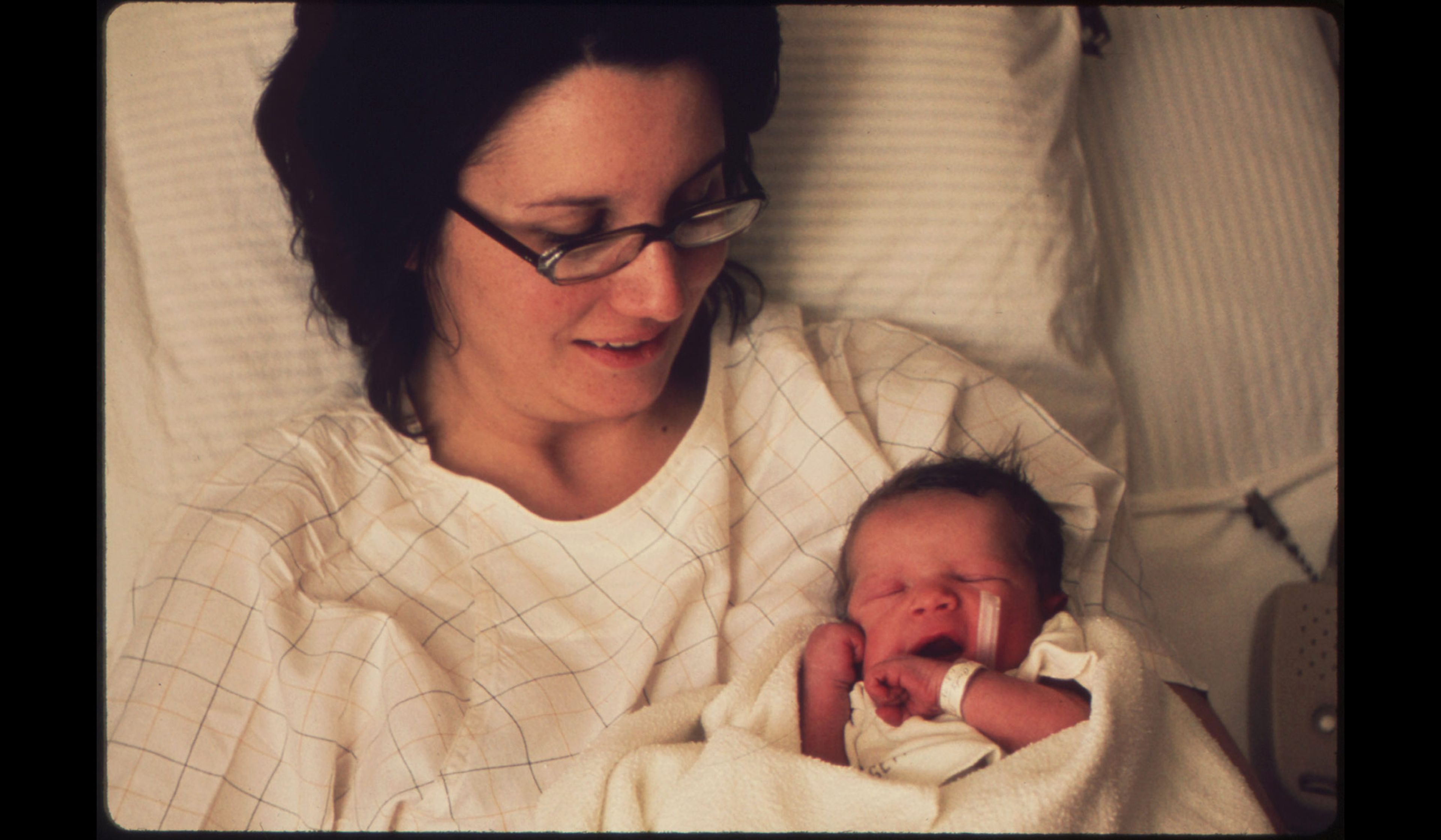





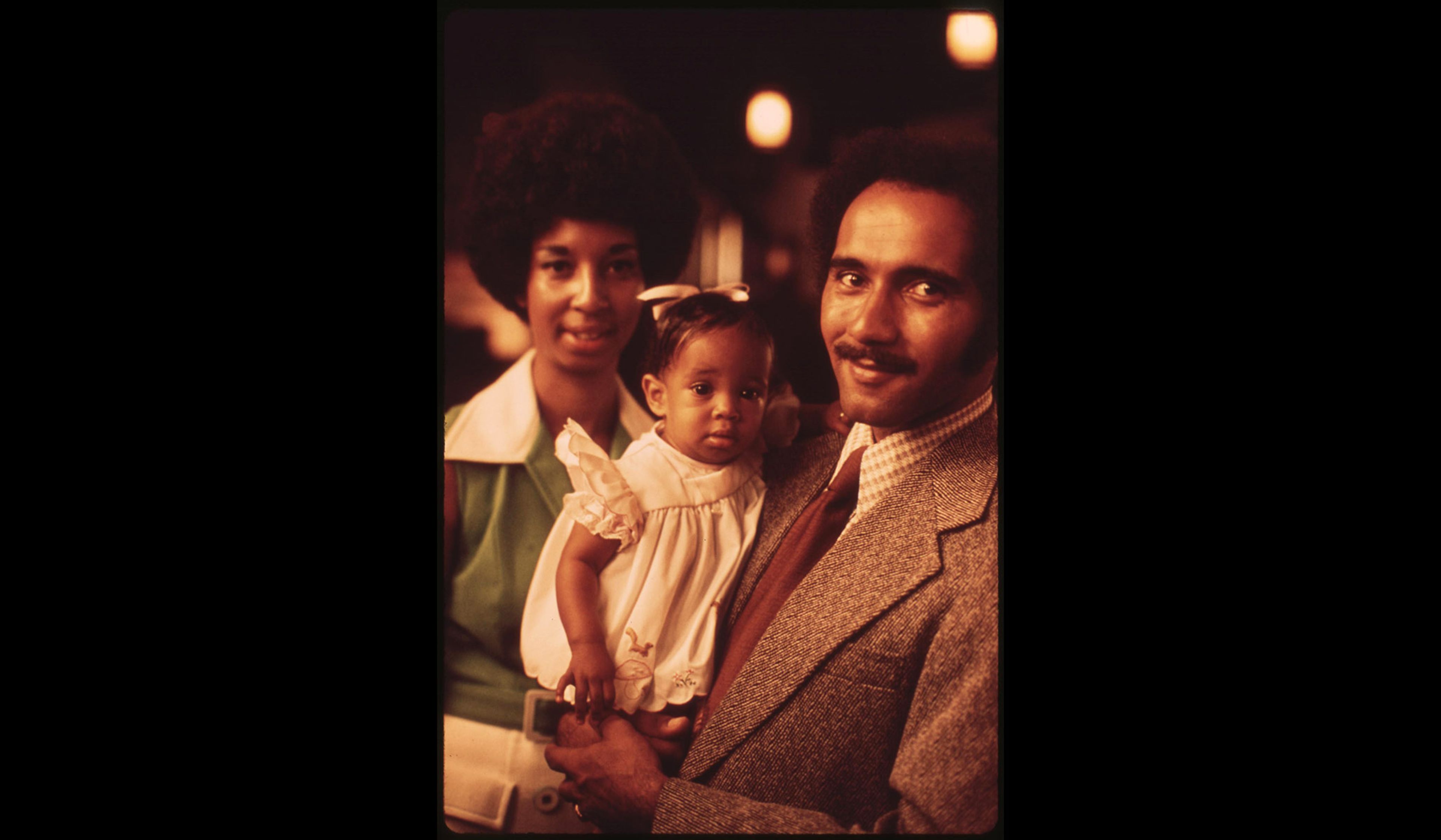


The first baby of the new year at Calgget Hospital in Garfield County, Colo., January 1973.
David Hiser/DOCUMERICA/National Archives
Immigration is impossible for demographers to forecast accurately because it is driven primarily by political and economic forces, not demographic regularities. With a badly broken if not positively shambolic immigration process and a sharply polarized polity, the politics of immigration in America could become even more contentious than they already are. The Biden administration’s witless posture on immigration — its maddening insouciance about our southern border and stubborn lack of concern about illegal entrants — seems almost designed to provoke anti-immigration outrage. Notwithstanding our self-image as a famously welcoming society, America has shut down immigration in the past. We relaxed our severe inter-war immigration restrictions only in the 1960s. Properly conducted, immigration has much to offer America, today and tomorrow, but given current realities, a cascade of self-defeating political blunders to sabotage such an outcome cannot be ruled out. Such a fiasco would only hasten our rendezvous with population decline — and such a failure would in itself set an ominous portent for all the other preparations required to deal with aging and population stagnation.
This leads us to the final, the most important, and in some ways the most mysterious of demographic questions bearing on U.S. population decline: the future of American family formation and birth patterns.
In recent years, the proposition that government action can catalyze a revitalization of the American family and redress our country’s present birth slump has been gaining intellectual and political attention. Conservatives in particular seem to place their hopes on the notion of conjuring a demographic stimulus in America from pro-natal policies. There is irony here, for illusions about social policy tend to be a disorder of the Left, while the cultural and political Right usually tends to be more realistic about the limits, and unintended consequences, of social experiments.
Sociologists and economists have devoted a century and more of study to the determinants and predictors of fertility. That work could fill a modest library (maybe even a CD-ROM). Yet it is surprisingly inconclusive. In the words of social historian Charles Tilly, “the problem is we have too many explanations which are plausible in general terms, which contradict each other to some degree, and which fail to fit some significant part of the facts.”
That said, the single best predictor for national fertility rates happens to be wanted family size as reported by women. It is not a perfect predictor, but it works very well both across countries and across time — far better than income, education, status of women, contraceptive access, or the myriad other variables that social scientists have examined.
In one sense this is a reassuring, even heartening, finding; it highlights the agency at the heart of our very humanity. But that tight correspondence between desired and achieved levels of national fertility does not look promising for proponents of pro-natal policy. If actual childbearing patterns are tethered to preexisting intentions and preferences, financial incentives to boost birth rates are likely to be costly and to elicit only modest — and perhaps fleeting — demographic results. And this is precisely what an unsentimental reading of the record of pro-natal polices in the post-war world might tell us (though such policies continue to attract convinced and un-dissuadable believers abroad).
Singapore’s efforts to boost birth rates, for instance, left the country with a 2019 total fertility rate of 1.14 births per woman — about 45 percent below replacement. Perhaps the Singaporeans didn’t try (or spend) hard enough? In Sweden, a perennial laboratory for family policy, demographers coined the term “roller coaster fertility”: Following each new baby benefit, they discovered, Swedish birth rates go up but then go back down to where they were before, or even below. Those financial incentives could change decisions about birth timing, but not necessarily about birth totals. The story is similar for the Kremlin’s highly vaunted 250,000-ruble baby bonuses for second and third children: Russian Federation fertility rates did rise temporarily but by 2019 were back to 2008 levels, when the program started. In an unexpected twist of fate, such additional net births as Putin’s program did “purchase” were more likely to be Chechens, or other disfavored minorities for whom a quarter million rubles looked like a lot of money. For any flat baby bonus will tend to be most attractive to parents with the lowest educations and incomes, whereas a baby bonus that equalized for “opportunity costs” of childbearing across the income scale would be impracticably regressive.
For the same reason that baby bonuses abroad have yielded such modest results, those interested in understanding America’s ongoing fertility slide — U.S. TFRs fell by almost 20 percent between 2007 and 2019 — might want to focus more on mentality than on money.
Begin with the obvious. The Millennials, who today occupy the prime childbearing space in America’s population pyramid, are of a markedly different mindset from that of their Boomer parents. Their lived experience is in a very different America. People under 40 do not have much memory of the America with a vibrant, private-sector-driven economy. They came of age during a strange historical run of unusually poor political leadership — from Clinton to Biden they have arguably known only substandard presidencies, red and blue alike. Theirs is an America where public confidence in the nation’s basic institutions has undergone a gruesome and wholesale slide. And that is just the beginning of the litany of differences. Do we wonder that Millennials’ expectations and desires about family and children might be diverging from those of their “Morning in America” parents?
In the early 2000s, when U.S. fertility was still roughly at replacement, I coined the term “American demographic exceptionalism.” Back then, fertility in the United States was distinctively higher than in Europe, Japan, and virtually all other affluent democratic societies. Noneconomic factors looked to figure prominently in that birth differential: values, attitudes, priorities. Religiosity was far more pervasive in the U.S. than in post-Christian Europe. The U.S.–European fertility gap also tracked with other attitudinal differences. Americans tended to be more optimistic about the future, prouder of their country, more willing to defend it or fight for it. All these of course were general popular responses rather than questions just for would-be mothers, but general social attitudes and norms have a bearing on personal choices for all of us.
Europe provides a case study in how a sea change in values can lead to a sea change in demography. Back in the 1980s, after most of Western Europe had gone sub-replacement, two Flemish demographers diagnosed what they identified as a “second demographic transition” in the region. The symptoms of this new demographic order included rising cohabitation and serial partnerships in the place of marriage, increasing childlessness, declining family size for those who did bear children, and a shift to more or less permanent sub-replacement fertility. In their diagnosis, this fundamental social change was driven by a transformation of values, not technological or economic trends. In their assessment, the new demography of Europe was powered by a quest for “self-actualization,” for “personal autonomy.” Old family forms and fertility patterns did not square terribly well with these new and widely accepted personal imperatives, and so they gave way.
Over the past two decades, the worldview of American youth and younger adults has become much more European. Religiosity has plunged: In a Gallup poll earlier this year, just 36 percent of Millennials said they belonged to any religious congregation. Optimism about the future, pride in their country, and willingness to defend it are all likewise reportedly on the wane, moving closer to European norms. Should it surprise that their fertility patterns are doing the same? And initial indications suggest that an even greater departure from the “Morning in America” worldview may lie in store with the younger, rising cohort of “Zoomers.” Should this persist, downward pressure on U.S. fertility could well continue to build as Zoomers enter prime childbearing ages.
Which leads us to the problem with any pro-natalism worth the name. If we permit the nonmaterial realm of life to figure in our inquiry of U.S. fertility prospects, we may conclude that proposals to revive the American birth rate through pecuniary family policy vastly underestimate the challenge they wish to address. That challenge may ultimately prove to be civilizational in nature. An ironic, self-actualizing, post-American-exceptionalism United States, both demoralized and de-moralized, would seem an unlikely candidate for replacement-level fertility. Nor is it easy to imagine the scale and scope of the baby bribes that would have to be dangled in such a place to forestall sub-replacement fertility.
At this point we must ask: What is so bad about sub-replacement fertility, anyway? In the abstract, prolonged sub-replacement fertility could have its benefits — friends of the earth would point to climate change and a need to lessen the human footprint. Further, if it is a revealed preference, family size — large or small — is the natural right for the parents in question, no one else. And as already detailed, it should be perfectly possible for a shrinking society to prosper financially.
Yet there is at least one potentially serious objection to the prospect of a steep sub-replacement fertility regimen in America, and this is the moral and ideological baggage that such a birth regimen is likely to drag along with it. Pessimism, hesitance, dependence, self-indulgence, resentment, and division: Do we really think there will be less of these in a 1.5-child America?
Further, would a “second demographic transition” America really be willing to make the incessant patriotic sacrifices requisite to defend itself and its allies, or to preserve the post-war liberal economic and political order upon which our prosperity and security so greatly depend? For better or worse, there is no understudy waiting in the wings if the U.S. should leave the geopolitical stage and take a holiday from history — thanks in no small part to the influence the second demographic transition has already exerted on former great powers.
The civilizational undertow now drawing Western societies into ever-deeper sub-replacement is not inevitable. Israel provides proof to the contrary. There, an affluent and embattled Western democracy reports fertility levels well above replacement — at latest reading, three births per woman. Moreover, Israel’s birth levels have risen over the past generation, from an already above-replacement 2.9 TFR in the 1990s. The upswing is due entirely to Israeli Jewry; birth levels have been falling among Israeli Arabs. Israel’s ultra-Orthodox faithful are famously fecund, but as a matter of arithmetic, the general rise in Israeli fertility seems to entail higher fertility for less observant Jews, too. Perhaps it would be crude and simplistic to say that Israelis want their country to have a future, and want their descendants to be part of it — but then again, such a reading might not be all that far off base.
The Israeli experiment would reward much greater attention from demographers, and not only those with pro-natal inclinations. For all their affinities, the U.S. and Israel will always have very different societies. But America has a rich religious heritage as well. Part of that tradition is the Great Awakenings witnessed now and again.
Our amazingly resilient society has been revitalized more than once before — and not by government. Spontaneous, intellectually and spiritually disruptive ferment from within civil society might offer a homegrown American answer to the culture of “second demographic transition.” Might. This would be a tall order, one beyond our capacities to anticipate if it should indeed arrive.
In the meantime, concerned students of American demography should be unflinching in their pursuit of accuracy — about both the civilizational forces that lead to modern demographic decline and the limited but nonetheless important tools we possess for addressing its consequences in our nation.












Comments