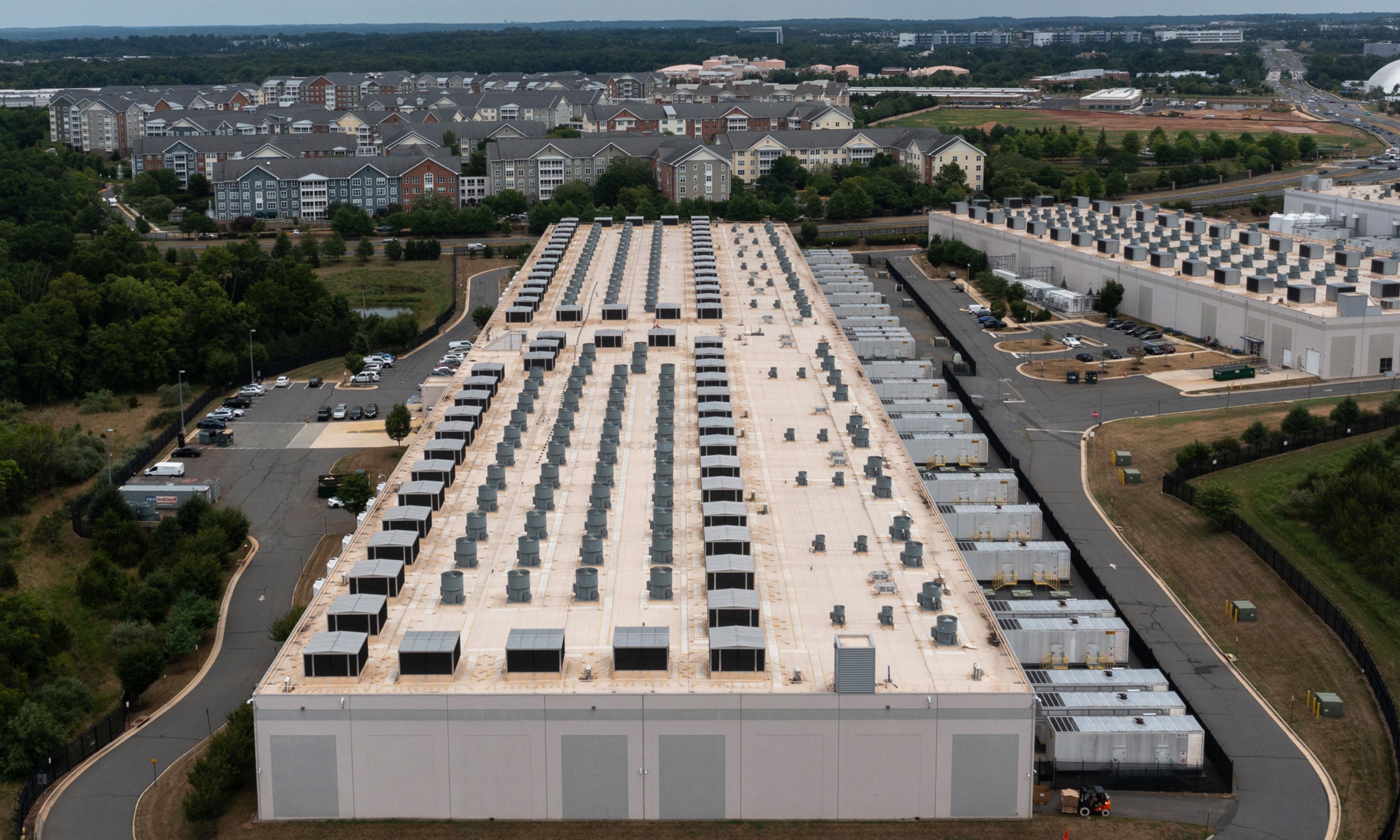
We are in the midst of a passionate debate over the desirability of “data centers.” Thus far, this debate has been stained by a profusion of silliness, superstition, and cynicism. But more than anything else, it has been notable for its profound tardiness. In 2026, data centers are such an inextricable part of American life that to discuss whether they are welcome is the equivalent of agonizing over what we think of this newfangled “television” thing. The public, we are told, has become anti–data center. If so, it is upset by the “center” rather than the “data” part of that equation, for whether they know it or not, Americans now rely on data centers in much the same way as they rely on their lungs. In every moment of every day, data centers are humming away behind the scenes, making the modern world possible. In 1973, Arthur C. Clarke suggested that “any sufficiently advanced technology is indistinguishable from magic.” Were he writing today, he might have gone further: once that “magic” technology has been widely adopted, wonder can turn to contempt.
Certainly, we wildly underestimate the extent to which we rely on data centers. Take my actions today. This morning, I sat down with my coffee and looked through National Review’s website. To get there, I typed “nationalreview.com” into my browser, and before I’d even hit “Enter,” my computer used a data center to look up where that site was located on the web. Once that location had been discovered, my browser then contacted the website via its primary IP address — which, in the case of a popular site such as National Review, meant a digital “visit” to whichever one of the many “proxy” data centers happened to be geographically closest to me. After a secure connection to that data center had been established, my browser then started assembling the text, images, videos, podcasts, fonts, scripts, advertisements, and other elements that made up the page I hoped to see. Because this involved all manner of different content types — some cached, some dynamic, some streaming — and required the use of application servers, database servers, and distributed content-delivery networks, it invariably required trips to multiple data centers, all playing different roles. Thus, before I had read a single word, my computer had been served 150 web requests, across 34 domains, having contacted roughly ten data centers spread across networks operated by nine different companies. Because everything worked as it should have, this process was invisible. But that doesn’t mean it wasn’t happening. Without seeing it, I had taken a remarkable journey around the world.











Comments