
Once upon a time, education was how politicians courted the middle. From the late 1980s through the middle of the Obama years, in the era of soccer moms and NASCAR dads, education policy was where Democrats showed that they cared about personal responsibility and Republicans that they were serious about equal opportunity. In a post–Cold War era of tech-fueled prosperity, education was a kitchen-table issue that spoke to shared values and aspirations.
That’s decidedly not the case today. And that’s okay. Indeed, while today’s polarized politics are troubling on many counts, they offer a chance to start getting education right.
For close to three decades, the Reagan-era report A Nation at Risk framed the issue of education. It was a matter of national security, and on topics such as standards, testing, teacher evaluation, and charter schooling, there wasn’t much daylight between education reformers on the left and those on the right.
In 1988, George H. W. Bush pledged to be the “education president” as part of his commitment to a “kinder, gentler” conservatism. Four years later, education was integral to Bill Clinton’s “New Democrat” persona as he jettisoned Walter Mondale’s tax-and-spend vocabulary in favor of a promise to expand opportunity for those who “work hard and play by the rules.” In office, Clinton embraced charter schools and school uniforms in lieu of grand societal critiques and ambitious spending plans.
In 2000, when education took on unprecedented salience in issue polling, George W. Bush’s bona fides on Texas school reform became the cornerstone of his “compassionate conservatism.” In office, he partnered with Democratic senator Ted Kennedy to pass the No Child Left Behind Act, supersizing Washington’s footprint in schooling and boosting federal school spending at a historic rate. When Barack Obama claimed the White House in 2008, his education agenda was, in many ways, an extension of Bush’s. Obama embraced charter schools, fought with the teachers’ unions, and pushed teacher evaluation and new data systems (and more spending) through his “Race to the Top” initiative.
The result of all this was a sense that education is a naturally centrist issue. There was a strong whiff of early-20th-century progressivism’s insistence that there was no Democratic or Republican way to run a school.
Well, things have changed. Today, there’s little interest in courting the middle. And that has had profound consequences for schooling.
This shift was presaged by the Common Core fight that exploded during the Obama years. Back then, the education-“reform” community got behind federal reading and math standards, with the Obama administration, establishment Republicans, the teachers’ unions, and major funders all rowing together. State adoption of the standards — often by way of barely noted state-board votes — was pushed by Obama education officials eager to manipulate every lever at their disposal.
Resistance to Common Core standards was thus relegated to the fringes and the nonprofessionals. It fell to the likes of comedian Louis C.K., a passel of Indiana moms, and a handful of ornery academics to raise hard questions about the program. By the time that some of the more disconcerting elements of the Common Core became well known (such as its “conceptual” math worksheets), membership in the bipartisan-school-reform club was contingent on one’s willingness to dismiss the critics as tinfoil-hat-wearing know-nothings.
Laid bare were divides that had long been covered over, prompting a burst of overdue introspection about the state of the education alliance. As one of us observed in the pages of National Review a decade ago, school-reform “bipartisanship” had long demanded far more of the Right than of the Left: Conservatives “accepted a massive increase in federal authority, an expansion of race-conscious accountability systems, and a prohibition on talk of parental responsibility” while their progressive allies had only to temper “their demands for new public programs” and agree not “to accuse their conservative allies of bigotry.”
But by the end of the Obama era, progressive reformers seemed positively thrilled to brand Republicans as racists and no longer were willing to rein in spending.
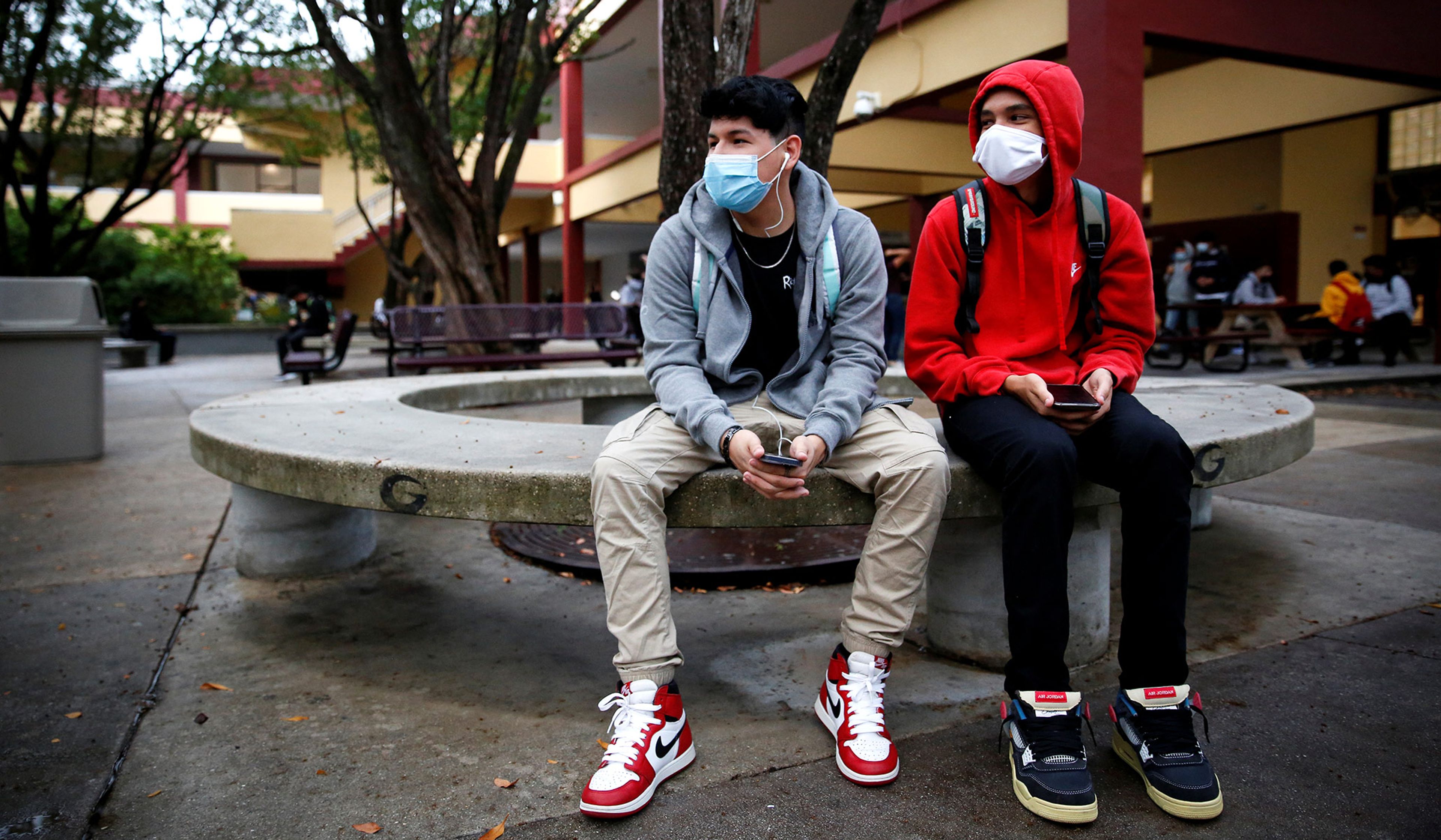

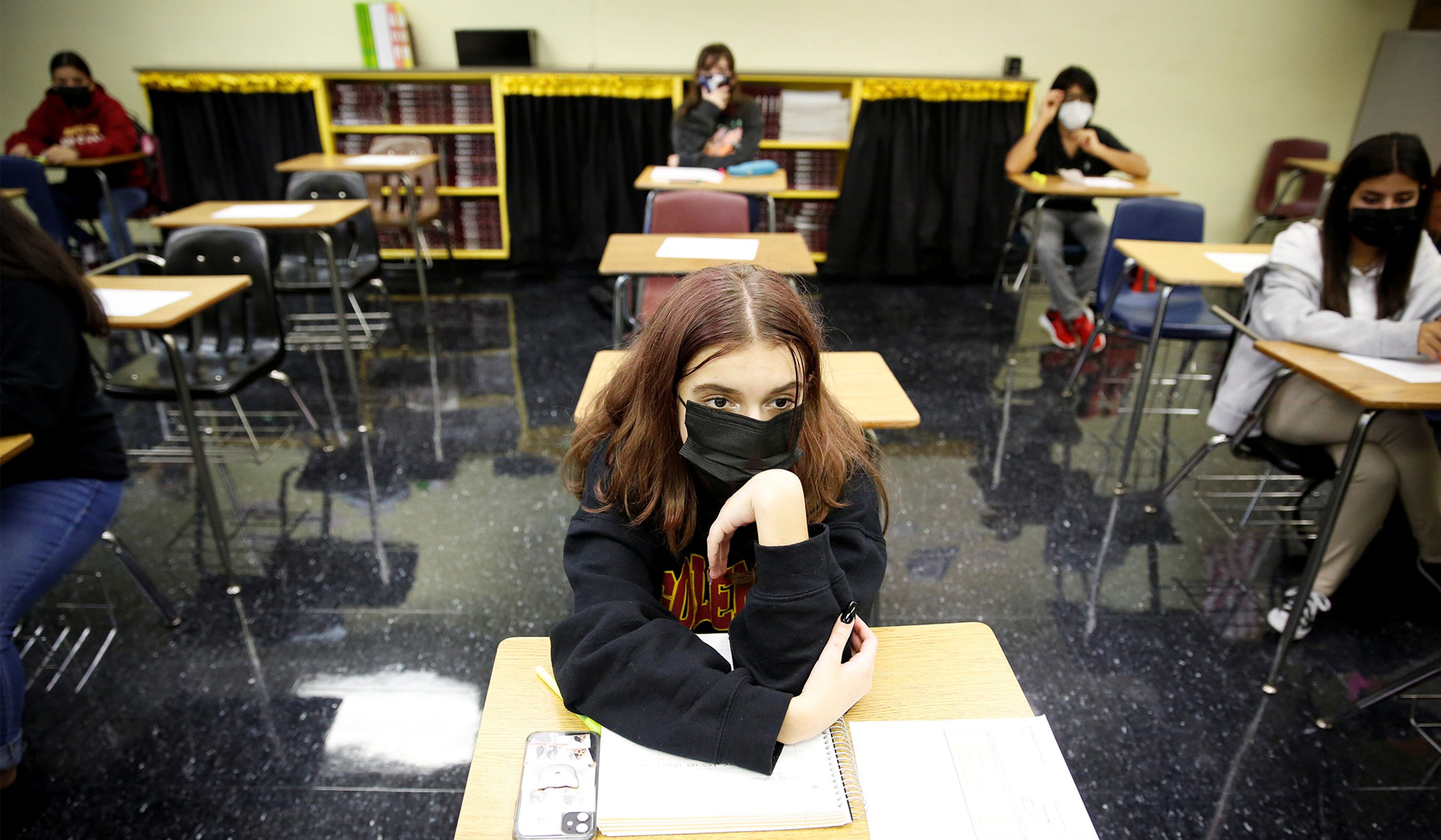
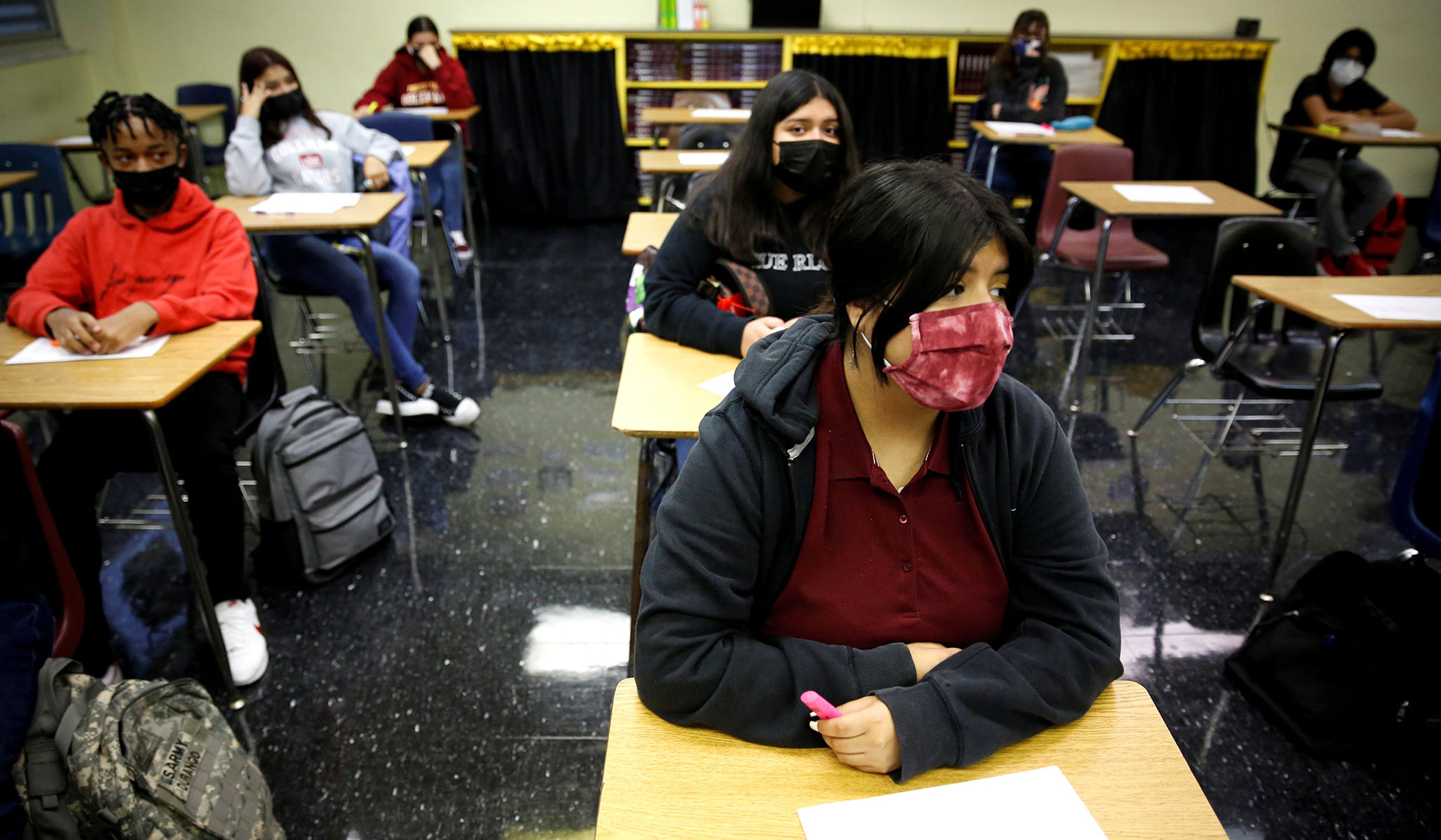
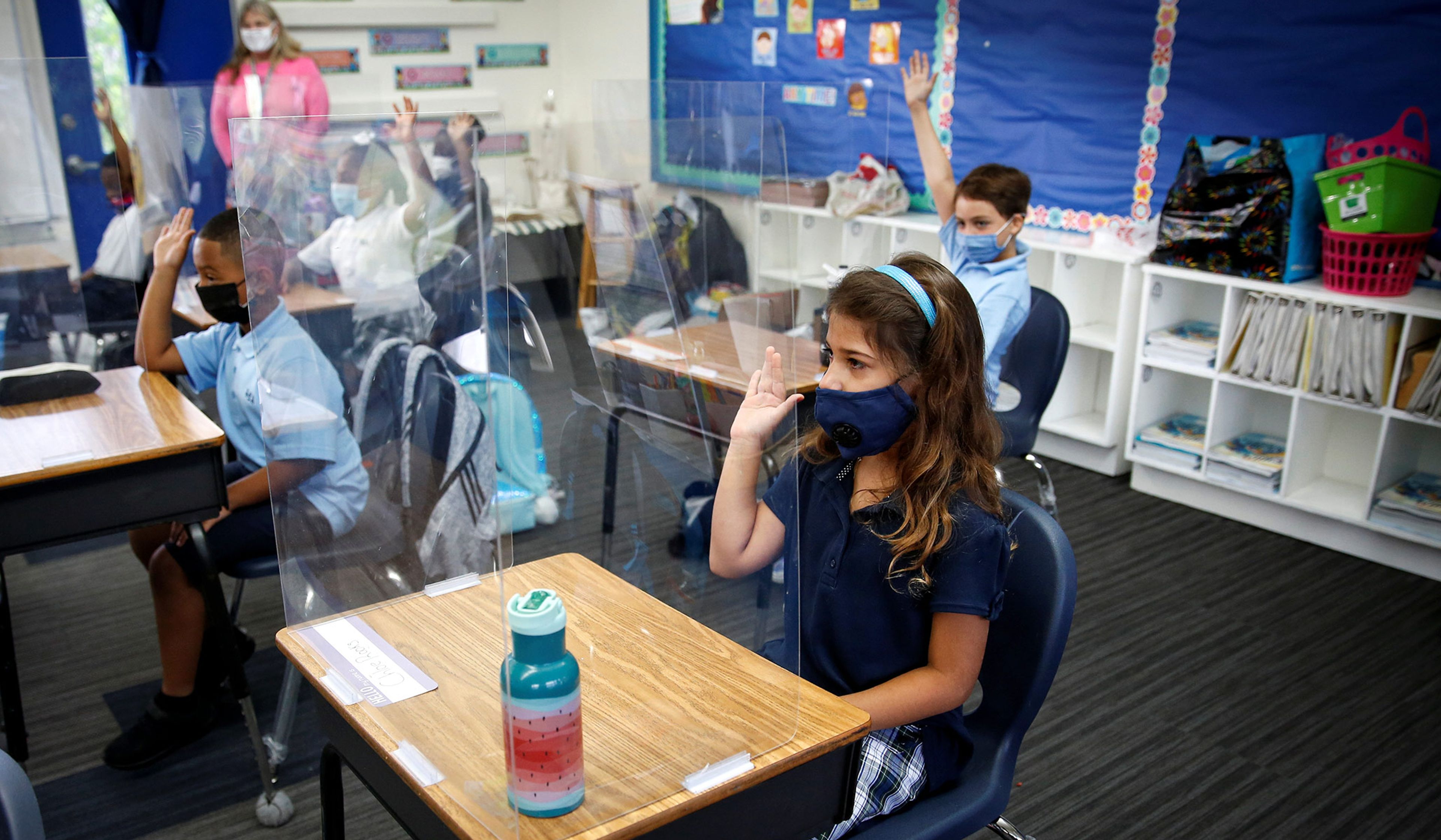

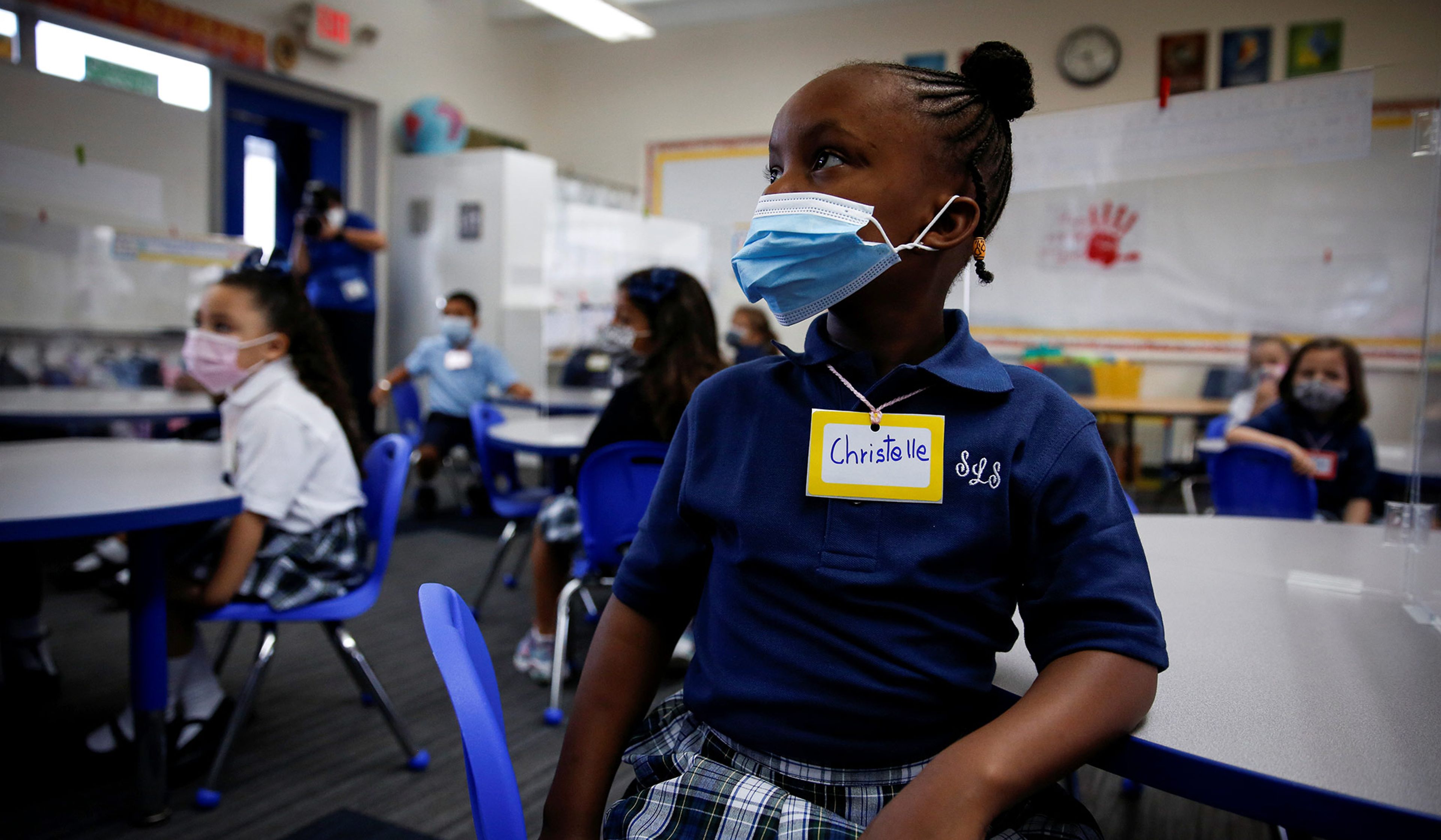
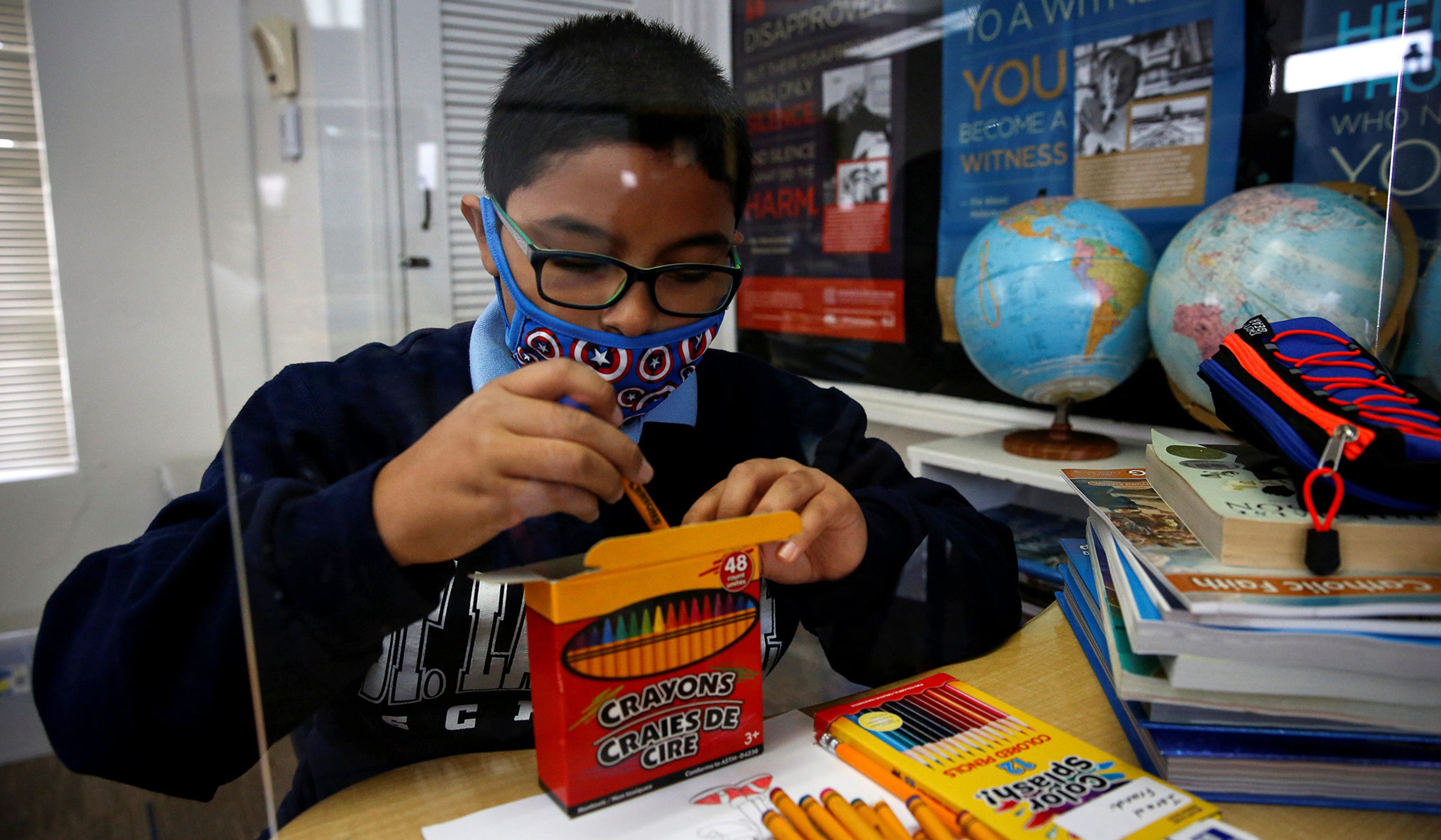

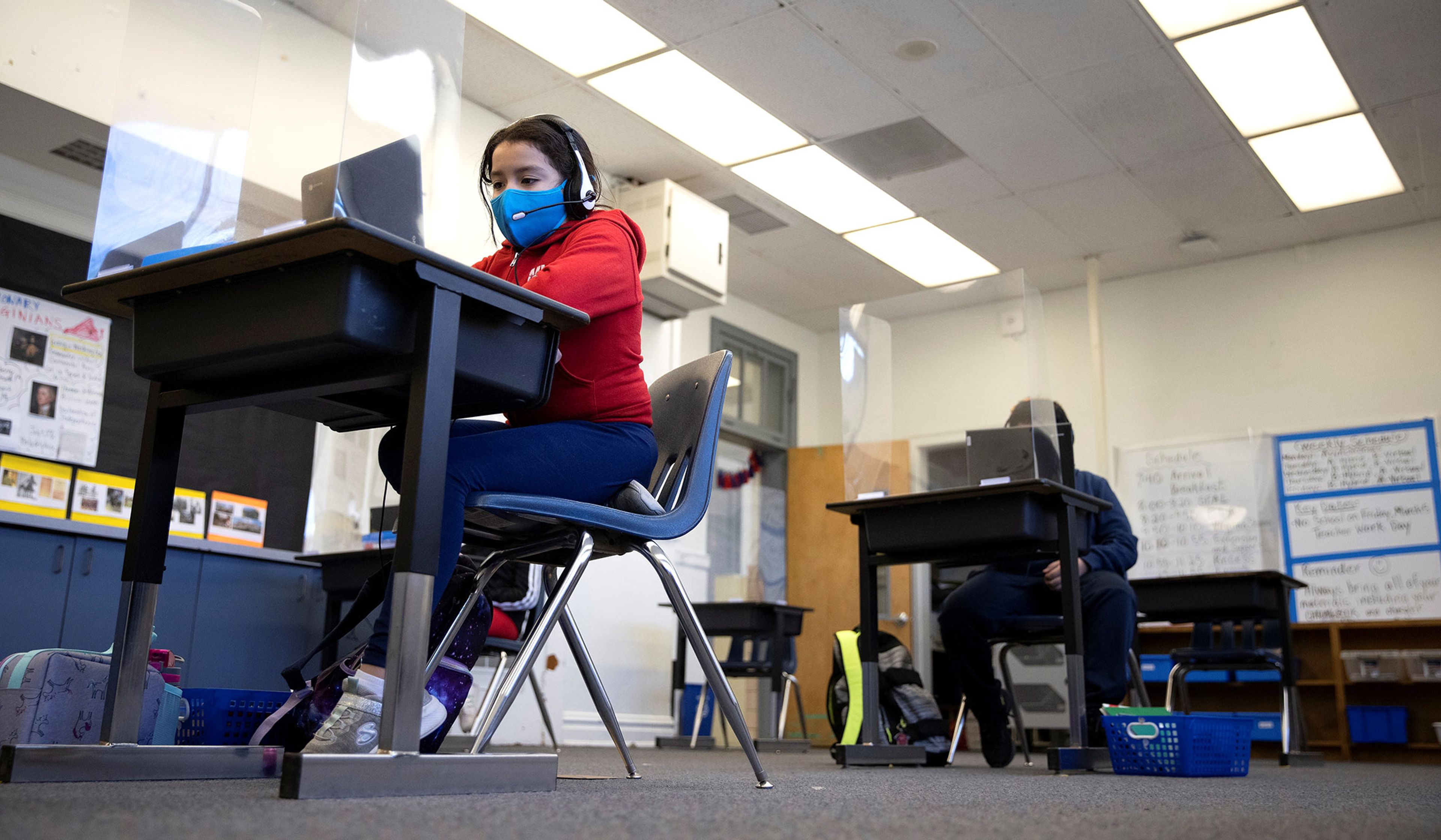
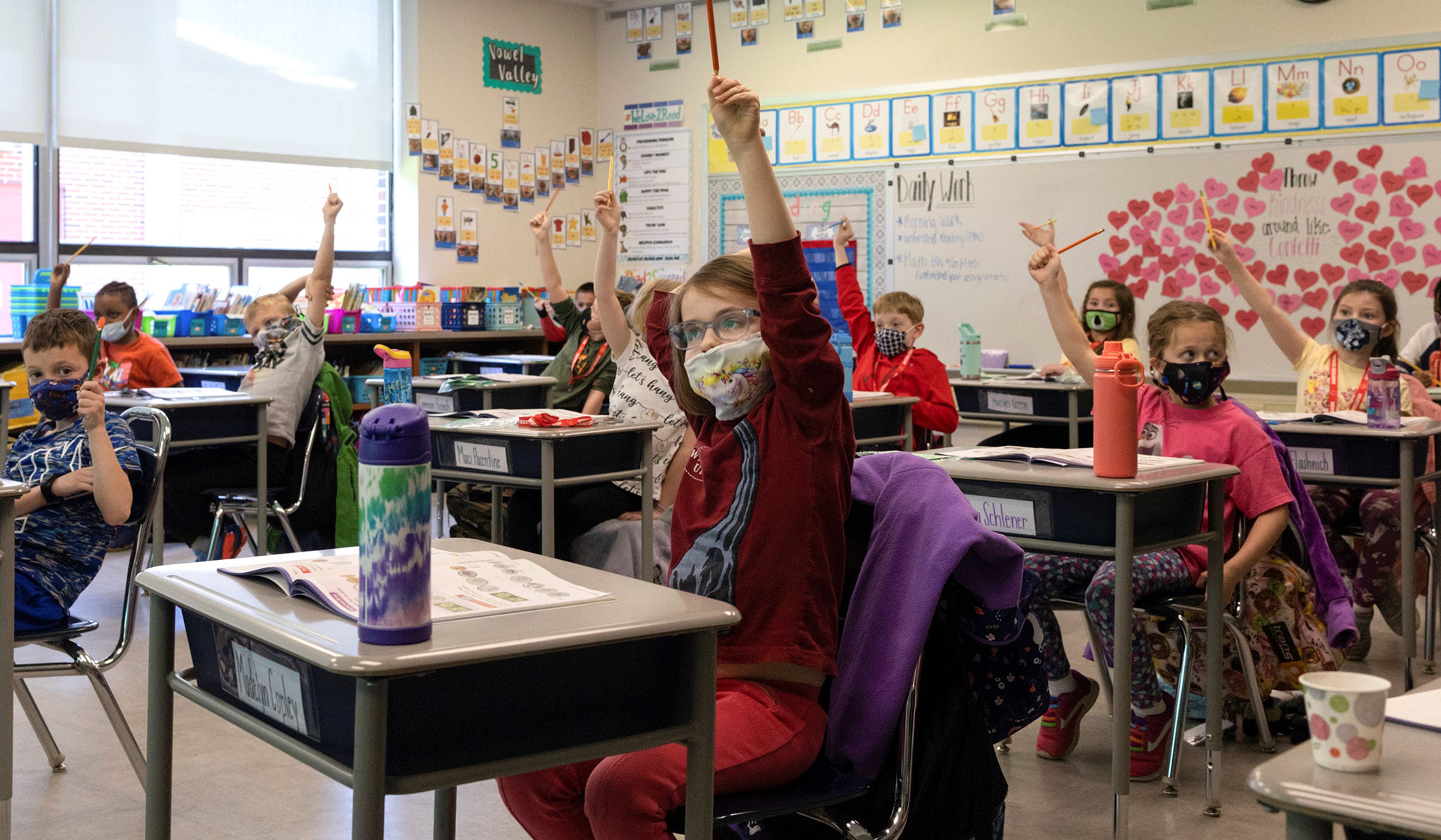

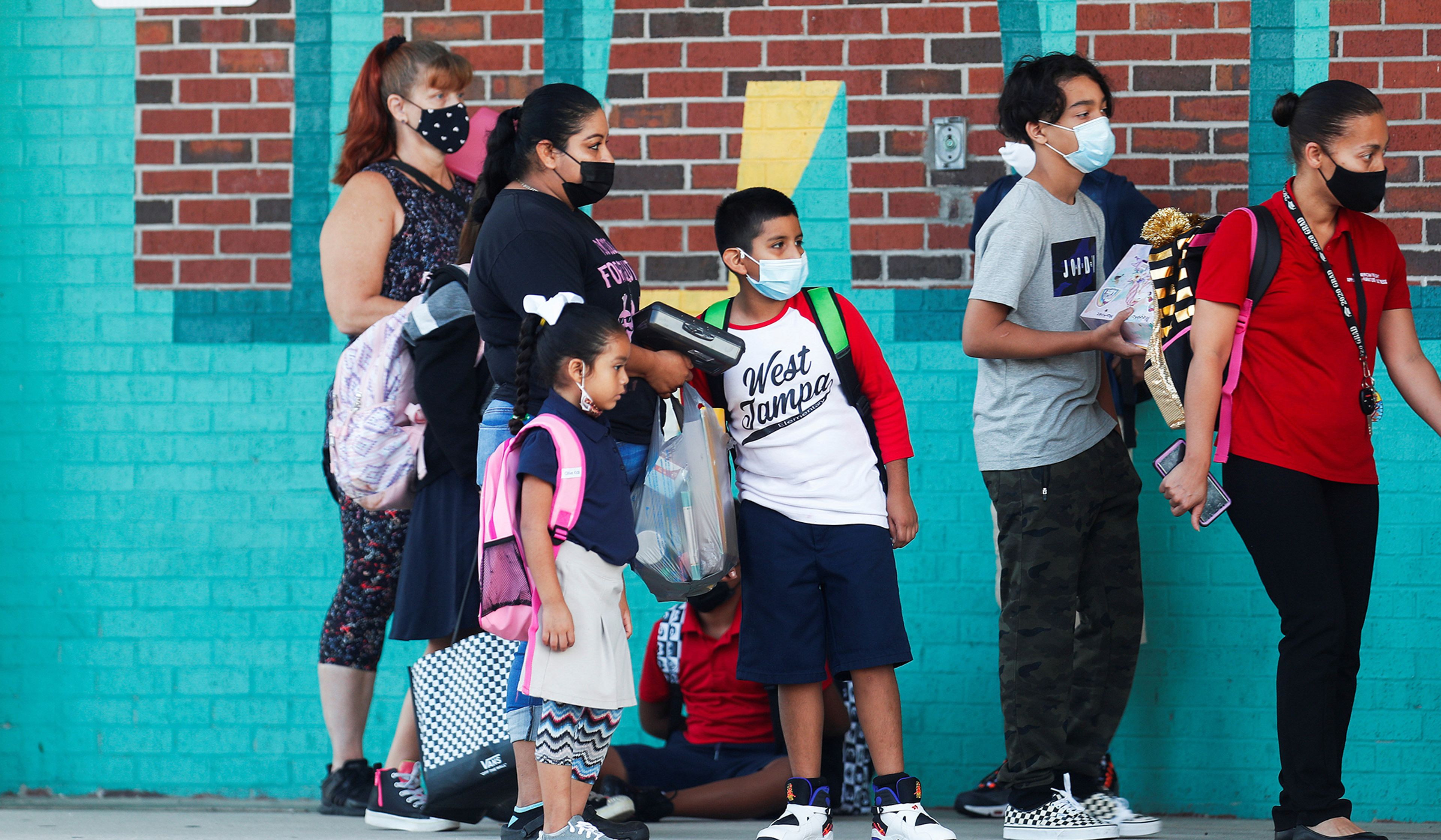
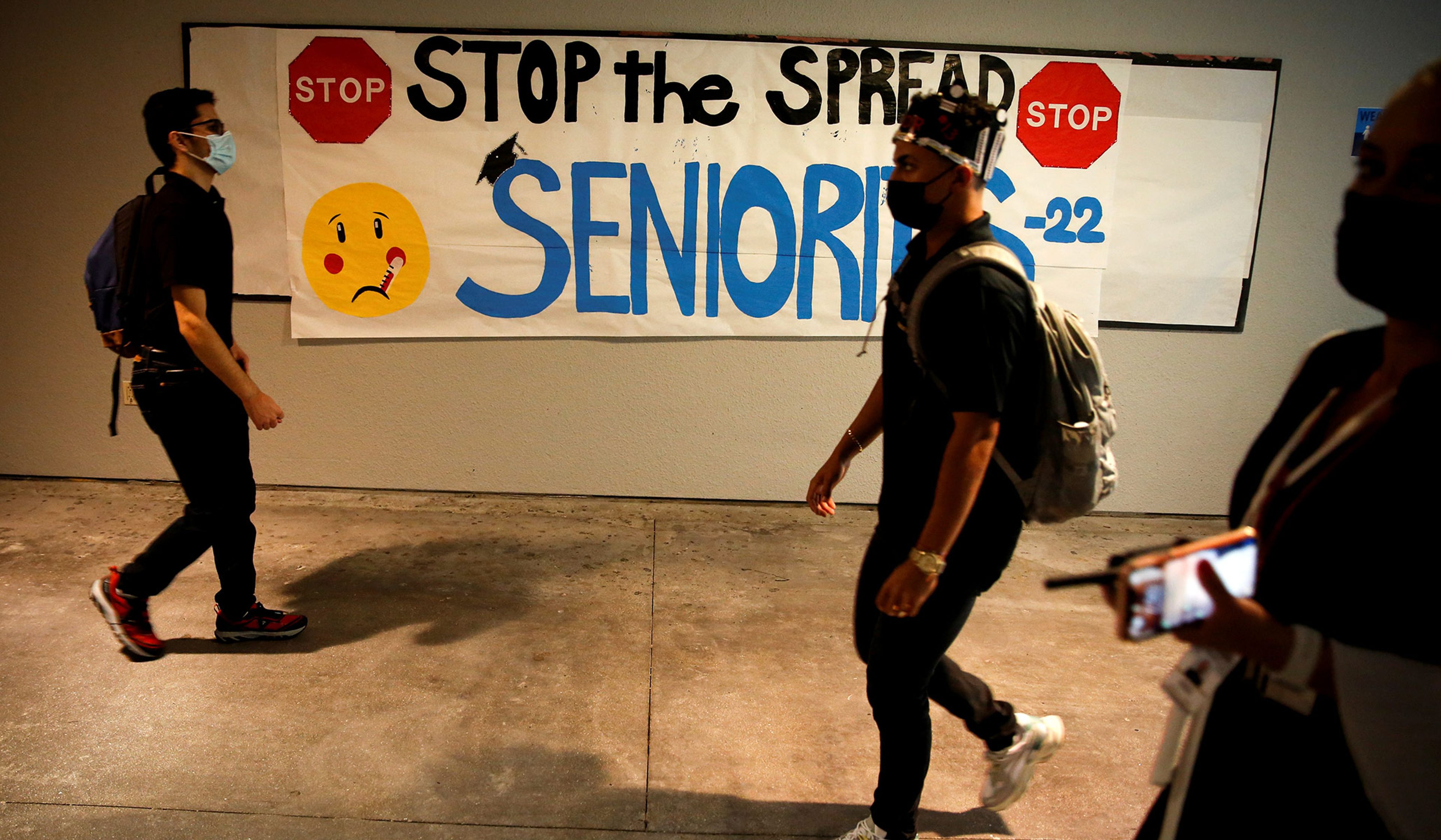


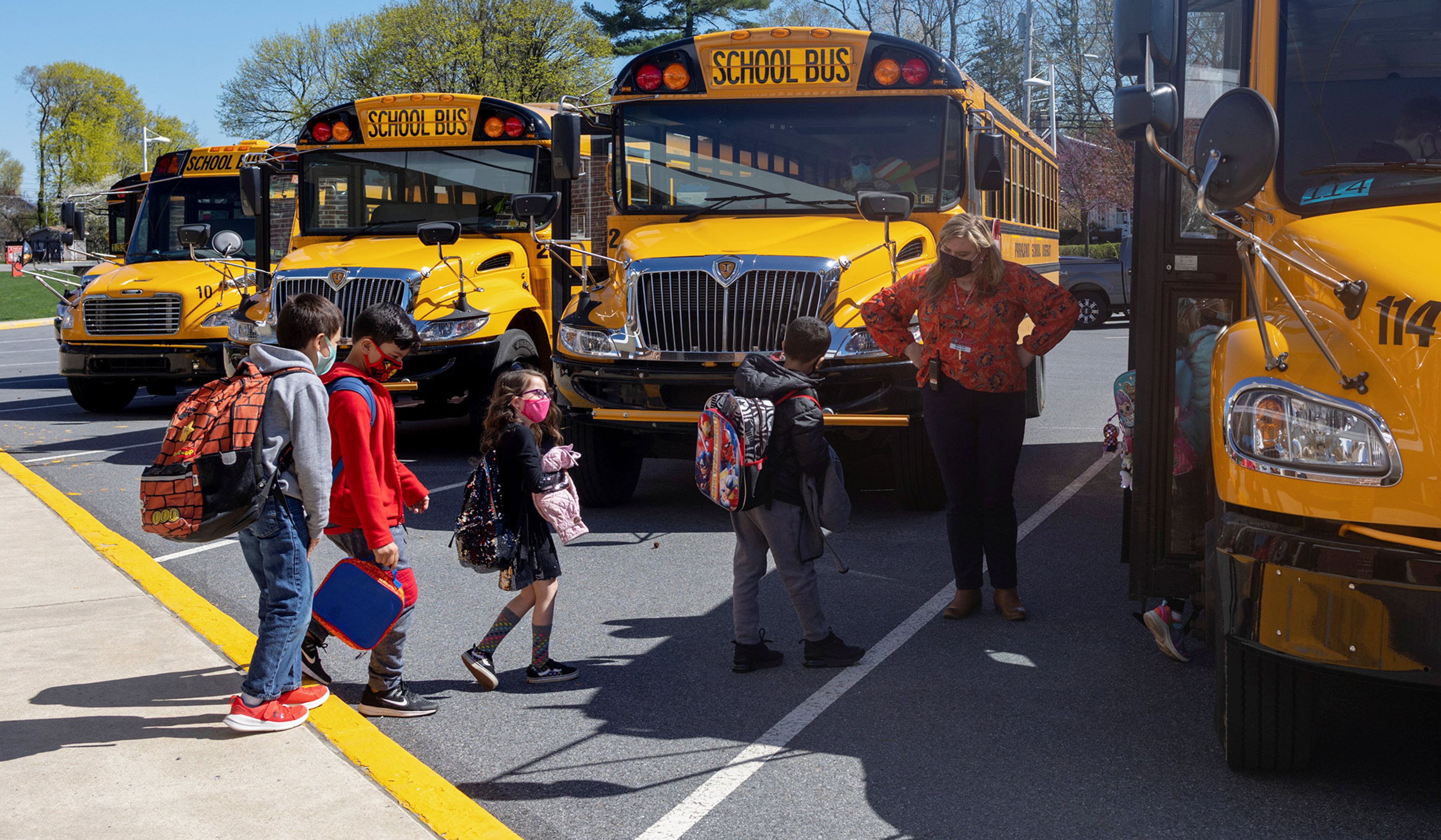
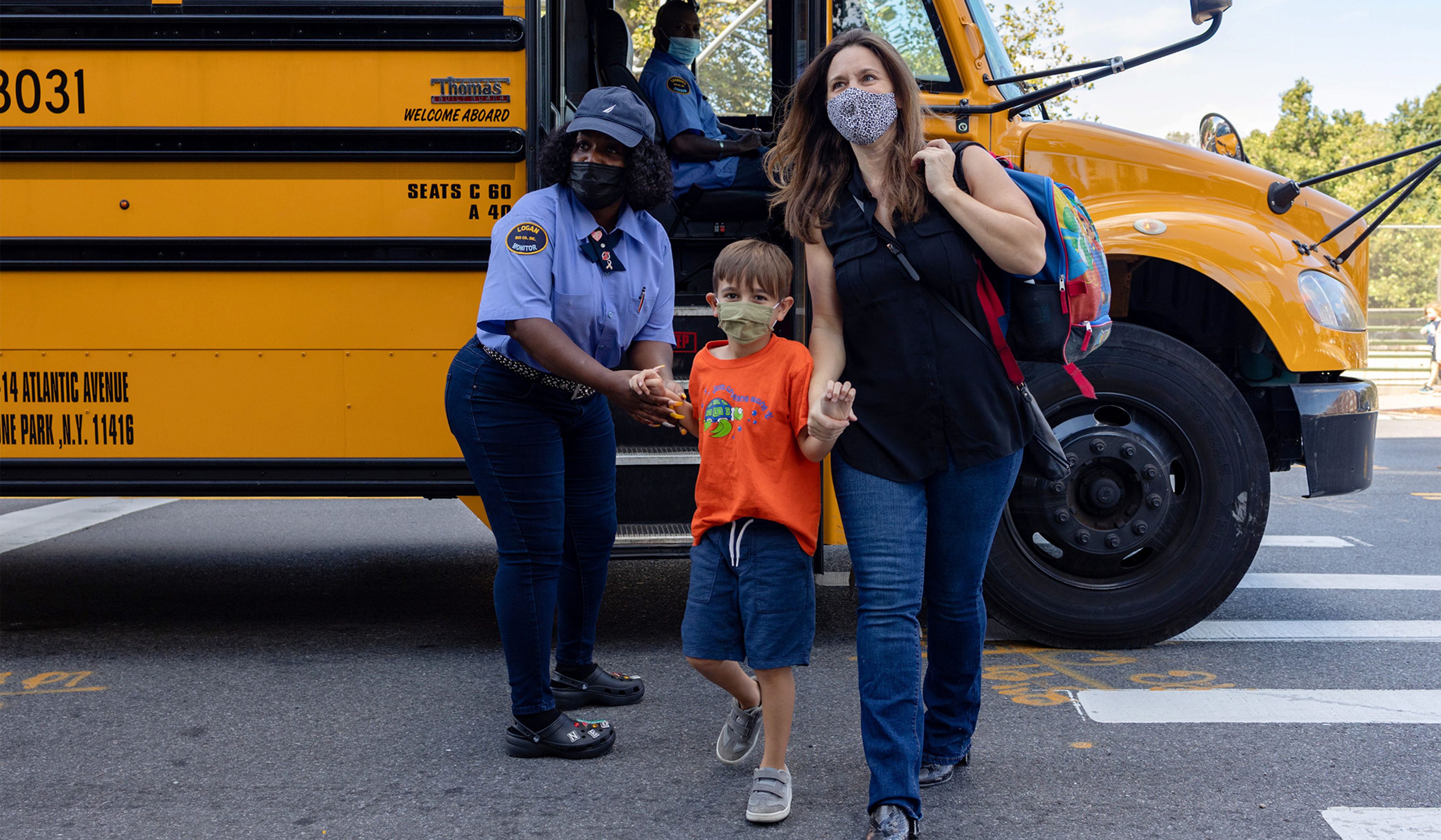

Students wearing protective masks arrive for classes on the first day of school in Miami-Dade County amid the coronavirus pandemic at Barbara Goleman Senior High School in Miami, Fla., August 23, 2021.
Marco Bello/Reuters
Hillary Clinton, in her 2016 presidential campaign, renounced her old “school reform” stylings and instead cozied up to the teachers’ unions, attacked charter schools, and called for big new federal outlays on pre-K and college. Four years later, in 2020, candidate Joe Biden unveiled his education platform at a town hall organized by the American Federation of Teachers. Biden promised to triple federal school spending but with none of the overbearing attention to results that characterized the Obama years. Once in office, Biden catered to his progressive base, embracing DEI, pushing student-loan “forgiveness,” and, in the name of equity, resurrecting second-term Obama attacks on school discipline. Meanwhile, after the appearance of Black Lives Matter in 2014 (a movement whose original organizers included Teach for America members), progressive reformers grew increasingly infatuated with the dogma of “antiracism.”
A mirror-image dynamic has been seen on the right. In 2016, the Trump education agenda amounted to little more than enthusiasm for school choice and hostility to the Common Core. In 2020, when there was no official Republican platform, Trump had little to offer other than hyperbolic jabs at school closures and woke excesses. This go-round, Trump has campaigned on shuttering the U.S. Department of Education, called for defunding woke schools and programs, and proposed a hefty college-endowment tax to finance a federally operated online college.
Little of what Trump and Biden offer the electorate today is likely to reassure centrists or win new voters. They are mostly stoking their bases. That’s because value-neutral meritocratic concerns (such as the need for standardized testing) have less traction in a political environment where tribalism runs high while schools and colleges have taken center stage in raging public debates about gender, race, and identity.
Where does that leave us? For one thing, it suggests that education reformers eager to resurrect the Bush-Obama model are likely to come up disappointed. The old alliance flourished in the political context of stronger parties, less polarization, and more institutional trust. This made it easier for elected officials to cooperate without fear of getting primaried. Today, except in very red or very blue states, it’s just a lot harder to legislate.
It’s also now clearer that, as noted above, the old bipartisanship wasn’t all that good a deal for the Right. It was born of the Right’s crisis of confidence. The GOP spent the 1990s getting battered on education as the issue gained political importance. Conservatives leaped at opportunities to ally themselves with cool center-left groups such as Teach for America, charter-school entrepreneurs, and achievement-minded urban superintendents. But these new allies were centrist only in the sense that they cared about improving outcomes for low-income and minority students. Otherwise, they expected conservatives to accommodate their technocratic and cultural sensibilities.
What now? While the Right’s reformers have racked up some impressive state-level wins in the past few years — on race and gender issues and reading instruction — they may be hitting a ceiling. Their wins have been concentrated in red states, and they haven’t done much to forge a coalition that can triumph in purple states or go national. And even the wins have too often been accompanied by stumbles in rhetoric, statutory language, and implementation.
Pandemic frustration and broken trust have fueled an appetite for education choice and for new models of K–12 and college education. Justified skepticism of education “experts” has curbed the appetite for bureaucratic solutions. And progressive activism in public schools has alienated huge swaths of traditional-minded Democrats and independents. All of this has created a landscape in which a new coalition can form around empowering parents, challenging top-down dictates, and defending shared values — even if it is not the old Bush-Obama bipartisanship. Such a coalition should adopt four principles.
First, it’s time to embrace shared values unapologetically. The bipartisan coalition sought to tiptoe around value questions. Today, by lopsided margins, the public leans right on hot-button cultural disputes concerning race, gender, and American history. Outrage impresarios lean into these fights, spewing audience-pleasing rhetoric that seems almost calculated to alienate normal people. Shared values should instead lead to thoughtful discussion and practical solutions. Traditional disciplinary norms can help restore order to chaotic classrooms, a commitment to free inquiry can counter campus groupthink, and a return to rigor can address out-of-control grade inflation.
Second, take on the education cartels. The field is rife with self-serving rackets: teacher-licensure requirements, college accreditation, sweetheart union contracts, and more. Busting up these arrangements makes room for more-promising models and new allies. Education choice is the classic illustration: Seventy percent of parents (including hefty majorities of black and Latino parents) support school vouchers and education savings accounts. Reforms such as tackling administrative bloat, cutting red tape, and ending DEI fiefdoms in K–12 and higher education have won broad support.
Third, pay more attention to substance and less to bureaucratic machinery. For a long time, conservatives focused on questions of accountability, federalism, and statutory constraints while leaving textbooks and classroom instruction to a progressive blob of professors, diversity consultants, teacher trainers, foundation staff, and curriculum writers. In a familiar one-way ratchet, progressive officials established new mandates and programs, and conservatives spent their tenures struggling to undo what had been done. Today’s reformers should take a page from Governor Ron DeSantis in Florida and lean aggressively into their oversight roles on matters such as board appointments, curricular standards, and guidelines for textbook adoption.
Finally, fiscal stewardship is crucial. For decades, conservatives wore the green eyeshades even as it became painfully clear that there was little appetite for reducing top-line education outlays. And when it comes to teacher pay or funding the Department of Education, even Republicans generally oppose cuts. A more promising path is to hold the line on spending while shifting dollars to priorities such as education choice and phonics-based reading instruction. Rather than funnel dollars into union-friendly step-and-lane pay scales or hefty pensions, we should pay teachers according to performance, workload, and skill set.
The new landscape of education politics offers an extraordinary opportunity to reimagine education reform. To make the most of it, conservatives should reject both the performative teeth-gnashing of the current opinion-monger caste and the zero-calorie stylings of the old bipartisanship in favor of something principled, practical, and promising.













Comments