Culture war is a metaphor so powerful that we tend to forget it is a metaphor. Our attitudes toward it are analogous to our attitudes toward actual war: Some are hawks, who lean into the fight, and others are doves, who don’t like fighting and would prefer to see it go away.
As Carl Trueman points out in his important new book Strange New World, culture-war hawks get the better of this argument: “Once one side in the cultural conflict politicizes an institution, the other side has no choice but to respond in kind.” Culture war is unavoidable; you may not be interested in it, but it is interested in you.
Surprisingly, Trueman’s writing in Strange New World is not at all polemical. It is a model of what it means to engage in the culture war while remembering that it is metaphorical.
The territory of culture is not hills and valleys but hearts and minds. To gain ground in such a conflict is to change what people think, even to make converts. Polemics rarely convert anyone, however useful they may be for stirring up one’s friends. To gain ground in the culture war, it pays to deploy a less familiar tactic, which one might call the art of intellectual espionage.
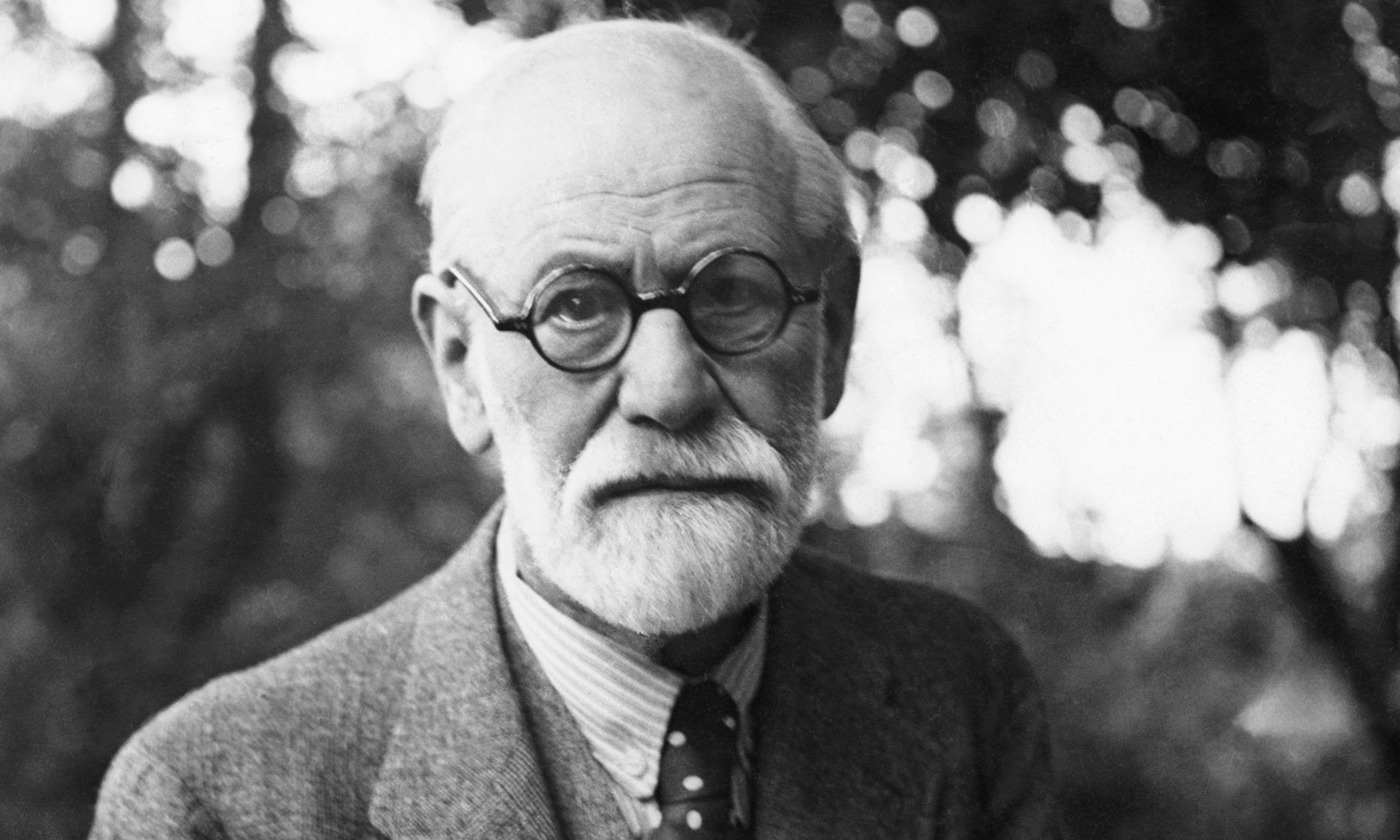
In Strange New World, Trueman — an ordained minister in the Orthodox Presbyterian Church and a political conservative — does his work in opposition territory. He considers the ideas of a long line of thinkers with whom he does not agree: Descartes and Rousseau, Marx and Nietzsche, Sigmund Freud and Wilhelm Reich. In the work of those thinkers, he examines the deepest sources of the worldview of those who have advanced the sexual revolution, politicized education, art, and entertainment, and are now taking aim at freedom of speech and religious liberty.
The core of this worldview is the belief in the modern self. Modern people take a historically distinctive interest in what we call the “real me” or the “true self.” We hold that each of us possesses “a unique core of feeling and intuition,” as Robert Bellah has put it.
Seeing ourselves as selves gives rise to “expressive individualism”: the desire to manifest publicly the inner sentiments we take to be our own authentic core. Trueman begins his story of the rise of the self and its longing for self-expression with Jean-Jacques Rousseau, the greatest apostle of the pure, uncorrupted voice of inner nature. Rousseau taught us to identify happiness with sentimental self-satisfaction, and named society as the inner self’s perpetual corrupter. Oppression, unhappiness, and inauthenticity all arise from our relations with other people.
Other thinkers have contributed major, if sometimes discordant, elements to the vision of the self and the world that is presently remaking our culture. Marx taught us to see religion as false consciousness and a mask of oppression. He encouraged the hope that technological advance might liberate us from the natural limitations that undergird social hierarchy, such as the distinction between male and female at the root of the patriarchal family. Nietzsche taught us that we had killed God, that we could cleanse ourselves from the resulting guilt only by becoming gods in our turn, and that the fitting task for divine beings like us is unfettered self-creation — the more transgressive, the better.
From Freud, we learned that the most important of the feelings that constitute the inner self are sexual feelings, and thereby to identify the self with sexual desire. From Wilhelm Reich, a member of Freud’s circle whose encouragement of child sex was too radical for Freud himself, we learned that “sexual codes must be shattered if human beings are to be truly free.”
By tracing this intellectual history, Trueman helps us understand why American principles once thought sacrosanct, such as the freedom of speech and the freedom of religion, are undergoing serious tests. If the self is feeling, and happiness is a psychological state of self-satisfaction, then words that hurt our feelings and interrupt our self-contentment are a real harm — and even the most ardent free-speech advocates have always conceded that harmful speech may be legitimately restricted. If religion is properly understood as a mythological excuse for criminal oppression, why should it have rights?
Trueman tells this story without animus, entering sympathetically into the minds of thinkers whose vision he ultimately rejects. At the same time, he burrows deeper into the source code of the modern Left than do many leftists, whose interest in and understanding of the past narrows daily.
But even as Trueman shows how the Left’s positions in the culture war are the logical consequences of basic presuppositions about the modern self that can seem unquestionable to many, he also shows how that self emerged from a contingent, at times dubious, history that has left it rife with contradictions. For example, the self sometimes claims to seek liberty from society for the sake of pure nature, and at other times claims that humanity’s liberation from nature should be our ultimate goal.
Most importantly, Trueman tallies up the cost of the modern self’s efforts to liberate itself. In spite of our freedom and affluence, Trueman notes, the modern West endures “catastrophic levels of depression and anxiety.” “We do not know who we are anymore,” he writes, and “freedom without belonging is a grim burden to bear.”
One can imagine a young person, not quite sure which way is up in this strange new world of ours, finding in Trueman’s book the most powerful kind of warning, which calmly demonstrates the questionable origins, inner contradictions, and profound unhappiness lurking behind what the philosopher Charles Taylor calls our “social imaginary.” Such a young person might go in search of a different, better account of who we are and how we should live.
Every young mind Trueman touches in this way might be understood as so much territory liberated in the war over our culture. But if such freedom is not reinforced with a better sense of human direction and belonging, it will feel impossibly weighty. To lighten that weight, Trueman encourages the Christians who are the primary audience of his book to offer the young “another culture,” a “loving community” rooted in “a true vision of what it means to be a human being made in the image of God.”
For all his intellectual espionage, Trueman knows that the best weapon in the culture war is not a weapon at all, but true Christian charity. To win our culture’s battles is not to own the libs, but to touch hearts, change minds, and save souls.












Comments