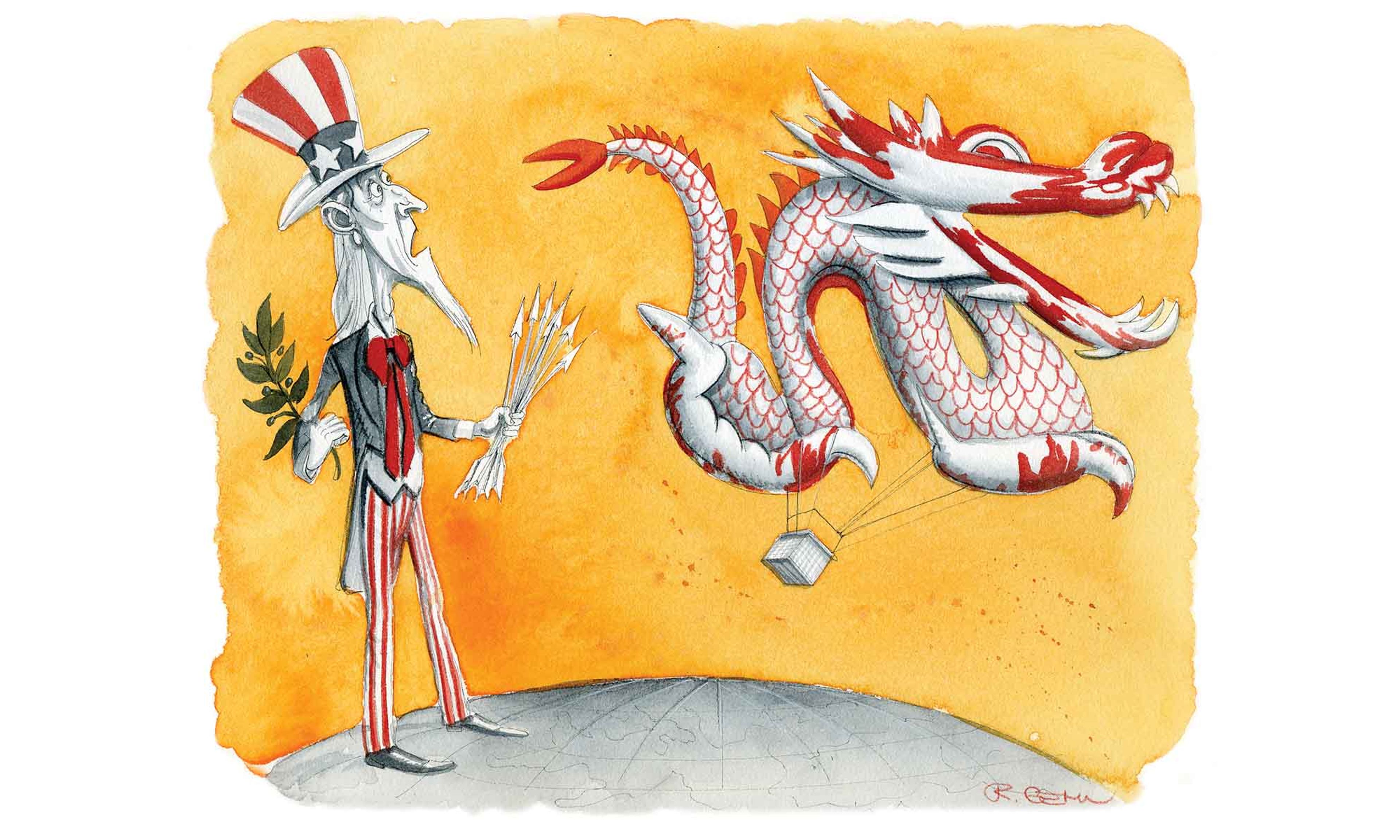
My fellow Americans, tonight I want to talk to you about the great foreign-policy challenge of our time — our strategy to contend with an increasingly ambitious and bellicose China. I speak to you to explain our approach to this challenge in ways that encompass and bring together many different efforts across our government and our country.
Over the past few decades, American strategy toward the People’s Republic of China has been all over the map, both literally and figuratively. On the one hand, in some places our interactions with China are oriented toward confrontation. If you were to look only at our geopolitical and military rivalry with China in East Asia, you might conclude that we are in a cold war with China that could well turn hot — mostly over territorial disputes in the region. On the other hand, our economic dealings with China are generally focused on cooperation and integration, especially in the commercial sphere. China is our third-largest trading partner and by far the largest exporter of goods to the United States. Our countries are economically intertwined in a very comprehensive way.
Some American corporations, sports leagues, and Hollywood studios go further than that and bend over backwards to accommodate the Chinese government’s demands to control speech and economic activity. This is disappointing. Conversely, nongovernmental organizations and the parts of our government that are concerned with human rights and religious freedom rightly condemn China as one of the most oppressive regimes on the planet today. In other areas, ranging from technology to espionage to cyber warfare to asserting global influence, we say that China is a competitor, but we have no comprehensive plan to compete across these and other spheres.
We respond to things — haphazardly at times, as we have done with the Chinese spy balloons over our country — but our responses are piecemeal and not tied in with a unified strategy. These disjointed moves happen when they happen, often coming out in little dribbles of policy: a new military approach here, a new export-control rule there, a regulatory change from one or another government agency, a tariff or investment or trade restriction, a congressional hearing on this or that topic. Many of our actions are not in congruence with each other, so the total effect is limited at best. This incoherence in our approach to the rivalry with China strengthens its position and weakens ours. I want to correct that fundamental flaw in our grand strategy.
Tonight I will give you the outlines of a comprehensive new American strategy toward China — not just a list of new policies, but a vision that does not seesaw between confrontation and belligerence, on the one hand, and value-neutral cooperation and accommodation on the other. Rather, the strategy will be integrated, with all the various elements supporting each other, based on a renewal of competitiveness in all manifestations of American power.
Let me state clearly that while this strategy is a very muscular upgrade of some of our previous approaches, I am not seeking a new cold war with China, let alone a hot one. I am not even letting my staff use the term “cold war,” because the strategic circumstances are very different from those of our rivalry with the Soviet Union.
Still, the best way to peacefully manage our relationship with an increasingly aggressive China is to do so from a position of renewed American strength on multiple fronts — strengths that will deter China’s militarism, deny China the economic and technological leverage over the U.S. that it intends to use against our interests, blunt China’s campaign on the world stage to deconstruct the international order built by the world’s democracies, and, over time, show China that moderation is its best path to a cooperative relationship with the U.S. and its allies.
As my earliest predecessor in this office, George Washington, said: “If we desire to secure peace, . . . it must be known, that we are at all times ready for war.” It is in that spirit that I speak to you tonight about my objective of the peaceful management of our increasingly tense relationship with China. I am clear-eyed about the expansionist, authoritarian, and repressive nature of the Chinese Communist regime, which has acted in so much bad faith and aggression while openly announcing grand designs to limit or decrease American power. Opposing it will require unquestioned strength and resolve on our part.
I am unapologetic and unabashed in basing all my foreign-policy positions on the presumption of American leadership in the world — muscular, confident leadership, not imprudent or reckless adventurism. We have failed over the past few decades to find the balance here. Americans were discouraged by the inconclusive results of our long engagements in Iraq and Afghanistan, but since then my three predecessors have sent too many signals of American retrenchment — so-called leading from behind — and been too swayed by a presumption that American leadership is resented.
I reject that view. As the failure of deterrence and the war in Ukraine have shown, there is a high cost to a lack of American leadership. When revisionist authoritarian powers with boldly announced ambitions are not resisted by the international community, they act. We have seen this with Russia, the Taliban, Iran, and others. Responding to aggression only after the fact is inevitably more expensive than deterring it in the first place.
For the international community to resist that sort of aggression, it needs American leadership. During the primary debates, when my worthy opponents questioned why we should care about the Ukrainian–Russian border when we cannot control our own southern border, you heard my answer: “We will care about both!” Great powers can meet more than one challenge at once. But there is no question that we must relearn the art of deterring adversaries and maintaining credibility, and we cannot do that by sitting at home.
The world will rally around our leadership on China. In Asia our friends and allies are coming closer together already. I certainly welcome the commitments of Japan and Australia to stronger defenses and closer cooperation with the U.S. So too with the Philippines, Indonesia, India, Singapore, Vietnam, and other countries of the region — all working with us in their own ways because of a common worry about China’s ambitions and misbehavior. Even some reluctant members of the European Union that for so long closed their eyes to the malevolent intent of much of China’s strategy are now alert and looking to coordinate their policies with ours.
Now, I know there are still some Americans, including in my party, who want to pull in our horns: reduce military spending, reduce overseas commitments, leave much of the world to its own devices. I understand this instinct in American politics — it has a long heritage. Providence has blessed us with two large oceans and two peaceful neighbors — an extremely unusual position. But those blessings have never been enough to keep us secure, and they certainly will not be so in today’s interconnected world. “Guns versus butter” is a false debate. We are in both the global-security and the domestic-prosperity business, and they are intimately connected.
I am an internationalist because I believe American leadership that fosters international cooperation on our terms produces the best world for U.S. peace and prosperity. Peace through strength, as Ronald Reagan reminded us, is always a good foundation.
Perhaps you are asking, “Why now? What has changed? Why the urgency? We seem to be doing fine. We are not at war with China. The cellphones, the microchips, the batteries, and the inexpensive manufactured goods flow just fine in a global economy that has made the U.S. prosperous and secure.”
You would not be wrong to think of certain snapshots in time this way.But conditions change, and we can no longer take such a snapshot for granted.
For decades, through Republican and Democratic administrations, we hoped that bringing a poor and backward China into the international economic system would help loosen the authoritarian grip of the Chinese Communist Party on the Chinese people. We looked for an increasingly wealthy and middle-class China to moderate its autocratic ways, develop a basic respect for the human rights and political freedom of people both inside and outside its borders, and decline to make military moves that would destabilize the region. But it has become clear that these hopes have been disappointed.
Over the past few decades, but especially over the past ten years of the Xi Jinping regime, China has become more repressive, more destabilizing, more bellicose, and ever more ambitious in its stated policy of supplanting the U.S. as the leading global power.
We have not been blind to this growing danger. I want to congratulate my two most recent predecessors for recognizing it and moving to address it in government statements and policies. The national-security strategies of both presidents noted the many ways that China seeks to undermine the regional stability that is based on U.S. alliances and agreements, and to reinvent the international order on terms favorable to its own authoritarian model and global ambitions. We have not translated that recognition into consistent, coordinated action.
China has infringed the sovereignty of its neighbors; it has made illegal claims to territory outside of its boundaries and solidified those claims with unlawful military facilities and bases. It has pursued an unprecedented military buildup, which it uses to intimidate its neighbors and discourage other powers from thwarting its designs. It seeks to dominate and control areas of the high seas through which much global trade passes, in violation of long-standing laws and traditions of freedom of navigation. China’s illicit collection and use of data worldwide, coupled with its global espionage and influence efforts, is ruthless and comprehensive. As the FBI and allied intelligence agencies have reported, the Chinese espionage campaign to steal intellectual property and infiltrate everything from our universities to our labs to our farmland is wide-ranging and dangerous.
China’s human-rights record, of course, is appalling. The U.S. has already declared that the Chinese government is committing genocide against Uyghur and other Turkic communities in the Xinjiang region, complete with religious suppression, imprisonment, torture, and forced sterilization. Its similar and unabating atrocities in Tibet have long been known. Add to these crimes against humanity its removal of human-rights protections and civil liberties in Hong Kong and its crackdowns on and repression of the general populace under the guise of anti-corruption campaigns or pandemic response.
When it comes to Covid, China has not only been evasive and untruthful about the origins of the disease; it has sought to punish and suppress individuals and entire countries for daring to request a transparent and full accounting. When in 2020 the Australian government called for an independent inquiry into the origins of Covid-19, China responded with an economic embargo, boycotts, restrictions on Australian goods, and other forms of economic warfare — an unprecedented wave of trade restrictions that froze many categories of Australian exports.
But the story doesn’t end there. I can tell you that China has learned something many people already knew — you cannot intimidate or bully an Australian. The Australians did not give in. Instead, they worked around the restrictions and embargo, and while this did cause some economic pain and disruption, the Australian economy was far more resilient than China expected. China has tried similar economic bullying against countries ranging from Canada to Japan to Norway. The tactic does not work, but it is an indicator of how an authoritarian and confident China feels entitled to treat anyone who questions it.



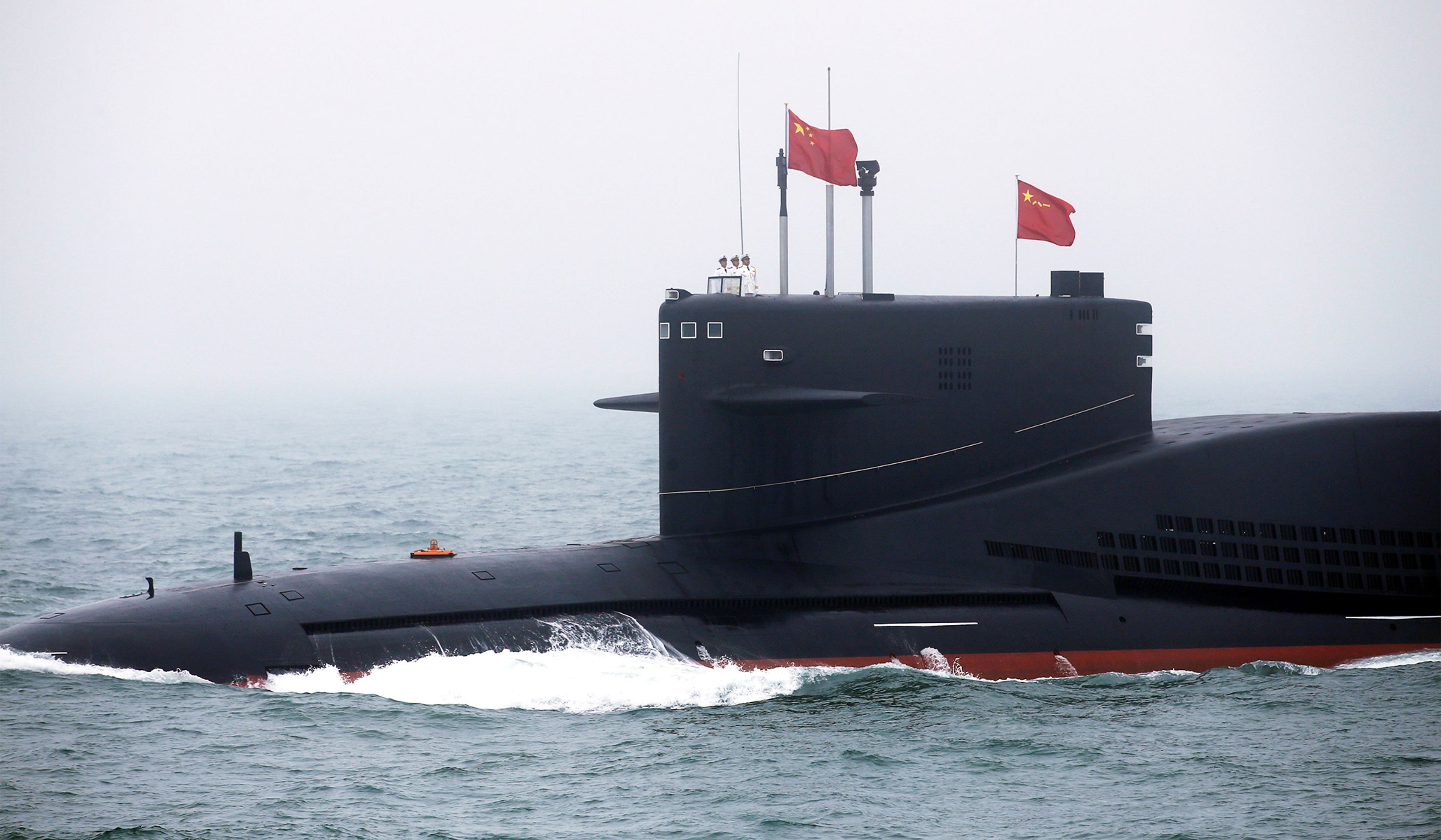
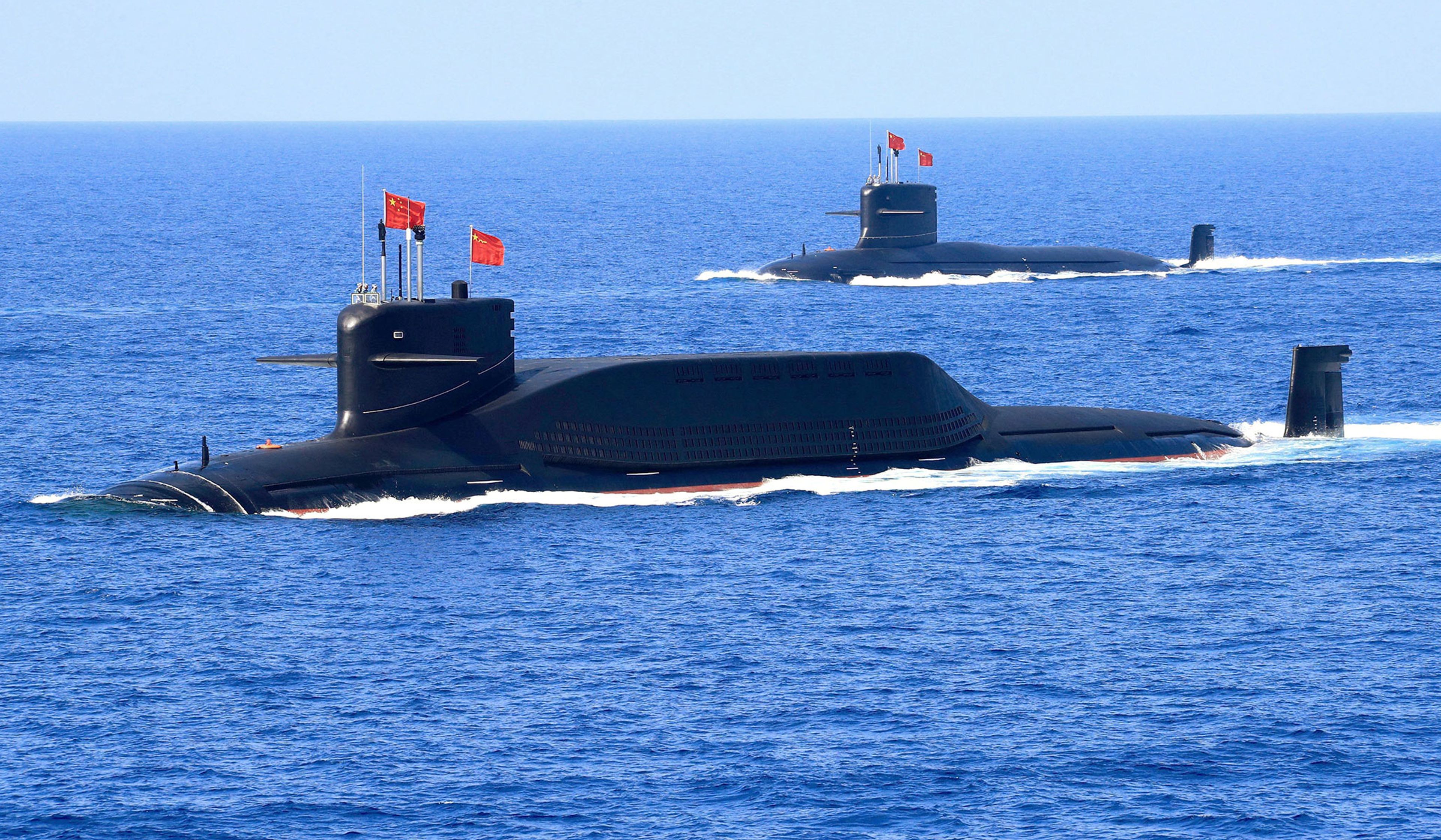


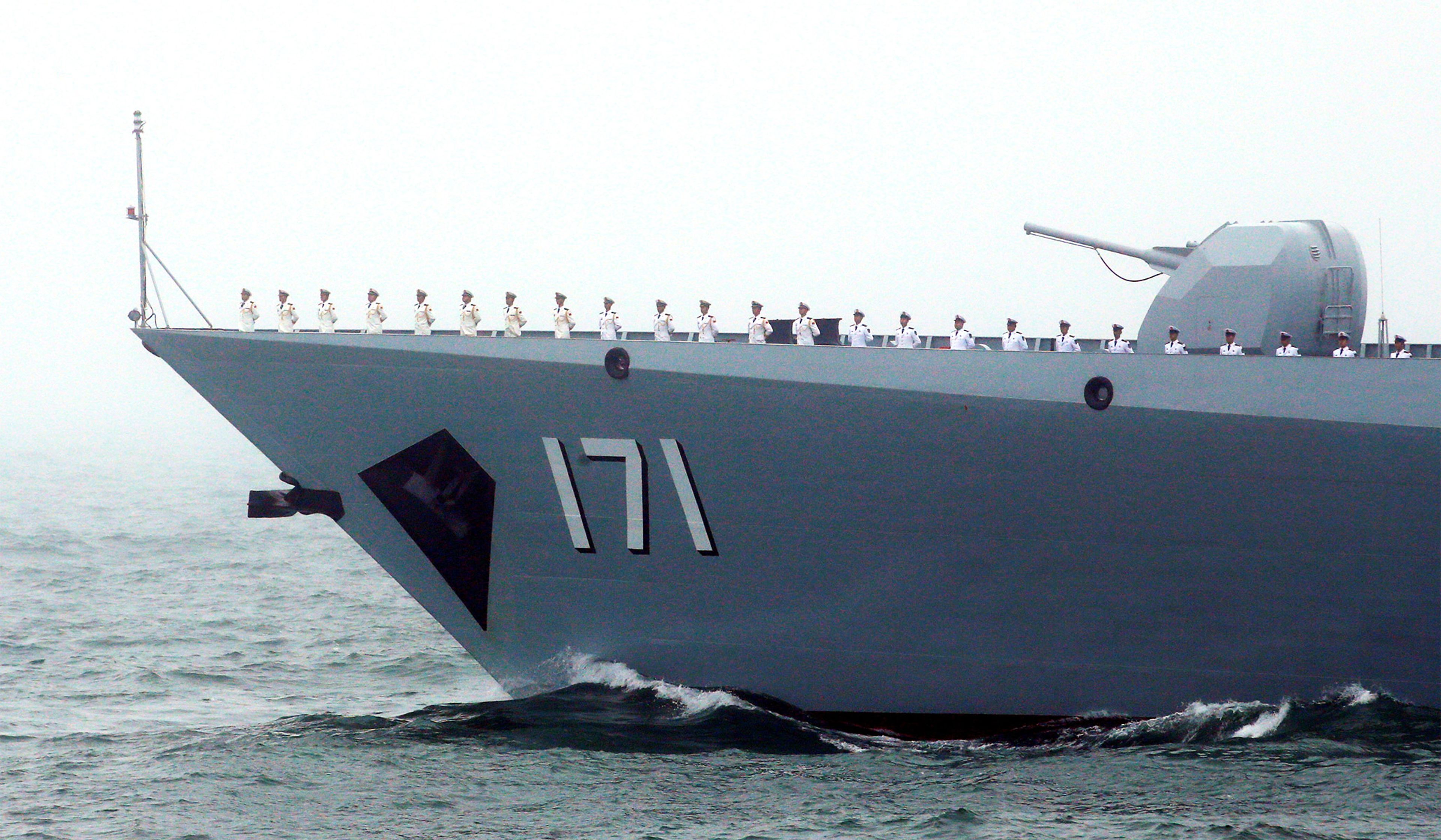
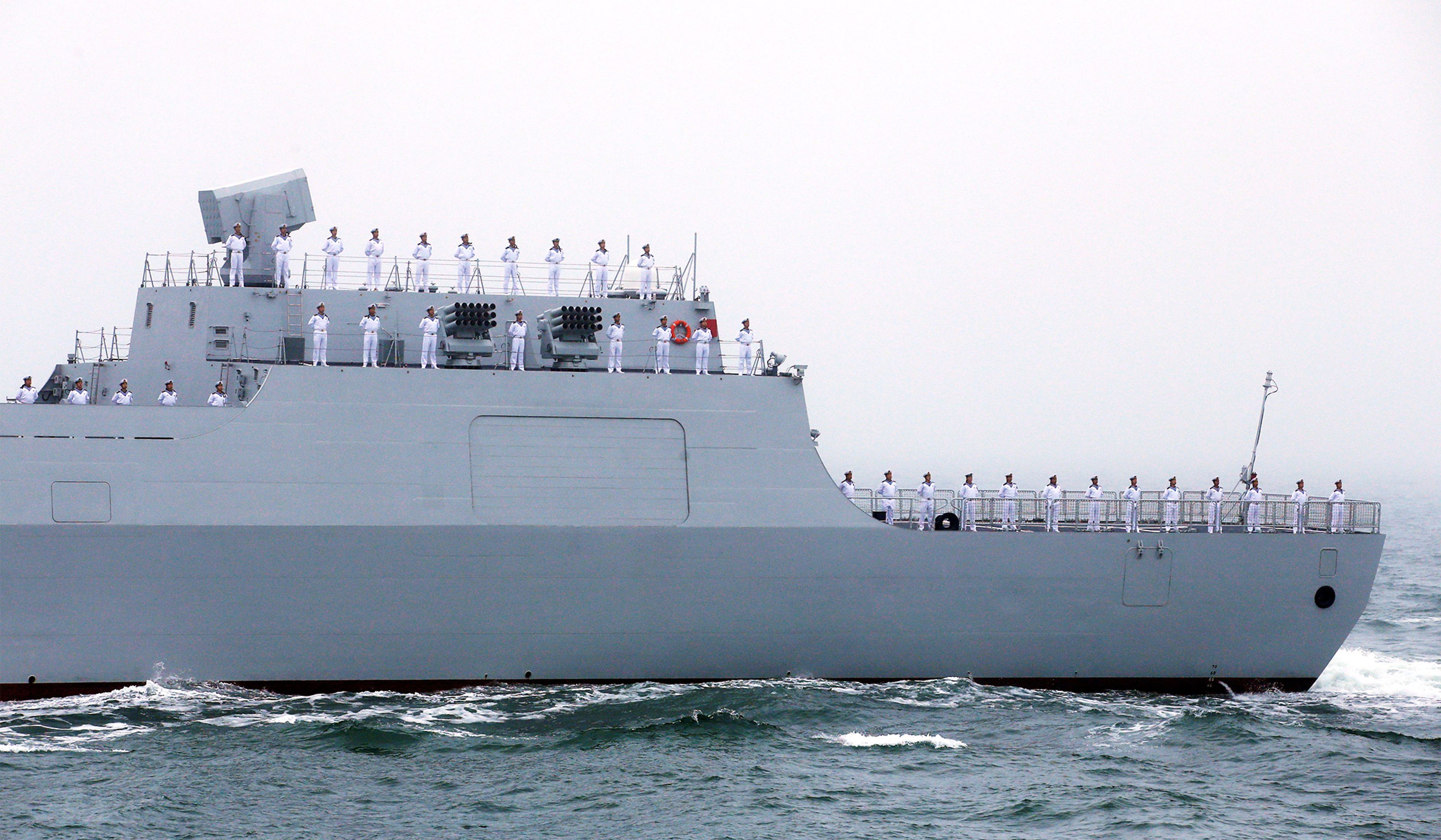
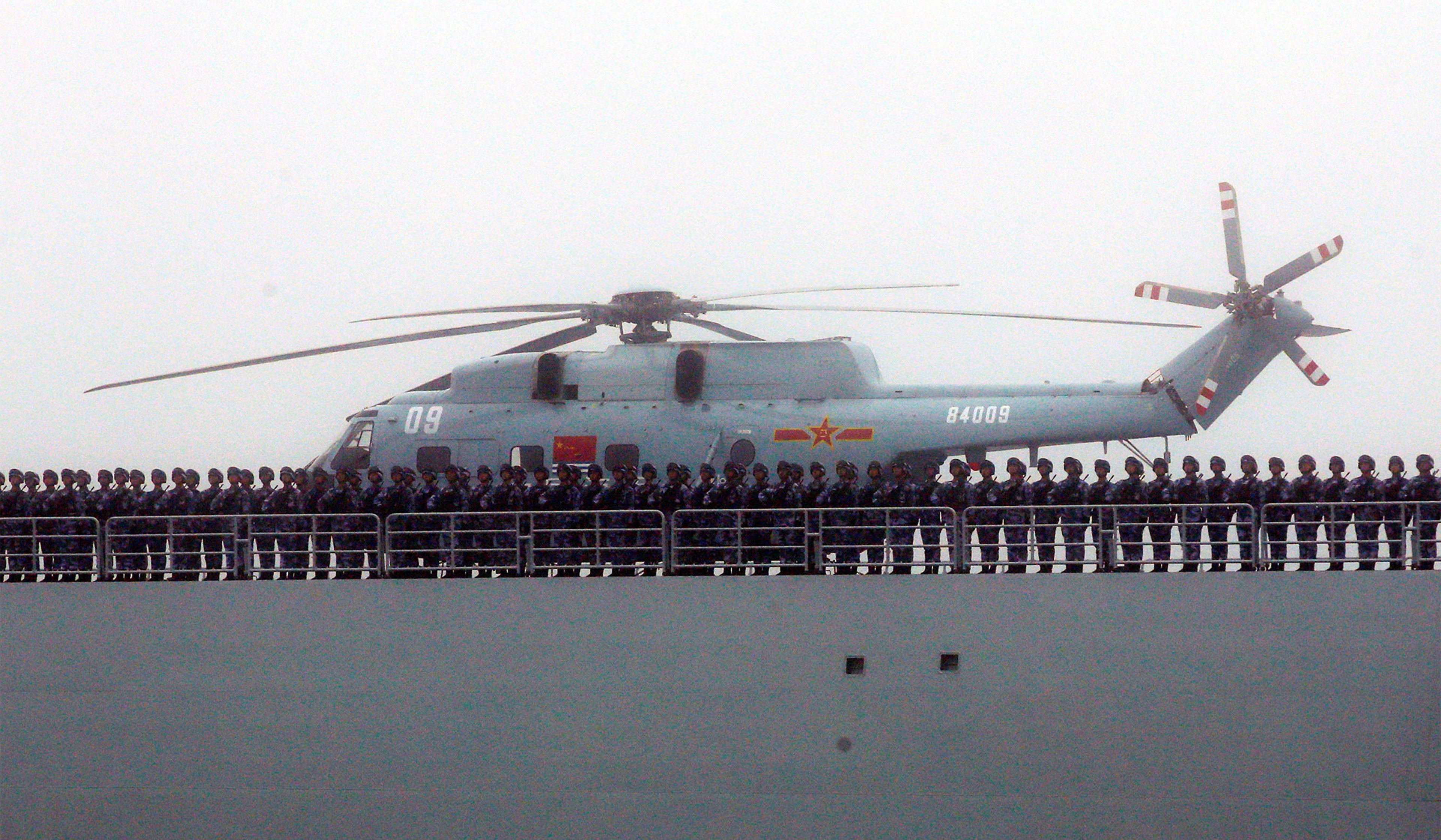

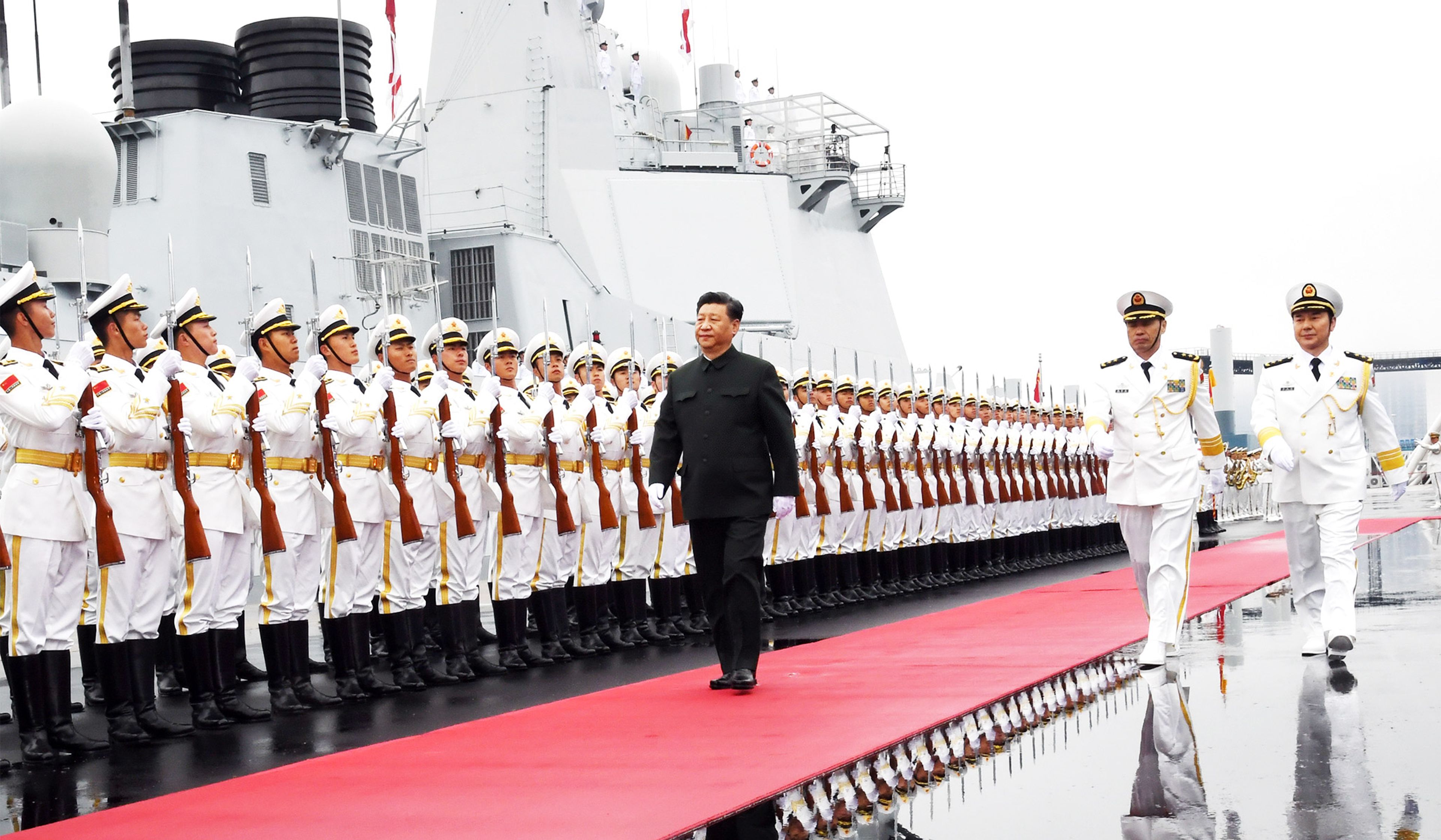
The Chinese aircraft carrier Liaoning takes part in drills in the western Pacific, April 2018.
Stringer/Reuters
Icould make the list of destabilizing and dangerous Chinese actions much longer, but instead let me give you an outline of what you can expect from our renewed leadership and comprehensive strategy.
First, we will strengthen our ability, in cooperation with our allies in Asia and elsewhere, to deter China in its relentless campaign to intimidate its neighbors, seize and militarize disputed territory, and ignore international laws about freedom of navigation and other global rules of the road. The Chinese Communist Party has a stated strategy of pushing the U.S. from East Asia and the Western Pacific and dominating its neighbors. China lays claim to 90 percent of the vital South China Sea, against all conventions of law and tradition. But our revitalized military and geopolitical strategy will not give one inch to its campaign of militarized intimidation. The United States will stand by its friends and its commitments in the region with renewed vigor and renewed capabilities to deter any further Chinese aggression in the region or attempts to destabilize the peace that has prevailed in East Asia over the past 70 years.
Next month the secretary of defense will give his own address, providing military details about my decision to rapidly accelerate our capabilities to deter and respond to contingencies in Asia. Right now we are moving too slowly. Over a decade ago the U.S. announced a “pivot to Asia,” but since that time our strategic position has weakened while China’s has strengthened. Many of the forces and systems we have planned to deter an advanced Chinese military were not to be fielded for another 15 years or more. That is too slow. I have directed the Pentagon to bring those capabilities forward at least twice as fast as their current schedule.
In particular, I agree with leading China thinkers in Congress, such as Representative Mike Gallagher (R., Wis.), who have encouraged the Pentagon to immediately field an “anti-Navy” — an enhanced array of current capabilities, such as ground-launched cruise and anti-ship missiles, drones, and precision air and ground defense systems for Taiwan. We have seen the effect an anti-Army can have in Ukraine’s success against Russian armored thrusts into the country. This immediate deployment will deter the Chinese from aggression in the region, especially against Taiwan, while the hulls of our future Navy are finished. We can field powerful deterrent capabilities for ourselves and our allies in the region now — and we will.
Furthermore, I want to affirm here tonight, for both our friends and our potential adversaries in the region, that there is absolutely no ambiguity in my mind about using American power to defend a Taiwan that comes under attack or is subjected to political or military coercion or intimidation. We will honor our commitments under the Taiwan Relations Act and the Six Assurances endorsed by Congress. All our friends in Asia can count on me to vigorously stand by our commitments. Deterrence, not “strategic ambiguity,” is our goal.
Second, we will overhaul our economic relationship with China. In particular, we will end the pattern in which American capital, technology, data, and intellectual property feed the strength and ambitions of the Chinese Communist Party and the People’s Liberation Army. China is using the free-market system that American power has safeguarded for 75 years, and it is clear now that it intends to use those gains in wealth and technology against us and our friends in Asia. We need to reduce our dependence on China’s manufacturing base in key areas where we need robust and redundant supply chains that are not hostage to China’s whims. We have been tinkering with these ideas in various places since 2016, but they are still not an integrated part of our economic statecraft.
This is the area of our grand strategy that needs the most work. By design, our economy is principally private, not public, so we do not have the same levers over economic statecraft that are used by many other countries. I think this is a gift from our Founders. The United States is, after all, a country with a government, not vice versa. But we need an economic strategy like the one that my predecessor Ronald Reagan announced 40 years ago, one that complements and supports our diplomatic and military policies. The federal government does not control our economy — in my opinion, in fact, the government is involved in too much of it. But we can offer safeguards and incentives in key economic areas, and policies that will aim to keep the Chinese from taking advantage of American wealth and technology to acquire capabilities meant to be used against us. We have been too reluctant to pull these levers.
Over the coming months, the secretaries of the U.S. Treasury and the Department of Commerce will announce a multifaceted plan to greatly restrict China’s access to American data, capital, key technologies, and intellectual property. This will be especially important in emerging sectors of national competitiveness, such as advanced aerospace, robotics, artificial intelligence, machine learning, semiconductors, 5G wireless communications, quantum information science, biotechnology, and other fields where China has used our openness against us.
Wittingly and unwittingly, our open markets have made possible the building of Chinese capabilities that threaten American interests and friends. For instance, when Americans invest in a Chinese company or a company with close ties to a Chinese company — perhaps simply through their retirement fund’s investment in a stock index to which a Chinese company has been added — they are investing in the Chinese Communist Party and even the People’s Liberation Army. Such is the degree to which Xi Jinping and the party have taken control of China’s economy. These days there really is no such thing as a Chinese company independent of the Communist Party. This must stop. I have asked the Securities and Exchange Commission and our listing agencies to investigate delisting all Chinese and Hong Kong companies whose stocks are traded on American exchanges. These companies would never meet the governance standard required by rules for U.S. firms. (I find it almost perverse that some American investment funds will not invest in some American companies based on spurious ESG standards, but those same funds invest in Chinese companies that are basically controlled by the CCP and even the PLA.)
This will be part of a concerted plan to restrict the support given by our universities, companies, and investors to Chinese businesses.
Most of you know that I am a champion of free markets, deregulation, and free trade. My views on these things have been and still are the foundation of my economic thinking. But we also need to recognize that we do not live in a perfect world. Pure economic globalization has a downside from a security perspective because it sends business activity to the places where it can most efficiently be conducted. In many cases, this has sent key manufacturing and now technology roles to China. As a result, our supply chains are vulnerable and our intellectual property is helping our adversary. Our strategy will not change the basic premise of globalization, but it will carve out key areas such as those I just mentioned and move them into more-secure forums for international cooperation, such as the Five Eyes alliance of our most trusted partners in the intelligence world. You may have heard this described as “friend-shoring,” and I intend to pursue it in areas critical to our national power.
The key to aligning the economic elements of our grand strategy toward China is threefold. First, these efforts must be targeted. Second, they must not backfire by causing unbearable damage to the U.S. and global economies. And third, they should be accompanied by a national strategy to secure supply chains and reinvigorate certain national capabilities that will reinforce our competitive advantage in the future. I will say more about this in a moment.
The next pillar of our strategy will be to resist the large-scale effort of China to reorder the political and economic framework in which our modern world operates: a world that respects human rights, political freedoms, sovereign borders, self-determination, open markets, freedom of the seas, and many other values that underpin the dignity, well-being, and prosperity of human beings. The People’s Republic of China has a concerted strategy and a huge bureaucracy dedicated to changing those systems in the World Trade Organization, the U.N., and many other forums and replacing them with frameworks that would be friendlier to authoritarian surveillance states of the sort that the Communist Party has built in China.
China’s leaders understand that they cannot be the preeminent power shaping key arrangements in the global arena as long as the existing framework, one created and maintained by liberal democracies, endures. One internal Communist Party memo warned that constitutional democracies and “universal values” are concepts that America endorses with the purpose of weakening and undermining the party’s control in China. The freedoms in the American Bill of Rights, or in the U.N.’s Universal Declaration of Human Rights, are unthinkable in a Communist China. Their mere existence, along with open markets and freedom of the seas, is a threat to the party’s fixation on political and economic control.
The secretary of state will soon outline many details about the diplomatic initiatives in this part of our grand strategy, but rallying international support around free societies and human rights will be its centerpiece. We must not let repressive and authoritarian surveillance states offer themselves and their practices as legitimate alternatives for the governance of societies. In the advanced democracies of the world, we have focused too much on our own imperfections. This impulse for self-correction is unique and healthy — so long as it does not descend into self-loathing. There are costs to running ourselves down, and one of them is that our ability to make comparative judgments becomes clouded as we let moral equivalence creep into our thinking. So let me leave no doubt: The ideas and values of human freedom that have propelled almost all human advancement the world over are simply better and more humane than the values of the dictatorial and repressive Chinese state. We will not cease to promote these ideas and values.
The last and perhaps most important pillar of our grand strategy concerns ourselves. To challenge, resist, or deny China on military, economic, and diplomatic fronts from a position of unmatched strength will require us to renew the traditional sources of U.S. strength at home: our innovative private-sector-driven economy, an aspirational culture of achievement and invention, our world-class education system, our status as an energy superpower, and our commitment to good governance and self-governance. These have been, are now, and always will be our “secret weapon” in competing with authoritarian states and revisionist powers. Yet in recent years we have strangled all of these traditional sources of competitive strength with unnecessary bureaucracy, bad policy, and ever more government control and spending.
This must change. We must propel American programs forward as a matter of national policy and government incentives. For instance, the U.S. should not only limit Chinese access to American universities in key science and engineering areas but also subsidize a quadrupling of American enrollment in the same programs. In the past 20 years, America has gone from enjoying a five-to-three advantage over China in the number of STEM graduates to now seeing China graduate four times as many STEM students as the United States and three times as many computer scientists.
My secretary of education will elaborate on our new efforts in that field. Many other cabinet secretaries and government officials, including our state governors, will be talking in the coming months about our efforts to achieve American primacy in semiconductors, quantum computing, artificial intelligence, biotechnology, and many other areas. The onshoring of key capabilities such as microchip fabrication will be part of this, but the plan for renewal will entail much more.
The time to execute this grand strategy is now. China’s bellicose, sclerotic, and authoritarian decision-making system, especially under Xi Jinping, has sidelined reformists in China, and the Communist Party has re-exerted control over the economy. The Chinese state is obsessed with domination, and in authoritarian systems, domination usually means a slowdown in economic growth and innovation. We are already witnessing just that in China today. Famous Chinese entrepreneurs disappear from public view after making independent moves not blessed by the CCP, and in the past few years the CCP’s state-owned enterprises have bought hundreds of publicly traded Chinese companies. Xi has aggressively reasserted control over China’s semi-open economy, which will make it more controllable, but also economically brittle. Combined with the severe demographic challenge China will see as its population ages and shrinks, its increasing economic challenges may induce opportunistic behavior on the part of a Communist Party that sees its interests served by destabilizing the region sooner rather than later. We must be ready now and at any time to deter such a possibility.
Over the past few years the U.S. has undertaken a number of policy changes to address China’s behavior. These include sanctions for human-rights violations, the passing of legislation to jump-start domestic semiconductor production, trade and export-control restrictions on key technologies, and much else. All these policies have achieved some good in and of themselves, but they will not rapidly shift the balance of the strategic situation by diminishing China’s capacity for destabilizing behaviors or by strengthening America’s position.
The priorities I have announced tonight will make our China strategy more comprehensive, more coordinated, and more urgent.
The overall impact of our grand strategy will be to quickly make the United States more competitive in crucial domains — military, economic, technical, diplomatic, and educational. In short order we will have more-credible military deterrence in East Asia, a more secure environment for key technology development, an end to Chinese espionage in our universities and industries, less vulnerable supply chains, fairer trade policies, renewed innovation, and a stronger diplomatic hand. I will enlist the energy and commitment of our private sector, not just our government, in this important endeavor.
Nothing in this strategy means the United States will cease cooperating with China entirely. Of course we will continue to cooperate, every day and in many important areas. China is a key economic partner of the United States (and vice versa) and a key part of the global economy. But conversely, nothing in this strategy will preclude periods of tense confrontation with China when confrontation cannot be avoided. No matter the situation, America will go into it from a position of greater confidence and strength, with the abundant options and flexibility that such a position implies. I am upbeat about our plan.
These efforts, my fellow Americans, will be good for the U.S. and good for the world. We will be stronger and more competitive. We will preserve peace and stability. And in the global contest between autocracy and freedom, we will make certain that freedom prevails. God bless our efforts to that end, and God bless America. Good night.












Comments