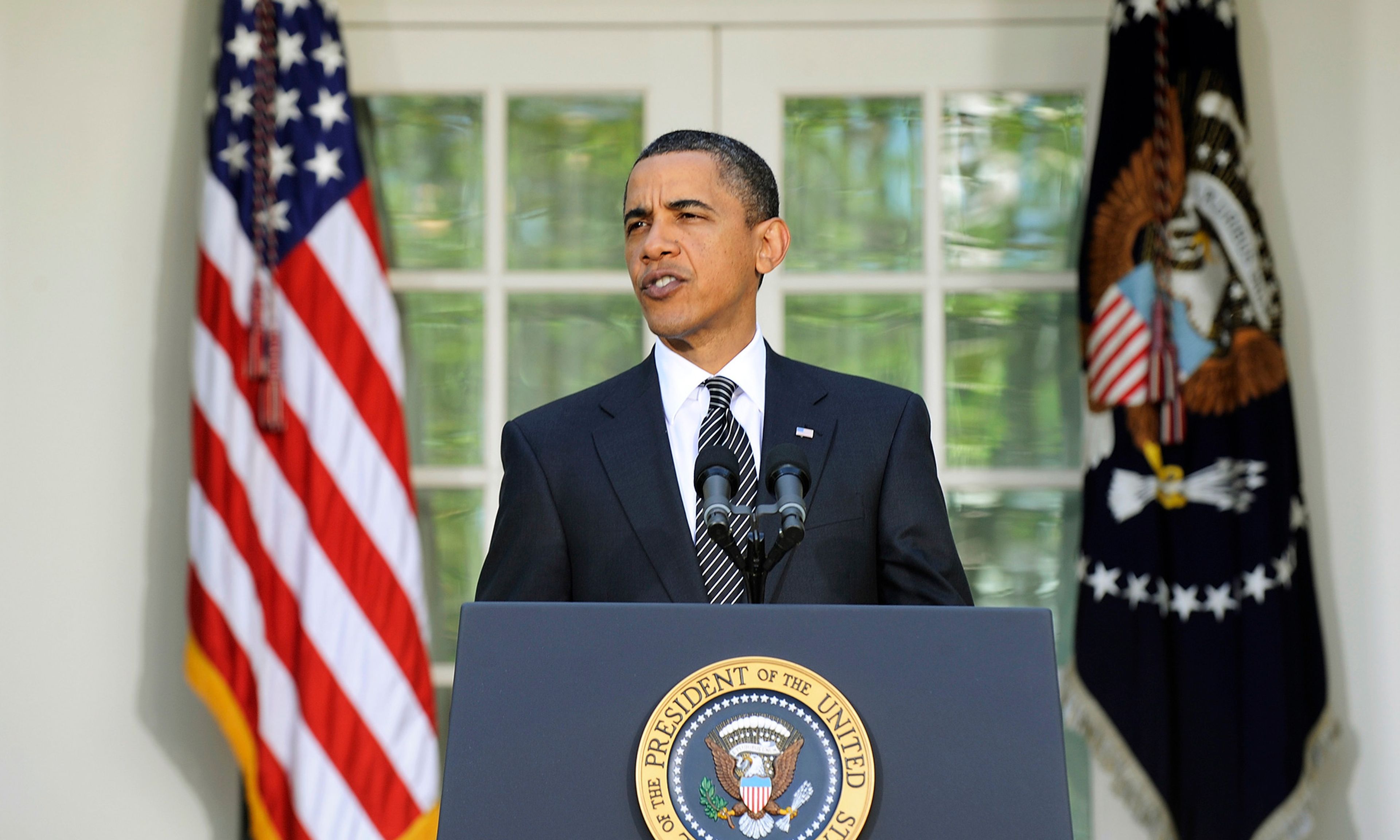
Reading David Remnick’s new 600-page book, one learns very little that’s new — anecdotes aside — about Barack Obama, but a good deal about David Remnick. Remnick, the editor of The New Yorker, writes well, he’s reasonably fair-minded in his characterization of well-known events, and he has a talent for painting pen portraits of the lesser-known characters Obama interacts with. Remnick has interviewed a wide range of people, including Obama’s Kenyan relatives, and their accounts enrich the book. He makes occasional forays into a semi-fictional mode: He describes scenes as they must have been, with a sometimes annoying, but not excessively deployed, tendency to try to write as if he were standing over Obama’s shoulder. While, sentence by sentence, there is little in the book that can be described as significantly false, it nonetheless manages to create a radically incomplete picture of the world Obama emerged from. But it provides a fascinating view of the platform on which Remnick, who is deeply sympathetic to Obama, stands.
The Bridge referred to in the title is the Edmund Pettus Bridge in Selma, the site of the famed 1965 “Bloody Sunday” clash between heroic civil-rights protesters and the state and local police who assaulted and beat them. It was an indelible moment of shame, and The Bridge rightly presents Obama’s inauguration as the moment when the hopes of the civil-rights generation were fulfilled, at least in part. Remnick uses the metaphor of a bridge to argue — as if this were a campaign bio, which it is in a sense — that Obama’s mixed-race heritage and his intelligence allow him to serve as a bridge between blacks and whites, liberals and conservatives.
But when Obama was given an opportunity on census forms to identify himself, he declined to select multiple boxes indicating his compound heritage but chose to identify himself as simply black. Similarly, the man whose perfect political pitch during the 2008 campaign caught the public’s hopes for less partisanship became, upon taking office, a fierce partisan and denigrated his opponents in a manner unprecedented in recent years. His unpresidential, unprecedented attack on the Supreme Court during his State of the Union address was of a piece with his repeated ad hominem dismissals of his critics as not just wrong but “cynical and irresponsible.” Remnick insists that one of Obama’s great qualities is his ability to maintain his authenticity even as he “shifts shapes.” In fact, Remnick has fundamentally misunderstood the man who took a million dollars in campaign contributions from Goldman Sachs, then denounced the same people as “fat-cat bankers,” and then proposed “reform” legislation that would benefit those same politically wired fat cats: If we trust the tale rather than the teller, the only thing authentic and enduring about Obama, ideology aside, is his drive to climb the greasy political pole.
Some of the elements of a more plausible picture of Obama are contained in this lumbering manuscript. Remnick argues that Barack Sr., Obama’s father, provided his son with a negative lesson on how to advance in the world. The president’s father was, by Remnick’s account, a talented individual who failed his potential. In the course of describing the father’s history, Remnick rightly takes the opportunity to discuss the relationship between the end of colonialism in Africa and the civil-rights movement in America. He recognizes, albeit superficially, that the two are deeply intertwined. But, a few passing references to Obama’s reading of Frantz Fanon aside, he never discusses the common ideology that laid both Africa and inner-city America low when it came to economic advancement: Third Worldism.
“Third Worldism” is a term that largely went out of use with the end of the Cold War, but the attitudes undergirding it are at the core of Obama’s political worldview. Literally, “Third World” meant a third camp aligned neither with the Americans nor with the Soviets. But, in practice, the key Third World leaders — such as Nehru, Nkrumah, Nasser, and Arafat — were tied to the Soviets. The underlying tenets of Third Worldism were expressed by Nkrumah, who took Ghana, once one of Africa’s economic bright spots, and drove it into the ground, much as “big man” Jomo Kenyatta shipwrecked Kenya with a similar approach. (It was Kenyatta, coincidentally, who wrecked Barack Sr.’s political career.) “Seek ye first the political kingdom,” argued Nkrumah, “and all else shall be added unto you”: Seize political power and from it wealth will follow. This is the same adage that has worked, to a degree, in machine-run Chicago.
Third Worldism is deeply statist but not necessarily socialist. It combines identity politics with the drive for economic redistribution. For the civil-rights movement as it moved from pursuing legal equality to advancing black power, Third Worldism provided what seemed to be a promising path to follow. It was the framework within which the young Barack Jr. emerged intellectually. And, as in his friendships with Rev. Jeremiah Wright and Arafat’s former press secretary, Rashid Khalidi, its influence has endured.
Third Worldism abroad, like its American cousin Black Power, suffered from a fundamental misunderstanding. Breaking out of European colonialism and American racism meant more than liberation from an oppressive order; it also meant the opportunity to participate in the economic life that allowed the West to grow wealthy. But to the extent that Third Worldism/Black Power assumed that wealth was merely a matter of seizing the mechanism of government to enhance one’s allies, it produced outcomes ranging from harmful to disastrous. Like much of the Arab world, Third Worldism wanted transformation without change, wealth without new cultural habits. It was a fantasy.
Obama has come out of the two worlds in America where that fantasy was most likely to be indulged: Chicago and academia. Nowhere in his banalities about Chicago politics — home to Jesse Jackson and Louis Farrakhan — does Remnick try to come to grips with a functionally segregated city in which a powerful black political presence is entirely consistent with a murder rate three times that of New York, and where a mayoralty controlled by Democrats since 1931 has produced an economy in which the largest employer is the federal government, the second-largest is the failed public-school system, and the next largest, in order, are the city government, the transit authority, the county government, and the park district. In academia, Obama simultaneously absorbed the postmodern view, in which words are reality, and a politics of racial and gender grievance.
Remnick is constitutionally unable to come to grips with Obama’s parochialism, since he shares its assumptions. There is, however, an interesting book to be written about Obama, using a bridge as a metaphor. It would describe Obama as the bridge between the liberal paternalism of Hyde Park, the University of Chicago neighborhood where he lived, and the Third World–like poverty of the black neighborhoods that surround it. It would be the story of how Black Power, which supposedly rejected liberal paternalism, came to live comfortably with it even as neighborhoods like the South Side of Chicago were left to suffer from its illusions.











Comments