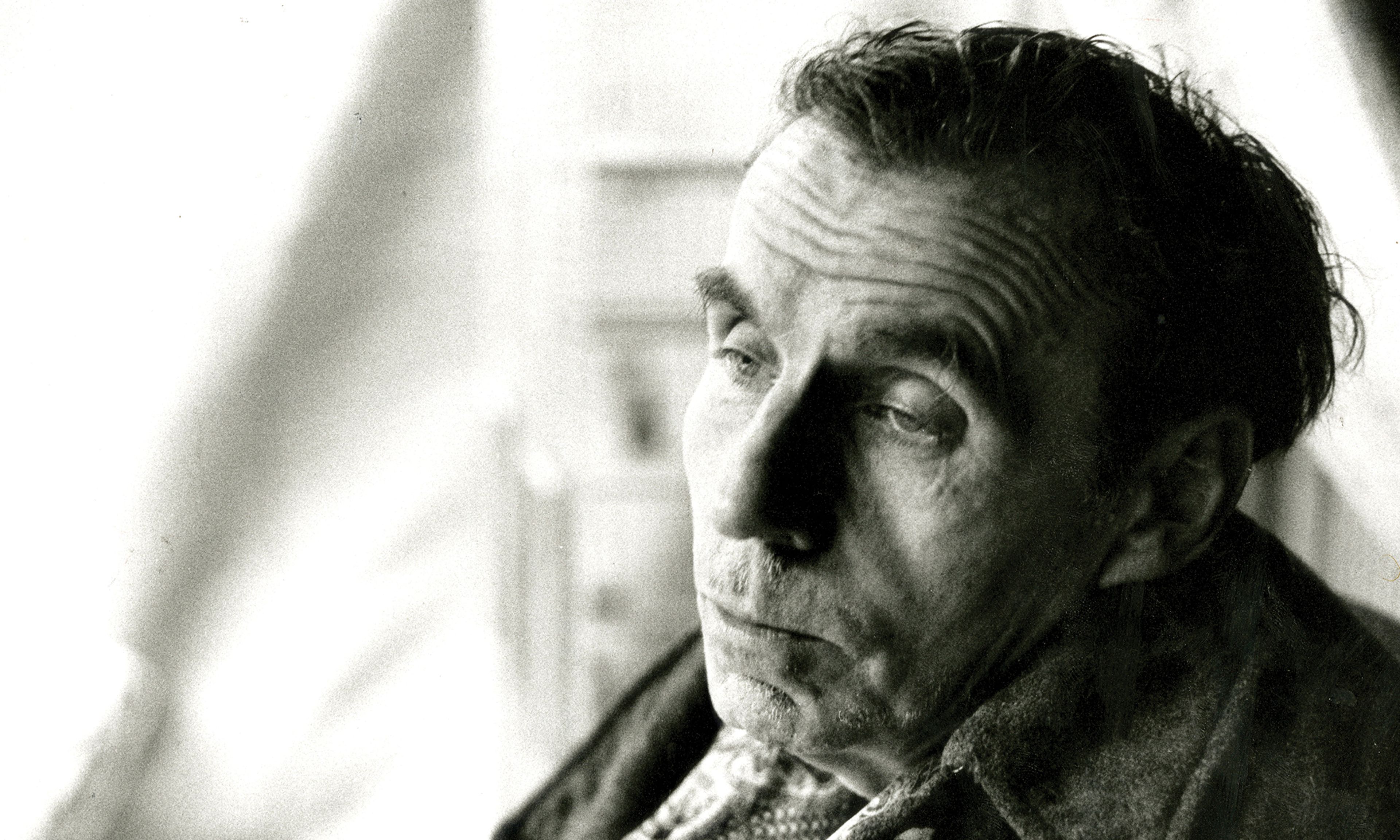
Louis-Ferdinand Céline is probably the most influential French author of the last hundred years. Guerre, which means “war,” is a novel that he wrote and virtually completed in the Thirties. Apparently he intended it to be the centerpiece of a trilogy that he never got round to writing, and the draft of Guerre remained part of his personal archive. Gallimard, probably the most influential French publishing house of the last hundred years, is treating publication as a unique and posthumous literary sensation, and the initial print run of Guerre is a massive 80,000 copies. There is something murky, almost fatalistic about its survival. In 1944 as the war was coming to an end, Céline, his wife Lucette, and their cat, Bébert, fled the country. Someone in the know must have entered Céline’s abandoned house and stolen his entire archive. Up to the time of his death in 1961, Céline liked to think that his papers must have been burnt, and it was already 2019 when the archive of some 5,000 manuscript pages plus correspondence and photographs surfaced (a suggestive verb in the circumstances). The more or less left-wing Le Monde speaks of “a miracle,” and the more or less right-wing Le Point raves about “the discovery of a great text.”
“Céline” was the nom de plume of Louis-Ferdinand Destouches. In 1912, aged 18, he enlisted in the cavalry. In the First World War, somewhere near Ypres, he received a bullet in his arm, though it is sometimes suggested that it was a head wound. After the war, he spent a year in England and another year in Germany, acquiring the languages of both countries, and then five years at the Rockefeller Institute in New York. He became a doctor, traveled and worked in Africa, and in 1936 even went to the Soviet Union. Altogether he looked set to qualify as a cosmopolitan humanist of the best kind.











Comments