Inflation is not yet, and let’s hope will not be, running as high as it did in the late 1970s and early 1980s, when we hit double digits three years in a row. But it is at its highest level since that time. Just as it did then, it is generating a potent conservative backlash. When inflation jumps, people don’t just resent paying higher prices. They feel a loss of control, the ground moving beneath them. Inflation becomes the dominant political issue.
And just as in the 1970s, politicians are flailing in response. That decade saw bipartisan experiments in price controls, which made prices look better but only temporarily and at the cost of shortages. A search for scapegoats is another reliable by-product of inflation. Then it was unions, foreigners, and big business. Much of the Left is now blaming corporate greed and consolidation. Senator Elizabeth Warren (D., Mass.) is invoking a far-fetched conspiracy of grocery-store chains and, with seven colleagues, proposing “a federal ban against unconscionably excessive price increases” by large companies.
This sort of nonsense, which seeks to explain a variable (the inflation rate) by reference to a constant (the desire for profit), can only distract from what is truly necessary to restore price stability. As in the 1970s — as in almost all inflationary episodes — what is necessary is, above all, monetary restraint.
Some confusion at the start of this bout of inflation was understandable. It has taken time to bring its dimensions into focus. But it has been clear for the better part of a year that the Federal Reserve needs to tighten money. And even now the nature of the problem is not fully appreciated. The main debate today concerns whether the central bank is tightening fast enough to beat inflation. The question we ought to be asking instead is whether it is tightening at all.
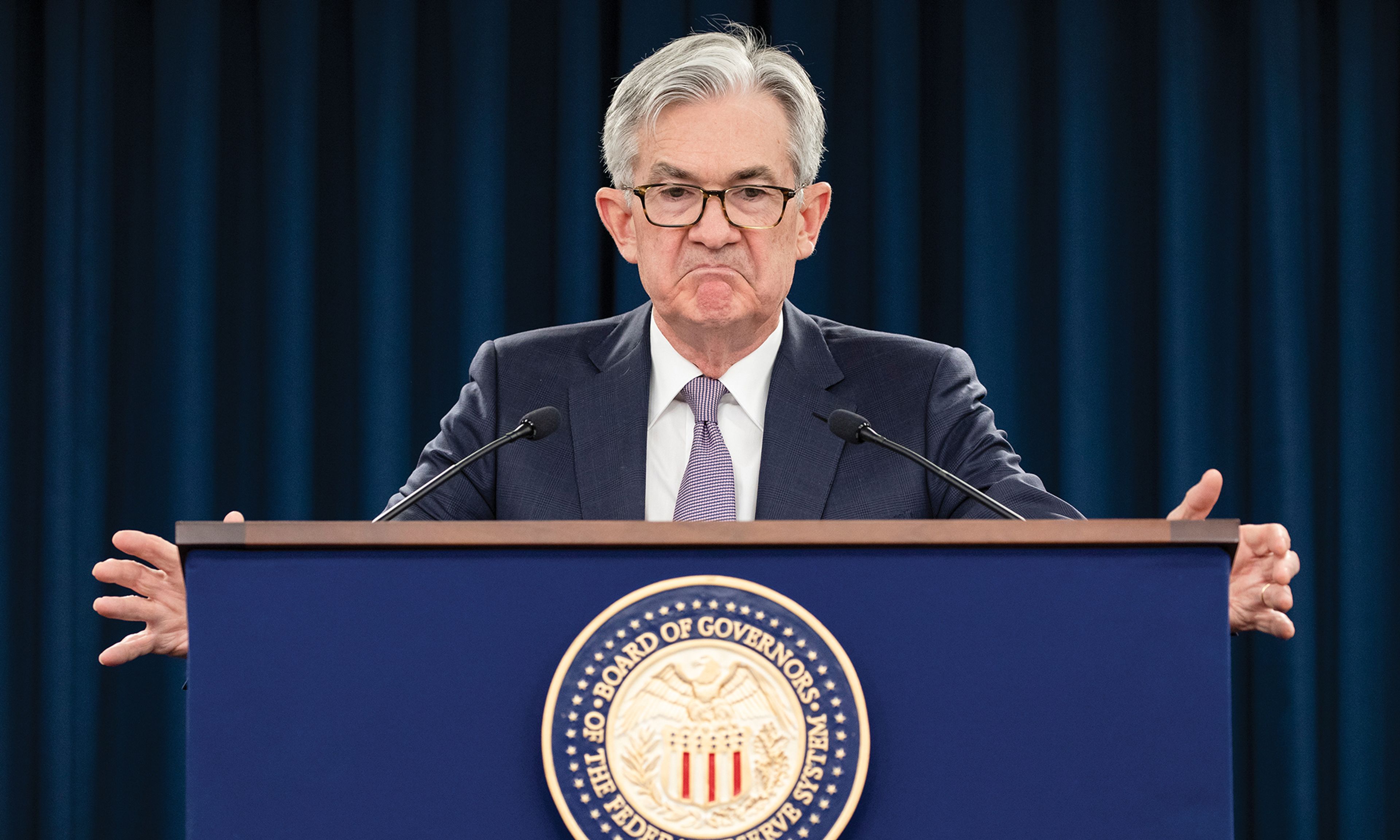
Before inflation rose, Jerome Powell had received high marks for his tenure as Federal Reserve chairman, a position he took under President Trump in 2018. The institution got credit for stimulating the economy during the Great Recession of 2007–09, keeping it from turning into another Great Depression. Warnings that its extraordinary actions — nearly quintupling the supply of money it directly controls — would lead to inflation, maybe even hyperinflation, did not come true. Powell followed the same playbook during the Covid shutdown, nearly doubling the money supply.
For all the plaudits, though, a rethinking was taking place within the institution. The Federal Reserve came to believe that it had been too tight during key moments of the crisis and the recovery. Ben Bernanke, chairman at the time of the Great Recession, noted in his memoirs that the bank had waited too long in the fall of 2008 to cut interest rates. Fed policy-makers, including Powell, concluded that in later years they had not appreciated how low unemployment could go without causing an overheated, inflationary economy. They had not realized, either, just how low the “neutral” or “natural” interest rate justified by economic fundamentals had sunk. Both of these mistakes made them more hawkish about inflation than they should have been. Raising interest rates in 2015 was an error that sparked what some analysts called a “mini-recession,” especially in manufacturing.
After informally seeking 2 percent inflation each year, in 2012 the Fed formally adopted that target. Inflation persistently ran below it during the 2010s, however, leading many economists to wonder whether the Fed was losing its effectiveness. With interest rates so low, it would be unable to cut them further in the event of a recession. The Fed had engaged in large-scale asset purchases when interest rates hit bottom, but low inflation called into question the stimulative power of that move.
In 2020, the Fed responded to these concerns by adopting a new policy of “flexible average inflation targeting.” If inflation ran below 2 percent for a while, it would “likely aim to achieve inflation moderately above 2 percent for some time.” An average target, in theory, would make the price level more predictable over the long run. By keeping the average rate from dropping below the target, it would give the Fed more running room to cut nominal interest rates when needed. It would limit the severity of recessions, too, by holding out the promise that a temporary slump would be followed by a boom — and that the Fed would extend that boom rather than cut it short.
In setting the new policy, though, the Fed opted for flexibility over credibility. It didn’t tie itself down by answering such questions as: Over how long a time period would it aim to hit the average? If you looked closely at the Fed’s statements, you would notice that it was also not promising to make up for periods of high inflation by aiming below 2 percent. The response to failures to hit the target would be asymmetric: Undershoots would be corrected, but not overshoots. The policy had a dovish bias built in.
Which fit the mood of the time. Not only was the Fed starting to doubt whether high inflation was ever coming back. It was increasingly looking at goals other than price stability. Progressive activists and academics urged the Fed to attempt to fight climate change and to promote social justice. During the 2020 presidential campaign — and right before the Fed announced its new policy — Joe Biden said that in addition to trying to minimize inflation and unemployment, the Fed should also seek to shrink the racial gap in wealth. Advisers suggested this might mean erring on the side of running the economy hot: tolerating higher inflation, even when the overall unemployment rate was low, in order to reduce the (significantly higher) black unemployment rate.
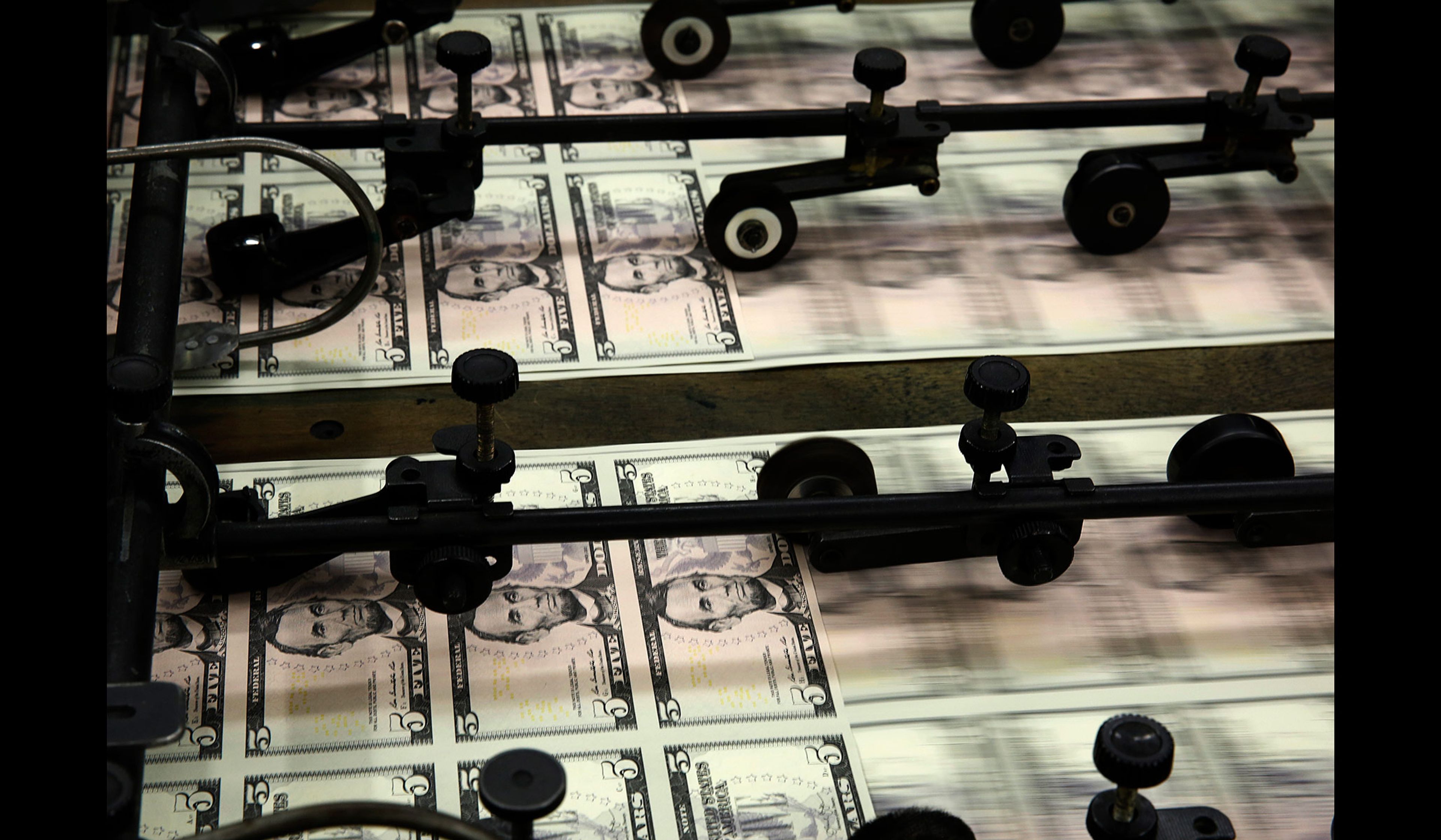
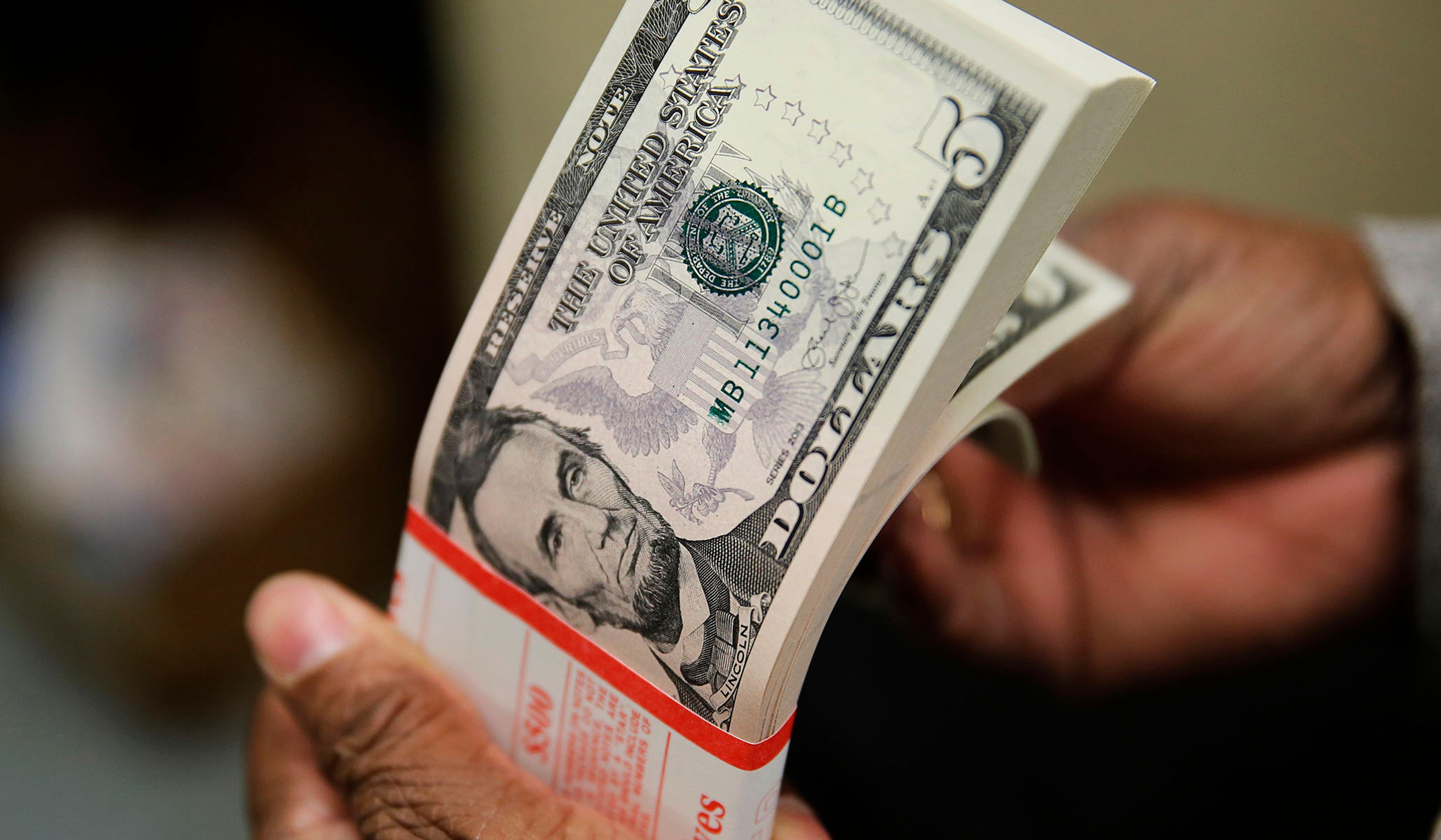
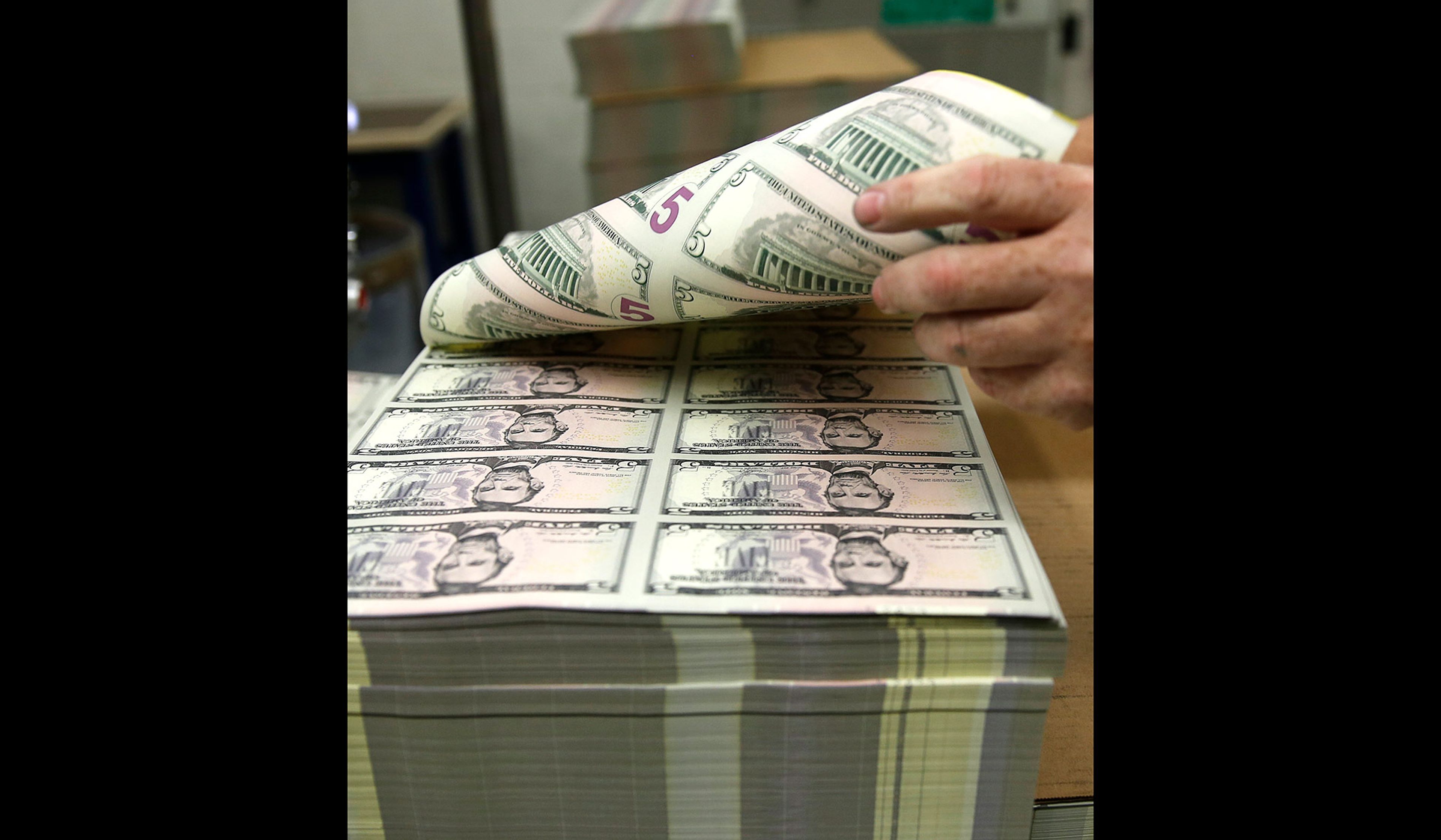
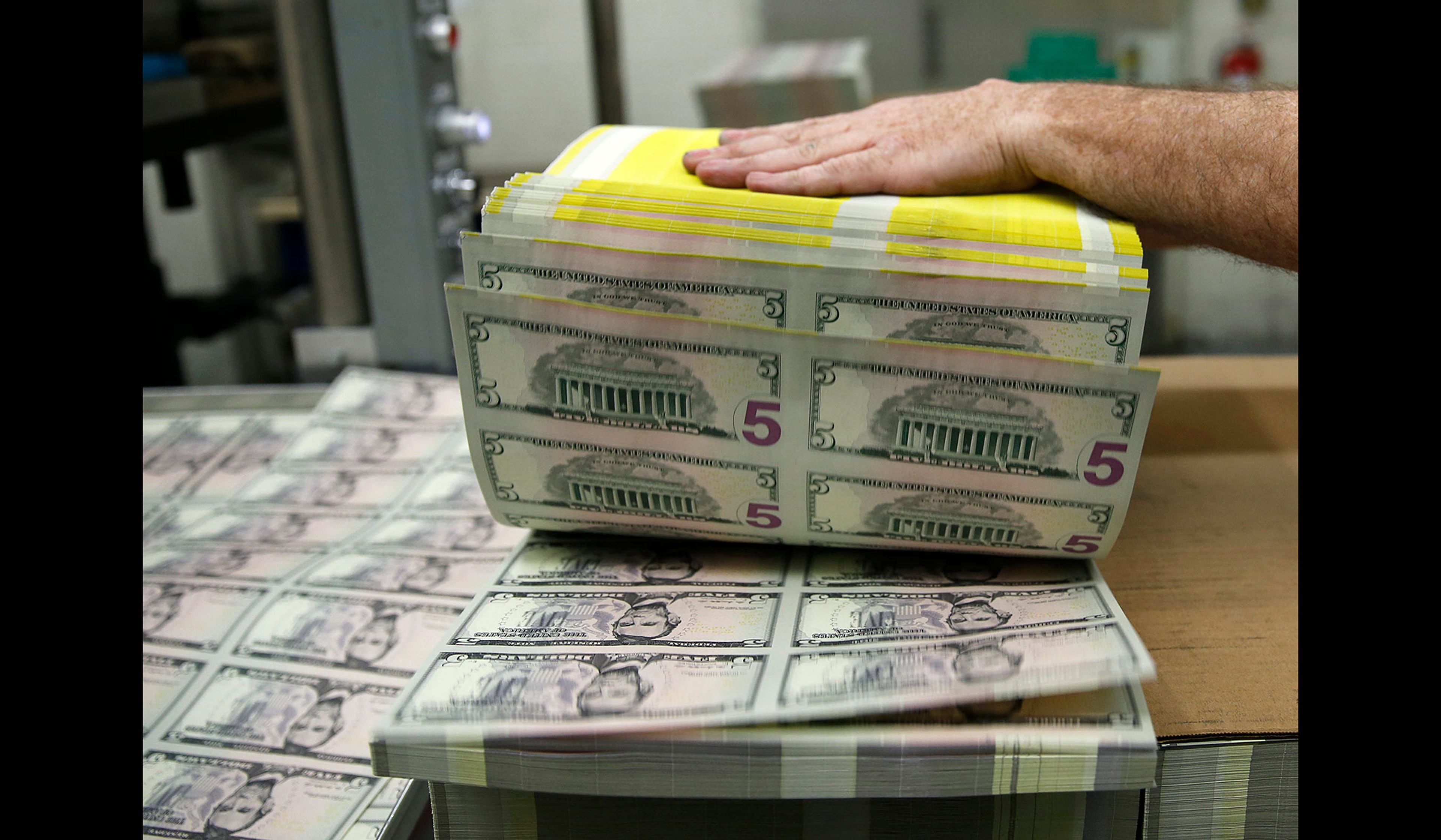
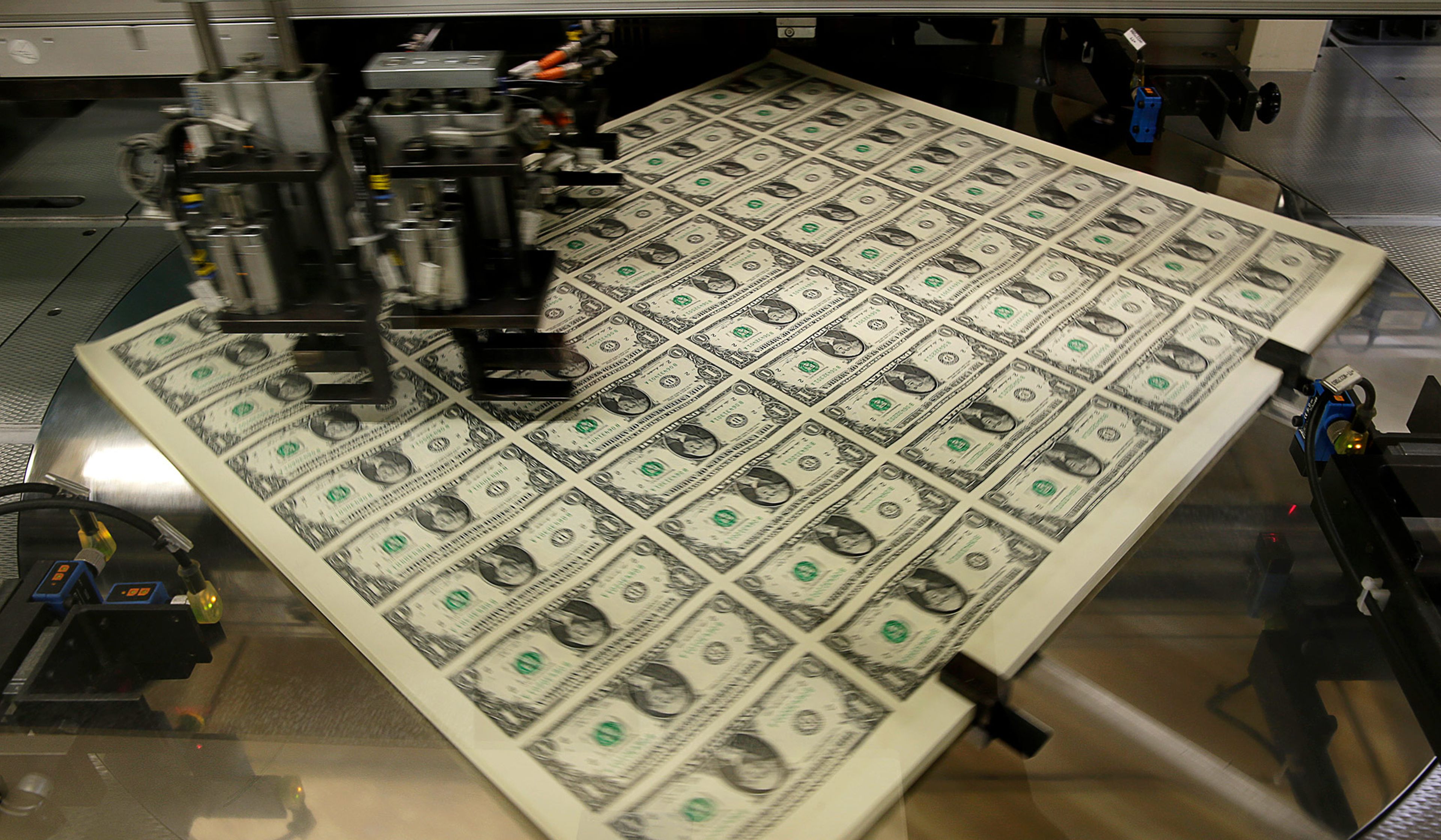
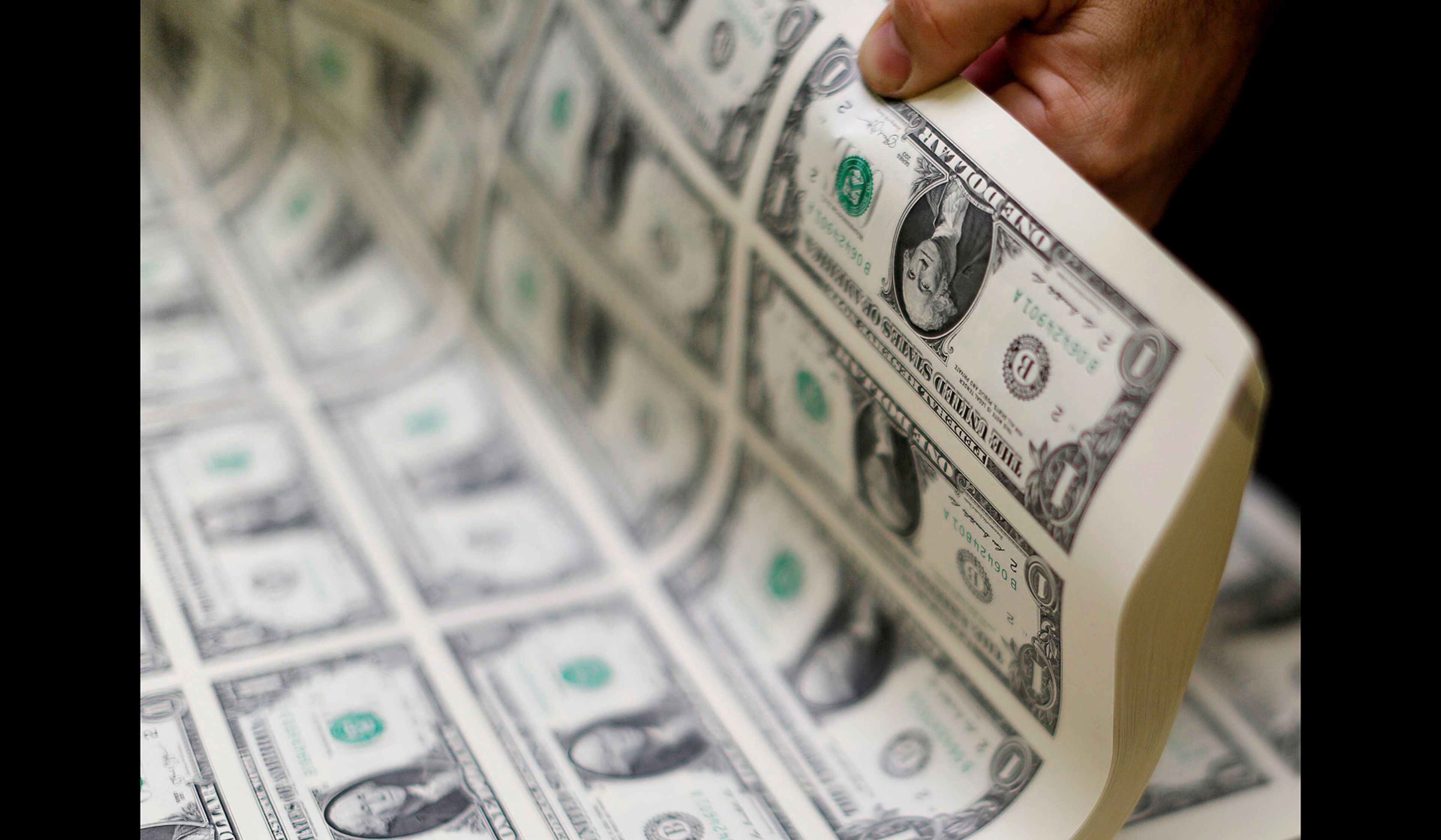
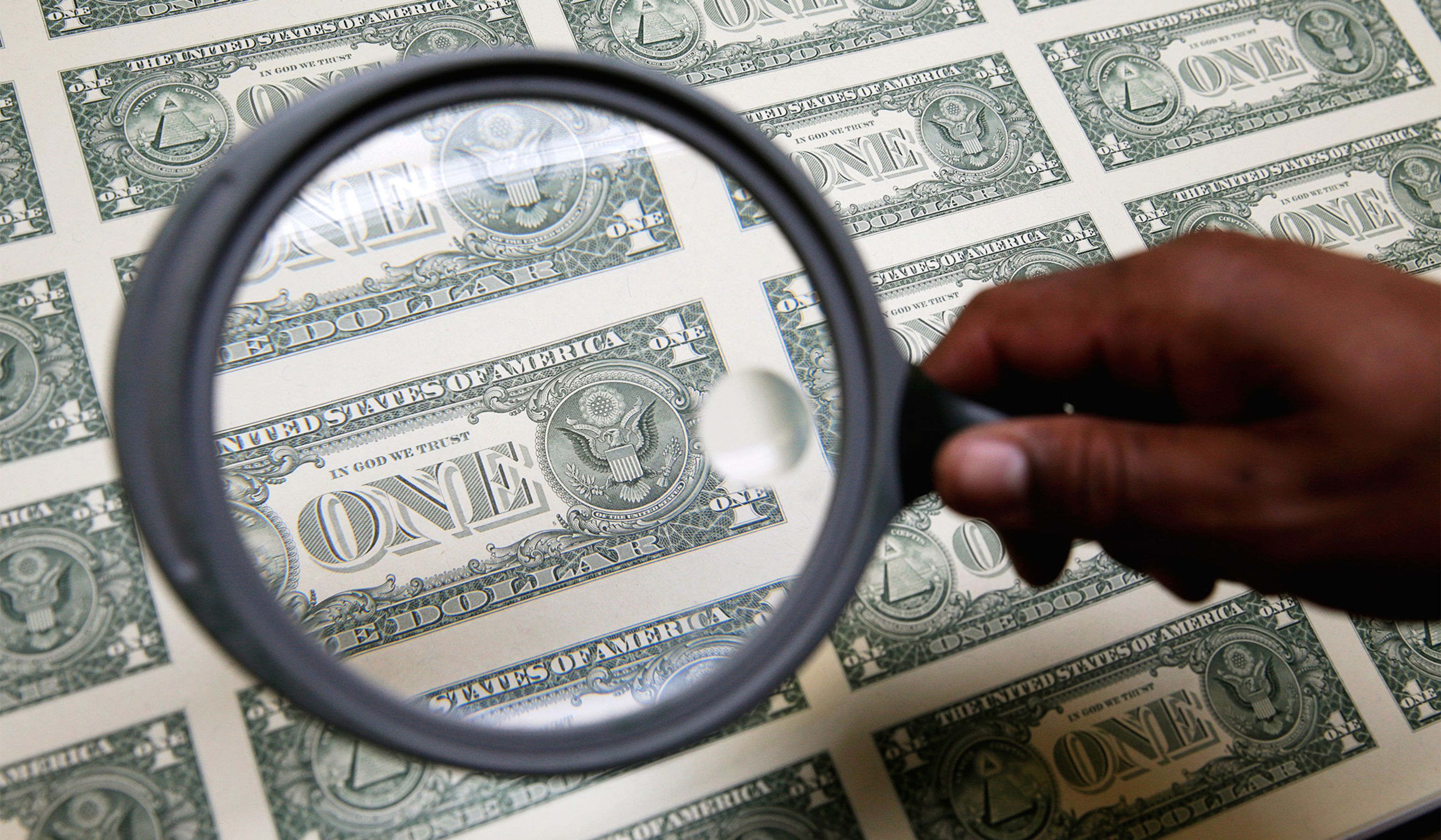
Engraving printing plates of President Abraham Lincoln on the $5 bill on a printing press at the Bureau of Engraving and Printing in Washington, D.C., March 26, 2015.
Gary Cameron/Reuters
Inflation picked up right after President Biden took office. “Core PCE,” the Fed’s preferred measure of inflation, rose 0.4 percent in March 2021 and then 0.6 percent in each of the next two months. Yet Fed policy-makers took pains to make it clear they were not alarmed and would not rush to raise interest rates or sell bonds in response.
They had their reasons. The inflation could be written off, in part, as the economy catching up after the low inflation of the Covid period. Some inflation was also attributed to supply-chain snafus attendant on the reopening of the economy. When the supply of crucial inputs such as oil or semiconductors falls, the output of goods and services is temporarily lower, and prices are temporarily higher, than they would be if not for the disruption. The central bank cannot undo this hit to living standards by conjuring more supplies. All it can do is take action to reduce the total amount of spending throughout the economy, which would restrain the price increases — but also reduce output further. For this reason, central bankers generally think they should “look through” this kind of inflation rather than tighten money.
This view of the causes of inflation inclined policy-makers to think it would be — the term became infamous — “transitory.” The message from market indicators of expected inflation was also reassuring. The difference in yields between bonds that pay out with adjustments for inflation and those that do not suggested that inflation would rise for a time but then settle back down. The projections for six to ten years from now were fairly consistent with the Fed’s 2 percent target. And how many times over the previous decade had dire warnings of high inflation fizzled out?
For such reasons, many economists and commentators in spring 2021 argued against any tightening. I was one of those commentators. The data cooperated with our view through the summer, as core PCE growth slowed down. But then it sped up, rising 0.5 percent for four months in a row — the equivalent of a 6 percent annual rate — starting in October.
It was becoming clearer that it was not just supply disruptions behind the price increases. The total amount of spending in the economy was also growing too rapidly. By the third quarter of 2021, spending had caught up to its pre-Covid trajectory. By the fourth quarter, it had surpassed it. The Fed should have sought to rein it in by this point.
But there was an additional complication. Powell’s term was set to expire, and progressives wanted him replaced by a Democrat. And Democrats were in no mood for a battle against inflation. Parties in power rarely welcome hikes in interest rates, and progressive parties even more rarely. Nancy Pelosi, the speaker of the House, said that rising inflation was the inevitable price of falling unemployment. (Actually, both fell in tandem in the mid 1980s, much of the 1990s, and again from 2011 to 2015.) The Biden White House and its friends argued that inflation was just a distraction from all the good economic news. Evidence continued to mount, though, that wages were not keeping up with prices.
After months of speculation about what Biden would do, in late November he chose to stick with Powell while replacing the Fed vice chairman for financial regulation. Randal Quarles, who had served in that position, has said that the uncertainty — and, presumably, the leverage it gave progressives — delayed the Fed from tightening. (Powell denies this.)
In the fourth quarter of 2021, spending grew even faster, at the equivalent of a double-digit annual rate. Fed policy-makers started to sound more and more hawkish. But not until mid March 2022 did the Federal Reserve raise the federal-funds rate, and then only by 0.25 percentage points. In May, it raised the rate again, this time by 0.50 points. The Fed had finally begun to tighten.
Or had it? Judging the stance of monetary policy, and how it is changing, is a tricky business. Inflation raises the neutral interest rate. If the Fed leaves its rate in place, it becomes lower and lower relative to that neutral rate. Under such circumstances, the Fed can be said to be loosening money passively. Inflation expectations kept rising through the first quarter of 2022, even as the Fed first talked about raising its rate and then did it. Spending kept rising above the pre-Covid trend line, as well.
Even if the Fed is tightening, it may be tightening insufficiently. Fed policy-makers’ own projections have inflation continuing to run above the target through 2024. Inflation-adjusted bond prices suggest that the market expects inflation above 2 percent, on average, during the next ten years. Since we have already been running well above 2 percent, that would mean we would exceed a 2 percent average for the 2020s. The market appears to have figured out the loophole in average inflation targeting.
The Fed risks raising unemployment, and even causing a recession, if it moves interest rates up faster and higher. But we have a high job-vacancy rate, suggesting that this may be as painless a time for tightening as we could ask for. If expectations of higher inflation became further entrenched, the cost of fighting inflation would just get higher. The aftermath of the great inflation of the 1970s included double-digit unemployment rates.
What may be more important now than taking discrete steps to tighten policy — shrinking the Fed’s balance sheet this much, or raising interest rates that high — is setting a clearer goal. A Fed commitment to bringing spending back down to its pre-Covid trend would have several advantages. It would strengthen the credibility of its fight against inflation by making it less ad hoc, less a question of what the Fed thinks the stock market or elected officials can take when it meets. It would reduce the risk of tightening too much. Get total dollar spending back on a stable path, and the fight will be over. And the Fed would be able to stick to that goal regardless of passing supply shocks. The more confidence markets have in the Fed, the more spending will moderate and the less action the Fed will have to take.
It took interest rates as high as 20 percent to get spending and inflation under control in the early 1980s. The precondition for that success was the Fed’s taking responsibility for inflation rather than seeing it as something beyond its control. It was not the inevitable result of industrial concentration, or consumerism, or democracy, or even OPEC, all of which took turns in the dock in the 1970s. Our inflation now is not primarily the fault of Covid, or the Business Roundtable, or Vladimir Putin. The Fed has it within its power to stop this inflation in its tracks. We will find out whether it has the will.











Comments