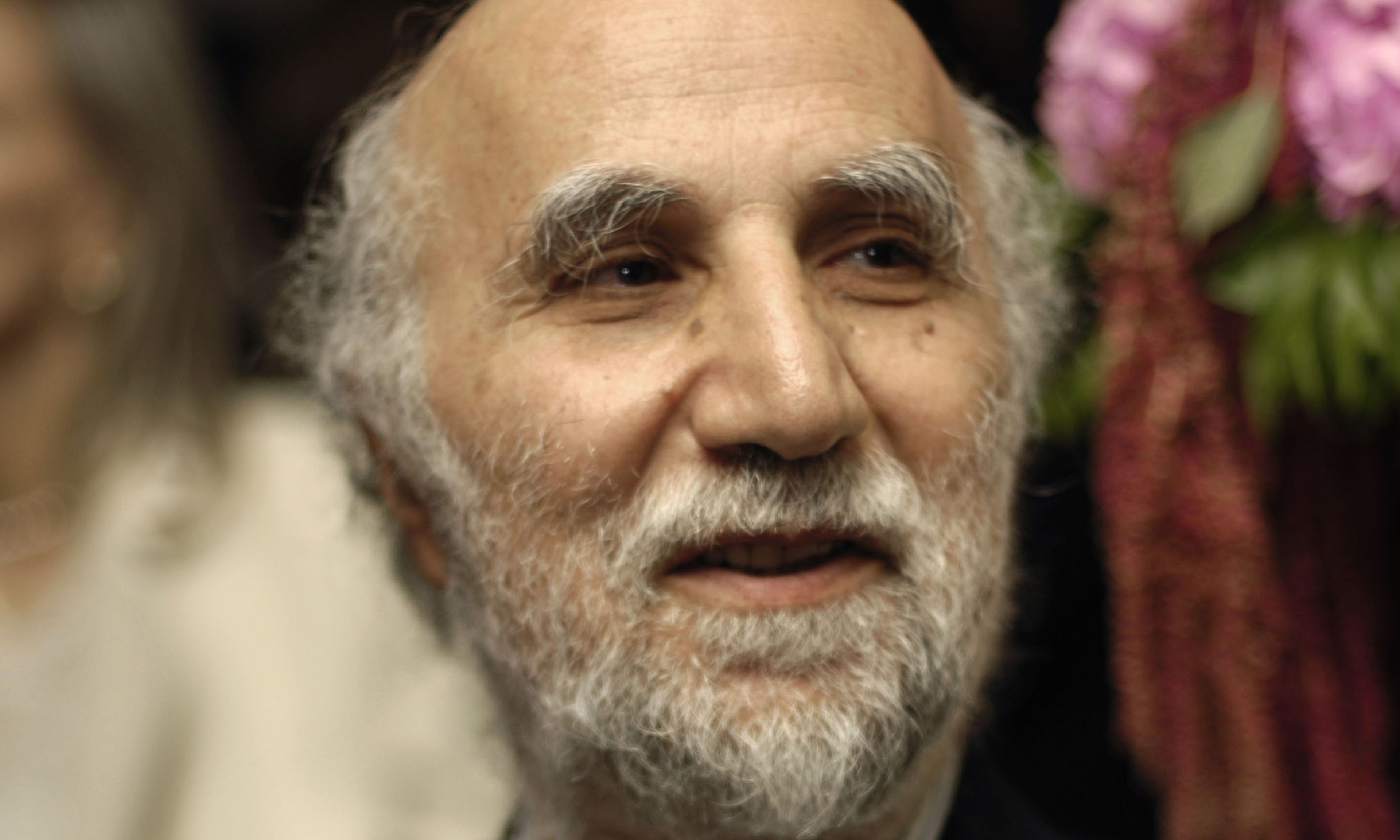
At the time of writing this posthumous memoir, which has all the makings of a classic, Fouad Ajami was preeminent among Middle East scholars and specialists. Government, academies, and the media were in the habit of asking him to interpret events anywhere and everywhere in the Middle East. Born in 1945, Ajami belonged to a generation certain that the quickening death of the British and French Empires was their opportunity. Self-government was expected to give Arabs their rightful place in the universe. Instead, their independence has been a shattering example of misrule, a disaster that runs from the middle of the 20th century right up to the present day.
It is almost a rule that an Arab historian or journalist is a partisan promoter of his own country and religious sect, unwilling to see anything good in the others. Fouad Ajami saw things differently. He was a Lebanese Shia and they were — and still are — the sect estimated to be a majority in Lebanon. The mountainous south of the country has so many Shia villages that the area seems like official Shia territory. Reflecting on Arnoun, the village of his childhood, Ajami judges it to have been forbidding and ill starred, though adding that he was glad to have inherited the ways of the land.
The alternative Sunni sect is probably a minority in Lebanon but has the means and the power to ensure its supremacy, leaving the Shias to count their numbers and cherish a sense of martyrdom. Ajami was able to remember good Sunni Muslims saying that “it was more meritorious to kill one Shia than seventy Christians.”
Ajami doesn’t say so in so many words, but the thrust of his book, its whole tone, is that the wretched plight of the Arabs will last until there is a state in which Sunni and Shia, and any other minority, meet on equal terms. The past once served the Arabs very well but no longer does. The magic that made for success has long since vanished, leaving traces of custom in its place. Custom obliges otherwise rational men and women to believe all manner of irrational things, and then to act on them without question.
Ajami’s opening chapter tells the cautionary story of Dalal, a sophisticated young woman who is not given a family name and may or may not be a relation. Dalal’s open friendship with men was common knowledge. In the light of custom, private conduct of the kind ruined the family’s reputation. “Sadness and grief,” in Ajami’s words, “were better than disgrace.” So her mother killed Dalal, pretended it was suicide, and everyone, including the police, pretended to believe her. Custom in this case is a cover for murder and hypocrisy.
“I grew up,” Ajami writes, “somewhere between my father’s capricious triumph and my mother’s laments.” “Capricious” is a favorite word of Ajami’s, and he gives it the special meaning of doing customary things that are irrational but done just the same because reputation hangs on it. Fouad feared and obeyed Ali, his father, portrayed as a man prepared to commit any cruelty that raised his status. To make money, he forsook the family and went to live in Saudi Arabia. Fouad was glad to see him go. A single short sentence makes the point: “Defeat invited shame into our world.”
Bahija, his mother, could sign a document only with her thumbprint. Ali was her second husband, and Ajami speaks of a slide to dishonor that would ruin him and his brother. Her view of the world was that one ought to kiss the hand one could not break and ask God to break it. Leaving their village, the family settled in the Armenian quarter of Beirut. Sunni gangs were in the background. Ajami’s voyage of discovery and understanding began in a shack where he slept under a tin roof. At school, Arabic grammar was a torment: “It had its capricious ways.” The little he knew about the United States came from westerns. High Noon was his idea of a perfect film. Movies made America accessible, and Britain and France had nothing of the kind to offer. Dispensing at last with Arabic subtitles gave him a sense of being set apart from the less fortunate. Ajami came to write an English that moves easily, and sometimes even in the same sentence, between facts and emotions, in a style for which “beautiful” is the only fitting adjective.
Ajami was 19 when he set out on the academic career that was to take him to Johns Hopkins University and the Hoover Institution. His early writings were on issues of special interest to fellow Shias, for instance the mysterious disappearance of a popular imam. After publishing in 1998 a book with the title “The Dream Palace of the Arabs,” he stood apart, a realist courageous enough to tell other Arab writers that they had some responsibility for the political and ideological calamity they were having to live with.
The run-up to the 2003 invasion of Iraq was Ajami’s moment in the corridors of power, and he documented it in The Foreigner’s Gift (2006), another title that speaks for itself. Saddam Hussein was a Sunni, but Ajami was working only to overthrow a brutal dictatorship. There was no gift and there were no meetings as equals either. As soon as President Bush made them victorious, Iraqi Shias persecuted Iraqi Sunnis just as the Sunnis had previously persecuted them. Custom got the better of them all, including Fouad Ajami.












Comments