Covid-19 was the greatest disruption in the history of American schooling, and children have borne the consequences. Among those, lost learning usually gets top billing. The Biden White House recently announced that students “are on average two to four months behind in reading and math because of the Covid-19 pandemic.” This July, Education Secretary Miguel Cardona decried students’ “unfinished learning” as the reason to get academic recovery in full swing. American Federation of Teachers president Randi Weingarten lamented that after “two years of disruption,” recovery “is really tough.”
What Weingarten conveniently leaves out is the reason for “two years of disruption.” Time and again, cautious state and school leaders — disproportionately Democrats in concert with teachers’ unions — extended school closures or strict Covid protocols, demonstrated little responsiveness as new evidence on Covid emerged, and minimized the trade-offs. Many red-state leaders did the opposite, damning the torpedoes even when Covid threats skyrocketed. While both parties demonstrated remarkable inflexibility in their Covid responses, it is the most Covid-cautious bets that proved most disastrous for students.
Now, in the third pandemic summer, it’s worth remembering that things didn’t always look so dire, or so politically divided. Back in the first Covid summer, in 2020, prospects for the new school year seemed bright, and blue-state leaders were looking pretty good. In March 2020, all schools — in both red and blue states — closed for the rest of the school year. In the early-pandemic fog — with limited understanding of the virus’s lethality and transmission, of therapeutics or mitigation measures (remember the CDC’s early urging of Americans not to mask up?), and of the relative health threat to students — that was a reasonable decision.
During that spring, blue-state leaders did an admirable job providing the best possible approximation of routine, in-person learning. As I documented, 86 percent of blue-state districts got asynchronous learning platforms such as Google Classroom up and running that spring, compared with 79 percent of red-state districts, and over half of blue-state districts offered synchronous options such as Zoom, compared with less than a third of red-state districts. Blue states also better ensured that students had the devices, Internet access, and direct contact with teachers that made the best of a terrible spring.
By early summer 2020, we looked to be successfully “bending the curve” of Covid cases, and school leaders in both red and blue states were optimistic about plans for reopening and recovery. But then Covid cases began to rise again, and on July 6, President Trump took to Twitter to announce, “SCHOOLS MUST OPEN IN THE FALL!!!” He quickly doubled down, asserting that school closures were “causing death,” and he threatened to strip federal funding from any school that didn’t reopen.
Almost overnight, school reopening became politicized, with a plainly Covid-cautious Left and a decidedly Covid-assertive Right. In D.C., public-school teachers marched with body bags to protest reopening plans. New York City protesters carried coffins. Legacy-media outlets such as the Washington Post accused Florida governor Ron DeSantis of “a high-stakes gamble” for pushing to reopen schools. Even limited, conservative reopening plans became lightning rods for criticism in blue states. As my American Enterprise Institute colleague Rick Hess (who writes elsewhere in this issue of NR) put it at the time: “If you had told me that Trump was doing this as a favor to the schools-must-not-open crowd, I’d believe you.”
That fall’s reopening plans reflected the sharp partisan division. As a July 2020 Brookings analysis found:
There is no relationship — visually or statistically — between school districts’ reopening decisions and their county’s new COVID-19 cases per capita. In contrast, there is a strong relationship — visually and statistically — between districts’ reopening decisions and the county-level support for Trump in the 2016 election. . . . On average, districts that have announced plans to reopen in person are located in counties in which 55% voted for Trump in 2016, compared to 35% in districts that have announced plans for remote learning only.
The political polarization seen at reopening endured across the 2020–21 school year. Case rates increased sixfold from September to January and then decreased by an even greater proportion by June, but despite this huge variation in Covid threat, factors associated with local attitudes on the “right” way to respond to the pandemic — including districts’ 2020 presidential-vote share, community masking preferences in summer 2020, and vaccine hesitancy in March 2021 — were more predictive of school closures than were Covid case rates.
Neither red nor blue school leaders were especially flexible in their responses to Covid. At the December height of the 2020–21 Covid threat, before vaccines were widely available, less than one in five Trump-voting school districts took the precaution of going fully remote. Before March, less than one in five Biden districts were fully open on any given week. By April, when vaccines were available and cases had fallen dramatically, only about one-third of Biden districts had fully reopened, compared with more than 60 percent of Trump districts. The first full pandemic year, the highest percentage of Biden districts that were fully in-person (38 percent in June 2021) never reached the lowest percentage of Trump districts (40 percent in January).
Disproportional Covid caution was devastating for students. A Harvard study found that students who stayed home for most of 2020–21 lost a staggering 50 percent of a typical year’s learning in math, compared with 20 percent for those who were mostly in-person.
In retrospect, extended school closures look especially flawed because schools weren’t that dangerous — they were actually one of the safest places students could be. We had evidence of this as early as October 2020. A North Carolina study found that school-related Covid transmissions were less than one-tenth of what would be expected given community transmission rates. As Duke pediatrician Daniel Benjamin summarized: “It’s safer for them to be in school than to be outside of school.”
If this were a contest, it’s clear that red states won the second school year of the pandemic, not because of flexible or responsive governance, but because they made the right bet at the outset.
By May 2021, almost all school districts had restarted hybrid or fully in-person instruction, and another hopeful summer began. That July, Covid cases hit pandemic lows, setting expectations for a year of recovery from both students’ profound learning losses and public schools’ unprecedented enrollment losses — nearly 1.2 million K–12 students the previous year.
Of course, the pandemic thwarted that early-summer optimism. August’s rising waves of the Delta variant left little doubt that 2021–22 would be another pandemic school year.
Nearly all districts reopened that fall with full in-person learning options for full-time in-person schooling — a tacit admission that the previous year’s early reopeners had made the right call. But political divisions were alive and well, this time over school masking. Certainly, the stakes differed between the deprivations of school closures and the nuisance of mask mandates, but both the political divisions and the lack of responsiveness to pandemic threats were the same.
As cases rose in late summer, the CDC retightened recommendations to 100 percent school masking, with no standard for when masks could come off. Former president Trump inveighed against the recommendations by “Joe Biden and his Administration,” efficiently maximizing polarization over masks. Predictably, in September, nearly 78 percent of students in Biden districts were under a mask mandate, compared with just 42 percent of students in Trump districts. Through January 2022 — while Covid cases dropped by half and then rose by a factor of ten — less than one in six students saw their district’s mask requirement change.
In February the dam broke. Blue-state mask mandates began to fall, and the CDC finally changed guidance to reflect local Covid conditions — shifting school masking recommendations from 100 percent to 37 percent overnight. Over six weeks, the percentage of students under mask mandates dropped from 55 percent to 5 percent.
Though less so than with closures, the stakes for school mask mandates are high because they represent more than just masking. They reflect the prioritization of returning schools to some sense of normalcy.
Indeed, masking patterns largely vindicated parents’ enrollment decisions. In 2021–22, enrollments rebounded in the districts that had returned to in-person instruction earliest the year before. But they continued to fall in districts that had stayed remote the latest that year. Those districts lost one in 23 students over the preceding two years. The only factor more correlated with differences in masking patterns than the presidential vote was the amount of in-person schooling the previous year.
Extended mask mandates were symptomatic of a deeper problem: Schools weren’t back to normal, by their own admission. This year, nearly four in ten schools saw higher student absenteeism, five in ten saw higher teacher absenteeism, and six in ten found that substitutes were harder to find. These are comparisons with the first pandemic school year, not the pre-pandemic levels. Eight in ten schools reported increased behavioral and socio-emotional struggles among students. Atop these struggles, 45 percent reported that “Covid-19 mitigation strategies” had had moderate or large negative impacts on teachers’ classroom management this school year. A tough year across the board, it was likely tougher in mostly blue districts with extended mask mandates.
That’s not to let red-state leaders off the hook. While red states made better bets about schools’ Covid responses over the last two school years, too many did so with no regard to pandemic surges. Indeed, in transparent attempts to signal their own pandemic resilience, several leaders sued districts in their state that dared to require masks in schools. Though preferable to excessive caution, their enforced judgments of pandemic risk likely had consequences for public health and school operations and were not backed by superior science.
Over two years, schools’ Covid responses have been politically divided and disappointingly unresponsive to shifting pandemic threats. Excessive Covid caution has proven, and will continue to prove, damaging to students and schools, but recovery will take leadership more responsive than what we have seen on both sides.
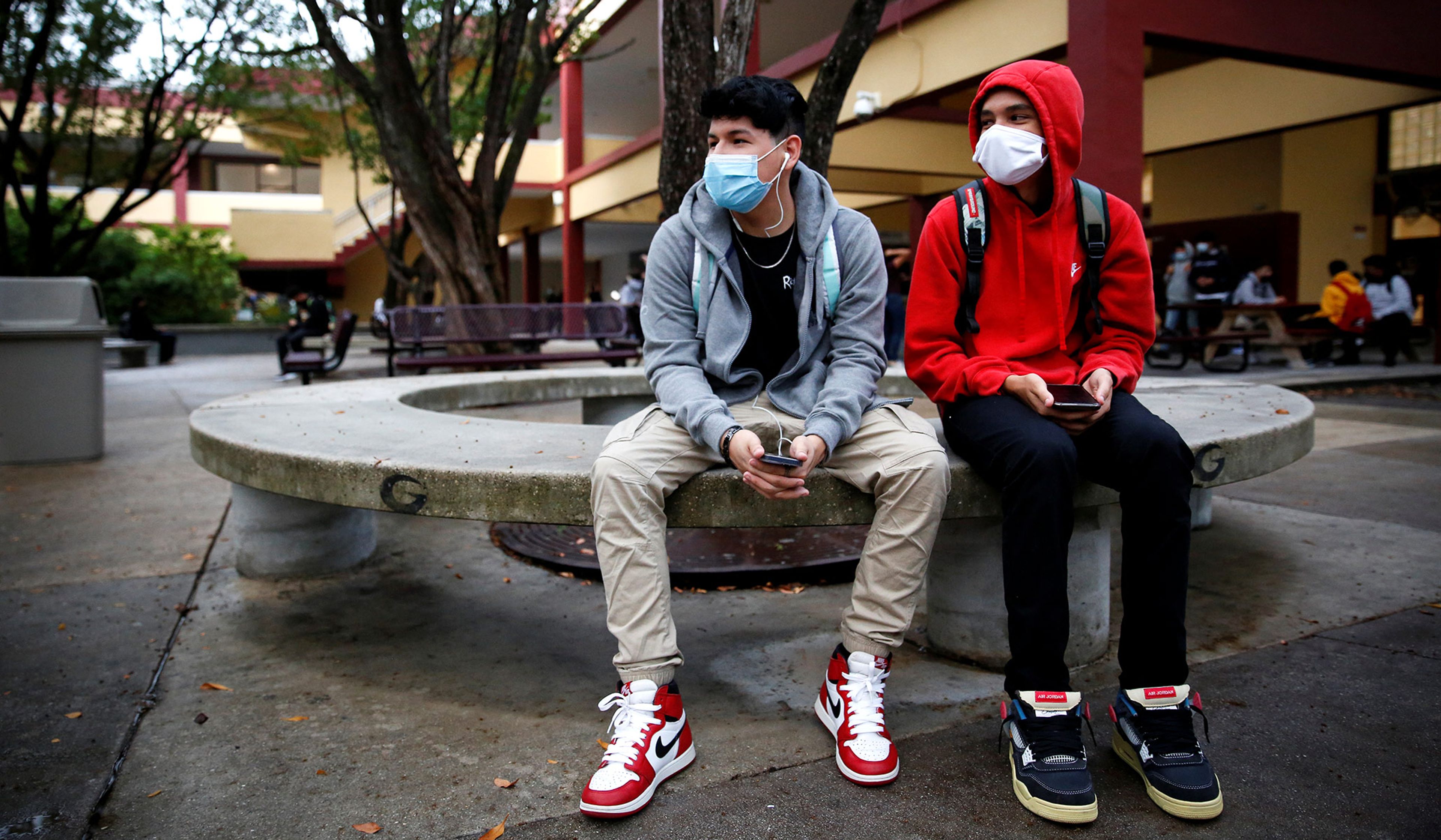
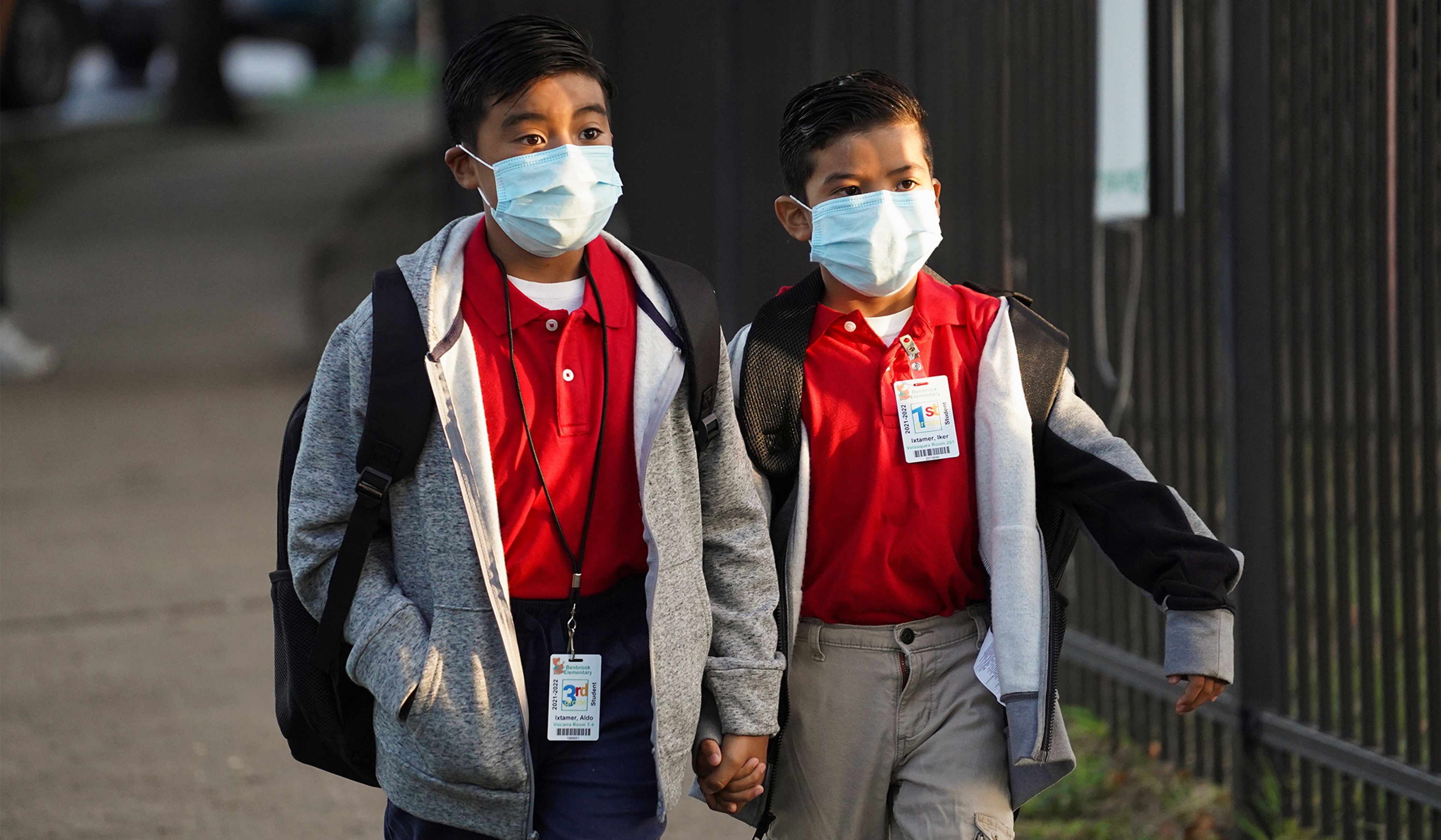
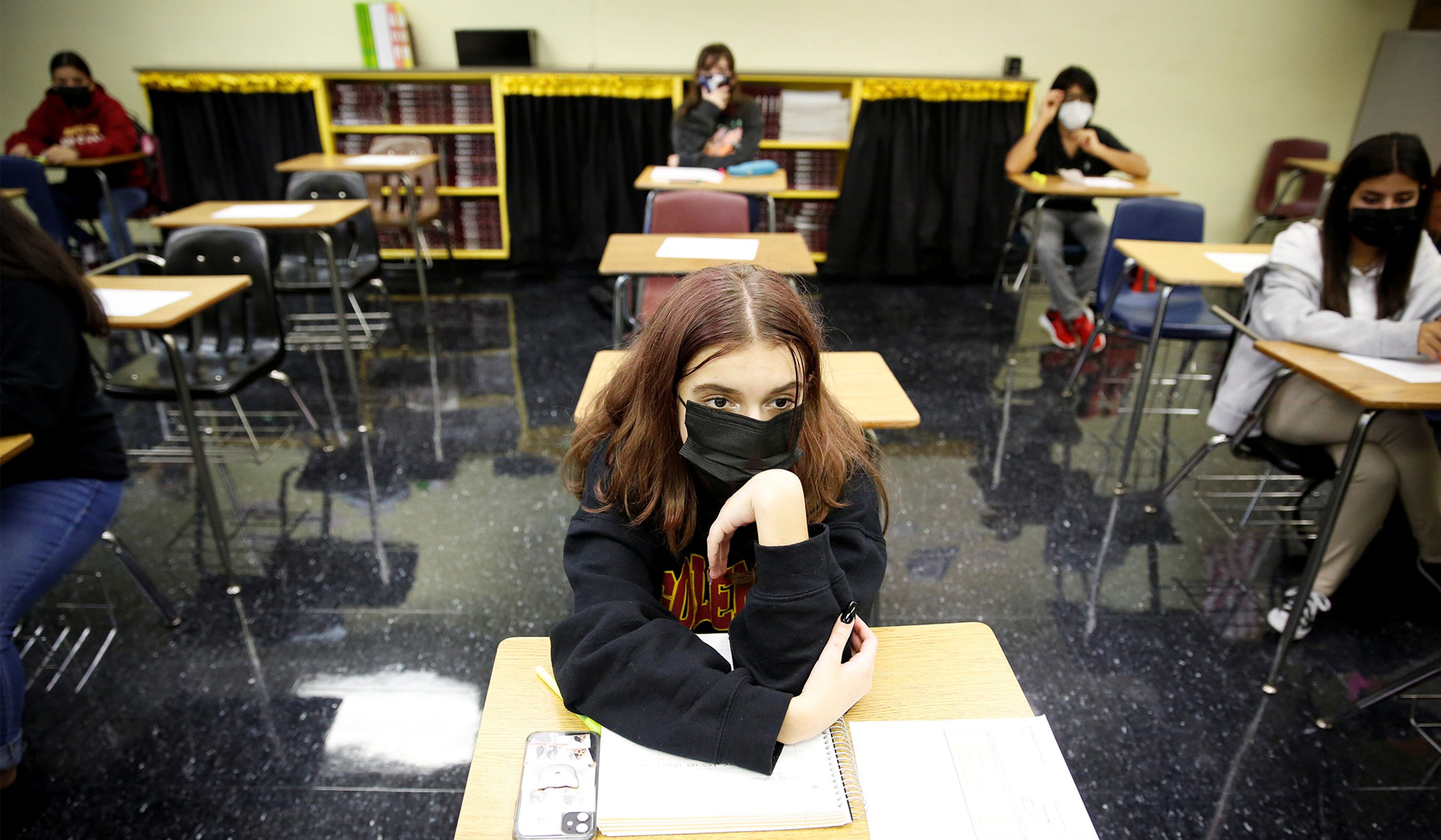
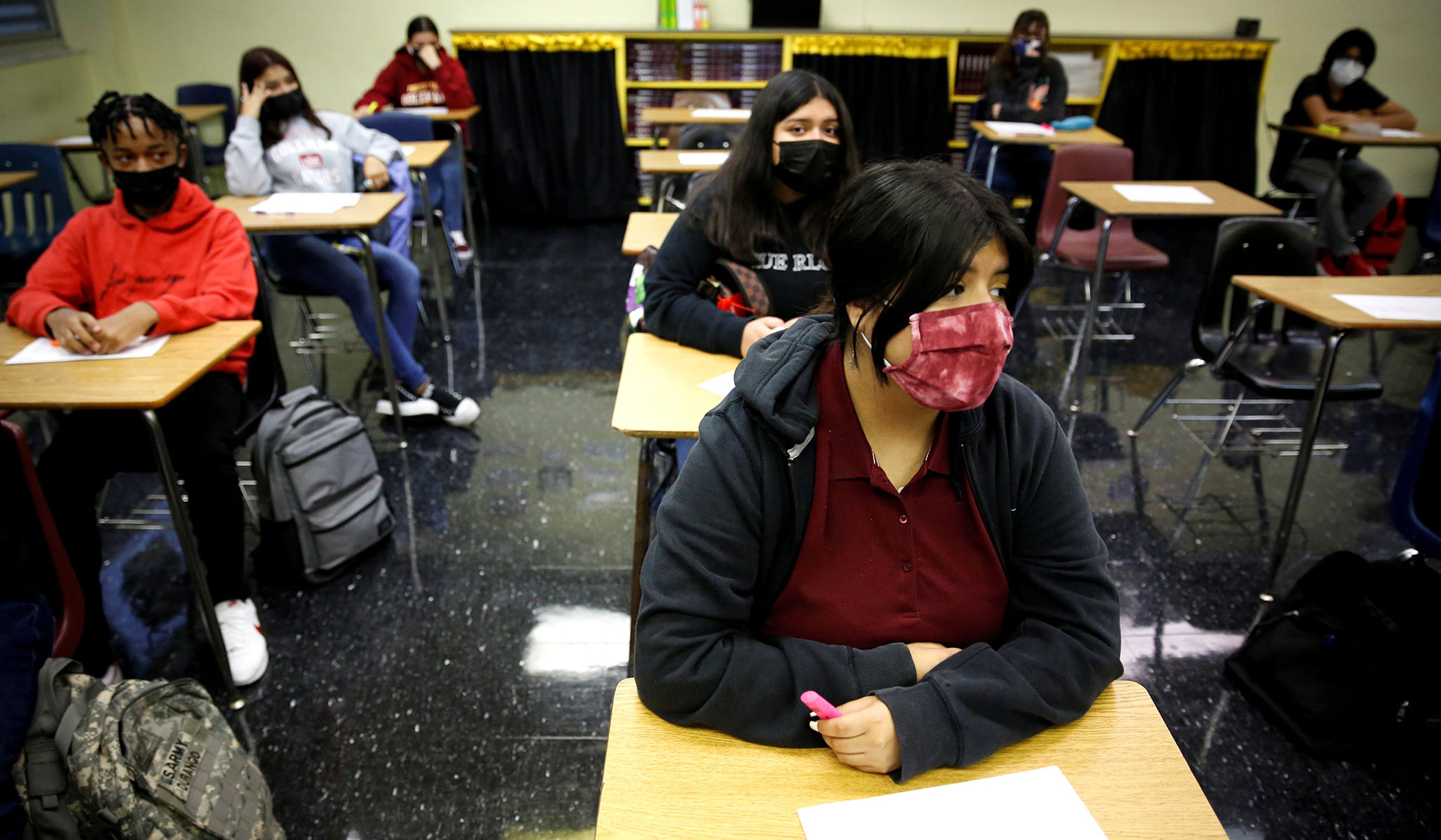
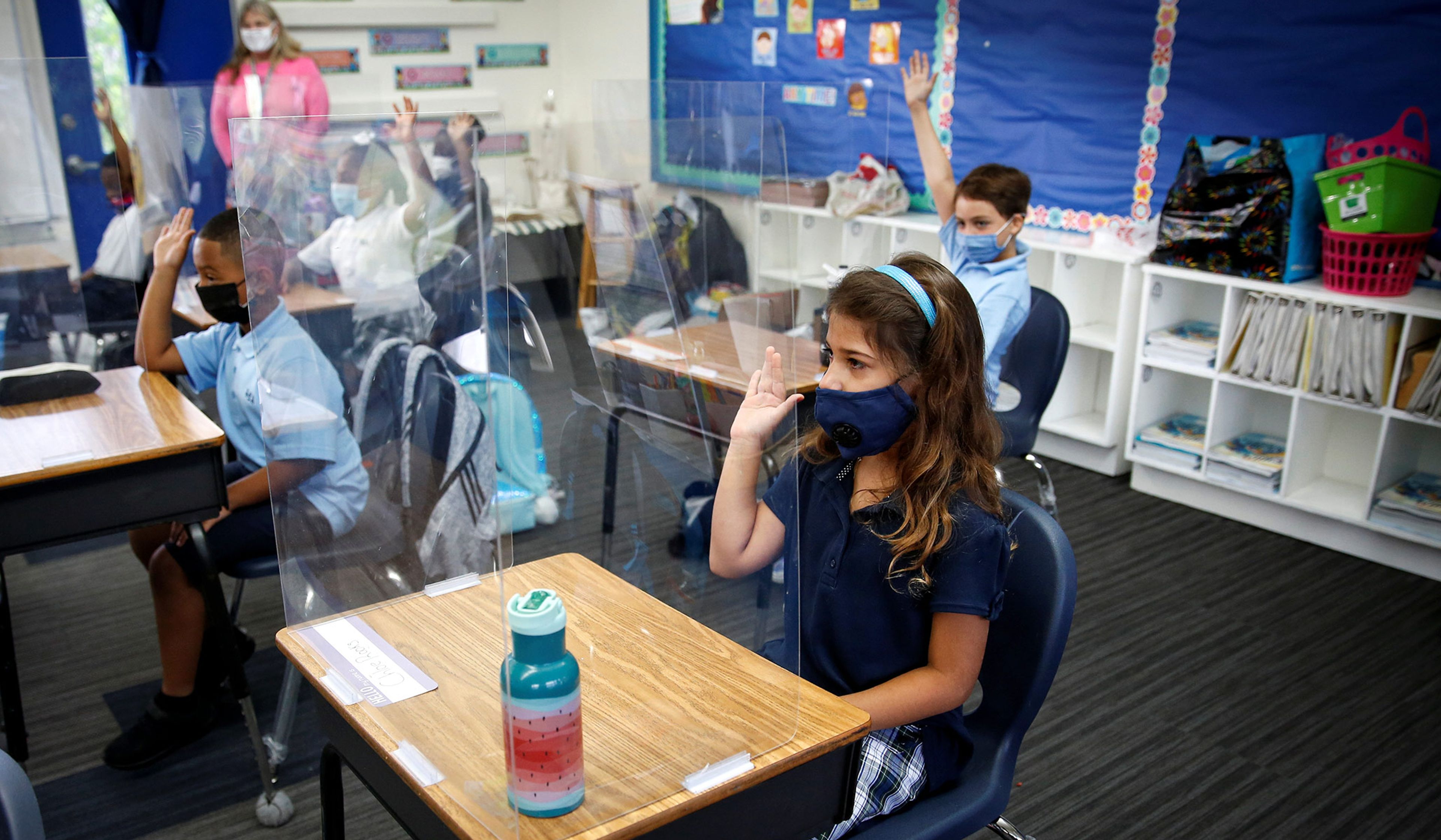
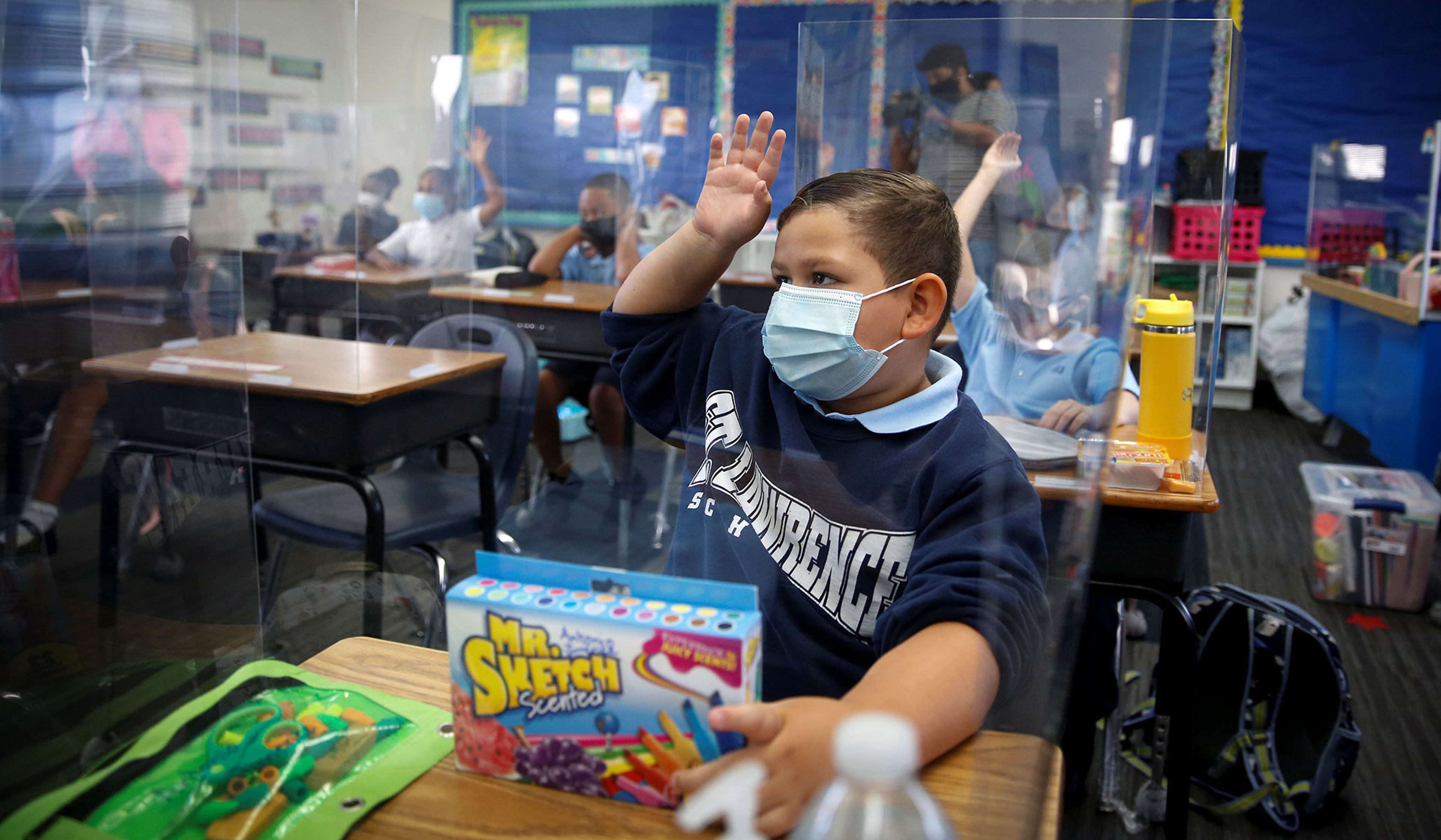
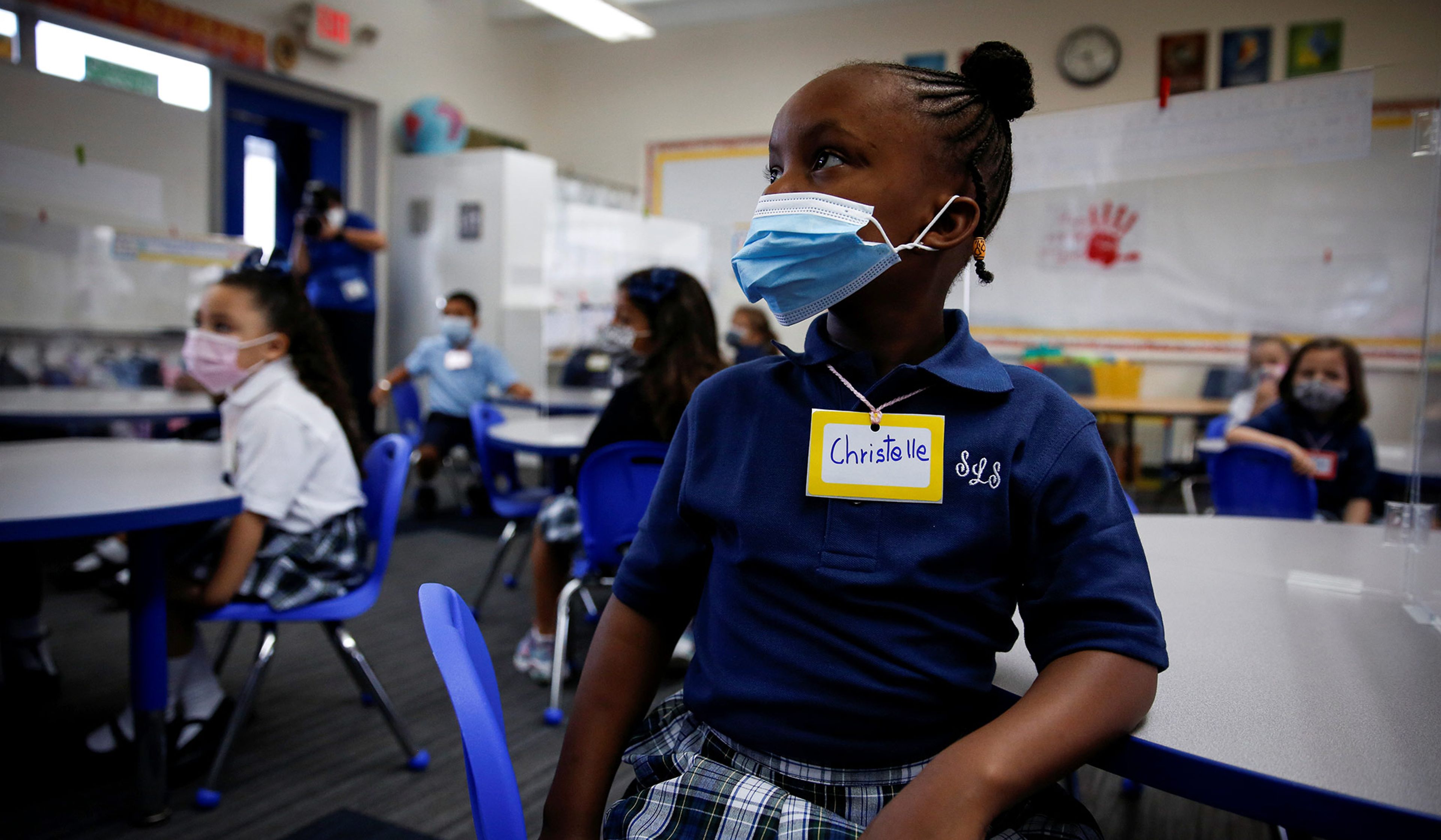
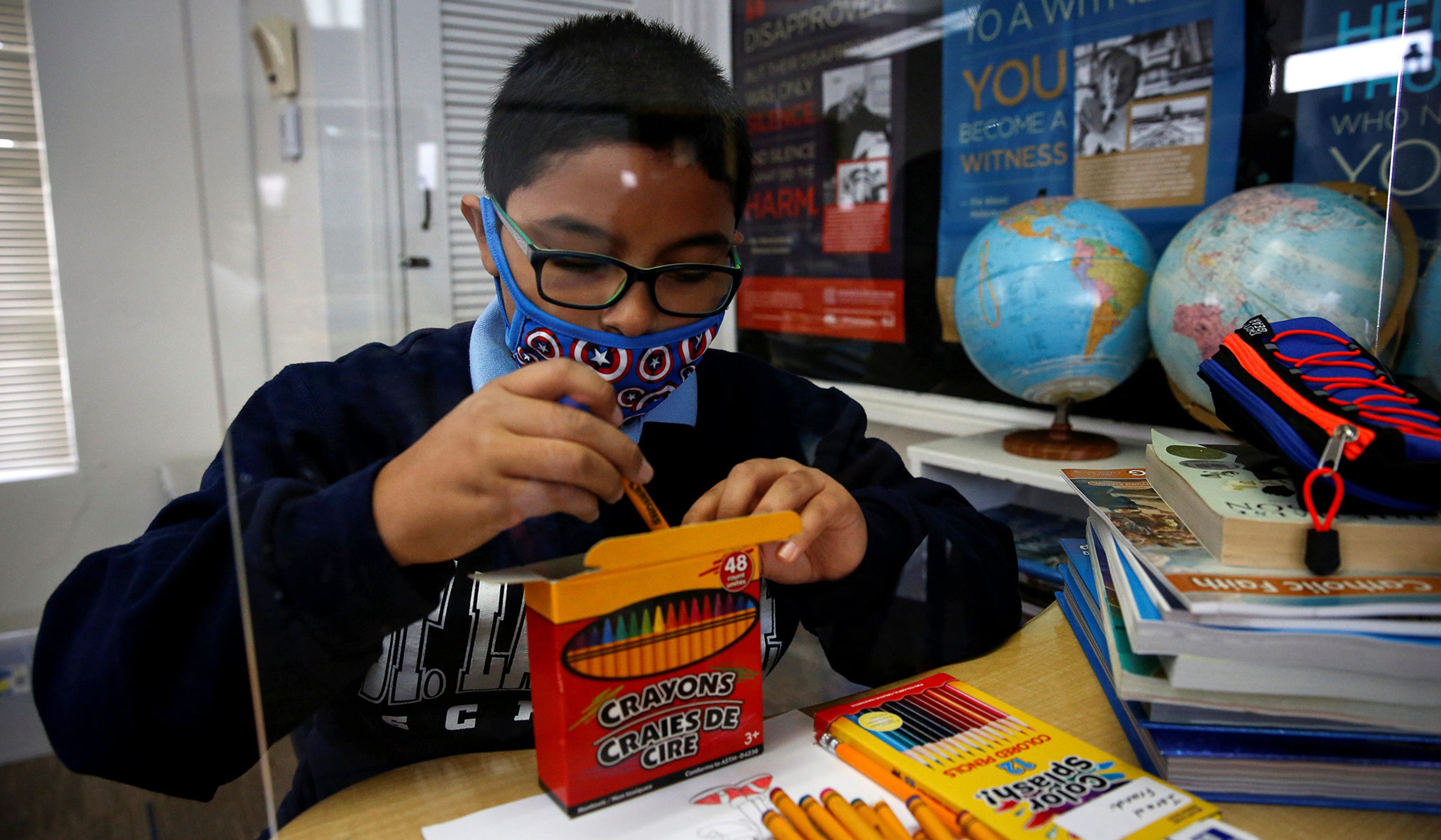
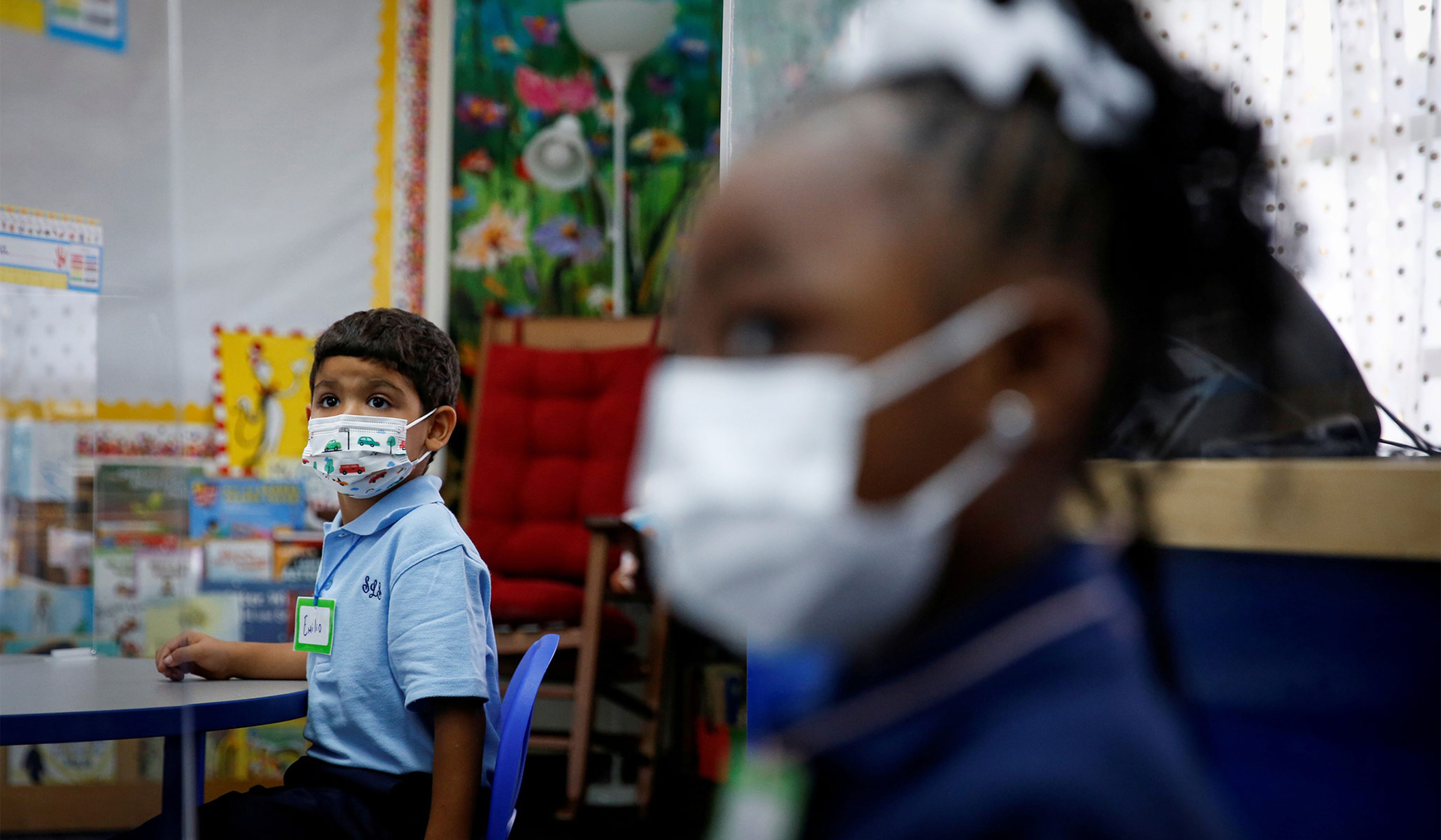
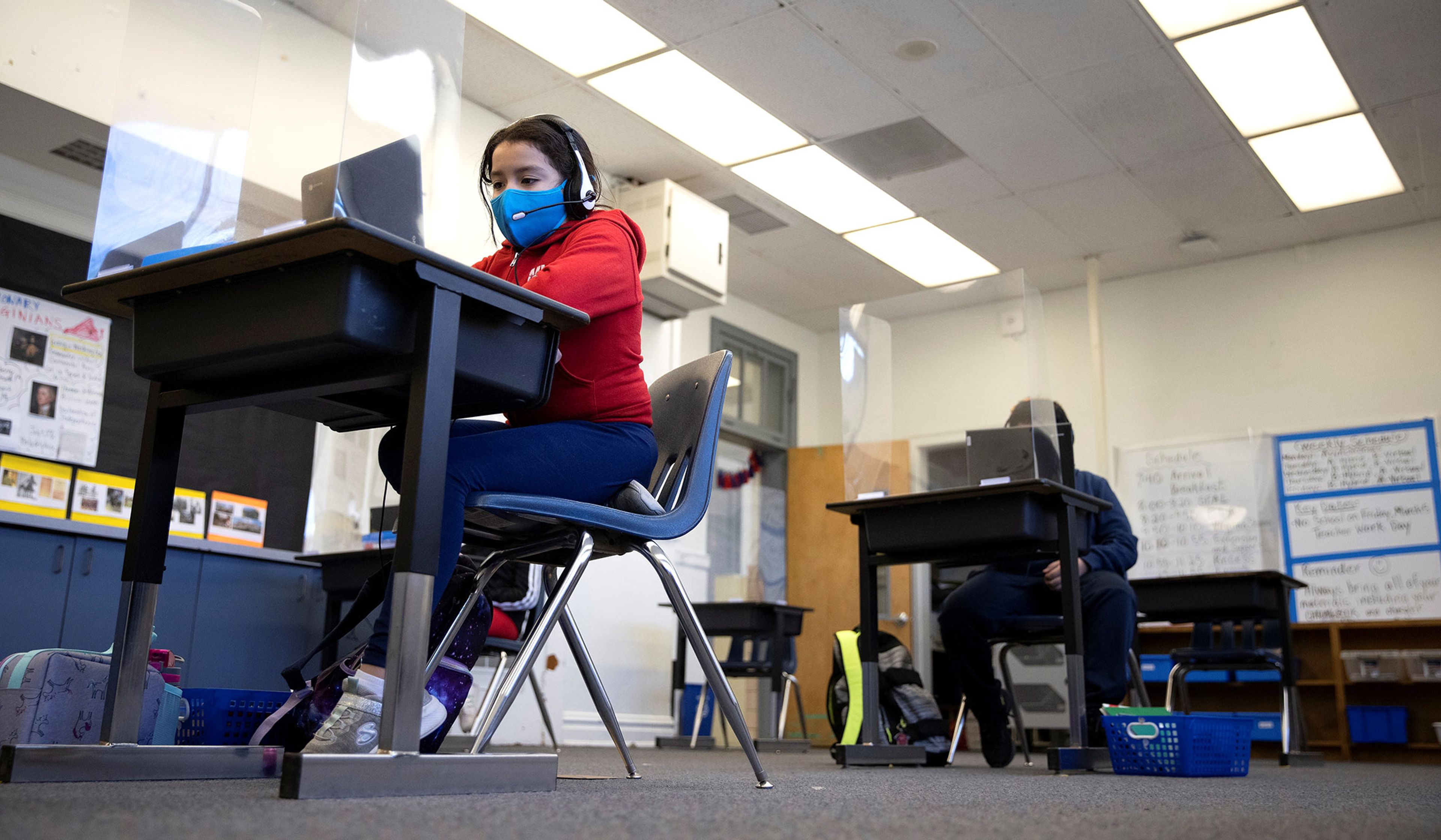
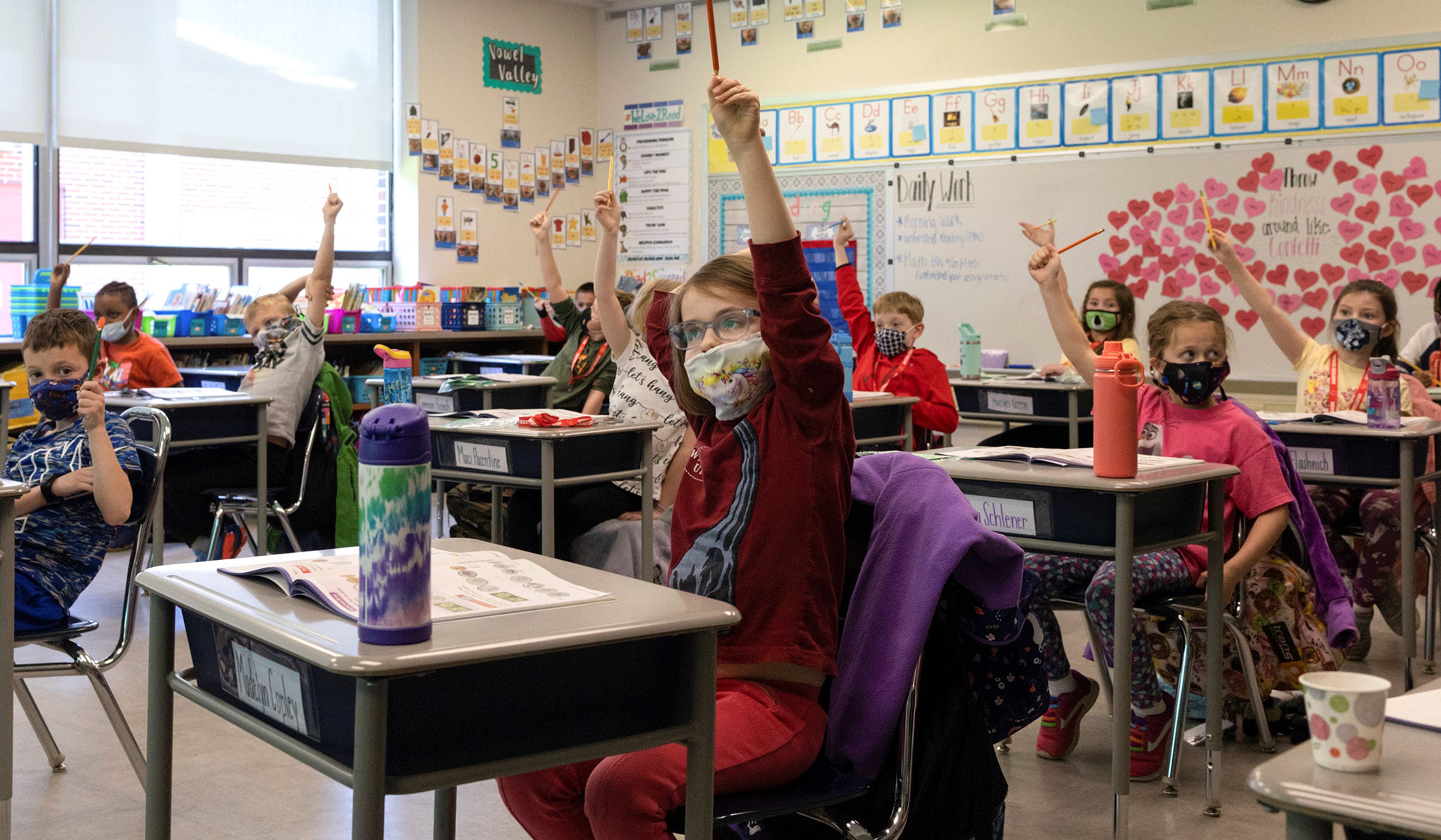
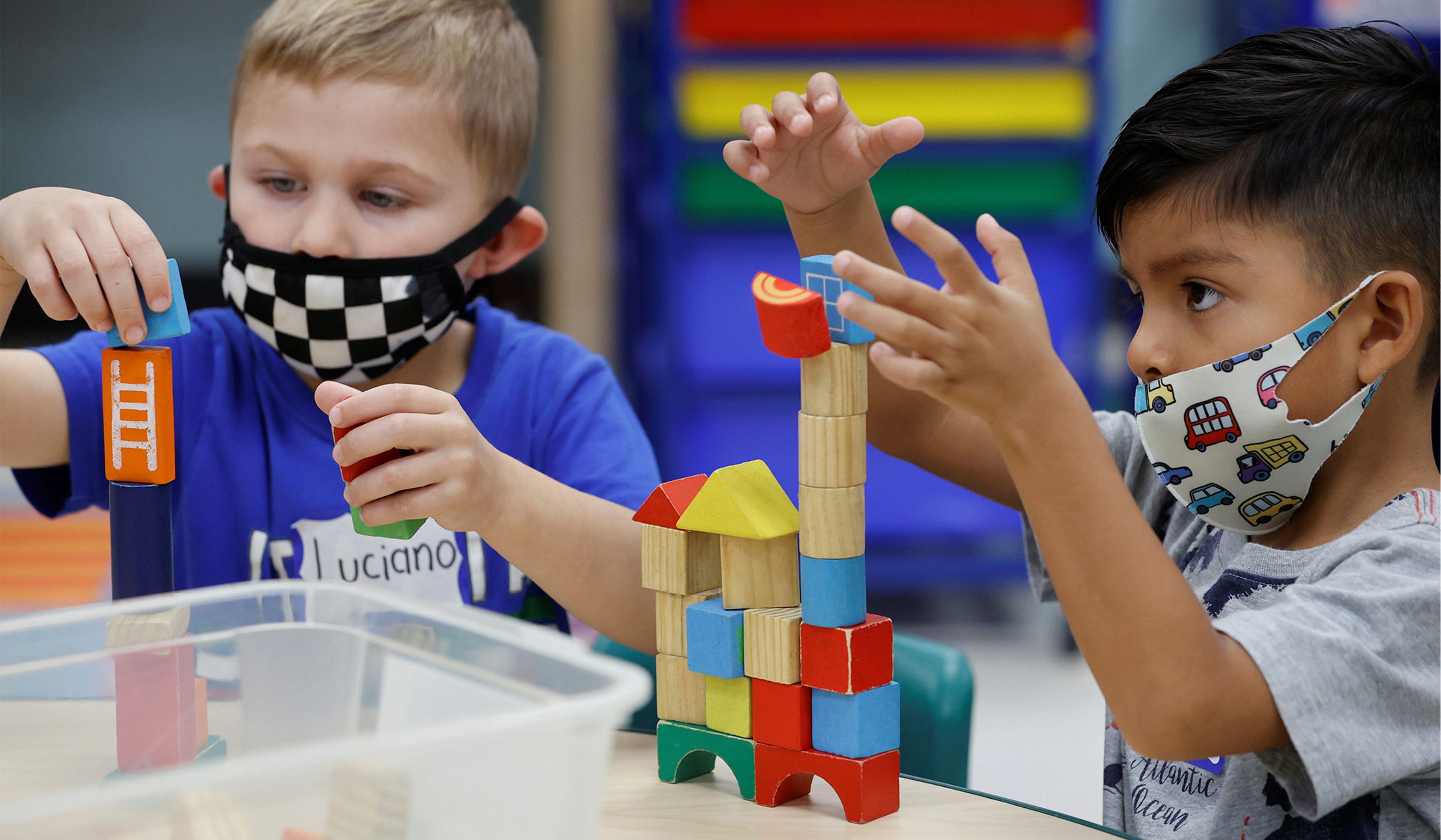
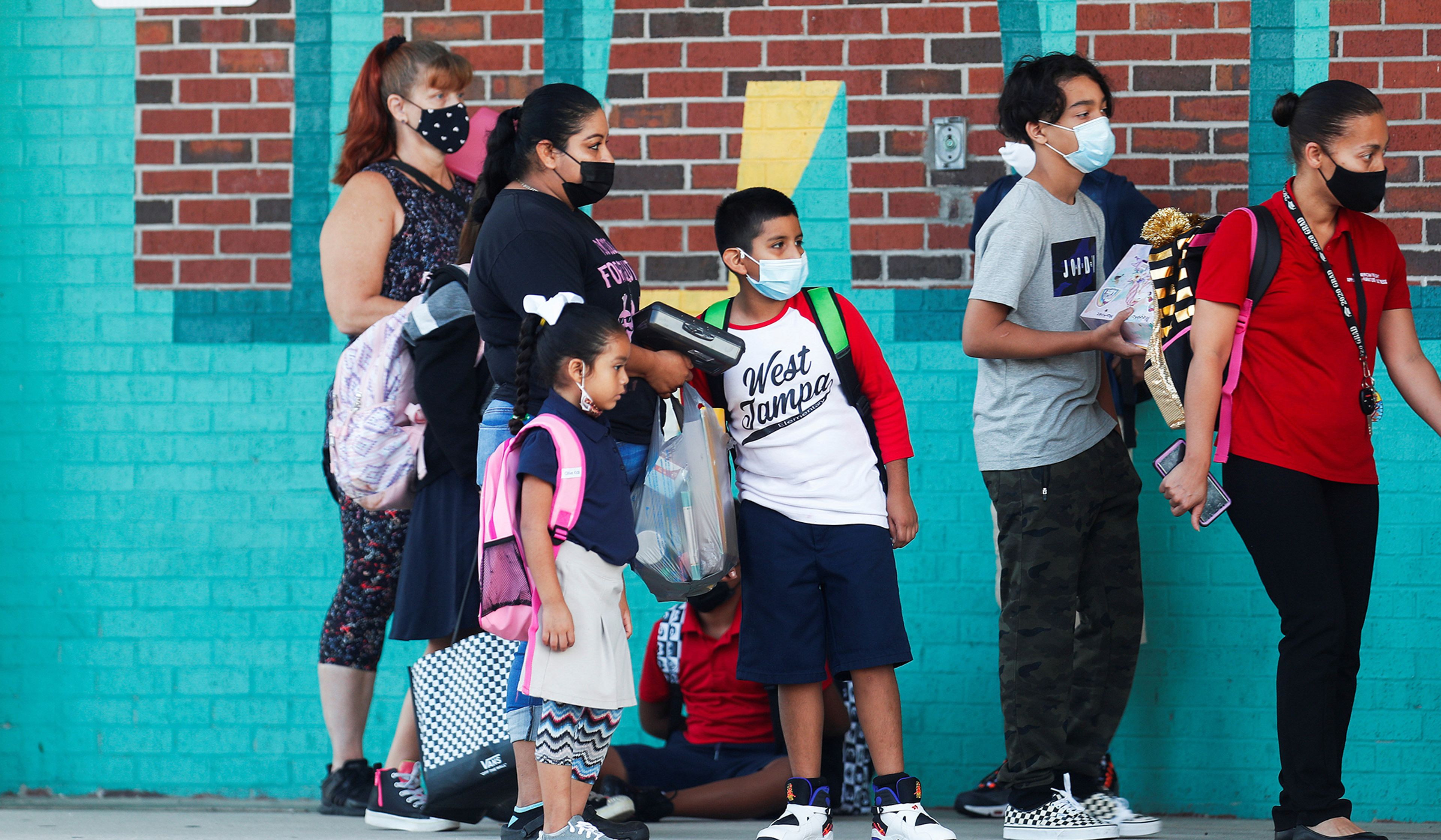
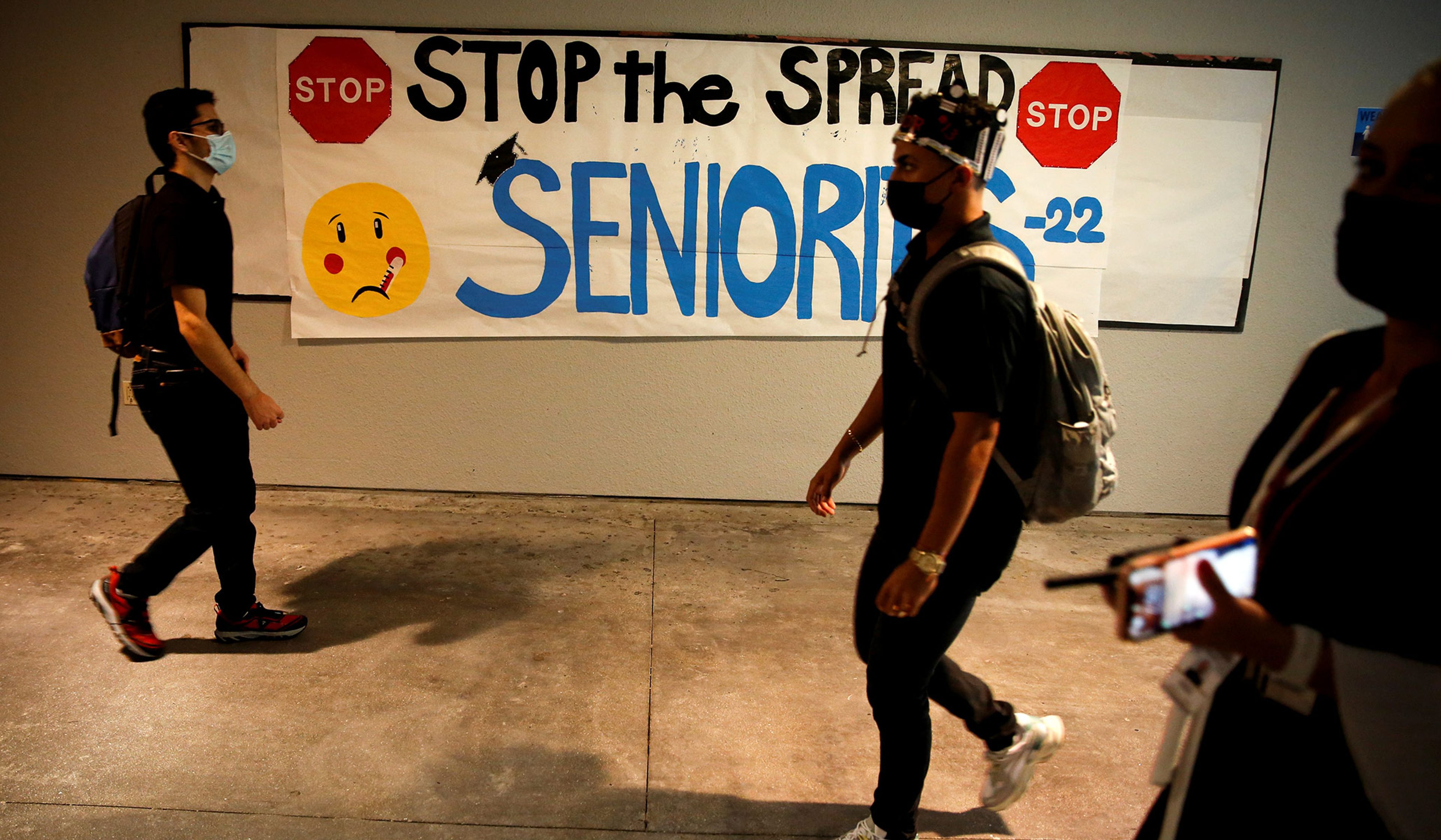
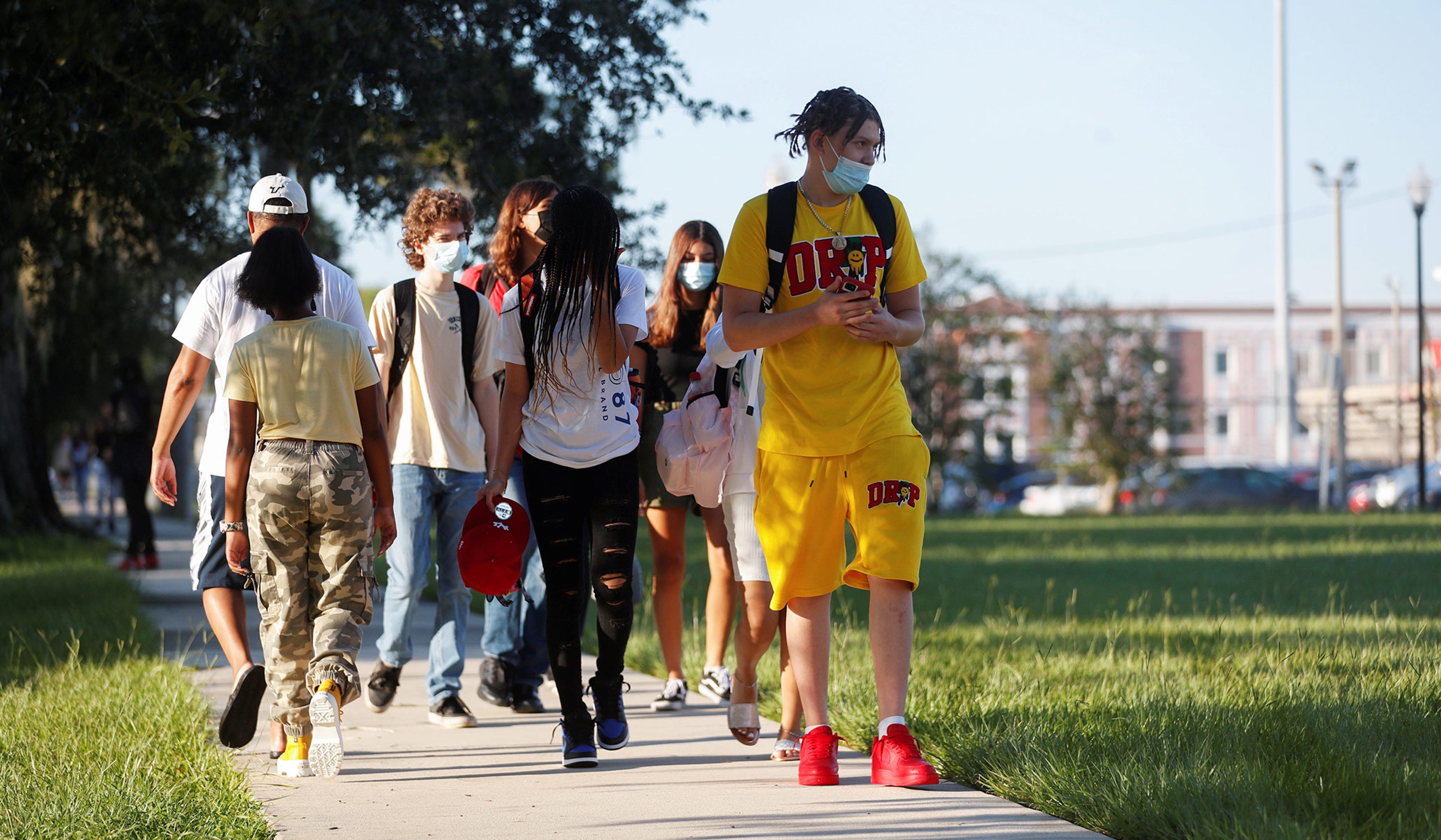
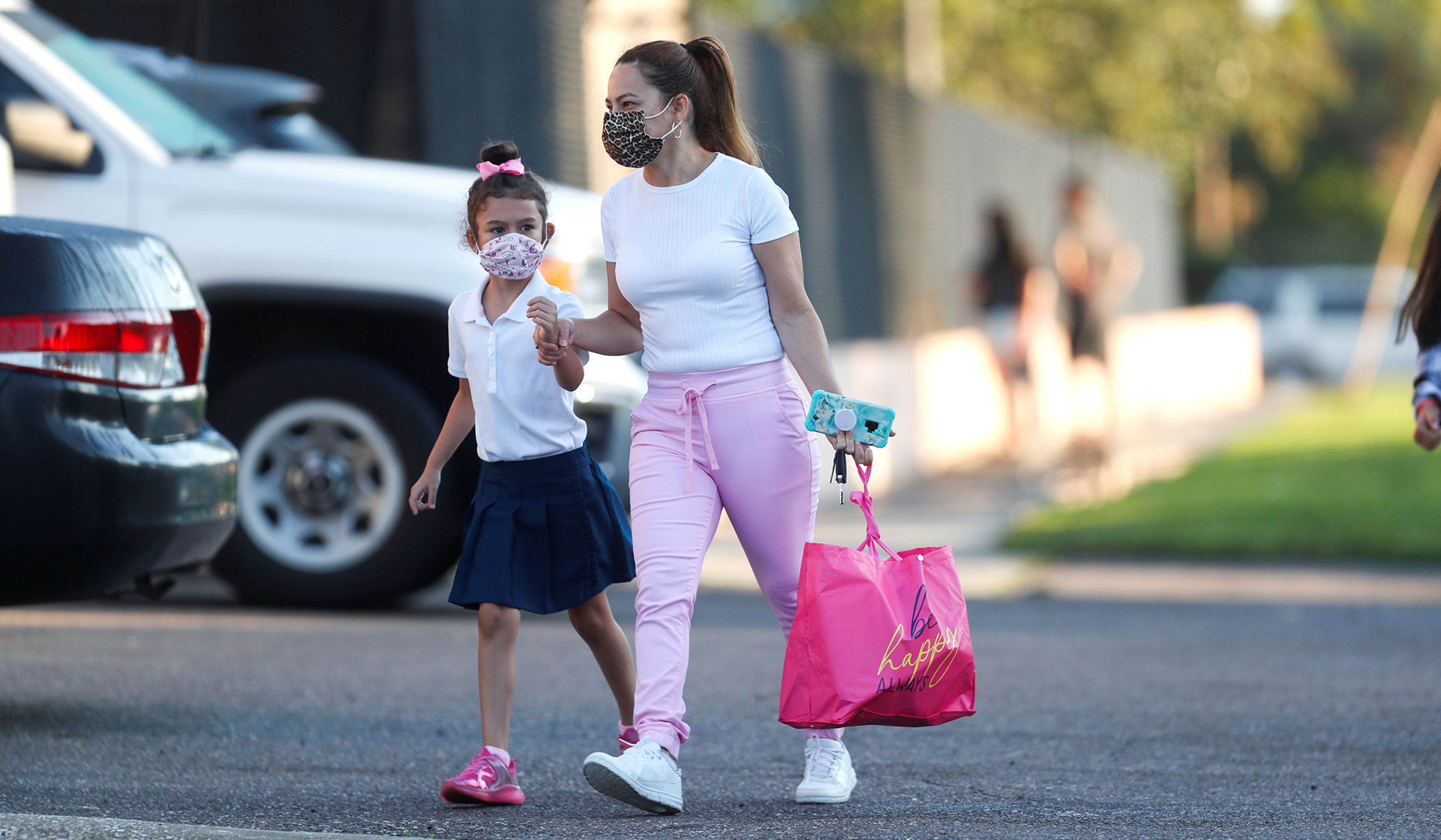
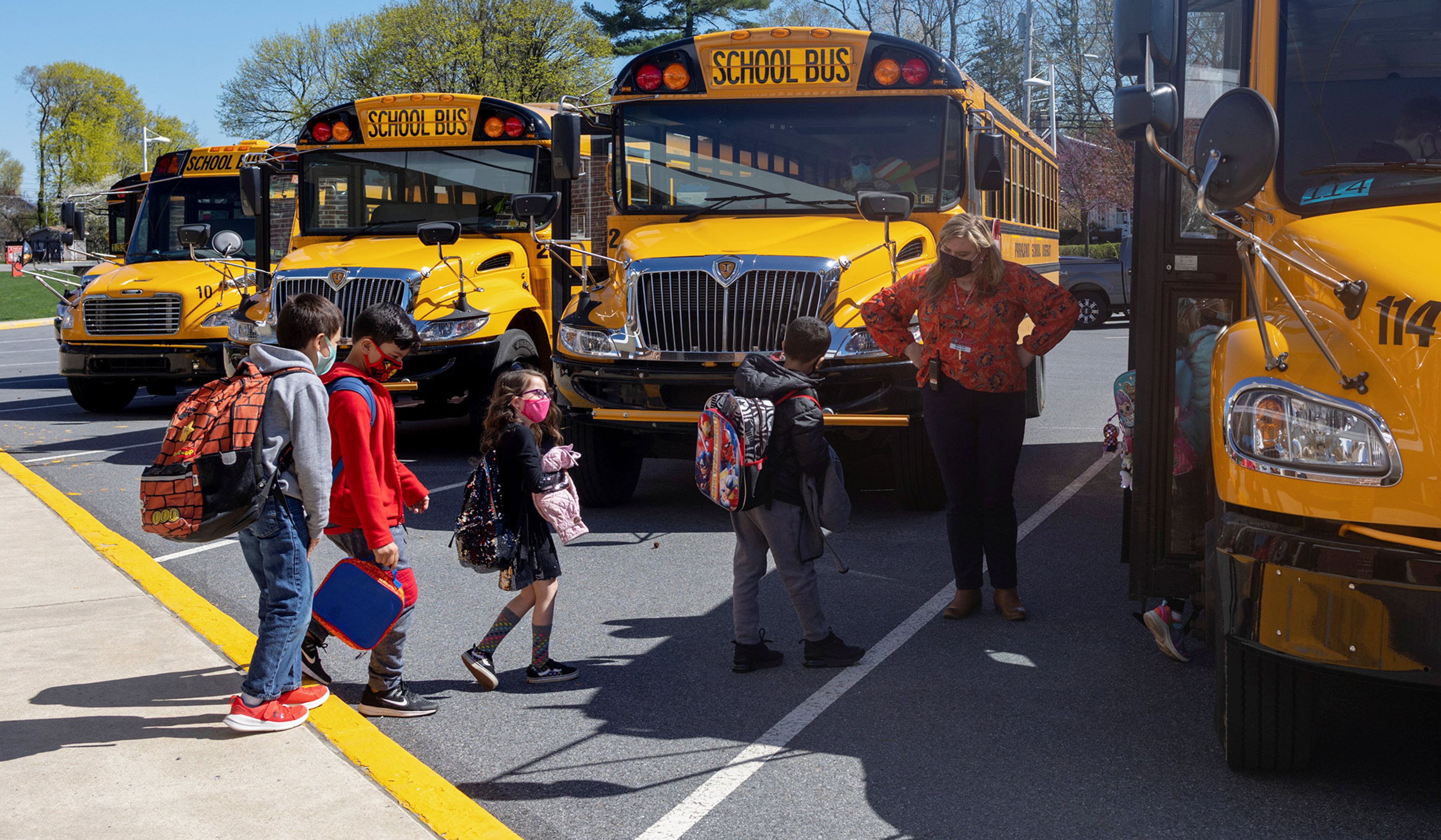
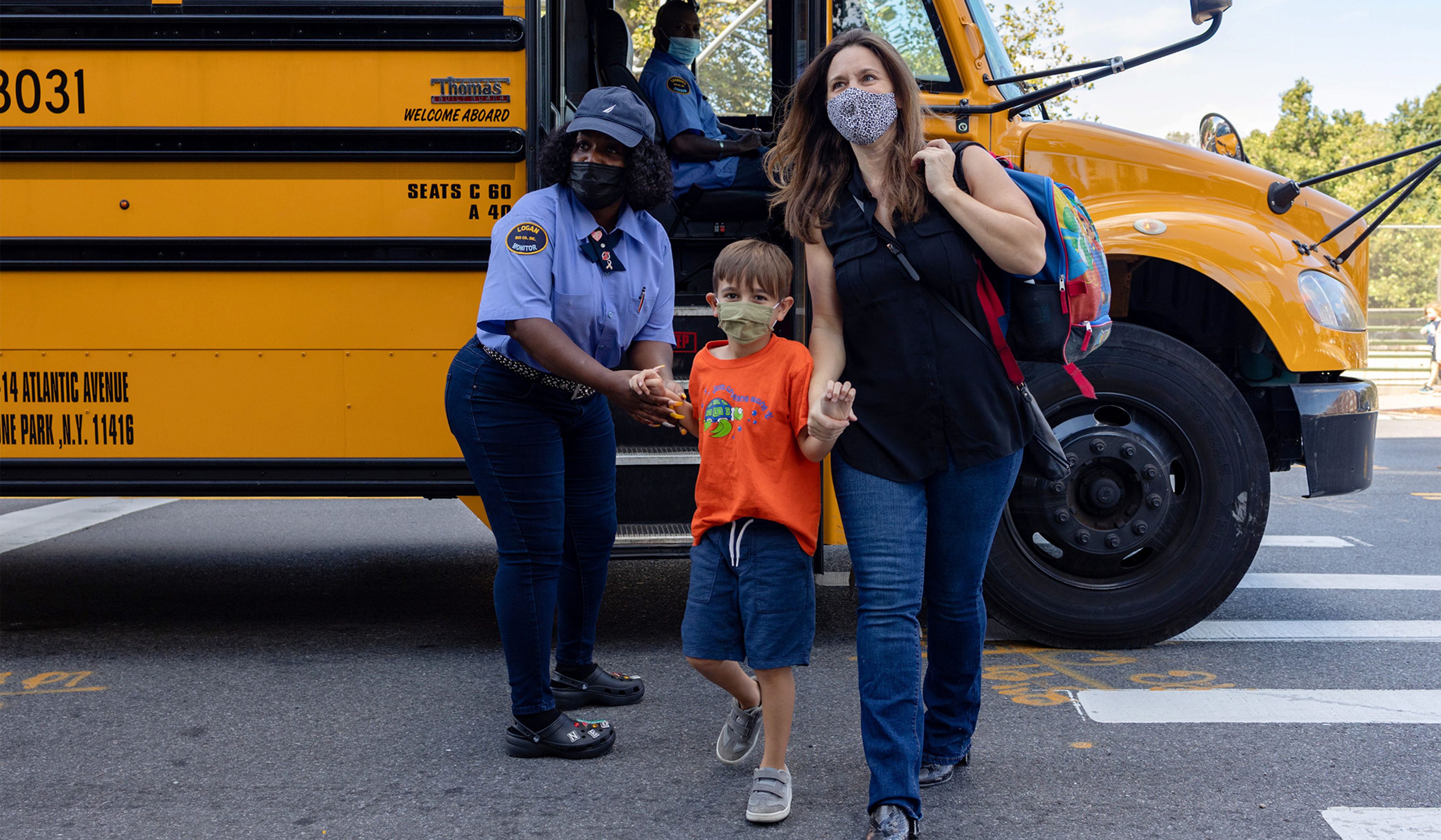
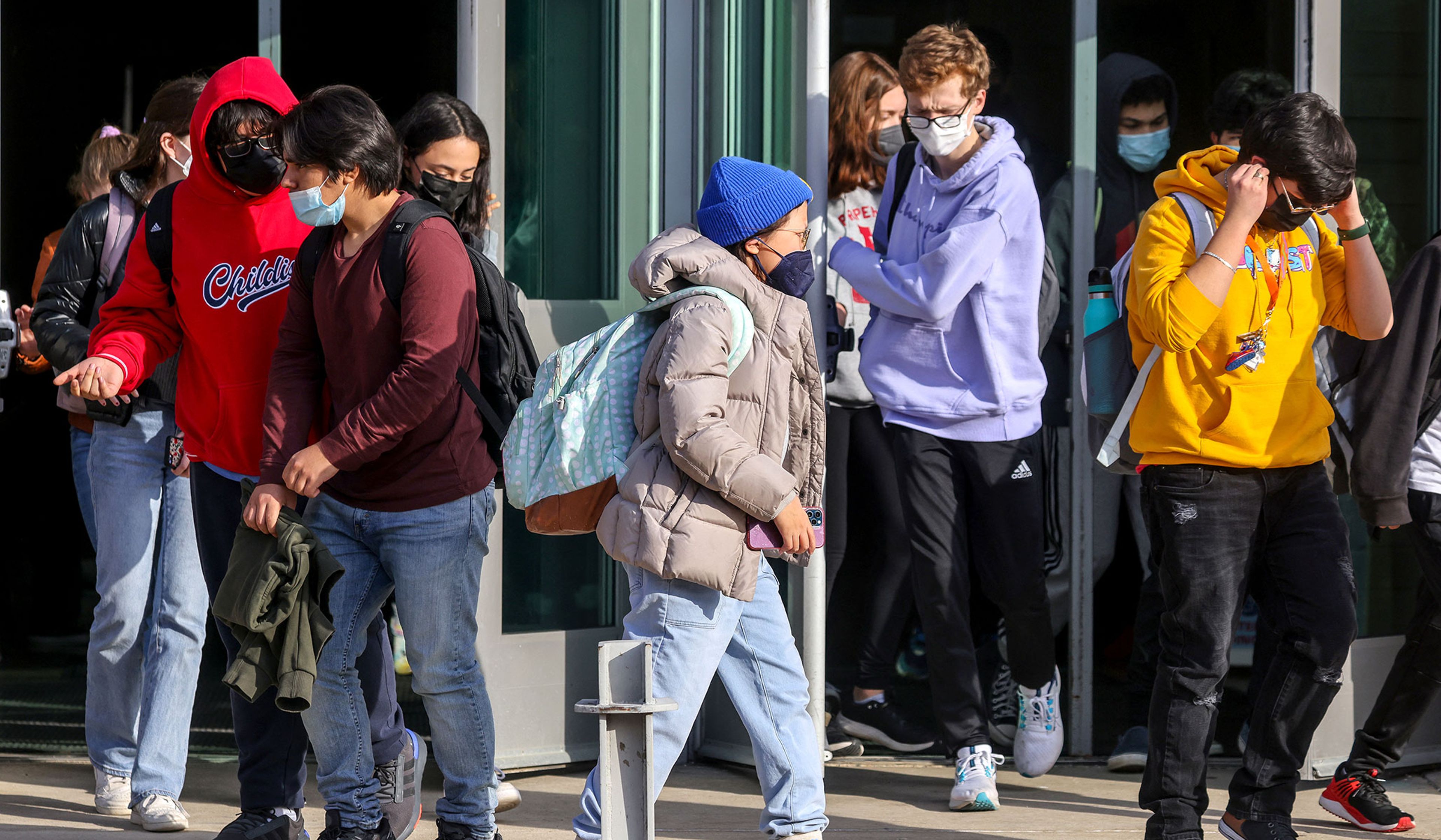
Students wearing protective masks arrive for classes on the first day of school in Miami-Dade County amid the coronavirus pandemic at Barbara Goleman Senior High School in Miami, Fla., August 23, 2021.
Marco Bello/Reuters
So where does all that leave us today? In another late summer, with reasons for optimism for the next school year — and uncertainty. Whether a pandemic or, now, endemic, Covid-19 will remain a challenge for schools this year, and not the only one. The other is recovery from pandemic losses for students and for schools. Meeting these two challenges will take better, more responsive leadership — from the White House to the schoolhouse — that is laser-focused on normalcy in schools as a means to recovery.
Normalcy is a necessary, if insufficient, foundation for recovery because it will let schools get back to building relationships, managing student behavior and absenteeism, stabilizing staffing, and giving consistent in-person instruction. Schools should set aside pipe dreams of reinventing schooling until they can stop the losses from the pandemic disruptions.
Of course, admitting you have a problem is the first step on the road to recovery, and some admissions are in order.
To the Covid-cautious states and districts that over-extended school closures or Covid protocols: Admit your series of bad decisions. Closing schools was reasonable in spring 2020, but keeping them closed for months longer harmed your students and reduced your enrollments. Extended mask mandates reflected the willingness to put off normal school operations longer. Yes, schools eventually opened, and masks eventually became optional — both tacit admissions of error. But all signs still suggest that the excessive caution driving those decisions remains in place.
While many districts — disproportionately those in red states — can be proud of their assertiveness, another admission is due from both them and their more cautious peers: The kids are not all right. A consistent and clear-eyed admission that students across the nation have been hit hard academically and socially by the pandemic, and that a mere return to normalcy is not enough, is essential to the task of recovery.
Victory laps by Republicans who have newly gained Americans’ trust on education issues may score political points but won’t make up for lost learning. Even worse, they could embolden pandemic risk-taking in other pandemic surges, inhibiting reasonable district efforts to maintain normal school operations.
Dismissive attitudes toward students’ academic struggles from superintendents and educators won’t do, either. In fact, recovery depends on pretty exhausted educators’ being brutally honest with parents. If teachers and principals don’t identify which students are behind, and communicate those problems to parents, we should not be surprised by low demand for programs that might catch them up.
Likewise, teachers’ unions should recognize that kids are not okay and put in the extra effort to help. Unfortunately, many unions have displayed a total lack of urgency. After extended closures in 2020–21, the Los Angeles teachers’ union had to be wrangled into adding a mere four days into their 2022–23 school calendar. Such underwhelming urgency from leaders and communities won’t meet the recovery moment.
On that note, here’s a third admission that leaders should make: Time is running out.
The timeline for recovery is short for two reasons. The first is the large share of current students whose schooling the pandemic affected. Most high-school seniors this fall never will have experienced a full year of high school unaffected by Covid, and freshmen have a few short years to make up ground. Younger students don’t have it much easier, with about half of elementary students never having experienced a full “normal” school year.
The second reason for urgency is the deadline for using federal pandemic-relief dollars. ESSER III, the last and largest Elementary and Secondary School Emergency Relief Fund packages, at $122 billion, must be spent, allocated, or lost by September 2024. As of January 2022, only 5 percent had been spent, much of it on business as usual. So if additional money is the key to getting kids back on track, schools have to spend it to advantage, soon.
Responsible leadership is exactly what schools need more of. Covid presented an unprecedented challenge in balancing the imperatives of public health with the need of students to learn. To be sure, some leaders met this challenge admirably, but too many failed this test. If, this year, they cannot return schools to normalcy and respond to the academic and pandemic challenges that face them, students will keep paying the price.












Comments