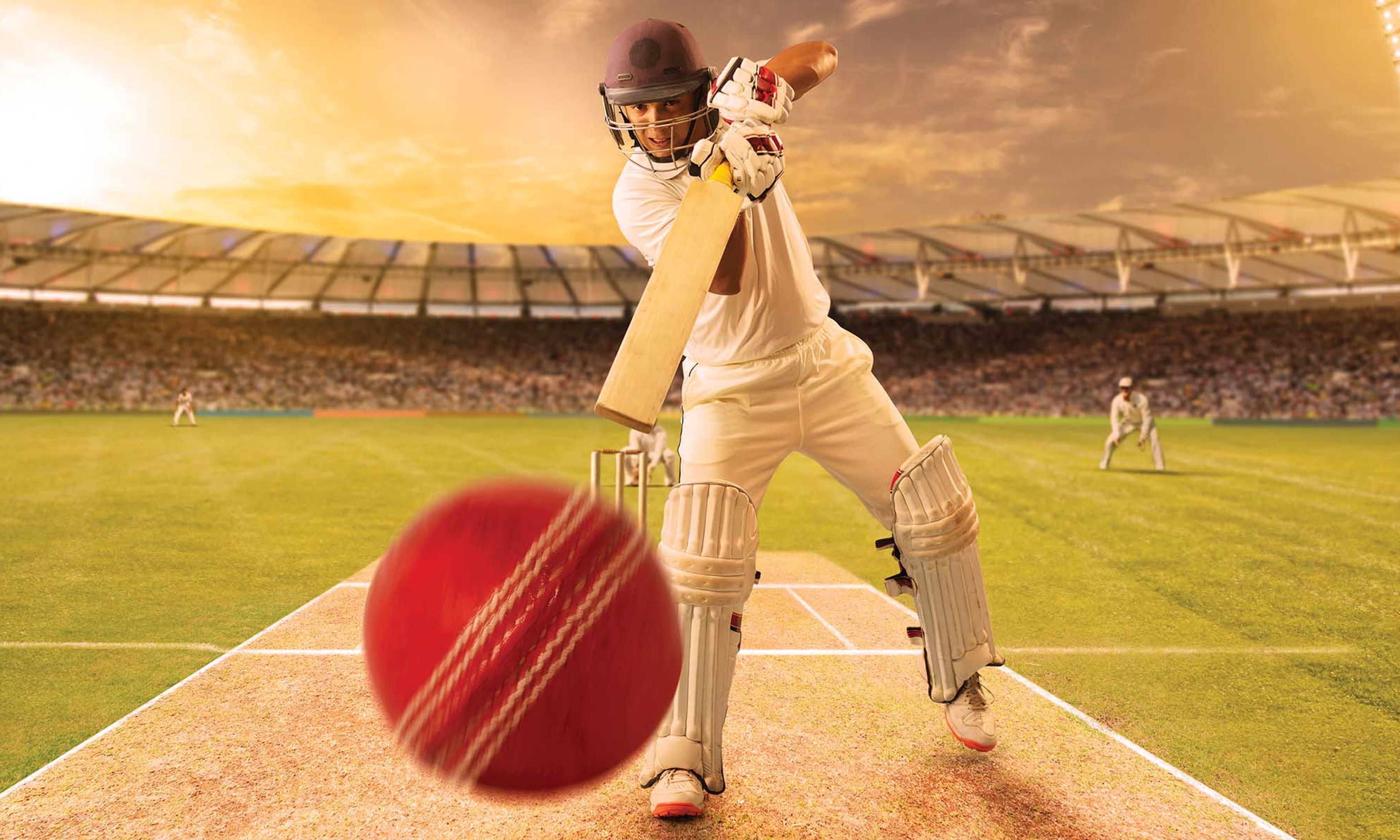
There’s a sport beloved by well over a billion people around the world. Its stars are multi-millionaires, and they are some of the most followed athletes on social media. Some of the world’s largest stadiums were built for this sport, and games are broadcast and streamed globally.
I’m talking about the world’s second-most-watched sport: cricket. Most Americans don’t even know how the game works, let alone follow it as fans.
Cricket’s global presence is no longer centered around the country from which it came, the U.K. With its billion cricket-mad residents, India now leads the way. This year, India is passing China to become the world’s largest country by population. India is currently the world’s fifth-largest economy and is projected, after growing at a faster rate than any other major economy, to be third-largest by 2030. As India’s economic might grows, expect its cultural impact to grow as well.
One of India’s top entertainment exports is cricket, and it has come to America in the form of Major League Cricket (MLC), which played its championship game near Dallas on July 30. To determine whether cricket has any chance of establishing a foothold in the U.S., I headed down to Texas. There I discovered an enthusiastic fan base and an established subculture around the game. It’s not mainstream, but it’s lively and has potential for significant growth.
Cricket is famous for its unwritten rules, gentlemanly courtesy, and stately history. “Test cricket,” still the highest form of the game, can take up to five days, with players breaking for lunch and for tea. It can be very dramatic, but in the sense that a major golf tournament can be dramatic. Each side bats through its eleven-man lineup until ten men are out (leaving one without a partner and so unable to continue) or until the team captain thinks they’ve scored enough and “declares” their innings closed — and then they do it again. Test cricket is also played only between the national teams of twelve countries, so there’s a limit on how much there can be.
Cricket matches are divided into “overs,” which have six balls each. When the bowler has completed an over, he must be swapped out with a different bowler. (Bowlers can return for nonconsecutive overs.) The batsmen stay up until they are put out, most commonly when either the ball hits the wicket or a fielder catches a batted ball on the fly. Since batsmen know they have up to five days to play, they often bat defensively for long stretches, saving their energy for certain moments to attack. Sides sometimes bat for 100 overs or more. The test-cricket record for longest innings by an individual batsman is 970 minutes, by Pakistan’s Hanif Mohammad in 1958. Batsmen commonly stay up for over an hour.
Like feats of endurance sports, these of cricket are impressive but difficult to market. To sell tickets and win TV viewers, it helps to have a sport that people can consume in one afternoon or evening and that is filled with as many exciting plays as possible. To these ends, the England and Wales Cricket Board created a new version of cricket, Twenty20 (T20), in 2003. As the name half-suggests, each side is limited to 20 overs. Twenty overs take about an hour and a half, so games last about three hours.
The field is roughly circular, with a perimeter usually between 60 and 80 yards from the center. When a batted ball rolls into or bounces over the boundary, this counts as four runs. When it clears the boundary on the fly, it counts as six. These types of hits, called “boundaries,” don’t require the batsmen to run, and they are seen as the more exciting plays of the game. For the fans, a four is analogous to a stand-up double in baseball, and a six is like a home run. Trying for a boundary is dangerous for the batsman because he is more likely to elevate the ball and put himself at greater risk of being caught out, but scoring quickly matters in T20, so the risk is more worthwhile. T20 batsmen hit more boundaries in less time than do batsmen in test cricket.
With more action, T20 was a more consumer-friendly product. It just needed to be brought to the market. The U.S. did not invent organized sports, but it did pioneer making them immensely profitable. The NFL, MLB, the NBA, and the NHL are regularly the four most valuable sports leagues in the world, with soccer’s English Premier League in the mix as well. The Indian Premier League (IPL), which was founded in 2008 and now has ten T20 cricket franchises spread across India, was the first successful attempt to bring the American franchise-sports model, with all its revenue potential, to a cricket mass market.
Forbes estimated that the average valuation of an IPL franchise went from $67 million in 2009 to $1.04 billion in 2022, growing on average by 24 percent each year. The most valuable franchise, the Mumbai Indians, is worth $1.3 billion, more than several MLB teams and almost every NHL team. Five years of IPL media rights sold for $6 billion in 2022, double what the previous five-year deal had been. The championship match is played in Narendra Modi Stadium — the world’s largest stadium, with a seating capacity of around 130,000 — in Ahmedabad. Between TV and streaming, around 600 million people watch the IPL in a given season.
What makes these numbers even more impressive is that the IPL season is only about two months long, consisting of only 74 matches in 2023. Only the NFL and the English Premier League make more revenue per contest than the IPL does.
This year, investors have re-exported the American franchise-sports model back to America in the form of Major League Cricket (MLC). The inaugural season is a two-and-a-half-week T20 tournament played mostly in Grand Prairie, Texas, part of the Dallas–Fort Worth metro area, with a few games in Morrisville, N.C., near Raleigh-Durham. The U.S. is short of high-quality cricket stadiums, but the league has plans and funding to build more. There are six teams, nominally (most do not compete in their home city for lack of a stadium) from Seattle, Los Angeles, San Francisco, New York, Washington, and Dallas.
Those six cities have something in common: They are home to some of the largest Indian-diaspora populations in the U.S. Tech executives Satya Nadella (Microsoft), Aditya Agarwal (Facebook and Dropbox), Shantanu Narayen (Adobe), and Subrah Iyar (Webex) are investors in the league. American Cricket Enterprises, the business arm of USA Cricket, was founded by Sameer Mehta, Vijay Srinivasan, Satyan Gajwani, and Vineet Jain, all of Indian descent. Mehta and Srinivasan had previously founded Willow TV, a cricket-streaming service. Three of the teams share names with IPL teams: the Los Angeles (Kolkata) Knight Riders, the Texas (Chennai) Super Kings, and MI New York (“MI” stands for “Mumbai Indians”). The ownership groups of those IPL teams have stakes in the corresponding MLC teams.
One of the few investors not of Indian descent, Ross Perot Jr., part owner of the Texas Super Kings, helps explain the Dallas connection. Grand Prairie Stadium used to be the home of the Texas AirHogs, a non-MLB-affiliated minor-league baseball team. The AirHogs went defunct in 2020, and American Cricket Enterprises bought a lease for the stadium. They renovated it to be used for cricket and started small, with 7,000 seats. Those 7,000 seats were full for the championship match between the Seattle Orcas and MI New York.
The inaugural MLC championship match was only one Sunday evening, but about five miles north of Grand Prairie Stadium, at the Islamic Center of Irving (ICI), every Sunday morning is for cricket. They have the good sense to play indoors in Texas in July, and the ICI gym is reserved from 7 to 10 a.m. The ICI is one of the largest Islamic centers in the region, with a capacity for as many as 3,000 people for masjid on Fridays. It also has a school on its spacious campus.
Ibad and I were the first two people to arrive on July 30. Ibad is an Afghan-American man, and it was his first time too at the ICI for Sunday-morning cricket. He had recently moved to the Dallas area from San Antonio and has been living in the U.S. since 2016. His wife is pursuing a career in medicine and has gotten a job in a Dallas-area hospital. They have a seven-year-old daughter, born in San Antonio. Like all proud fathers, Ibad eagerly shared a picture of her.
Indoor cricket takes many forms, depending on the room it’s played in. In the ICI gym, players use soft tennis balls because there are windows. The wickets are set up on one end of the gym, with the striking batsman always on the side nearest the wall. The far wall opposite him is the boundary: four runs if it bounces and hits the wall, six runs if it hits it on the fly. If the ball hits the ceiling, it’s an automatic out.
The Muslim community in and around Irving is mostly of Indian and Pakistani origin. Amir is Indian-American, and he was the next guy to show up for cricket. He lived in Chicago before moving to Dallas last year. He told me he works in IT. “You’re going to hear that a lot around here,” he joked.
The ICI hosts cricket tournaments roughly once a quarter and streams on its YouTube channel. The winner gets a trophy and the choice of which restaurant to celebrate at. The ICI board members attend the final match, and play is very competitive. Ibad said the Muslim community he was a part of in San Antonio had tournaments that were similarly competitive.
Amateur cricket clubs have popped up just about everywhere in the U.S. where there’s a significant South Asian population. Some are work teams, such as the Microsoft Cricket Club, which was founded in 1994 and has since opened membership to nonemployees. Others are religious teams, commonly affiliated with Muslim or Hindu places of worship. Teams form regional leagues and compete with one another, in matches that are often watched by spectators.
The Sunday I was at the ICI was not a tournament day, which was a relief for me because they handed me a bat. I had plenty of experience playing baseball, but none playing cricket. Ibad showed me how to grip the bat, and Amir advised me to keep my wrists flexible. It’s not so much about swinging at the ball as it is about guiding the ball with the bat. Especially indoors and with a tennis ball, swinging at the ball increases the risk of hitting the ceiling. The bowler provides a lot of the power.
We split into two sides, three players each. There had been a tournament only a few weeks before and turnout was low. “More people come in the weeks before the tournament for practice,” Amir told me. Some weeks can see 20 or more people play, he said. Almost everybody who plays, on Sundays and in tournaments, also worships at the ICI. Amir said masjid is always full on Fridays.
Amir and Ibad both knew about and were following MLC. Neither was able to attend a match in person because tickets were sold out. Another player in the gym was wearing a Seattle Orcas shirt. Ibad was especially interested because Rashid Khan, the top Afghan player who is currently the top-rated T20 bowler in the world, is on MI New York.
“It has gotten very big,” Amir said of MLC. “It makes sense. They have a lot of money and got very good international players.” He rattled off a list of the big names in the tournament. We agreed MLC would do even better if they played in Dallas in a cooler month.
We played indoor cricket for about two hours. I took one catch and hit one boundary and was otherwise dead weight for my side. I ran at the wrong times, and the other guys patiently put up with my certainly illegal bowling. But, perhaps strangely, I felt familiar with this foreign game being played in a religious institution of which I am not a part. Not because I had watched cricket on TV before, but because we were dudes being dudes, away from work and family for a few hours, getting some exercise and competing with one another. Plenty of nearby churches host the same thing — just with basketball, and not on Sunday morning.
Iwanted to see whether there would be tailgating before a cricket match when it’s 105 degrees outside, so I showed up about an hour before the MLC championship between the Seattle Orcas and MI New York began. Sure enough, there was. Groups of people had found the few shaded spots under trees in the parking lot to set up camp.
I spoke to Faheem, who works for a major bank and was wearing a gigantic blue foam cowboy hat. He said he got it at a Dallas Cowboys game and was saving it for the right moment. When I asked him why he had come out to the match, he said, “We grew up watching cricket in Bangladesh, but my sons have never seen a match before.” His sons, aged seven, ten, and twelve, told me they were rooting for MI New York.
Nearly every fan in attendance was of South Asian descent. Many were wearing IPL jerseys or Indian or Pakistani national-team jerseys. A sizeable number were sporting MLC merchandise. Sponsors with logos plastered around the stadium included Abound (an app for sending remittances, from Indian firm Times Internet), Royal (a rice company), BetBricks7 (an Indian betting website), and Sling TV (which was emphasizing that it streams cricket matches and has a large library of Hindi TV and movies).
The concession stands offered Pepsi products and mango lassis. Chicken biryani and pizza were on the same menu board. There was a tent selling grilled corn and tandoori chicken. Beer-drinkers could get Anheuser-Busch products or Arka, an Indian-style lager. One man carrying a concession haul back for his family had stacked servings of French fries, chicken nuggets, and vegetable samosas on top of each other.
In an adaptation of throwing out the first pitch, Satya Nadella bowled the first ball during the pregame ceremonies. Skydivers parachuted onto the field with flags for each team and an American flag while “Danger Zone” from the soundtrack of Top Gun played. Everyone stood for “The Star-Spangled Banner,” and oohed and aahed when fireworks went off at “bombs bursting in air.”
MI New York won the coin toss and elected to bowl first. As stars Rashid Khan of Afghanistan and Trent Boult of New Zealand came close to the stands while playing the field, fans yelled their names to get their attention. Khan and Boult waved to the crowd and signed autographs between overs. Anyone who managed to make eye contact with them, even if only for a split second, would exclaim, “He looked at me!” to whomever he or she was sitting with.
About 30 minutes into the game, everyone’s attention was drawn away from the players and to a group of five or six people walking down the stairs to the field level. I had to ask who was at the center of it, but everyone around me knew her on sight: Nita Ambani, the wife of Indian billionaire Mukesh Ambani and part-owner of the Mumbai Indians. “I am such a big fan of hers!” said a woman sitting in front of me.
About 15 minutes later, there was another stir as Nadella, part-owner of the Seattle Orcas, came down to field level in the same way. He went to shake hands and talk to Ambani, both no doubt happy with their investments. The ten-year-old son of the woman who was excited to see Ambani was jumping up and down because Nadella looked at him and gave him a thumbs-up.
Seattle was off to a slow start batting but turned up the intensity as the innings progressed, with South African Quinton de Kock knocking 87 runs and the team posting a strong 183-run target for New York to chase. Of the fans wearing MLC merchandise, the vast majority had MI New York gear, but that was not an indication of their cheering preferences. Everyone cheered just as hard when a Seattle player hit a six or took a wicket as when a New York player did. They just wanted to see sixes and wickets. They were ultimately cheering for the game itself.
MI New York’s batting started off disastrously when opener and top American player Steven Taylor was retired without scoring a run (or “out for a duck,” in cricket parlance). But that brought Trinidadian Nicholas Pooran into the game, and he put on a show that nobody in attendance will forget. He scored a half-century (50 runs) on only 16 balls. The crowd began chanting, in call-and-response fashion, “Nicholas! POO-RAN!” whenever he was on strike. Pooran kept smashing boundaries, earning his century (100 runs) on 40 balls. He leapt as he ran between the wickets to score his hundredth run, ripping off his helmet and pumping his fists when he made it to the other side. The athletes weren’t treating MLC as an exhibition. They were competing hard.
And Pooran wasn’t done yet. He scored 137 of New York’s runs, including the 184th, which gave New York the first ever MLC championship. He hit so many boundaries (13 sixes and 10 fours) that it became almost comical when he would hit another one and earn another standing ovation. When the final run was scored, Pooran collapsed in a likely combination of exhaustion and emotion as his teammates mobbed him to celebrate their victory, and a fireworks display completed the first MLC season. There were still chants of “Nicholas! POO-RAN!” in the parking lot after the game.
Most Dallas–Fort Worth residents likely did not know the match took place. But as South Asian Americans continue to prosper and India’s global influence continues to grow, expect cricket to become more popular in the U.S. With a well-funded league that has demonstrated the ability to provide an entertaining product, in a country with an unmatched appetite for professional sports, there’s room for the king of games.












Comments