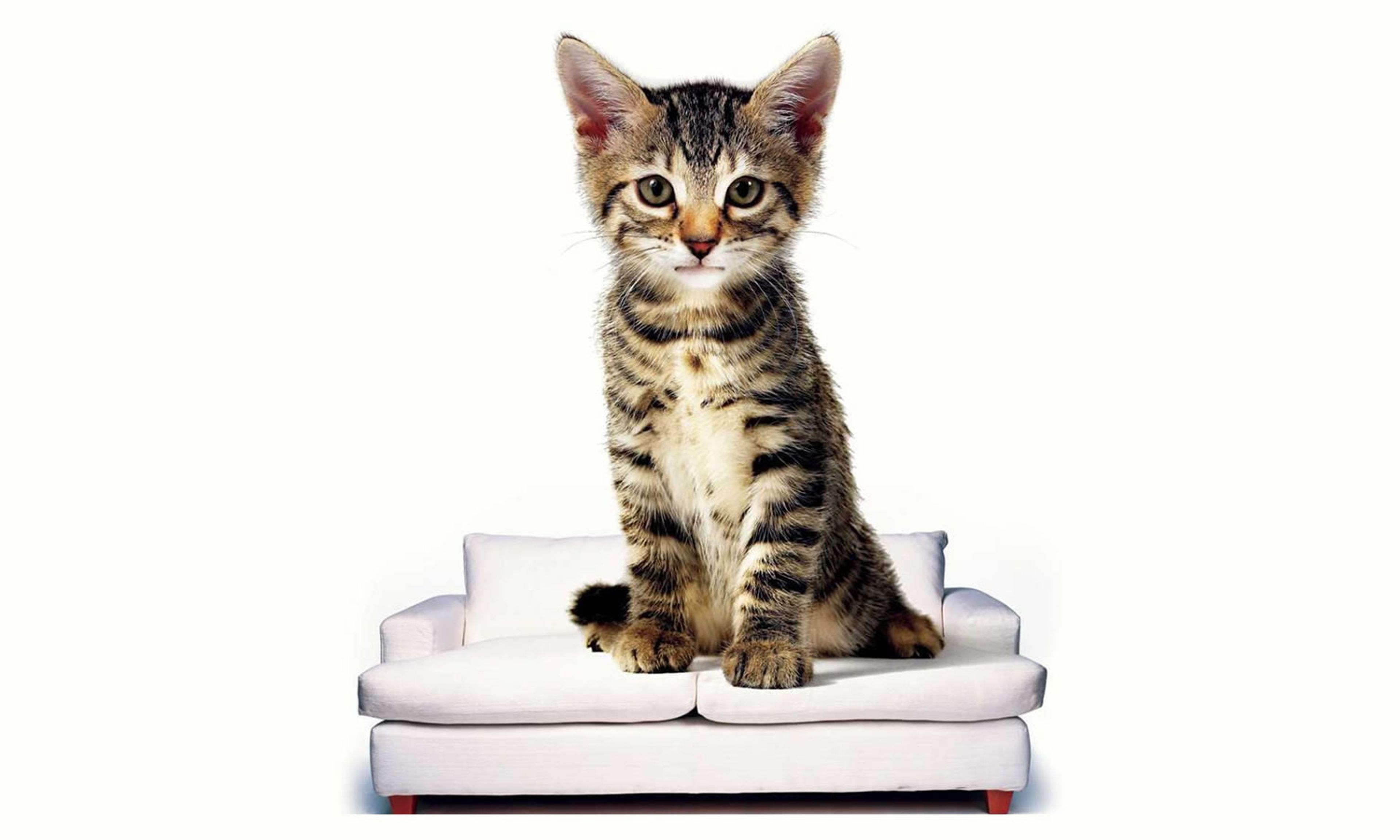
Surreptitiously — one might even say, with Sandburg, “on little cat feet” — a social revolution has overtaken America. It has been joked that the Internet was invented for national-security and industrial purposes but is now dominated by, about evenly, porn and cat videos; and it took the Internet to make people realize just how dominant the feline presence in our national life has become. The number of house cats in the U.S. is approaching 100 million, reports journalist Abigail Tucker in The Lion in the Living Room: How House Cats Tamed Us and Took Over the World (Simon & Schuster, 256 pp., $26) — and she tries to explain how this happened.
Unlike other domesticated animals, cats serve no obvious utilitarian purpose: They do not (outside of certain highly questionable restaurants) provide human beings with food, nor do they protect our homes or carry our burdens. So how did they become a household fixture? Tucker explains that the house cat is the rare animal that took the lead in its own domestication: As wild cats, such as lions, started heading toward extinction, the smaller animals that eventually became house cats scrounged for food in the garbage surrounding human settlements. That’s how they got involved with human beings. They were subsequently accepted into the households because of their cuteness — which, Tucker points out, “is not an arbitrary . . . quality”:











Comments