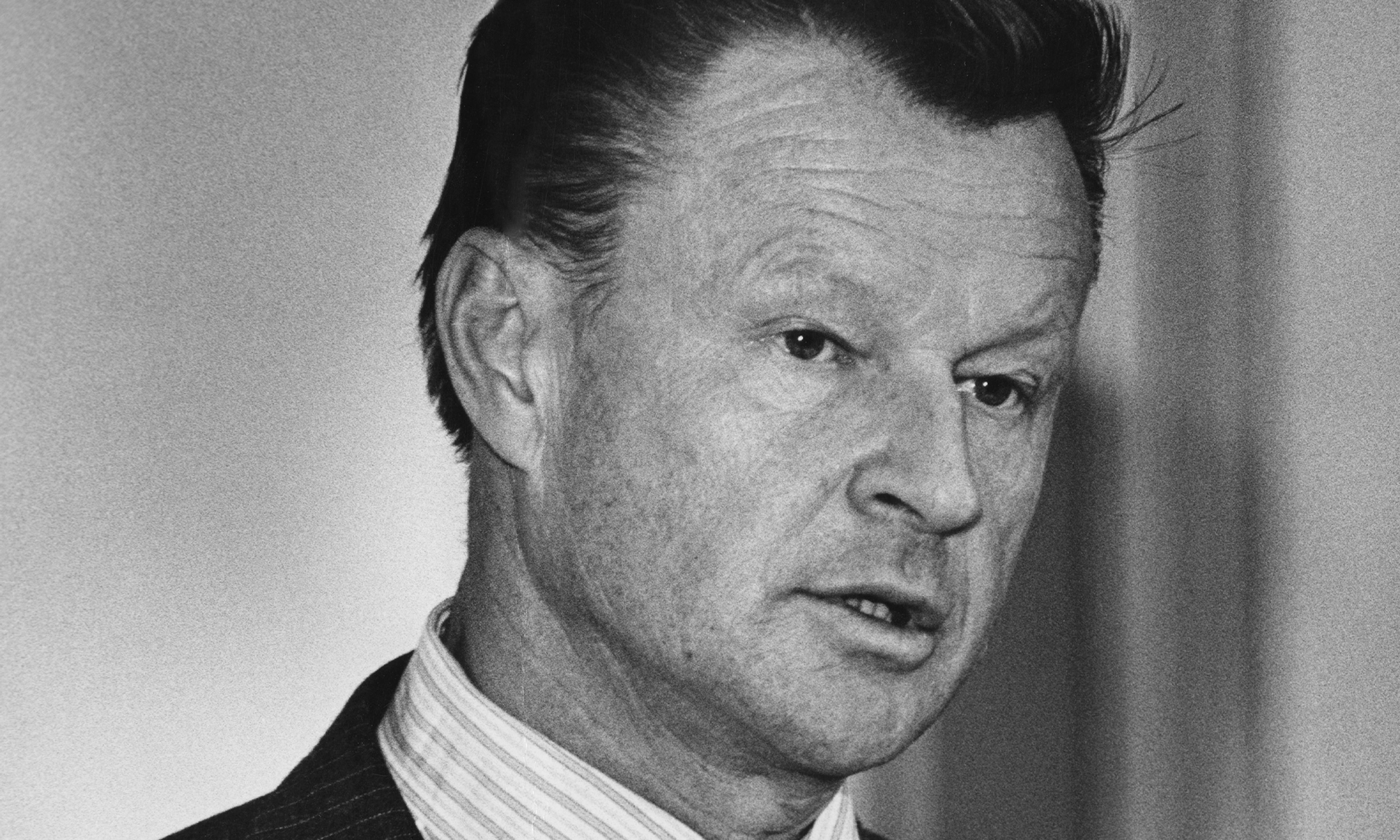
Edward Luce’s biography of Zbigniew Brzezinski distills a career that shaped U.S. strategy at a defining moment of the Cold War. Luce is sympathetic to his subject. He connects Brzezinski’s experience as a Polish émigré, who escaped Hitler’s and Stalin’s destruction, to the intellectual and professorial rigor with which he studied Moscow and conceptualized a hard-edged, prescient strategy aimed at exploiting Soviet weaknesses. As President Jimmy Carter’s national security adviser, Zbig pushed — with varying degrees of success in a divided Carter administration — for a strategy that would avoid the passivity of containment and limit the risk of a nuclear war associated with a forward-leaning “rollback” policy.
Luce shows that Brzezinski’s toughness toward Moscow — despite what his sometimes vicious and prejudiced critics charged — was not based solely on temperament or on his emotional connection to Poland. Rather, it was grounded in a theory he formed as a young scholar. Zbig believed that the USSR was an empire overstretched by its “nationalities problem” and sustained by repression, which could be exploited by the West. He articulated these ideas long before the system actually cracked. Luce frames Brzezinski as “America’s great power prophet” because Brzezinski believed that, if the U.S. kept up the pressure and offered hope to its captive nations, the Soviet Union would erode from within. Brzezinski laid the intellectual foundation of his statecraft in his 1961 Foreign Affairs essay, arguing for “peaceful engagement” with Eastern Europe. The seminal piece argued for neither rollback nor surrender but a calibrated opening to the Soviet satellites in Eastern Europe by widening economic and cultural space within them and encouraging pluralism. That article became the seed of later “differentiation” policies that did not treat Soviet satellites as a monolith, rewarded autonomy, and quietly helped local forces of liberalization. Luce shows how Zbig pushed a reluctant Carter administration to use tools such as Radio Free Europe, cultural exchanges, and human rights diplomacy to encourage detachment from the Soviet empire, especially in Poland.











Comments