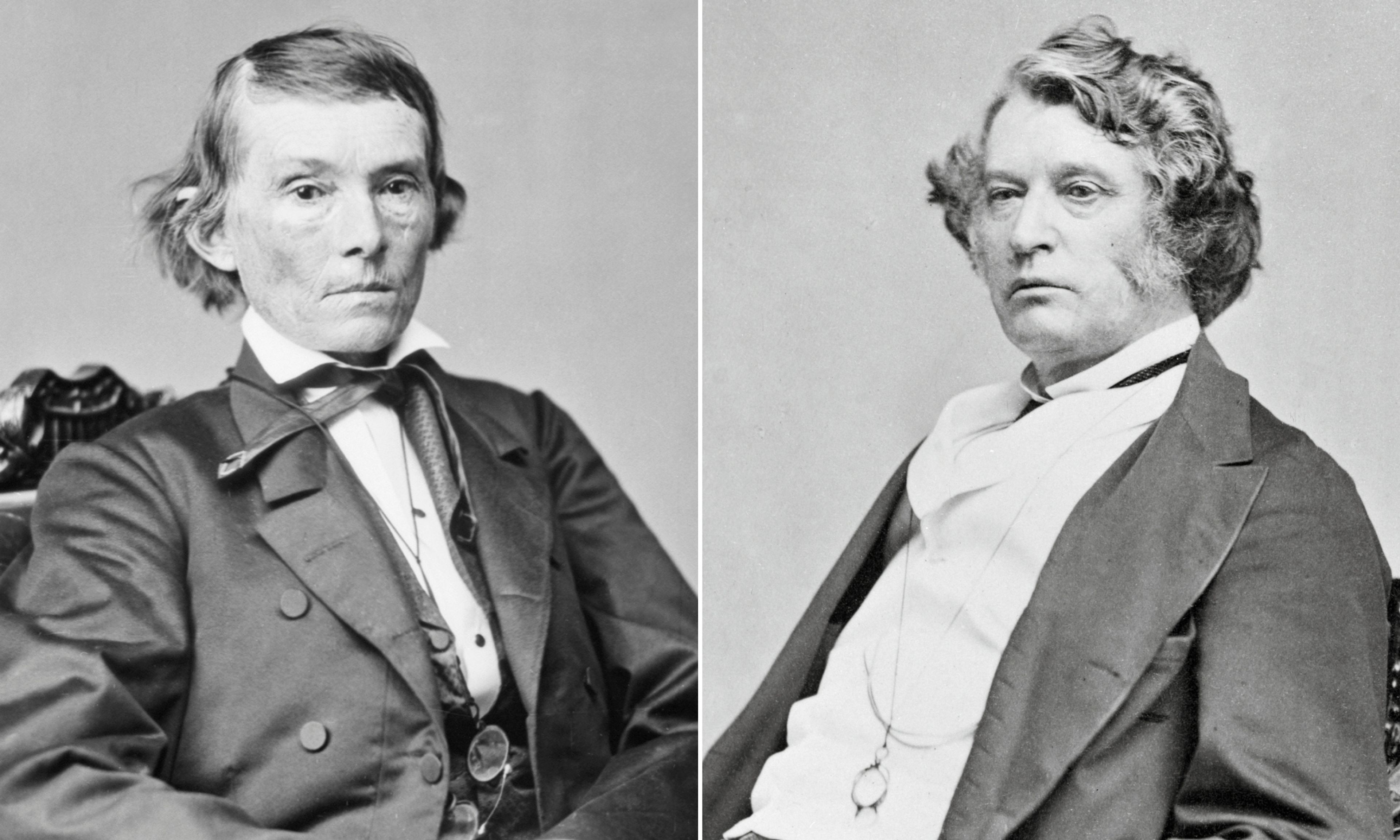
In politics, principle plays a vital role. But it has never been everything. For the statesman as for the democratic politician, principle guides, persuades, prioritizes, and justifies. Applied prudently, it is a compass, not a straitjacket. We can see the limits of principle in the competing careers of two mid-19th-century American statesmen: Alexander Hamilton Stephens, born on a Georgia farm in 1812, and Charles Sumner, born in Boston in 1811.
Stephens was born to play the intellectual in politics. Pallid and skeletal, he drew comparisons to an animated corpse. He dosed himself with whiskey to endure an assortment of debilitating ailments. Orphaned at 14, trained as a Presbyterian minister, he never married and partook of none of the pastimes of Southern manhood. He was drawn to the life of the mind.











Comments