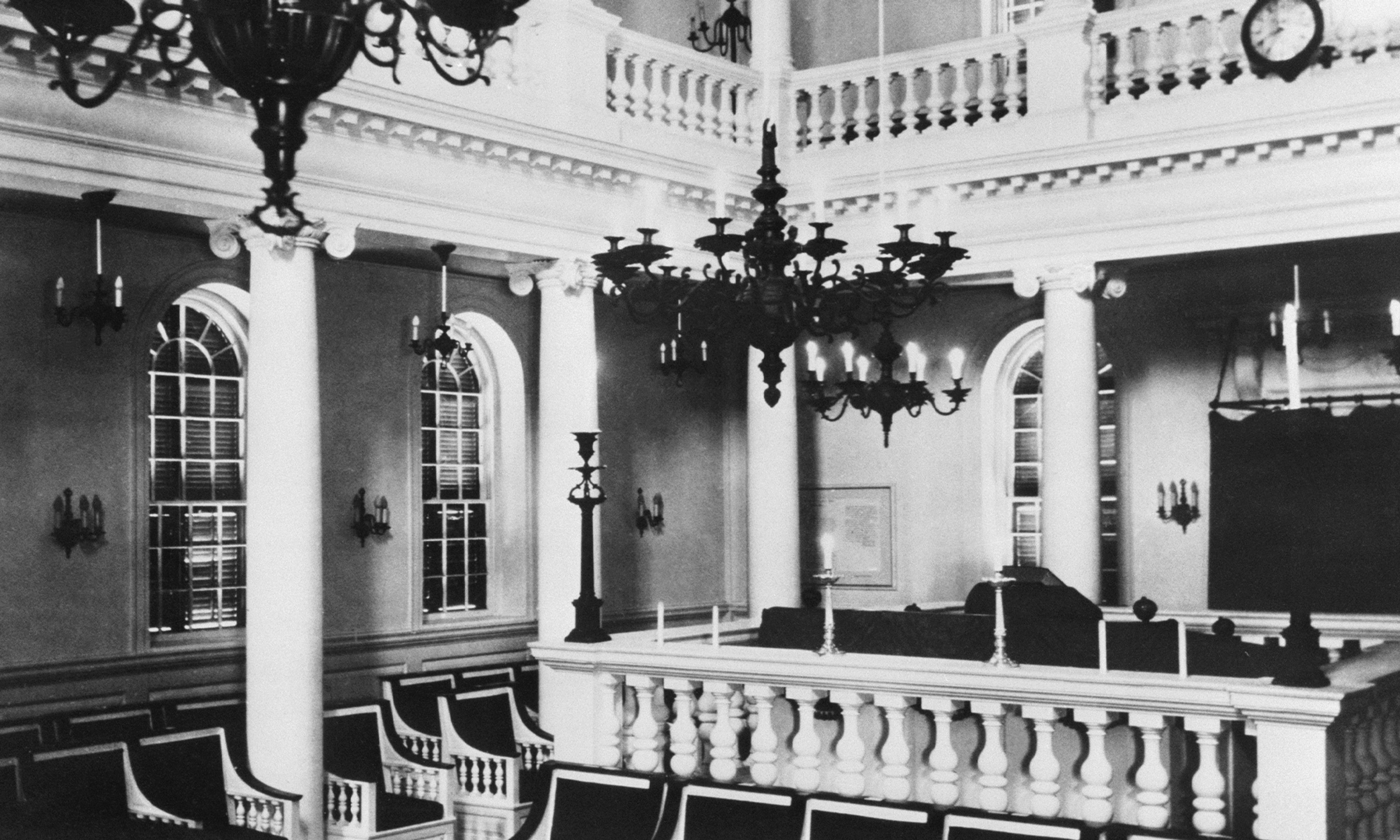
When President George Washington visited Newport, R.I., in the summer of 1790, he could scarcely have imagined that he would end up penning, in the midst of his trip, one of the enduring expressions of American equality. Yet his letter to the Jews of Newport is still celebrated, and it appears in debates about America to this day. Justice Antonin Scalia, for whom it was a favorite citation, quoted it in his Supreme Court opinions. Justice Elena Kagan also cited the letter to Newport’s Jews in a dissent, though she had to issue a correction when she referred to that community as the oldest Jewish congregation in America. That distinction is held by Congregation Shearith Israel of New York; it is the house of worship in Newport that is the oldest synagogue structure in the United States. But as famous as the often-quoted letter is, few know its background; and as we celebrate America’s 250th birthday, the letter’s story is worth rediscovering.
Perhaps the least-known interesting fact about the Newport letter is why Washington came to Rhode Island in the first place. Until that summer, Rhode Island was not really part of the United States. In 1788, Rhode Islanders had refused to ratify the Constitution and therefore also refused in 1789 to participate in the first national election. Washington became the president of the United States in April of that year, but only twelve of the 13 states were truly united. Because of its civic recalcitrance, the state was known to much of the country as “Rogue Island.” One might say that Rhode Island was the progenitor of the hashtag #NotMyPresident.










Comments