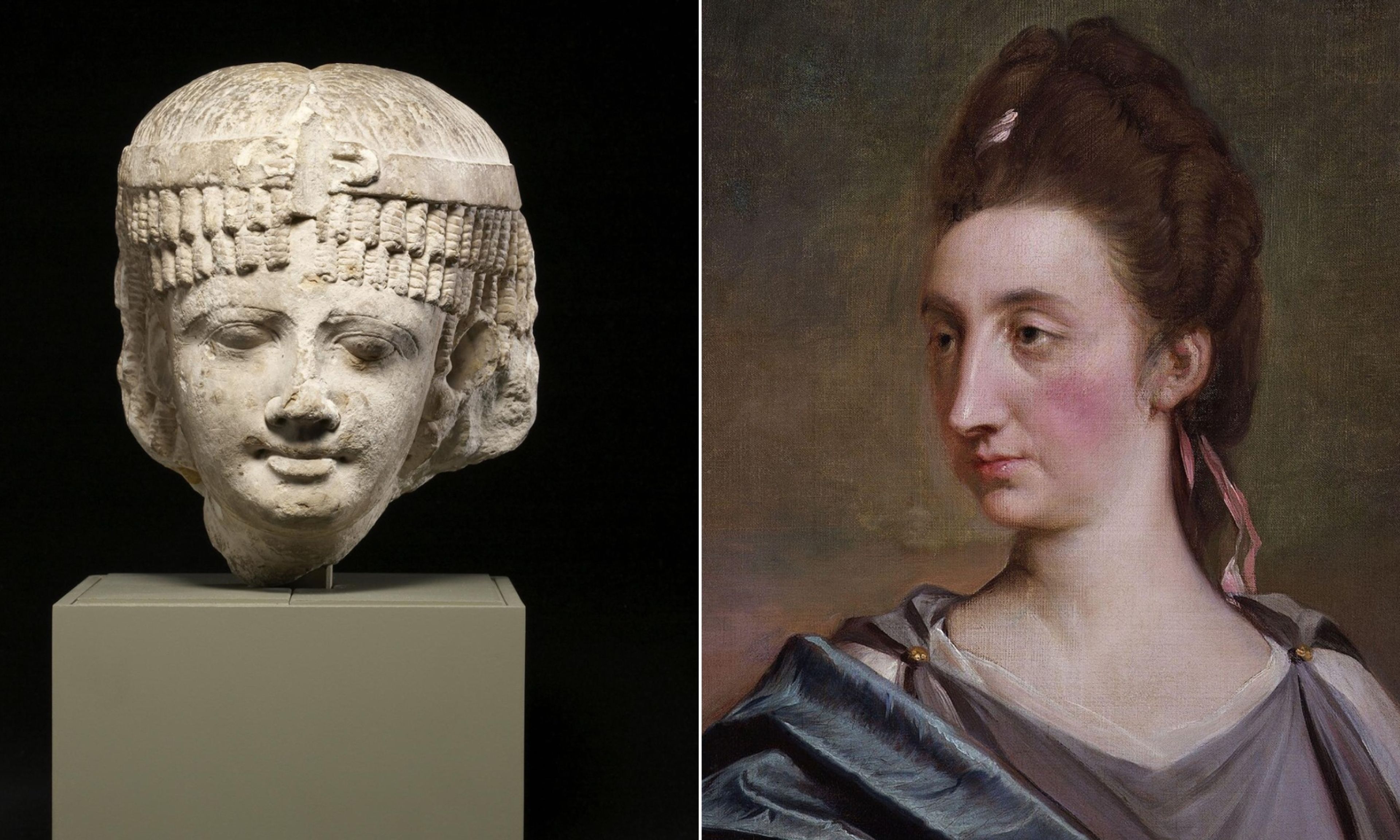
How did Guy de la Bédoyère decide where to start his latest book, Brief Lives of the Ancient World: Rulers, Rebels, and Robbers (Yale University Press, 272 pp., $26)? How did he decide where to end it? Plutarch’s pursuit, in Parallel Lives, was comparative case study. John Aubrey left Brief Lives (most of whose subjects were roughly the author’s contemporaries) unfinished when he died in 1697. And de la Bédoyère’s subtitle doesn’t narrow down his project. What exalts this book is its author’s awareness that his, like Aubrey’s, is a “rude and hastie collection,” and that among his selection criteria there’s one that is inescapable: availability. Ancient history is, or should be, tight-lipped; willing to speak only through the written record. And this is sparse.
Ahmes son of Ibana wasn’t a ruler or a rebel or a robber, but we have the detailed inscription on his tomb. However exaggerated, this is one of our very few sources about the major events of early 18th-Dynasty Egypt (c. 1500 b.c.). De la Bédoyère’s situates the VIPs — from Augustus to Augustine — alongside such fascinating if relatively obscure figures as Ptolemaeus son of Glaukias, Cleopatra III, Philip the Arab, and Claudia Severa, an army wife whose brief letter to a friend is perhaps the best-known primary source from Roman Britain. This may be ancient history, but, as de la Bédoyère knows, “The links between us and the past are short ones.”





Comments