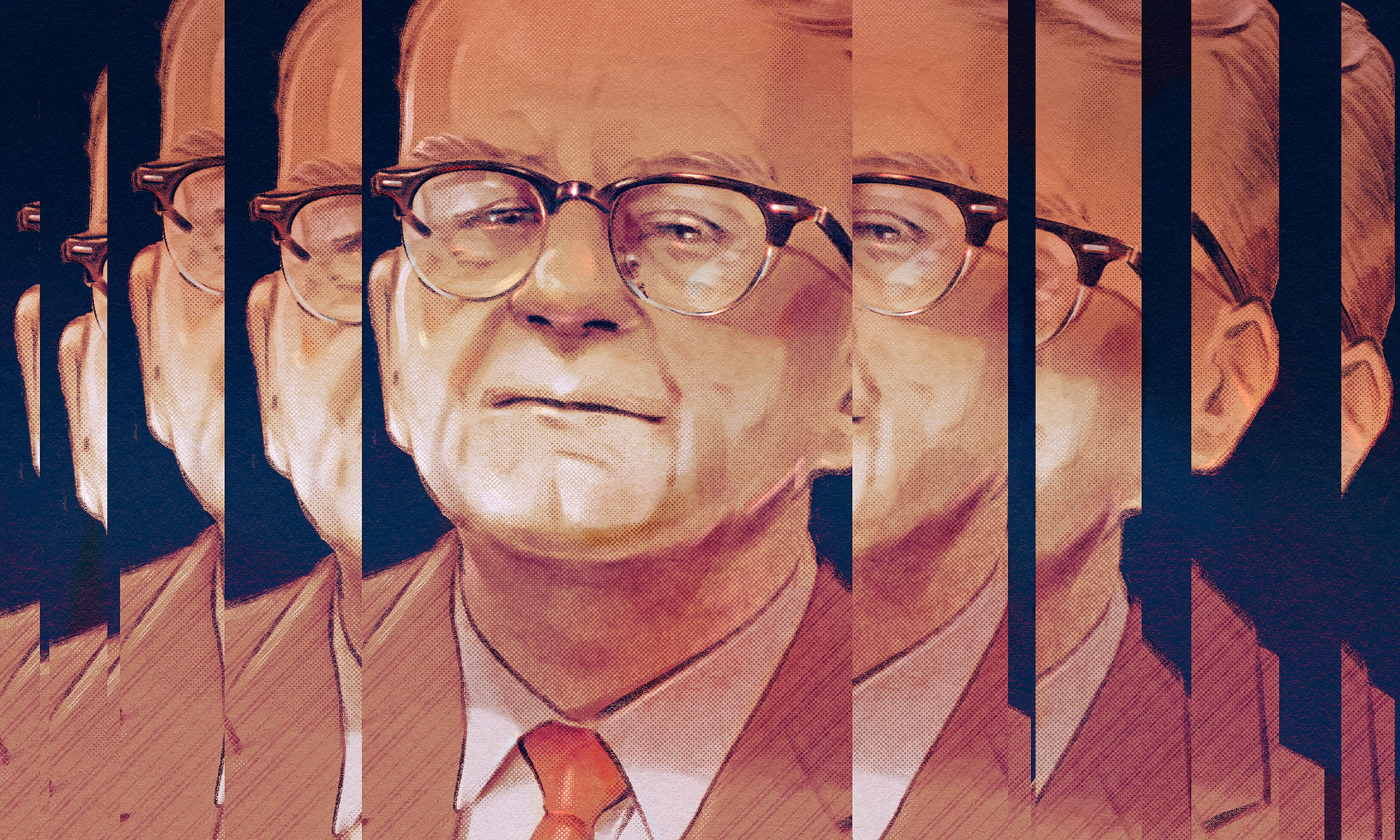
Given that the first essay I ever penned on James Burnham — the 10,000-word behemoth, “Present before the Creation: James Burnham and the New World Order” — appeared in NR’s 35th anniversary issue and that two more have since been included in issues marking later anniversaries, I feel a need to justify returning to the same distinguished NR veteran in the present special issue. That justification is not any obsession of mine but the observable fact that Burnham (1905–1987) has had more resurrections than the soprano Dame Nellie Melba said farewells from the stage. He is recurringly relevant.
Burnham entered intellectual history in 1941, when he created a world sensation with his first major book, The Managerial Revolution. At a time when the world was tending to extremes of left and right, the defection of Trotsky’s favorite pupil, an American to boot, to a new post-Marxist ideology that dismissed even the possibility of a proletarian revolution was hot copy. It was a somewhat nuanced defection: he predicted that a revolution was indeed happening, even quite advanced, but it was in the wrong hands. Not the workers but the managers of industry who knew how to make things work would inherit the earth. Accordingly, states governed by such managers — whose skills made things work in both private and public sectors — would therefore triumph in military and economic competition. What would eventually emerge from that competition would be three vast autarchic superstates rooted in industrial power, engaged in endless conflict, and ruling their peoples through authoritarian bureaucracies behind formal democratic masks.










Comments