
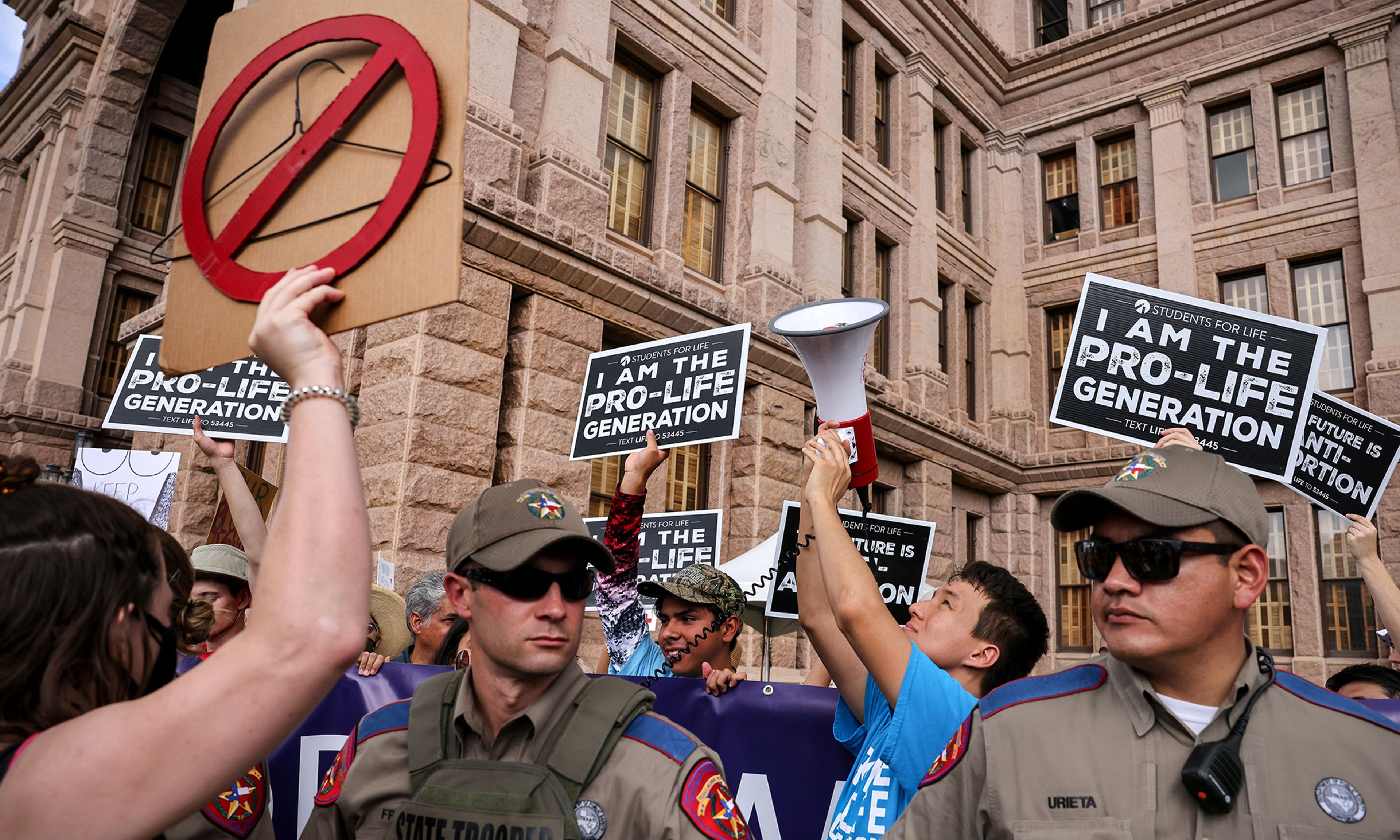
On November 28, the Texas supreme court heard oral arguments in a case about the state’s abortion law.
In Zurawski v. Texas, a judge in Travis County ruled in August that the exception in Texas’s abortion law — which allows an abortion when there is a risk to the life of the mother or “a serious risk of substantial impairment of a major bodily function” — also covers cases when the baby is unlikely to survive long after birth. The State of Texas immediately appealed the ruling, and on Tuesday, Beth Klusmann of the Texas attorney general’s office argued to the state supreme court that the law’s exception does not cover cases when severe fetal abnormality is the sole reason for an abortion (though such cases often also involve threats to the mother’s life or physical health under which abortion is permitted). It would require an act of the legislature to revise the law to permit abortion when a fatal fetal health condition is the only reason for the abortion, Klusmann argued.





Comments