
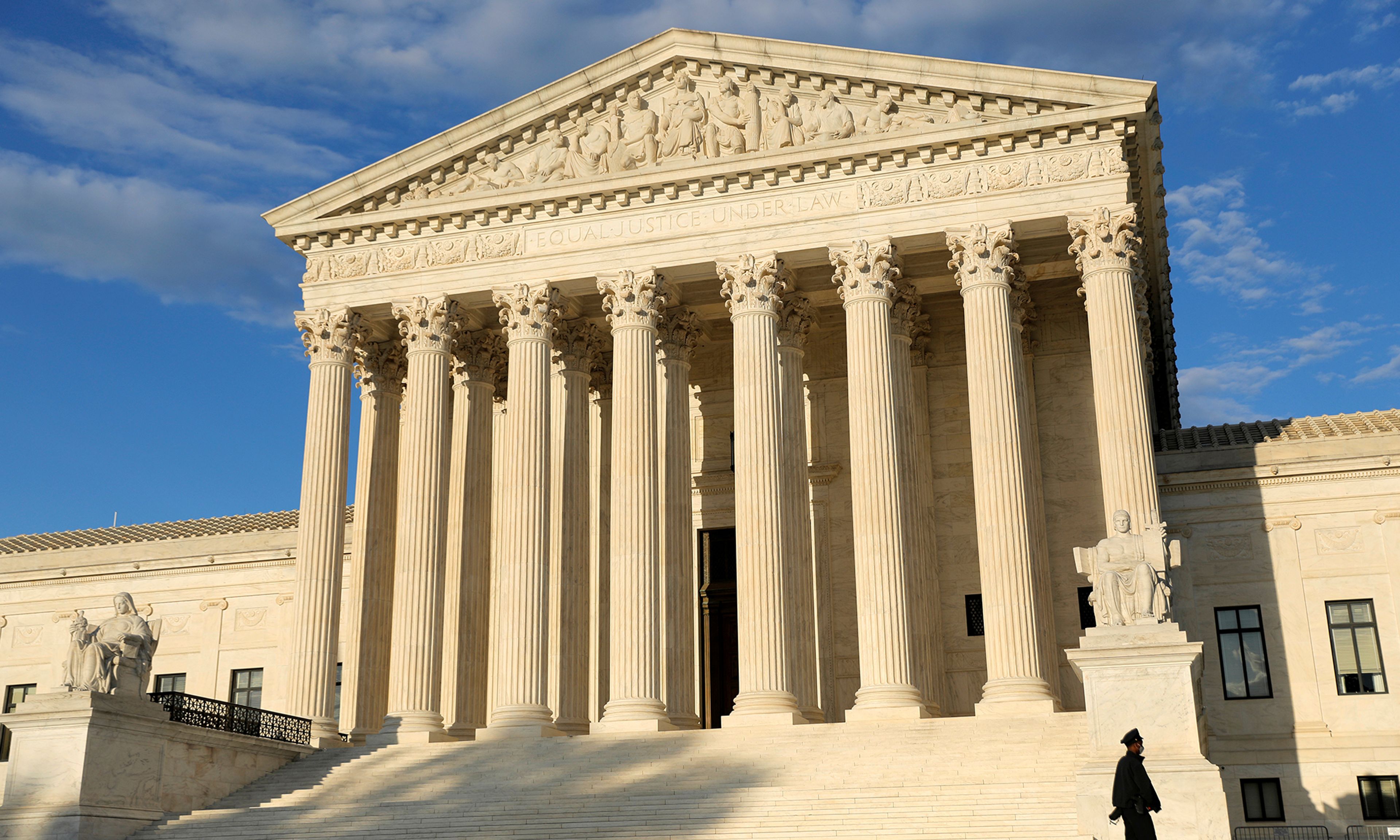
Does the Free Exercise Clause entitle religious believers to exceptions from laws that burden their religious practices? Years ago, the Supreme Court said no. This year, though, in Fulton v. Philadelphia, the Court made some changes in a more religion-friendly direction. It said that if the government offers exceptions from a rule but doesn’t offer them to religious parties, the Court will apply strict scrutiny — a tough standard to protect religious liberty and scrutinize the government policy.
In a concurrence, Justice Alito worried that it would be all too easy to make an end-run around the majority’s rule: Government actors could just stop offering any exceptions.
There is an answer to Justice Alito’s worry: Many efforts to evade Fulton will end up looking like a form of targeting religion. This will trigger strict scrutiny. And the recent cert grant in Carson v. Makin, a case regarding school funding in Maine, could allow the Court to clean up remaining questions about the analysis.
The Context: The Court’s Rereading of Its Free Exercise Precedents
The Supreme Court’s 30-year-old Free Exercise case, Employment Division v. Smith, said that laws that are neutral and generally applicable are not a violation of the Free Exercise Clause. But this year, the Supreme Court established that a lot of laws will fail the “generally applicable” test. In Tandon v. Newsom, the Court held that laws with exceptions are not generally applicable. In Fulton, a majority held that laws that give the government discretion to give exceptions are also not generally applicable. When a law isn’t generally applicable, then the Court applies strict scrutiny: The government has to have an especially compelling justification for the law; otherwise it’s a violation of the First Amendment.
Some scholars have dubbed the Supreme Court’s new approach the “most favored nation” view of Free Exercise: whenever any comparable activity gets an exception, religious groups must get an exception or else the regulation gets strict scrutiny.
The Problem: Getting around the Rules?
The worry that Justice Alito voiced in his Fulton concurrence was that it would be easy to evade the Supreme Court’s new, more religion-protective rule. Regulators who want to make sure that religious practice is covered just need to eliminate exceptions from their rules.
In Fulton, the city of Philadelphia said that a Catholic adoption and foster-care agency violated the city’s nondiscrimination policy by objecting to placing children with same-sex couples. The government had discretion to offer exceptions from its nondiscrimination rule, but none were given to the religious claimants. The Supreme Court said that this triggered strict scrutiny.
But couldn’t the city just repeal the exceptions? The only person to suffer from the repeal would be the religious parties.
Repealing the Exceptions Would Not Be “Neutral”
The city shouldn’t be able to repeal exceptions just to force the religious groups to comply. If the city eliminated the exceptions or discretion that had triggered strict scrutiny, it would look very much like the city was trying to target the religious parties. And this is prohibited by existing Supreme Court precedent.
In a 1993 case, Church of the Lukumi Babalu Aye v. Hialeah, the Supreme Court explained that a law that “targets” religion is not neutral. In that case a town ordinance was “gerrymandered” to prohibit religious conduct and not much else. A city that eliminated its exceptions or discretion in a particular regulation when a religious objector was complaining would look very much as if it were trying to adjust its regulation to target the religious actor.
As a practical matter, if the actual intent of government actors were to eliminate exceptions precisely in order that its rules would cover religious exercise while avoiding strict scrutiny, there’s a reasonable likelihood that the scheme would be explained at some point. The government actor would say, “Eliminating these exceptions will let us impose this rule on religious people.” This could look like a statement evidencing an antireligious motivation. And the Supreme Court said that such statements evidenced targeting and triggered strict scrutiny in Masterpiece Cakeshop.
The Remaining Issue
One complication remains. A minority of courts have adopted a narrow interpretation of Masterpiece Cakeshop. They say that religion-targeting statements matter only when a government actor is engaged in an adjudicatory function.
The First Circuit suggested this narrow reading of Masterpiece in Carson, the Maine school-choice case. Maine provides funds that parents can use in certain circumstances to pay for private education for their children — but religious education is excluded. Plaintiffs challenging this rule pointed to (among other things) comments in the legislative record that they said were analogous to the anti-religious comments the Supreme Court found problematic in Masterpiece Cakeshop.
But the First Circuit dismissed this argument by claiming that Masterpiece Cakeshop applied only when the anti-religious comment comes up in an “adjudicatory” setting. It’s a questionable reading of Masterpiece: Why would the First Amendment apply differently to adjudicators from legislators? To be sure, there might be different ways to weigh the evidence in different settings. If one of three adjudicators is vocally anti-religious, that will have more weight than if one legislator out of a hundred is anti-religious. And if legislation isn’t otherwise targeting religion, maybe even the presence of animus on the part of some legislators isn’t enough to turn the legislation into a Free Exercise violation.
But so long as legislative targeting of religion is a Free Exercise problem — and we know from Lukumi that it is — then there must be some more nuanced way of evaluating evidence of legislative targeting. The First Circuit’s flat assertion in Carson that Masterpiece Cakeshop doesn’t apply outside of adjudication seems implausible. Indeed, the Supreme Court suggested in Fulton that Masterpiece was applicable there as an alternative rationale for the ruling, which would necessitate applying Masterpiece outside an adjudicatory setting.
A Chance to Clarify
At the very end of its term this year, the Supreme Court agreed to review Carson. (Argument will take place sometime in the fall.) While the focus is on a broader question about the Court’s rules regarding funding to religious education, this also provides the Court with the opportunity to clarify the analysis of religion-targeting laws. It could explain that anti-religious rhetoric matters not just in adjudicatory settings. And if it does this, it will be a lot harder for regulators to make an end run around Fulton too.





Comments