Why Fiscal Conservatives Should Care about Abortion
Written by Bobby Jindal
If Republicans want to win elections, the coalition of pro-life and limited-government conservatives must continue to stand together.
Share this story
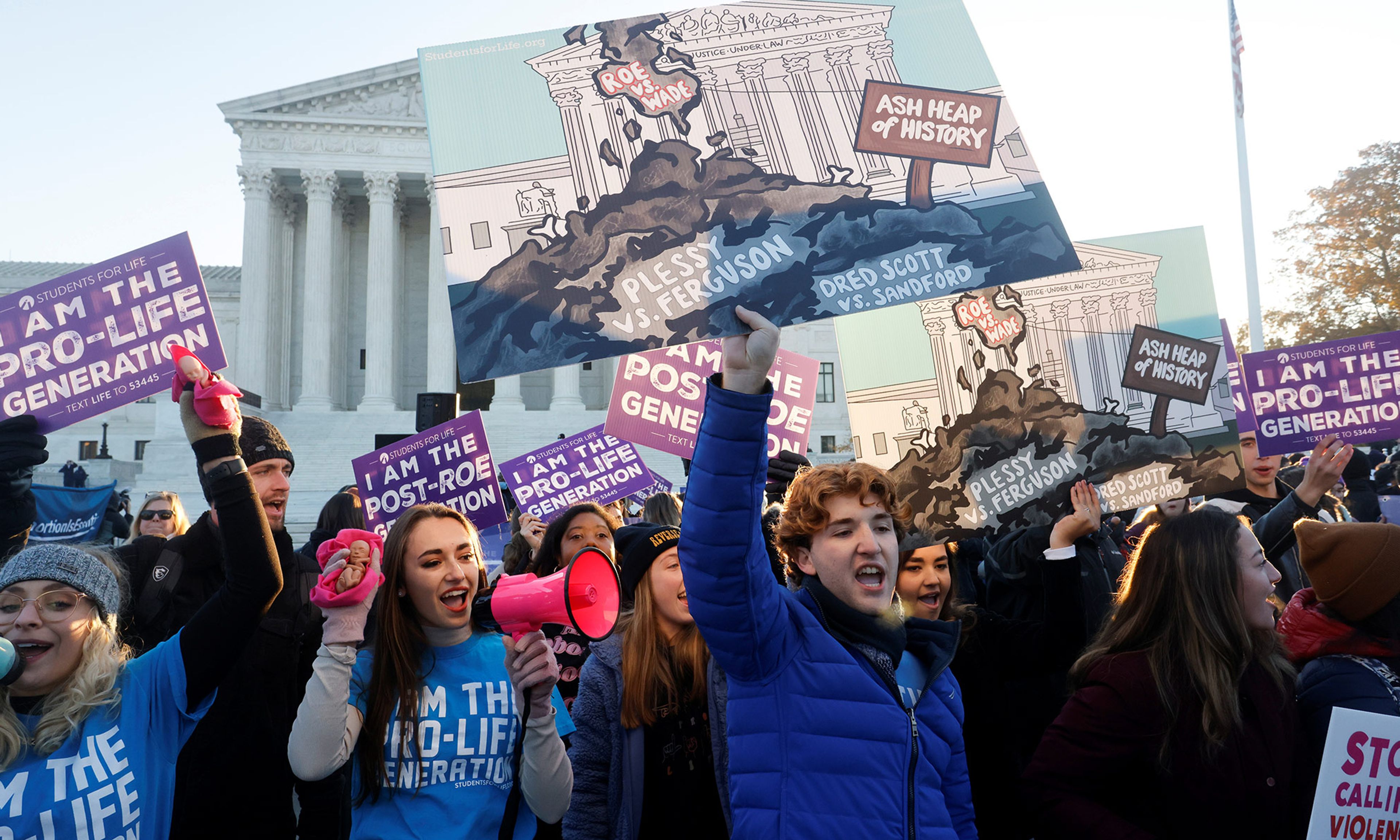
Democrats are trying to convince themselves that a loss at the Supreme Court over the Mississippi law banning most abortions after 15 weeks of pregnancy would actually be a political win for them in the midterm elections. If the Court overturns the Roe precedent creating a constitutionally protected right to abortion, their argument goes, the Democrats will reclaim the swing suburban voters they lost in the Virginia governor’s race. They believe that a legal setback on abortion would reenergize their dispirited base and donors, while lulling conservative activists into complacency. Fear and an impending sense of loss (in this instance, of rights, as Democrats see it) have powered many successful political campaigns.
Democrats are not alone in believing Republicans have overreached with recent laws restricting access to abortion in Mississippi and Texas. Self-described moderate Republicans, who consider themselves fiscally conservative and socially liberal, worry that the party may be the dog that does not know what to do when it finally catches the car. Salivating over Biden’s sinking approval ratings — a result of rising inflation rates and recurring Covid stumbles — and well aware of the historic advantage enjoyed by the minority party in midterm elections, these moderates think their party is violating the adage to never interfere with an enemy in the process of destroying himself. They are convinced that Republicans are on a glide path to winning back Congress and possibly the White House and see any abortion rulings as unwelcome distractions.
Including pro-life language in the party’s platform, supporting the Hyde amendment to limit taxpayer funding of abortions, nominating conservative judges, and enacting incremental restrictions in red states all seemed like harmless concessions to keep Reagan’s three-legged stool intact. Fiscal, social, and foreign-policy conservatives co-existed and mutually benefitted, as long as each faction got some, but not all, of what it wanted. These moderate Republicans believed that everyone got the inside joke that it was fine to talk about repealing Roe as long as nobody actually did anything about it.
Seemingly on the verge of victory, pro-life conservatives have been disappointed before. In its 1992 Casey decision, the Court replaced Roe’s pregnancy-trimester framework with one based on fetal viability and eliminated Roe’s strict-scrutiny standard for abortion regulations. Though states were allowed to adopt more incremental abortion restrictions, the Court disappointed social conservatives by reaffirming Roe’s constitutional right to abortion. Chief Justice John Roberts is reportedly seeking to assemble a majority on the Court for another compromise that would strike down the viability framework, giving states more latitude in restricting abortions, but would again leave Roe’s right to abortion intact.
Roberts apparently thinks he is preserving the Court’s reputation and legitimacy, as he sought to do when he voted with the Court’s liberal bloc to preserve Obamacare. But any ruling short of a repeal of Roe threatens to disrupt the conservative legal and political coalition that has developed over the last several years and would delegitimize the Court in the pro-life community. Conservatives have broadly united behind an originalist banner to nominate and support judicial candidates who believe the original intent and meaning of constitutions and laws should govern their later application.
Fiscal conservatives have partnered with social conservatives to help win federal elections and nominate conservative jurists, the former hoping to repeal the Court’s 1984 Chevron ruling and the latter hoping to repeal Roe. Chevron gives government agencies broad authority to interpret statutes; fiscal conservatives argue that unelected bureaucrats should not have such unlimited regulatory powers. This legal fight is part of the larger political battle against the growing powers of an administrative state that is not directly accountable to voters. Conservatives have argued that the Court’s deference to federal agencies and creation of the right to abortion are both inconsistent with an originalist reading of the Constitution. Pro-life Republicans suspect moderate Republicans of having harnessed their political energies to win elections and nomination battles only so that they might use the conservative judiciary to limit the regulatory state — without overturning bans on abortion restrictions. A Roberts-style compromise would leave pro-life activists deeply skeptical of the originalist project and the political party with which they have long identified.
Gallup polling shows that Americans are nearly evenly split between self-identifying as pro-life and self-identifying as pro-choice, with a plurality saying that abortion should be legal only in certain circumstances. In politics, intensity matters. Many of the Republican Party’s most committed supporters — the ones likely to volunteer for campaigns, knock on doors, and vote — are ardently pro-life and prioritize the abortion issue. They have worked long and hard within the system, sacrificing other policy priorities, waiting for this day and this ruling. Meanwhile, the Democratic Party moved from proudly including pro-life members and seeking to keep abortions “safe, legal, and rare” to celebrating abortions at any stage of pregnancy and for any reason. In doing so, they drove many with qualms about abortion to quit their party and join the Republicans.
Pro-life Republicans include many blue-collar, culturally conservative voters who might otherwise find Democratic economic policies attractive. They don’t inherently mistrust unions or automatically support limited government, deregulation, and lower tax rates for large corporations and the wealthy. Many support populist policies but have joined forces with fiscal conservatives for the greater good. They consider a potential Court victory a step toward a moderate outcome, with each state able to decide its own abortion laws, rather than restricting the procedure across the country.
If the Court overturns Roe and Republicans simply duck and hide, self-serving Democratic predictions that the ruling would be a political gift in the midterms will turn out to be correct. The side that is viewed as more extreme will lose. Republicans can fight the issue to a draw and even a small win, but it will not happen organically. And it will not happen if fiscal conservatives stay home and abandon the coalition that has brought them to the brink of victory.
[slideshow slideshow="1009721" /]

About the Author
Bobby Jindal was the governor of Louisiana from 2008 to 2016 and a candidate for the 2016 Republican presidential nomination.
Featured Tags
Advertisement
Advertisement
Comments