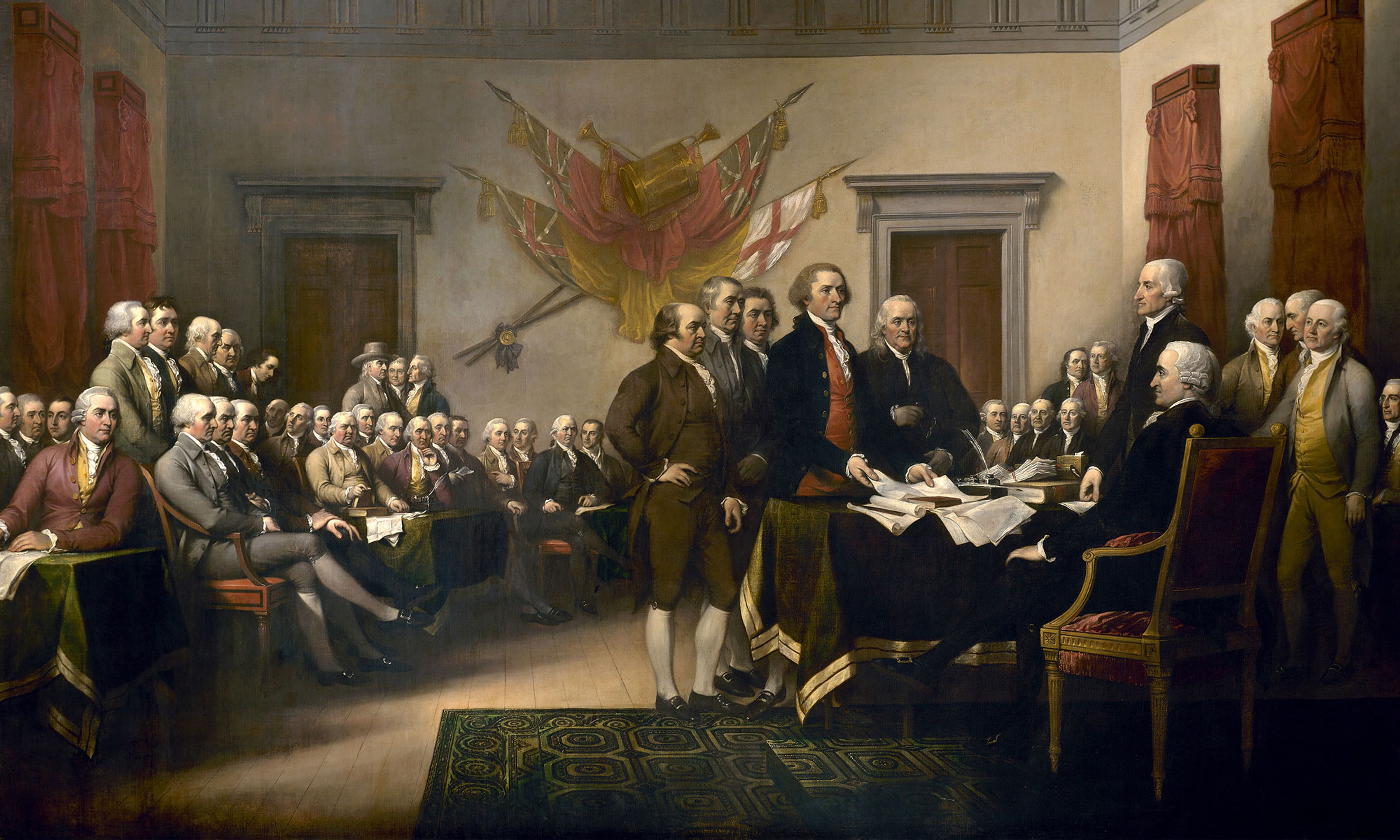
Revisionist historians have claimed that the Declaration of Independence’s most essential part is not the famous opening passages, but its list of 27 grievances against King George III. These injuries, it is said, are the real meat of why the Americans sought to escape British rule and were willing to wage war to attain independence. Yet these revisionists make the mistake, in Alexander Hamilton’s words, of affirming “that the deputy is greater than his principal; that the servant is above his master.” The series of grievances serves as evidence of unjust government under a higher standard of what just government is and must be. That standard is laid out most clearly in the second paragraph of the Declaration.
For subsequent generations of Americans who study their founding document, this paragraph seems to contain two principles that appeal to different minds. The first is popular sovereignty, or democracy. “All men are created equal,” so each must have an equal say in how the society is governed. “Governments are instituted among Men” as their creation to control — no more divine right of kings to rule over the rest. All power is derived from the “consent of the governed.” When government becomes destructive of the ends for which it was established, “it is the Right of the People to alter or to abolish it, and to institute new Government, laying its foundation on such principles and organizing its powers in such form, as to them shall seem most likely to effect their Safety and Happiness.” The people always remain in ultimate control of their government. When government turns to despotism, “it is their right, it is their duty, to throw off such Government.”





Comments