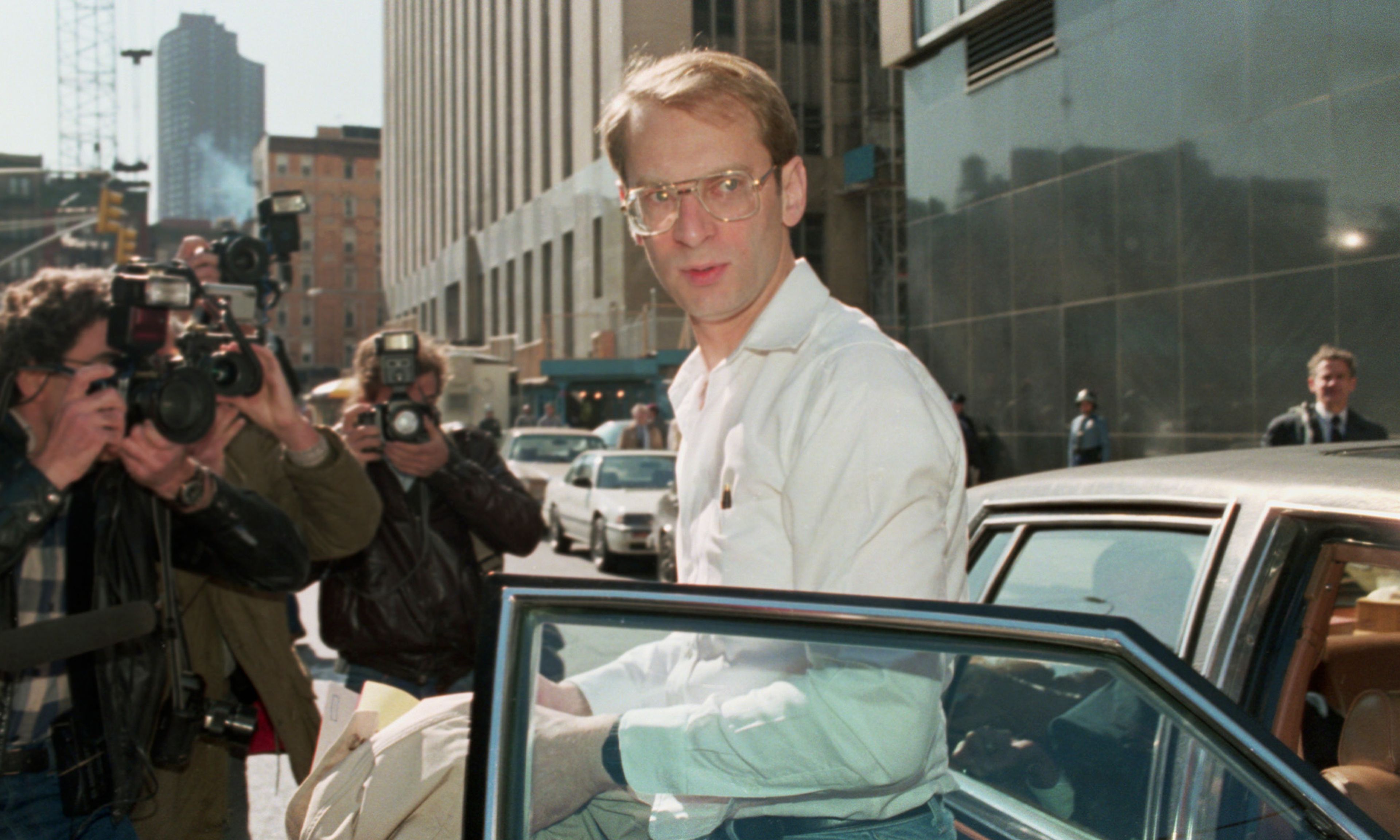
Some high-profile legal cases never lose their ability to fascinate, enrage, galvanize, and inspire fervent discussion and debate. That’s certainly true in the case of Bernhard Goetz, the mild-mannered Greenwich Village resident whose shooting of four young black men who had approached him in a subway car on December 22, 1984 — and the uproar that ensued — became bywords for the racial tensions, urban decay, rampant crime, and general malaise of New York City in that era.
Goetz has always had his share of ardent supporters — who have praised him for defending himself at a time when the police and courts of a liberal city failed miserably to do their job — and equally impassioned foes, who have branded him a racist and vigilante. At the former end of the spectrum, you have Guardian Angels founder and recent New York City mayoral candidate Curtis Sliwa, whose organization provided protection for Goetz during his trial and demonstrated on his behalf, with members at one point holding a sign that read, “Politicians should try riding the trains before calling people vigilantes.” And at the latter end, there’s radical lawyer Ron Kuby, who in 1996 led a successful civil lawsuit, resulting in an award of $43 million in damages, against the figure he branded “a bigot with a gun.” (Goetz had escaped criminal conviction for attempted murder and first-degree assault, though not for a lesser weapons charge.)




Comments