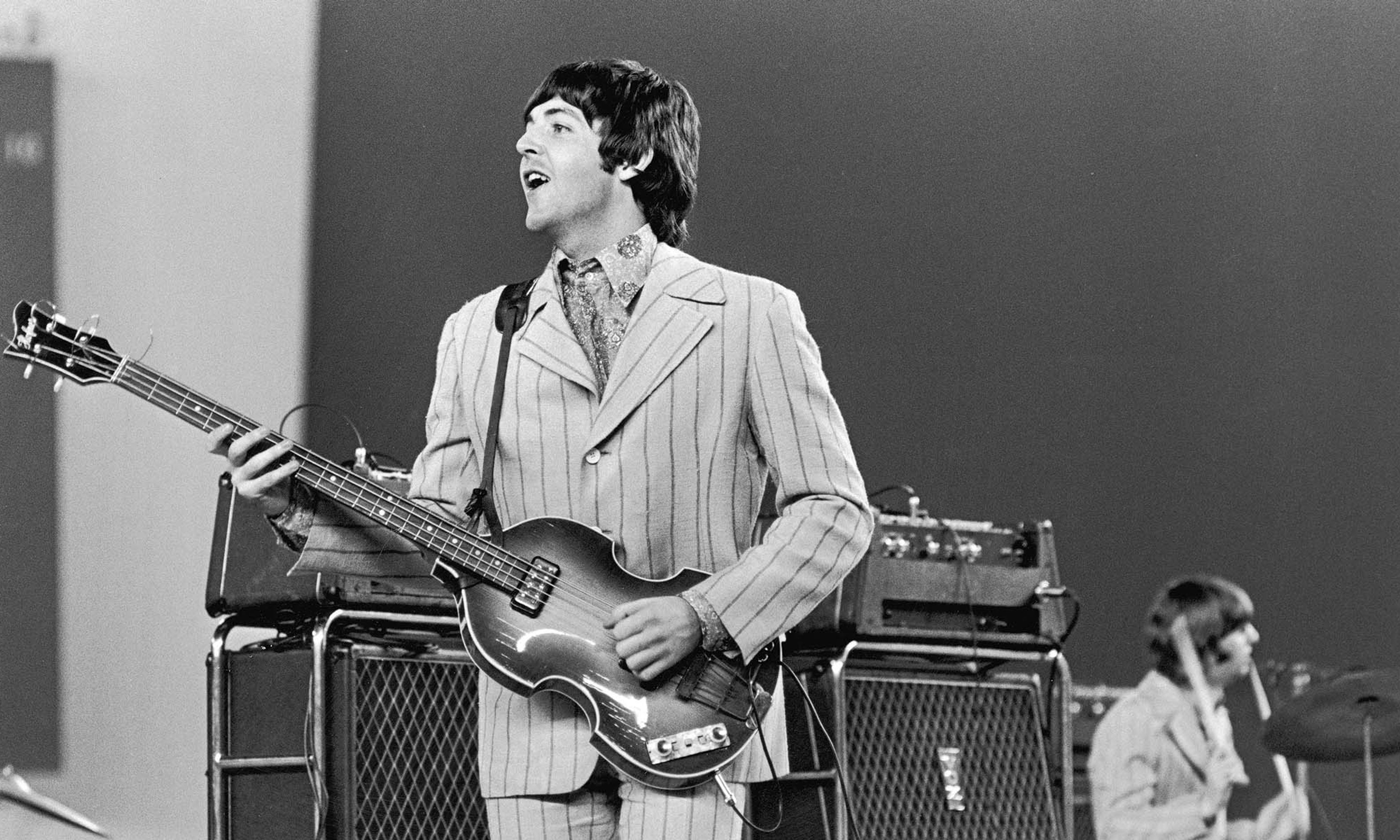
Giles Martin, son of the Beatles’ celebrated producer, George Martin, has remixed Rubber Soul. The result, which follows similar work done on Sgt. Pepper, Abbey Road, the “White Album,” Let It Be, and Revolver, is titled Rubber Soul (2026 Mix), but it might more appropriately be titled The Paul McCartney Restoration Project. As with Giles Martin’s other work, the primary benefit of his efforts is to take the original Beatles recordings and to make them sound terrific on modern audio equipment. Highlights this time around include the sitar on “Norwegian Wood,” which now escapes the surly bonds of earth and sounds as if it’s there in the room with you; a clearer delivery of the gorgeous harmonies on “Nowhere Man” and “Think for Yourself”; and a greater prominence for John Lennon’s magical countermelodies on “You Won’t See Me” (“No I wouldn’t / No I wouldn’t”) — but above all else, the improvement is in the bass, which, at long last, sounds as the group wanted it to back in 1965.
Rubber Soul was more folk-inspired than any other Beatles record, but in “Drive My Car” and “The Word,” it features a couple of songs that were taken straight from American Motown, and which the band explicitly wanted to sound like American Motown. In this, however, they were thwarted. In his autobiography, Here, There, and Everywhere, the Beatles’ longtime engineer, Geoff Emerick, recalls that Lennon and McCartney were perpetually disappointed by the lack of punch in the drums and the bass that they heard on their commercially released records, and that they were frustrated to the point of insubordination by EMI’s insistence that if they were allowed to produce their masters in the style favored by American artists such as Wilson Pickett, they ran the risk of making their listeners’ record-player needles jump out of the grooves. Eventually, the duo got their own way, with “Paperback Writer” (1966) marking the transition. But this was too late for Rubber Soul, which, despite its invention and remarkable sophistication, was one of those “early” records about which McCartney had long complained that “the drums and bass were really mixed towards the back.”





Comments