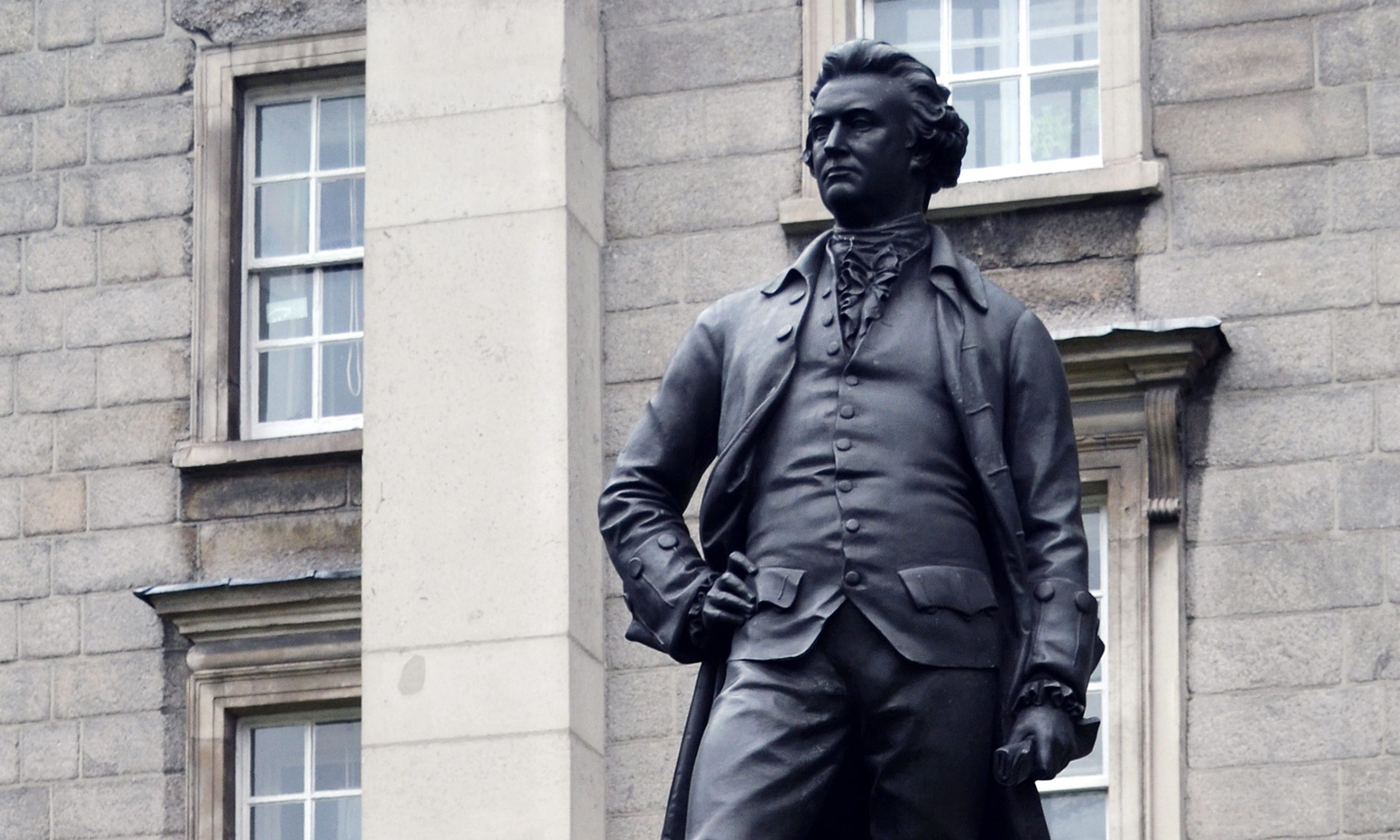
You be the judge: Edmund Burke’s brother, Richard, owned eleven slaves in the West Indies; Burke co-authored a book noting that the expansion of the slave trade could serve the commercial interests of the British Empire; Burke was one of the architects of the Free Port Act of 1766, which promoted free trade — trade that necessarily included the slave market — between Britain’s West Indian and American colonies; Burke defended the independence of the African Company, which trafficked slaves; Burke criticized Lord Dunmore’s plan to liberate American slaves to fight on behalf of the British during America’s War of Independence; Burke at times used language that reinforced European stereotypes of Africans in the 18th century; Burke drafted a plan for gradual abolition but did not release it publicly; Burke never introduced the plan in Parliament; and Burke opposed immediate abolition in the House of Commons in the early 1790s.
So did Burke support slavery? Did he benefit from it?





Comments