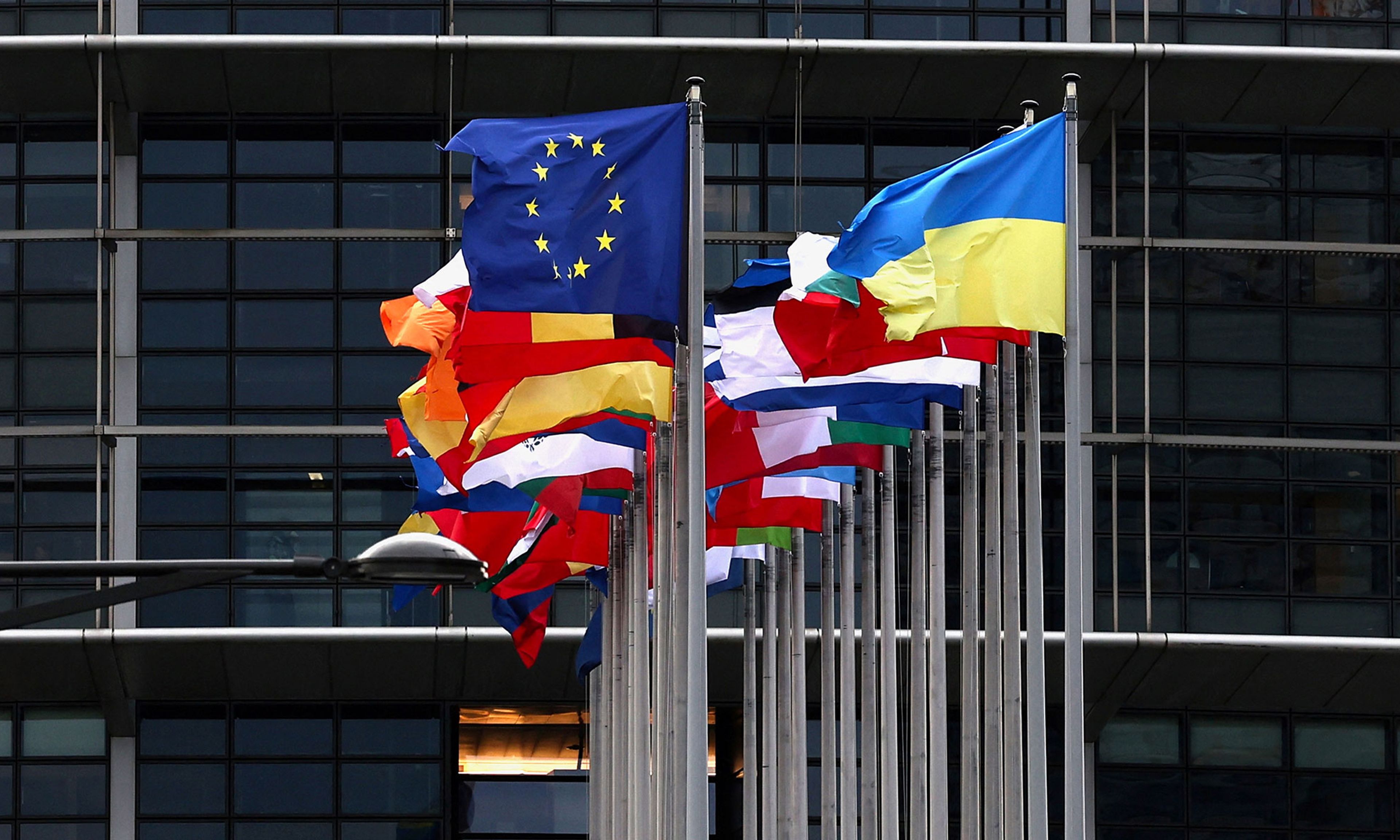
The European Union is preparing to expand by potentially adding Moldova, Montenegro, Albania, and Ukraine — though the latter remains unlikely — as new members over the coming years. The priority for Brussels, however, is not simply to grow the club, but to ensure that growth does not weaken the establishment that runs it. Newly released plans would accomplish this by seriously curtailing the power of member states. Clearly, Brussels has learned the wrong lessons from the 2004 eastward expansion of the EU.
Decision-making in the European Union is a slow process. The European Commission, its executive branch, initiates almost all legislation, which is then submitted to the European Parliament, its legislative assembly. While the Commission sometimes struggles to get bills past Parliament, the real hurdle is the Council of the European Union, where each member state has equal representation. In the Council, members can frequently exert veto power, as decisions in many areas require unanimity. Even when this is not the case, a qualified majority — meaning 55 percent of members representing at least 65 percent of the EU’s population — is typically required. The more members the EU has, the greater the likelihood that at least one of them will object to something European Commission President Ursula von der Leyen and her allies propose.



Comments