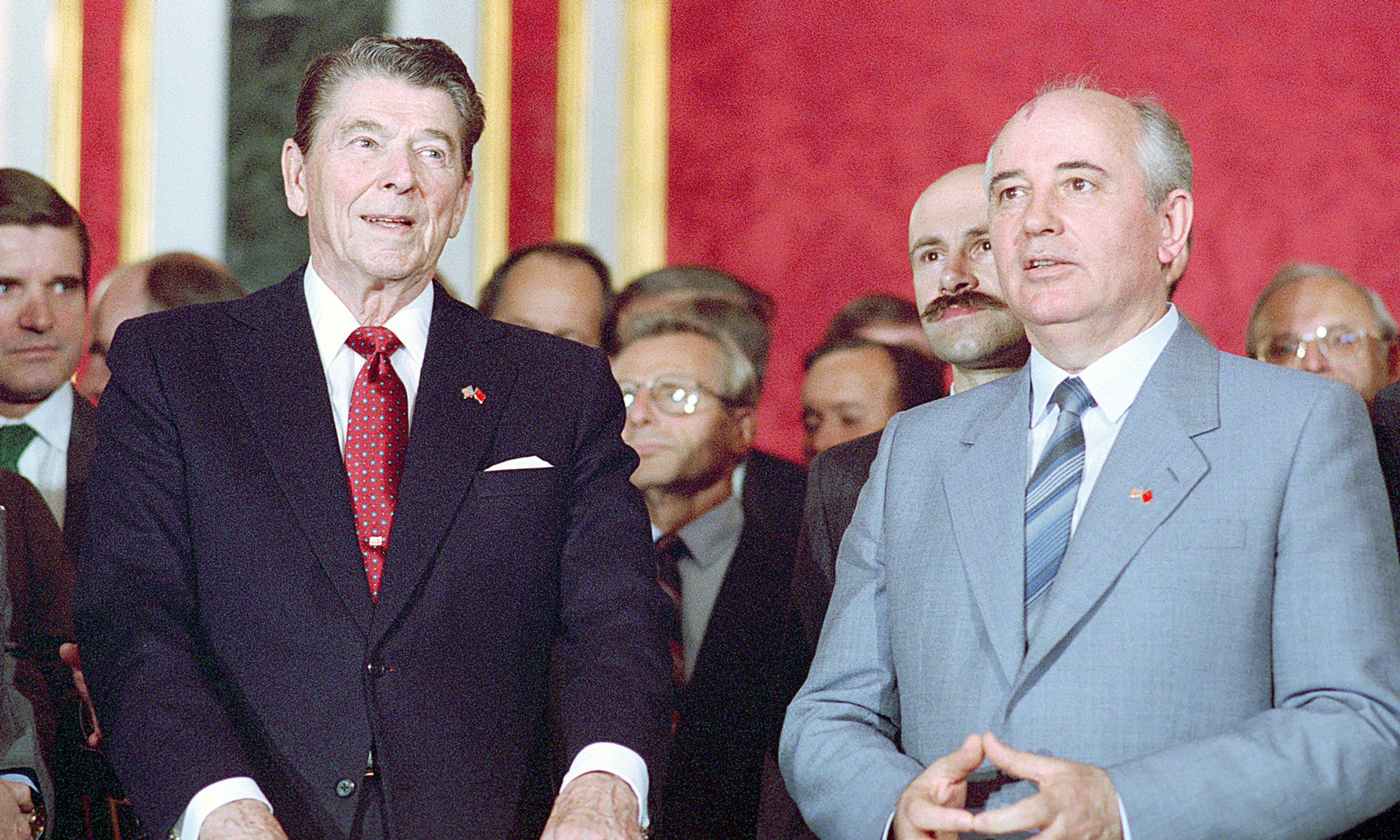
Ronald Reagan’s statesmanship was far more complex and contradictory than is often portrayed by both his supporters and his detractors. On the one hand, he pushed for a U.S. rearmament program, including the modernization of the U.S. nuclear “triad” of bombers, nuclear submarines, and survivable ballistic and cruise missiles. On the other hand, he abhorred nuclear weapons and sought real arms-control agreements that would abolish them. He negotiated one of the most successful nuclear-reduction treaties during the Cold War.
Reagan attacked Jimmy Carter for undermining allies in the name of human rights, but he also jettisoned Cold War allies such as Philippines dictator Ferdinand Marcos to push Manila toward democracy. Though a staunch anti-communist, Reagan embraced the Communist Chinese, whom he saw both as an ally against the Soviet Union and as a country committed to capitalist reform. Though committed to free markets and free trade, Reagan supported government intervention to guard against high-tech competition from Japan.





Comments