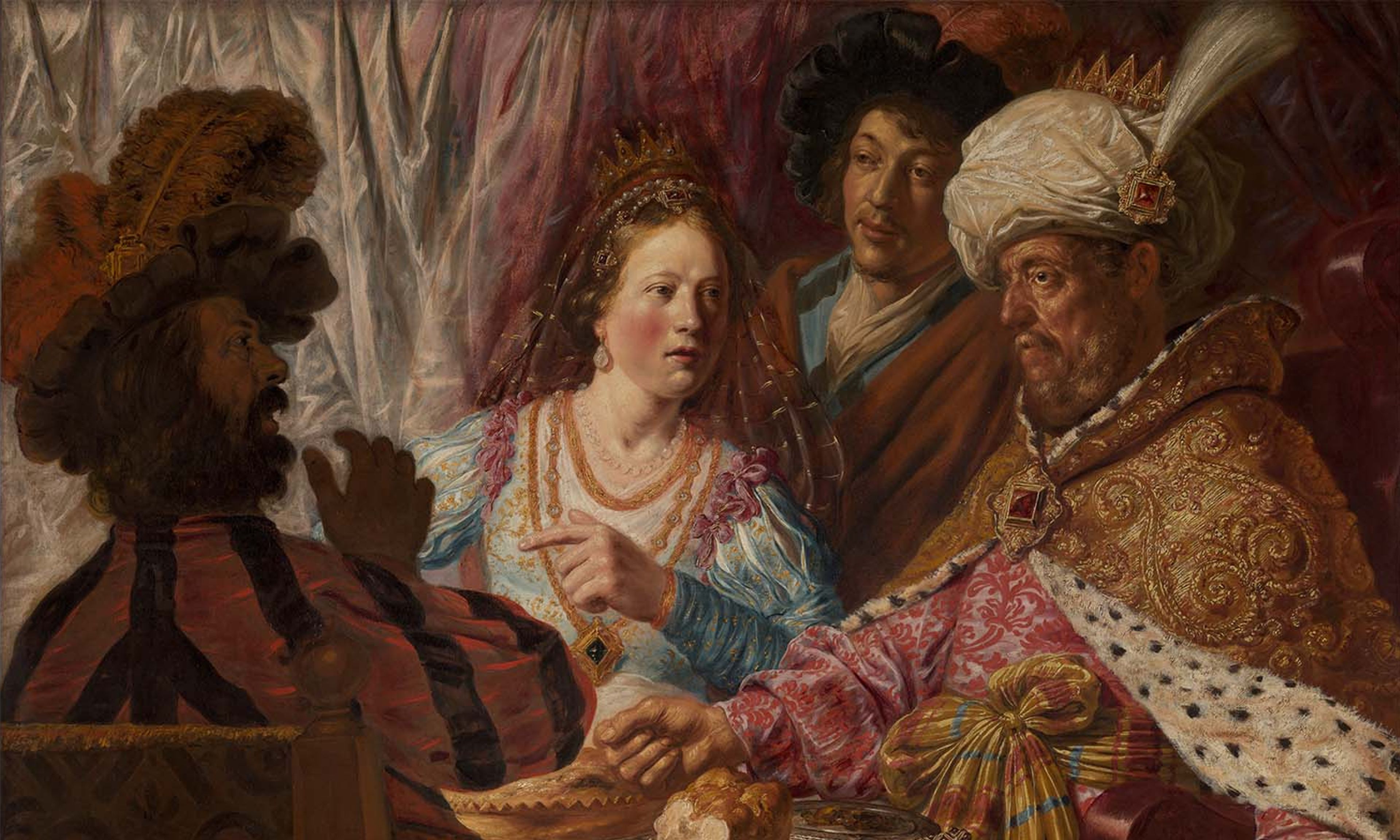
The Book of Esther in the Age of Rembrandt is the brilliant, edifying new exhibition at the Isabella Stewart Gardner Museum in Boston. I know, it’s nowhere close to Purim, the upbeat Jewish holiday honoring the heroine Esther, and Rosh Hashanah and Yom Kippur aren’t upbeat at all, but I’m a philosemite, so I mean well. The show — 39 works of art, among them three paintings by Rembrandt (1606–1669) — takes us to Esther’s story in ancient Persia, circa 470s b.c., and to mid-17th-century Amsterdam and the Netherlands, just freed from Spanish rule and in its Golden Age. Esther was much celebrated then by Dutch Christians and Jews alike.
I almost never toss “edifying” among my superlatives and rarely “brilliant,” but the Gardner’s show is so good that it should constitute a class for all those one-trick-pony curators in the field today. The Book of Esther, in fact, passes a swath of curatorial commandments. As an art critic, I think these are nearly as vital as the ones delivered atop Mount Sinai. I’ve seen shows so bad, they’ve tested my observance of God’s Sixth.





Comments