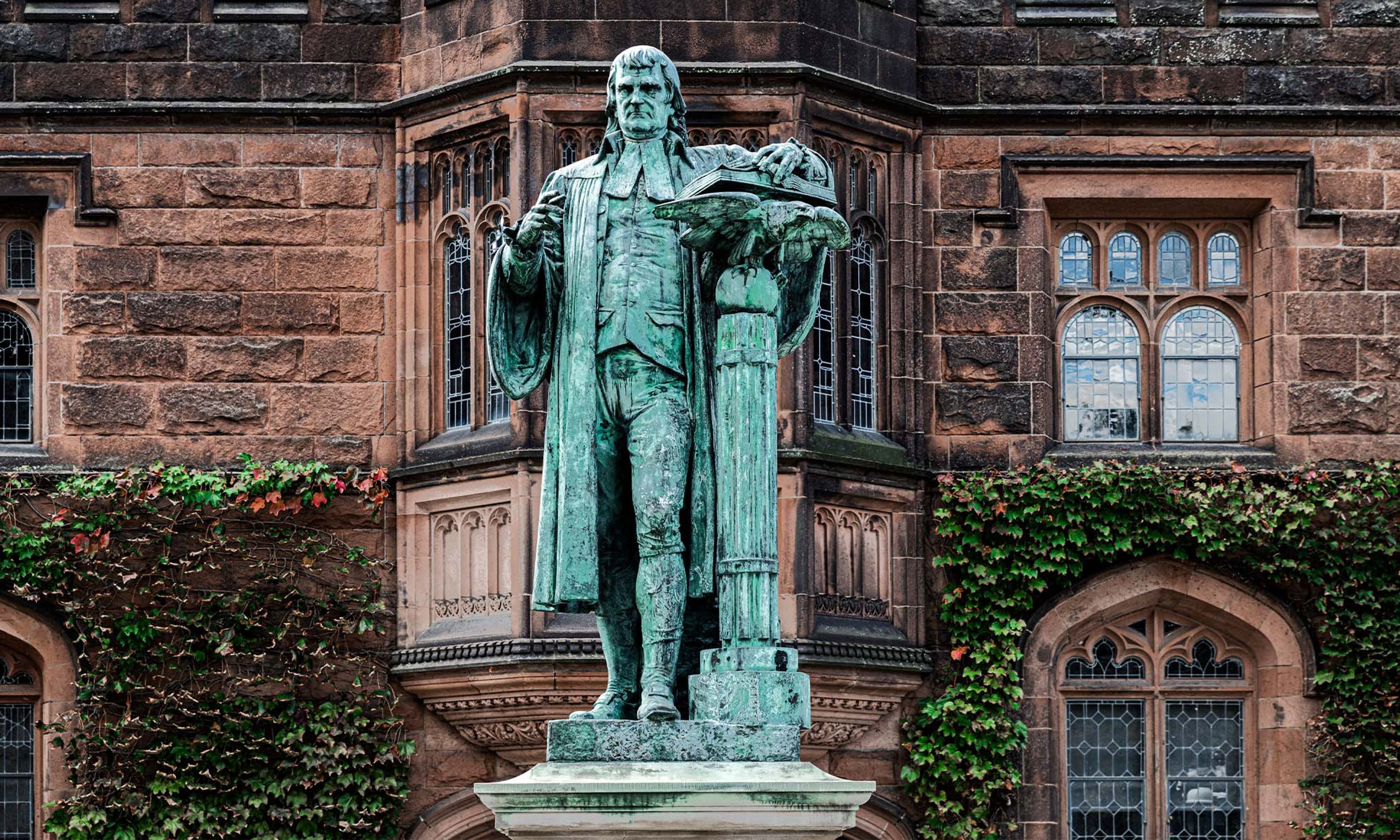
Since 2001, a ten-foot-tall bronze statue of John Witherspoon, one of the country’s Founding Fathers, has towered over Firestone Plaza atop a seven-foot, seven-inch plinth with three tablets explaining his legacies as a patriot, president, and preacher, next to the main library on the campus of Princeton University. The administration is weighing a petition by some 286 (a pretty puny number, by the way) students and others to remove or relocate the statue because he owned two slaves. This, the petition says, gives people “a right to feel uncomfortable, to feel less at home.”
It is unknown how many of the tens of thousands of Princeton students who have walked past the statue have felt that way, or whether any of them were aware of the evidence that Witherspoon was an advocate of eventual abolition who expected to free his slaves by age 28, or that as a Presbyterian minister he had baptized a fugitive slave in Scotland, or that he was the only signer of the Declaration of Independence who was a clergyman and a college president, risking execution or prison if the American Revolution failed, or that some 40 of the other 52 signers also owned slaves, including George Washington, John Hancock, and Benjamin Franklin. A student said at a university listening session on the matter, “For a lot of black people, one of the first things they think when they see that statue is slavery.”





Comments