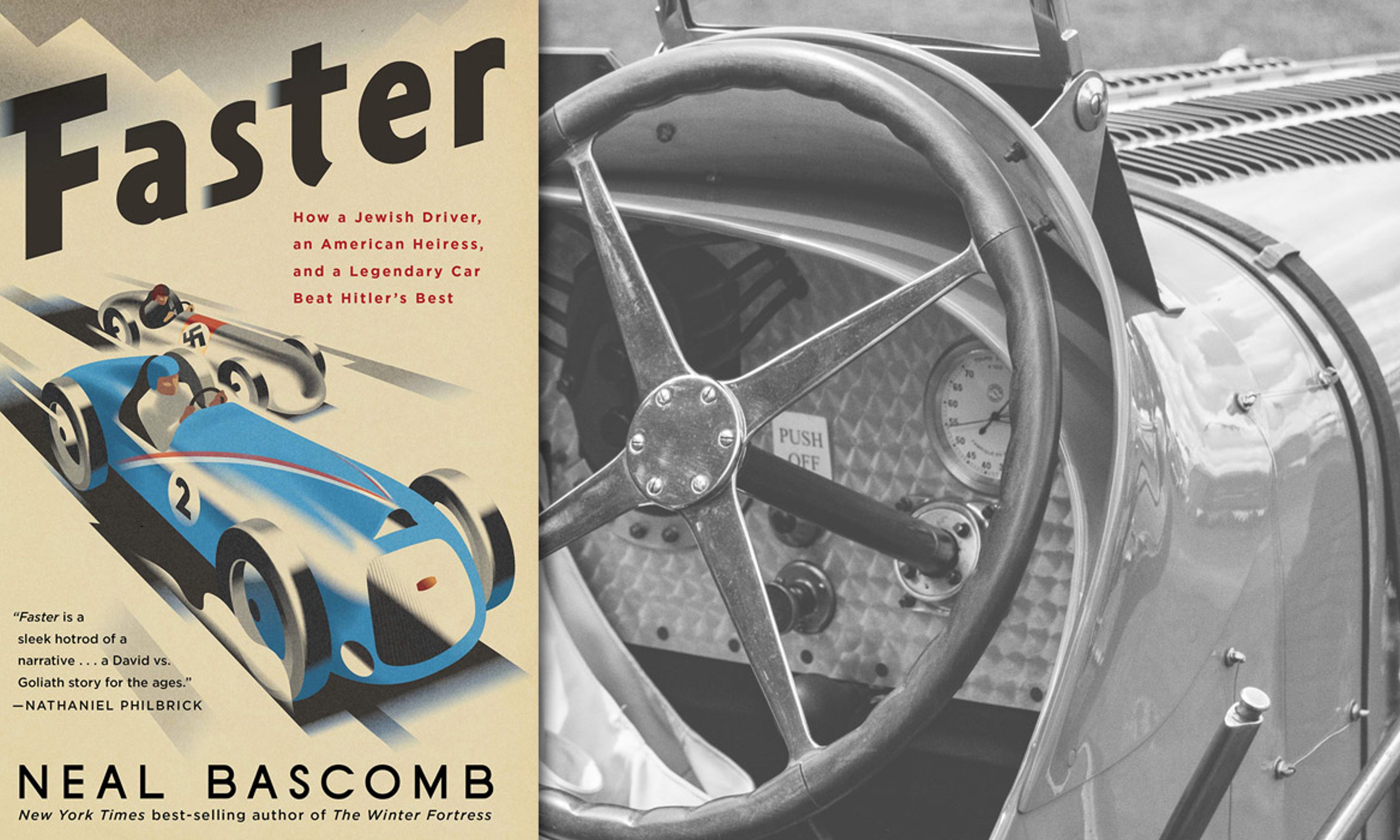
Race cars . . . Nazis . . . Monaco . . . a brash heiress and taciturn underdog . . . an epic showdown in the Pyrénées. It’s hard not to fall in love with Faster, Neil Bascomb’s brisk new portrait of European auto racing on the eve of World War II. Assuming we’ll be able to venture out of doors this summer (a big “if” at this point), Faster gets my vote for the season’s most exhilarating and substantive beach read. It’s precision-engineered for Hollywood, and, as far as I can tell, it’s all true.
There is alchemy at work in a piece of writing that approximates the rhythms of racing. At pivotal moments, the sentences fire in escalating, compact bursts—each stalking the next like the cars crowding each other on the winding city-streets of an old-style Grand Prix. One imagines Bascomb’s laptop fitted with a gearbox. But while it’s easy enough to describe how the book feels, it’s more difficult to explain what it’s about—at least in a line or two. The unwieldy subtitle—“How a Jewish driver, an American heiress, and a legendary car beat Hitler’s best”—makes the attempt, but the messy human drama contained in Faster’s pages spills outside the checkboxes those words suggest. To his credit, Bascomb (Hunting Eichmann) is too fine a writer and too conscientious a journalist to ever make more than a half-hearted attempt to keep his subjects in line with those labels.





Comments