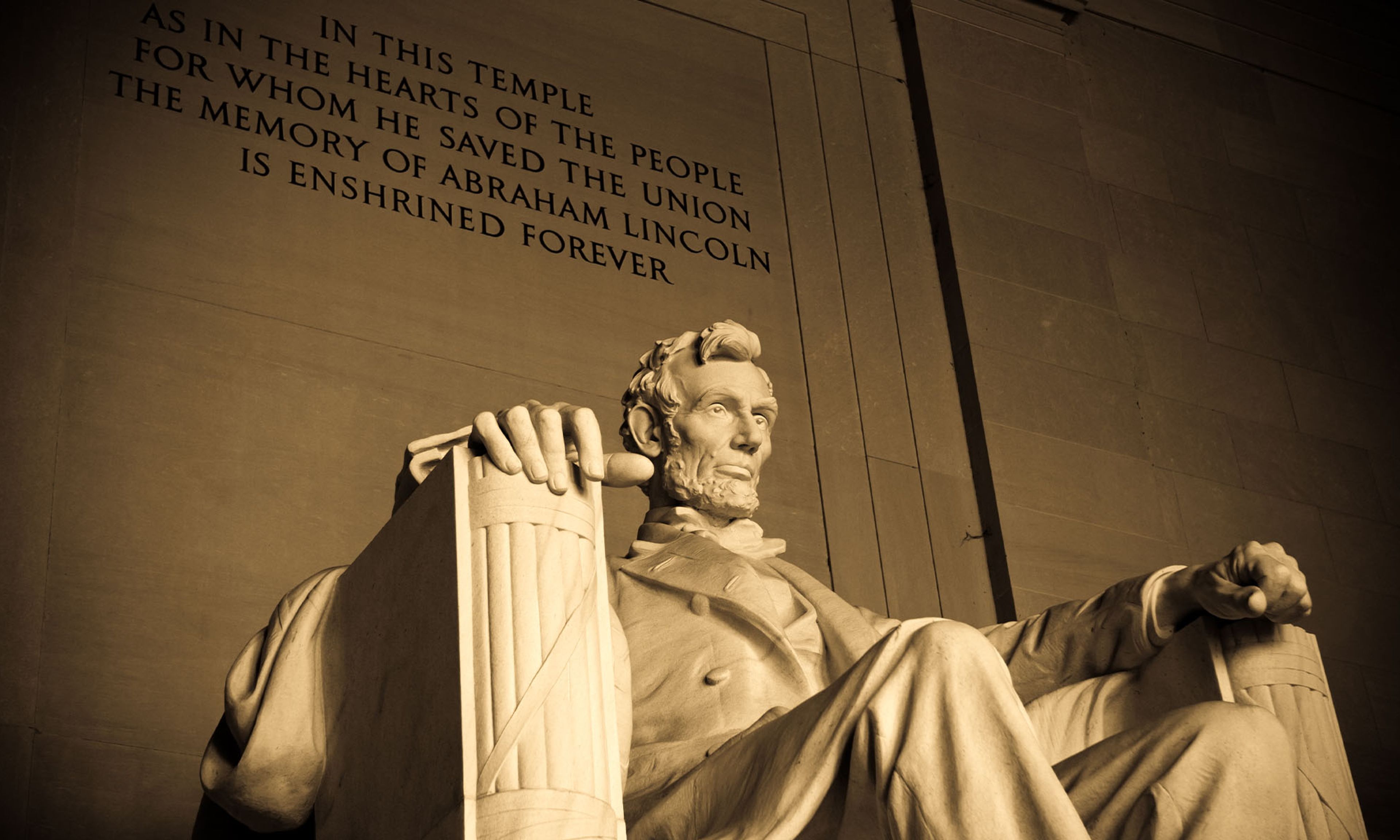
It is a pity that at the national level we do not celebrate Lincoln’s birthday as a separate holiday, instead of putting it together with Washington’s as “Presidents’ Day” as we now do. The two men and their historical settings were vastly different, and whatever Washington’s many personal virtues, his beginning a series of Virginian slave-owners as presidents — himself, Jefferson, Madison, and Monroe — gave a fatal ambiguity to the American founding that has reverberated more loudly in recent years. It was Christian humanist Samuel Johnson who pointed out the devastating irony that the “loudest yelps for liberty” in America in the mid 1770s seemed to come from “the drivers of Negro slaves.” It was Lincoln’s tragic triumph to thwart and ultimately to overcome the discrediting, original sin of American political history.
It may seem absurd to suggest that Americans are “losing Lincoln,” given the vast literature that we have on him. As long ago as 1984 the New York Times journalist Herbert Mitgang asserted that there were 5,000 books on Lincoln, and in the intervening 40 years many have been added, some of them very distinguished: scholarly works by such figures as Harry V. Jaffa (his second great work on Lincoln), James McPherson, Eric Foner, J. P. Diggins, James Oakes, and Allen C. Guelzo, and popularizing works by Guelzo, Richard Brookhiser, and Richard Lowry, the last three being regular writers for National Review.




Comments