Share this story
A wise man once said that "the nine most terrifying words in the English language are: I'm from the government, and I'm here to help."
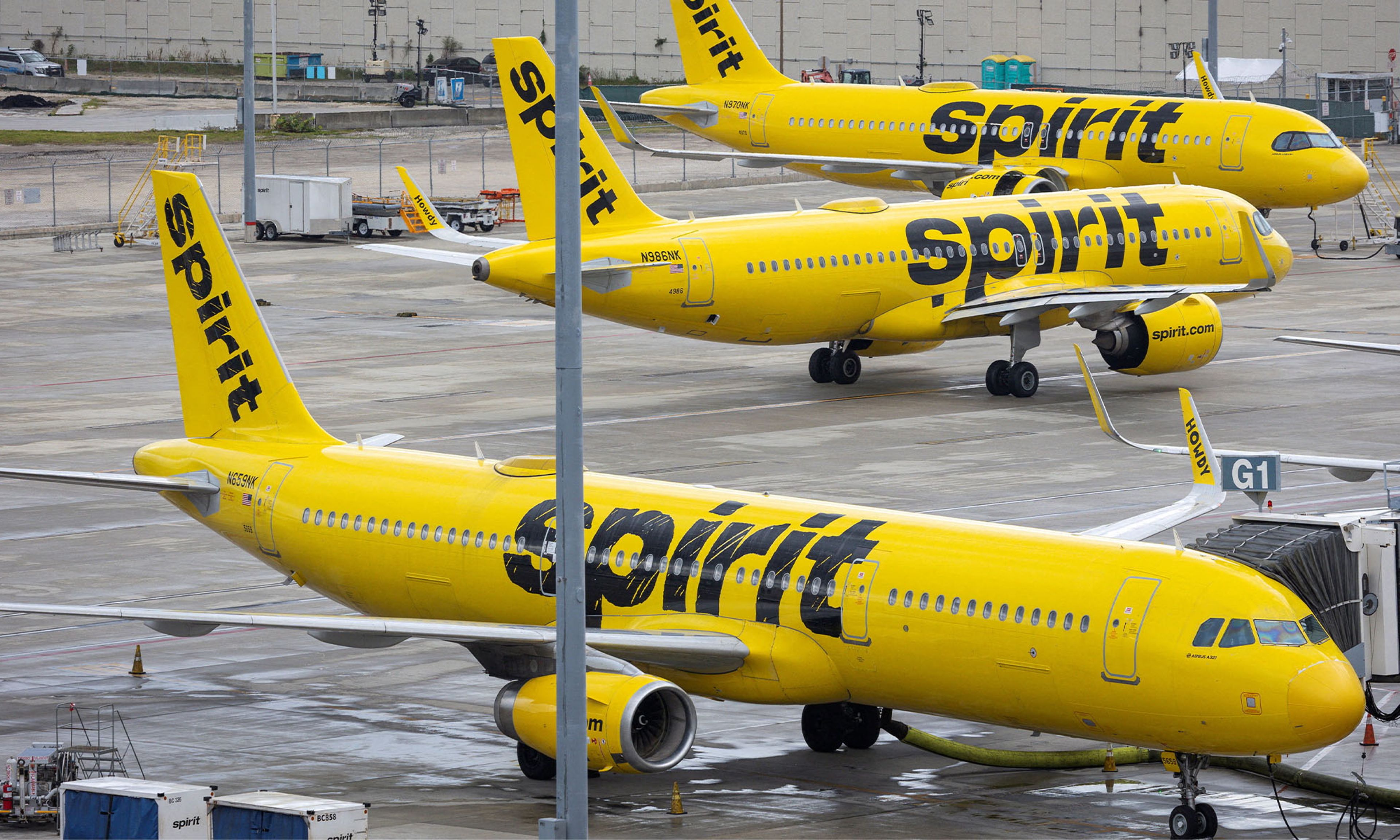
And so to Spirit Airlines and the “helpful” intervention by the antitrust authorities in 2023.
As we note in our editorial:
In 2022, Spirit Airlines, which was going through very tough times, agreed to a merger with JetBlue. In 2023, in a decision typical of the assertive antitrust of that era, that merger was blocked by the Biden administration for no obvious good reason: The merged entity would have been only the fifth-largest airline, with a market share far below that enjoyed by any of the big four, but Washington knew best.
Here’s part of what Rachel Chiu, writing for Capital Matters in March 2023, had to say about the decision to block that merger (emphasis added):
It . . . came as no surprise when the Justice Department — joined by Massachusetts, New York, and the District of Columbia — sued to block the merger earlier this week. The complaint alleges that the transaction would eliminate the “largest and fastest-growing ultra-low-cost carrier” and increase fares. Ironically, regulators highlight existing consolidation in the airline industry without appearing to think through how, if their suit is successful, it could worsen this state of affairs.
Well, we’ve discovered how much worse it could get.
In fact we have discovered it on three occasions. Spirit subsequently filed for Chapter 11 twice (“Chapter 22” as some said) and is now once again in desperate straits.
Here is an extract from an article by Stephen Moore for Capital Matters after a federal judge upheld the decision to block the JetBlue merger (emphasis added):
The antitrust laws require the government to show a “substantial threat to competition” to prove its case. The reality is the opposite. Merging the sixth- and seventh-largest airlines would have helped create a fifth major airline, reduce costs, and expand JetBlue’s fleets and routes. This marriage would have enabled JetBlue to compete head-to-head against the “big four”: United, Delta, Southwest, and American. Ironically, the dominant airlines are breathing a sigh of relief. . . .
Without the merger, Spirit is likely to go bankrupt. Spirit is known as an “ultra low price” airline — so knocking it out means higher ticket prices. . . .
This decision is a loser for consumers and for shareholders, but it’s a victory of sorts for the Biden regulators. Lina Kahn at the Federal Trade Commission sees her role as blocking nearly all mergers and acquisitions. She sees phantom monopolies at every street corner. She’d sue the Girl Scouts for price-fixing the cookies they sell if she had the chance. The theory is that companies should only grow “organically,” but most successful firms grow their profits by organic growth and by acquisition. Allowing small companies to be acquired is a stimulant to small-business creation in America.
After Spirit went into Chapter 11 for the first time, I wrote a bit about Washington’s intervention, including this:
The state, you see, knew better than shareholders. And the state had plans for Spirit. This was the new model antitrust of the Lina Khan era, the reworking of antitrust away from a focus on consumer welfare and toward a device to reshaping the economy, inspired in part by a neo-Brandeisian fear of “bigness.” Paranoia and top-down diktats are not normally a good way to run an economy, although Khan has won the admiration of the “Khanservatives,” big government types such as Missouri Senator Josh Hawley.
Spirit has floundered, but the object of the Khanservatives’ (who included a certain Senator Vance) admiration has done well, despite her busily inglorious time at the FTC. She served as a co-chair of Zohran Mamdani's mayoral transitional team and will now be influencing future generations from a senior position at Columbia.
Lina Khan, the antitrust enforcer who challenged tech giants, wants to shape another generation of legal scholars to join her crusade.
Columbia University, where the 37-year-old has taught on and off since 2020, is launching the Center for Law and the Economy, which will be jointly run by Khan and Lev Menand, a law professor at Columbia.
The center aims to offer Khan’s brand of antitrust enforcement and economic policy to law students and progressive policymakers nationwide. It will also focus on areas such as banking law, consumer protection and economic governance, Khan said.
“It’s just been clear that there is a huge hunger among students, and law students in particular, to be part of this work and to help advance it,” Khan said in an interview.
Of course they do. It means power, money, and influence. That the price will be paid by those hit by the economic underperformance that will result is just too bad.
Omelet, eggs, you know how it goes.

About the Author
Andrew Stuttaford is the editor of National Review's Capital Matters.
Featured Tags
Advertisement
Advertisement
Comments