Share this story
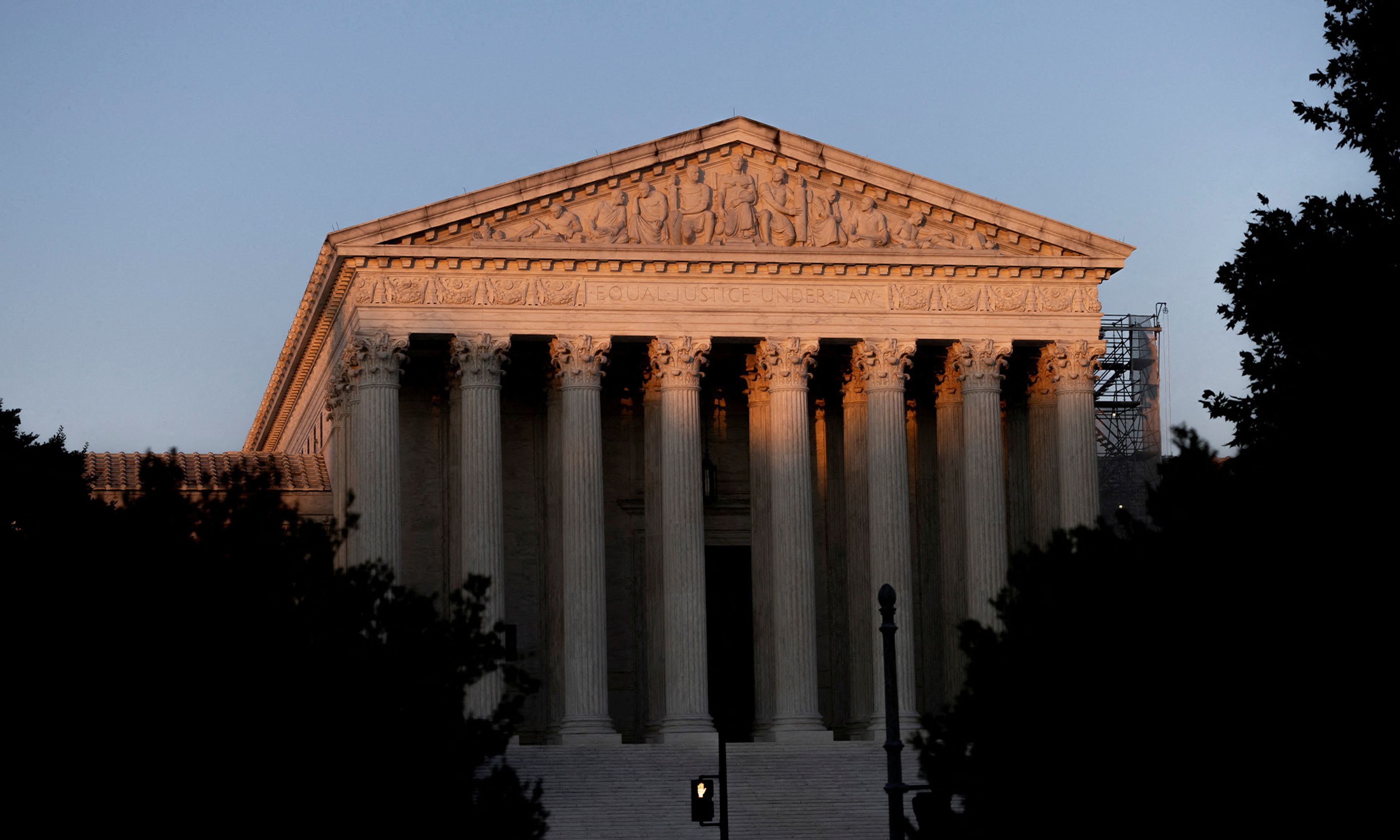
Well the news is that Justice Alito won’t retire. The stories are extremely well-sourced and confirm my long-standing suspicions. Of course, baseball fan that Alito is, it’s good to recall Yogi Berra that it ain’t over till it’s over. We won’t know for sure until July 1.
But let’s assume he isn’t going anywhere. The same goes for Justice Thomas, who is widely expected to covet the title of longest-serving justice and has otherwise indicated a desire to leave feet first. There was no doubt that Thomas would spin the wheel of Fortune, and it seems Alito will, too.
This presents a short-term issue with the midterms. (Beyond that doesn’t even really bear speculation at this point.) In six months, Republicans may lose the Senate, in which case both justices are stuck and, if something should happen to one or both of them, they won’t be replaced under this administration.
Likelier than losing the Senate, though, is a narrow Republican majority. With developments in Texas, Ohio, and Alaska, a 50–50 Senate is a real possibility and perhaps the likeliest outcome. Assuming Lisa Murkowski continues to caucus with Republicans (which is not a certainty, especially if Dan Sullivan loses), she will be the deciding vote for any Supreme Court justice.
If Susan Collins is vote 49 or 50, it won’t be a big deal. She may balk at a more aggressive member of the Thomas “clerk family” but, all other things being equal, Collins will vote for a qualified nominee of the president’s choosing. She has her own principled view of how she approaches judicial nominations.
Murkowski’s approach is, well, murkier. She famously voted against Kavanaugh for reasons that made no sense unless you understand that her core base of support is professional women in Anchorage, and the female lawyers of Alaska descended on her office in force to oppose Kavanaugh. There was also a nagging issue surrounding Kavanaugh’s opposition to the Akaka Bill, which Democrats cleverly used to generate anxiety among Alaska Natives — Murkowski’s other main constituency.
If Murkowski is the deciding vote, these are the constituencies that will need to be appeased. Yes, she’ll want American Bar Association qualification and “mainstream” presentation, but when the rubber hits the road, it’s the professional women of Anchorage and the Alaska Natives to whom she’ll need to justify her vote.
This means not even a whiff of MAGA. It means no pro-lifery. It means no unconventional legal careers. It means no doctrinaire jurisprudence. It’s going to be a very difficult gauntlet for an actual conservative to run, and it almost certainly disqualifies almost everyone who gets discussed.
It’s worth floating some trial balloons, of course. Would she oppose Patrick Bumatay as the first openly gay justice? Jay Richardson, the hero of Mother Emanuel? Raúl Arias-Marxuach, the Sage of San Juan? Hopefully not, but I wouldn’t bet on it.
Keep in mind: If there’s a Supreme Court vacancy in a 50–50 Senate, it’s probably because of a bad turn on Fortune’s wheel; neither Alito nor Thomas would willingly put their seats in the hands of such a Senate. An actual vacancy gives Murkowski all the cards, so why should she fold?
This means the White House will have to get creative. The goal can’t be a legacy pick because she won’t allow for it. The goal needs to be simply holding the seat until a bigger majority is available over the next six to ten years to confirm a long-term occupant. The smart play may be a caretaker justice. Here are some possibilities.
Diane Sykes — Until recently the chief judge of the Seventh Circuit, Sykes presents as the consummate professional woman and does not give even a whiff of MAGA. She’s a suburban Republican, through and through. While early in her career she made some arguably pro-life statements, on the court of appeals she faithfully applied precedent, even ruling in favor of Planned Parenthood to the irritation of social-conservative groups. Yes, she dissented in a parallel case to Bostock, but it’s hard to pin her with any kind of animus. Her Second Amendment jurisprudence is among the strongest in the country, but that’s actually a plus for Murkowski. Sykes is senior status so it would be an unusual pick, and she would resist jumping back into the fray. I bet she’d answer the call, though, if her country needed her — until a larger Senate majority would let her return to her plow.
Mark Bennett — A judge of the Ninth Circuit in Hawaii, Bennett is a staunch but eminently “reasonable” conservative. Bennett made a name for himself early in his tenure on the Ninth Circuit by successfully taking opinions en banc — well before conservative reinforcements arrived. While obviously not a woman, Bennett is from Hawaii, which has an affinity with Alaska. While Hawaii attorney general, Bennett defended the Akaka Bill that caused problems for Kavanaugh, a position that would put him on the right side of the Alaska Natives. While Bennett has been a conservative on the Ninth Circuit, he was opposed rather fiercely by the right wing of the Republican conference for liberal positions he took representing Hawaii under Republican Governor Linda Lingle (who would doubtless lobby Murkowski on Bennett’s behalf), which would probably endear him to Murkowski. Bennett is around five years older than Sykes and would perhaps have a hard time giving up the intellectual feast of the Court when the political stars align, but I think he’d recognize that it's not about him, in the end, and would be an excellent caretaker.
John Neely Kennedy — The junior senator from Louisiana, Kennedy is a formidable attorney in his own right. He was a senior editor of the Virginia Law Review and Order of the Coif. He clerked on the Fifth Circuit and then maintained a successful legal practice in Louisiana alongside substantial government service. (In many ways this is actually the profile of a Trump judge.) Famous for his Socratic questioning of judicial nominees, he’s one of the few senators up to the task of serious judicial service. Like Murkowski — importantly — Kennedy is an appropriator. He is also an extraordinarily savvy legislator as a general matter whom one crosses at his or her peril. Murkowski would therefore think twice about torpedoing Kennedy — unlike the other eligible senators, whom she’d knife happily.
I’m sure there are other possibilities but, with Alito and Thomas staying put, this is what the field of confirmable nominees probably will look like in a 50—50 Senate. It goes without saying that the president can always just nominate whomever he wants and prompt an interbranch, intraparty conflict, but that’s priced in. If you want the best-case, realistic scenario for a 50—50 Senate, it’s brief but admirable service from Sykes, Bennett, or Kennedy.
About the Author
Michael A. Fragoso is a lawyer in Washington, D.C. and a fellow at the Ethics and Public Policy Center. He previously served as chief counsel to Senator Mitch McConnell and chief counsel for judicial nominations and constitutional law on the Senate Judiciary Committee. He clerked for Judge Sykes from 2014 to 2015.
Advertisement
Advertisement
Comments