Unsanction Israel
Written by Cole S. Aronson and Avi Bell
Biden’s anti-Israel sanctions regime violates several standards of sanctions policy and threatens speech rights of Americans and in other democracies.
Share this story
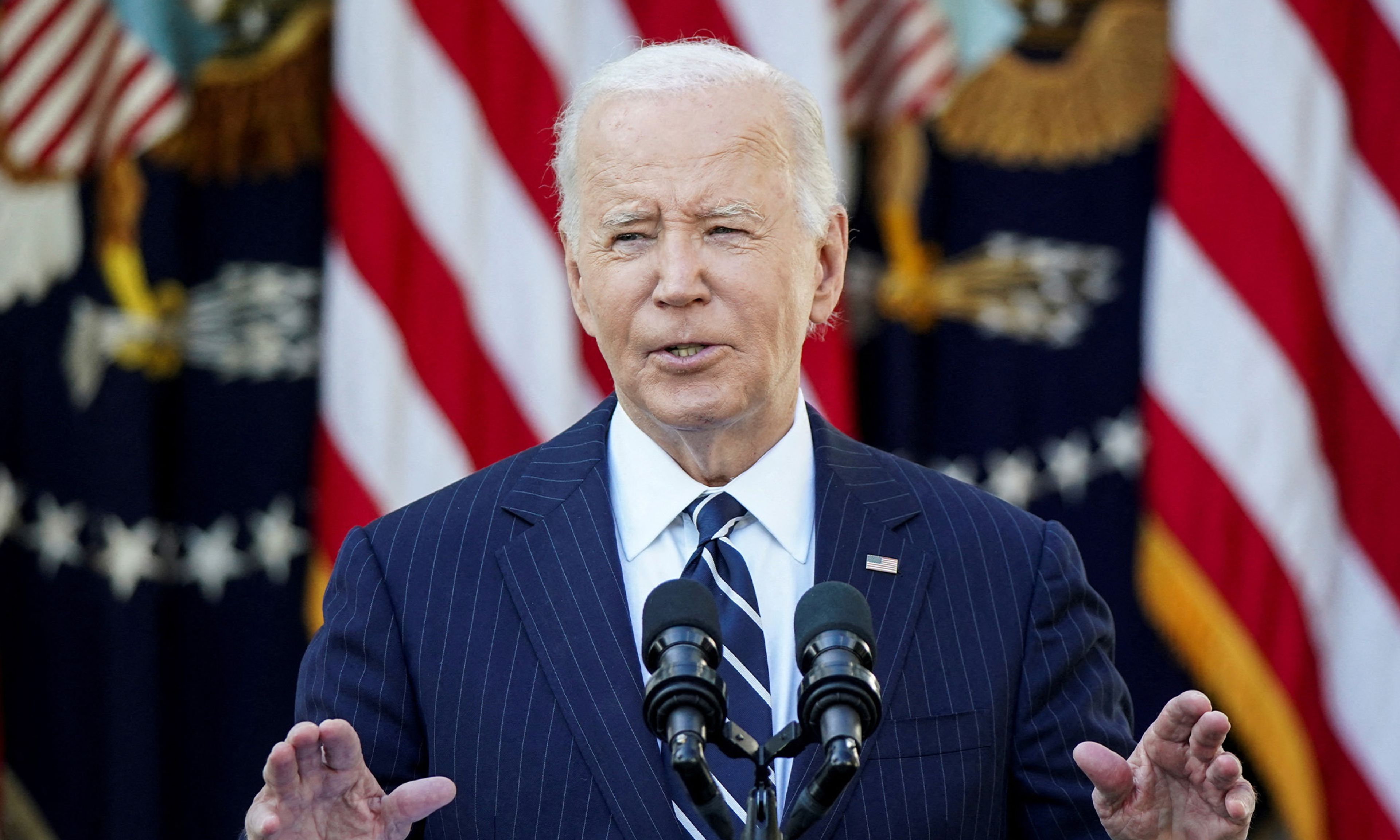
President-elect Donald Trump promises to abandon the Biden administration’s duplicity toward Israel and accommodation of Iran. An easy win for Trump and future ambassador Mike Huckabee is canceling sanctions against Israelis “for undermining peace, security, and stability in the West Bank,” in the words of an executive order from February of this year.
Advertised as addressing “settler violence” in the West Bank, Biden’s anti-Israel sanctions regime violates several standards of sanctions policy and threatens the speech rights of Americans.
America almost never sanctions other democracies, even to resolve disputes affecting hundreds of millions of people — Indian discrimination against Muslims, for instance, or low European defense spending. Americans respect the desire of other self-governing peoples to govern themselves, rather than to obey coercive dictates from Washington. If America cannot peacefully persuade another democracy to change its ways, America lives with it.
Standardly, America sanctions rogue states and non-state groups that brutalize people lacking recourse to courts or democratic institutions. Think China, Russia, Iran, North Korea. Or the terror groups and cartel “states within states” in Yemen, Sudan, and nominal democracies like Mexico that fail to govern all their territory. No one’s self-government is harmed by sanctioning Iran and the like because Iran and the like aren’t self-governing to begin with.
America sometimes uses sanctions to help functioning democracies fight crime syndicates, like the Italian mafia or the Japanese yakuza. And recently, America sanctioned two allies — Germany and Turkey — for aiding an enemy state: Russia. Notably, German participation in the Nord Stream pipeline and Turkish weapons purchases from Moscow were sanctioned under a statutory authority — the Countering America’s Adversaries Through Sanctions Act — expressly made to fight American enemies. The sanctions against Israelis — authorized by the much broader International Emergency Economic Powers Act — aren’t about anything of the sort. Israel is itself fighting America’s enemies, not helping them.
America doesn’t sanction political violence in other democracies, even when it’s much worse than alleged settler violence. Kobili Traoré, who killed the elderly Parisian Jewish woman Sarah Halimi, was let off of homicide charges on the grounds of cannabis-induced psychosis. French Jews were outraged that a Jew could be murdered with impunity so long as the murderer got high in advance. But Traoré was never sanctioned, and neither are the less famous Islamists whose thefts, assaults, rapes, and murders are rarely punished by the European democracies they afflict.
American sanctions policy now classes Israel with the world’s worst regimes, including Iran, a state sponsor of terror officially dedicated to Israel’s destruction. But actually, in at least one way, American sanctions now treat Israel worse than Iran: by targeting the speech of its citizens.
Tzav 9 is an Israeli NGO that protests Israel’s facilitation of aid to Gaza, a policy of questionable legality that Israelis fiercely debate. Sanctions against Tzav 9 punish foreigners for exercising their rights to speak on the questions of the day. The plastic wording of the February executive order authorizes American bureaucrats to classify any speech as “actions . . . that threaten the peace, security, or stability of the West Bank.” The administration hasn’t explained what aid policy in Gaza has to do with peace in the West Bank. But such flexibility is a feature, not a bug, of the Biden sanctions regime, which has no analogue for advocates of Iran’s terror campaigns or of Russia’s invasion of Ukraine.
The sanctions regime could even target Americans. One of us is co-counsel in a lawsuit challenging the constitutionality of Biden’s executive order on behalf of Texans for Israel, a 501(c)(3) defending the rights of Jews to live in the West Bank. The Biden administration views the West Bank’s Jewish residents as obstructions to a two-state solution. Most importantly for Texans for Israel, anyone who funds legal defense — or even buys groceries — for Jews sanctioned for residing in the West Bank is himself sanctionable.
The Biden sanctions are a new backdoor method for punishing activities protected by the First Amendment. By marketing the sanctions as a way to stabilize the West Bank, the Biden administration converts everyone’s speech into a threat to American security interests. This could be done by any administration for any purported security interest at all. Any person, American or not, could be accused of “indirectly” destabilizing a hot spot and have their bank accounts frozen without due process.
All this would be bad enough if “extremist settler violence” were responsible for West Bank chaos. The Biden administration is right about one thing: the West Bank is unusually chaotic. However, the sanctions regime it has set up to address the chaos grossly misidentifies the culprit.
Since October 7, 2023, the Israel Defense Forces have captured or killed more than 5,000 Palestinian terrorists — about 40 percent from Hamas — in areas that the Palestinian Authority has, in recent years, neglected to pacify. The operations against burgeoning terror networks are Israel’s most extensive in the West Bank since the 2001–05 Palestinian Authority–sponsored terror war, which killed 1,000 Israelis.
The only Palestinian entity the Biden administration has sanctioned is something called Lions’ Den, a cluster of loosely affiliated cells manned by members of established groups such as Hamas and the PA security forces. But really, it’s too generous to say Lions’ Den has even been sanctioned at all. Lions’ Den has no bank accounts and little institutional existence beyond pamphlets and graffiti.
West Bank Palestinians have committed hundreds of terrorist attacks and killed at least 20 Israelis since October 7, 2023. But the Biden administration and Israel’s critics haven’t confirmed a single West Bank Palestinian death from so-called settler violence in the same period. We stress confirmed — completed investigations into incidents in which West Bank Palestinians died haven’t determined settlers to be responsible, except when deadly force was used against Palestinians committing crimes or terrorism.
Nearly all alleged incidents of West Bank Jews committing violence against Arabs involve property crimes — stealing sheep, breaking fences — or intimidation: youths yelling at Bedouin to leave an encampment. Such activity is wrong. But whatever ails the West Bank, it isn’t the low-grade thuggery common to regions where antagonistic groups live cheek by jowl.
Settler violence is so infrequent that the Biden administration has struggled to find perpetrators to sanction. Instead, it has sanctioned persons never accused of violence or already dealt with by the Israeli authorities.
Avichai Suissa was sanctioned for running Hashomer Yosh, an organization protecting West Bank Jews from Palestinian violence. Neither Suissa nor Hashomer Yosh is accused of anything more violent than “grazing the herds” and guarding the property of sanctioned persons. Ben-Zion Gopstein, founder of the anti-intermarriage group Lehava, was sanctioned after some convictions and acquittals in Israeli courts for incitement.
Arguably the most serious sanctions target, David Chai Chasdai, is in Israeli administrative detention. Chasdai is accused of participating in the February 2023 attack by an Israeli mob on the Palestinian town of Huwara, which resulted in one Palestinian fatality. The Huwara attack was terrible. But the attack was preceded by eight months of the wartime destabilization the Biden administration hopes to solve and has anyway been addressed by Israeli authorities. Endemic Palestinian property crimes against Jews, meanwhile, remain under-prosecuted by Israel, ignored or encouraged by the Palestinian Authority, and unsanctioned by America.
Sanctioning Israel in wartime advances the best hope of Israel’s enemies -- to isolate Israel from its friends. Israelis of all persuasions have objected. At a recent Israeli parliament meeting, we were struck to find both opponents and supporters of the Netanyahu government condemning the sanctions regime. Anonymous Biden administration sources have stated that American sanctions are intended to provide political cover for anti-Israel sanctions by other democratic states, such as those imposed by Canada, the U.K., and the European Union.
Americans should join with Israelis in opposing this intervention in Israeli public life — to protect their own free-speech rights, and to support an American security partner.
Meanwhile, if the incoming Trump administration wants to address West Bank violence, it can start by sanctioning the Palestinian Authority, which has never been punished for its 30-year career of funding and encouraging Palestinians to murder Jews.
Cole S. Aronson is a journalist in Jerusalem. Avi Bell is a professor of law at Bar-Ilan University and the University of San Diego.

About the Author
Cole S. Aronson is a journalist in Jerusalem.
About the Author
Avi Bell is a professor of law at Bar-Ilan University and the University of San Diego.
Featured Tags
Advertisement
Advertisement
Comments