There Is No International-Law ‘Right’ to Enrich Uranium
Written by Andrew C. McCarthy
It’s a bogus claim that nevertheless finds no shortage of support among transnational progressives and Trump populists.
Share this story
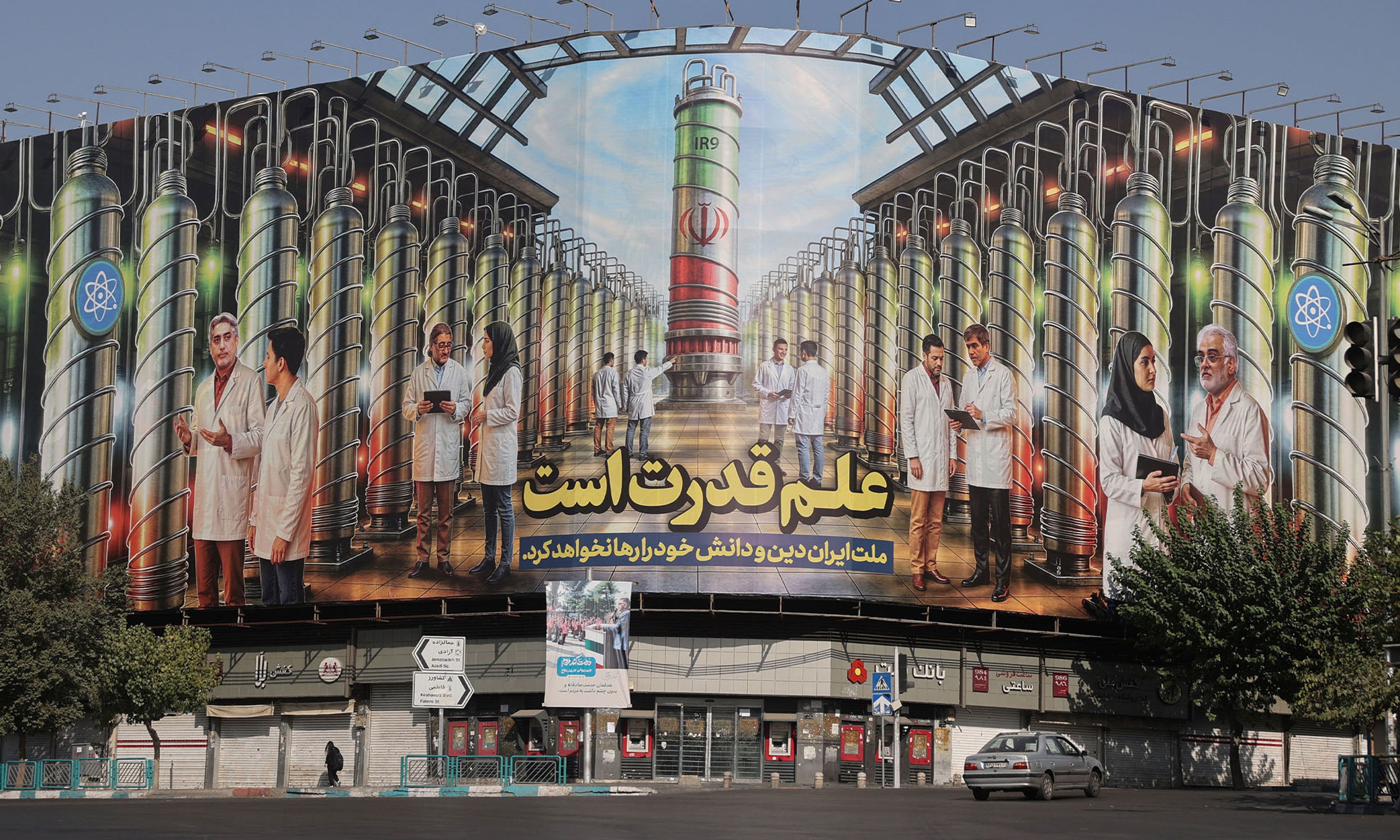
Is President Trump gliding into his own version of President Obama’s Iran nuclear deal — the Joint Comprehensive Plan of Action (JCPOA) that Trump decried as one of the worst agreements in the history of American foreign policy?
There are reasons to be concerned. To be fair to the president, his administration, unlike Obama’s, has destroyed or rendered inaccessible the physical infrastructure of the Iranian regime’s nuclear weapons program. It is, of course, impossible to erase the know-how Tehran developed over decades of deceit about its activities, but much of that is entombed after serial assassinations of regime scientists (mostly in Israeli intelligence operations).
What may or may not be entombed is approximately 440 kilograms of highly enriched uranium (HEU). Western intelligence services can only hypothesize regarding the cache’s whereabouts after weeks of what is a second round of missile attacks against Iran — the first was in last year’s Twelve Day War.
The known HEU mass is probably enough to manufacture about nine nuclear bombs. I’m no nuclear physicist, but some high school science complemented by research from the Center for Arms Control and Non-Proliferation makes the math easy: The known material is enriched to 60 percent, according to the International Atomic Energy Agency (IAEA); some mass would be stripped away in refining it to 90 percent (i.e., weapons grade), and it takes between roughly 25 and 50 kilograms of weapons grade (depending on the sophistication of the refining process) to make one bomb.
On the other hand, even though the jump from 60 to 90 percent enrichment is the easiest step in the process (getting from 0 to 60 is the hard part), it cannot be accomplished without operable centrifuges and other activity that would be detectable by spy satellites. Even if Iran currently had the capacity (unlikely), U.S. and Israeli forces could strike any of its manufacturing facilities before a bomb could be produced. Probably.
Still, if anything has been made manifest by the ongoing war (which is still in a rickety pause — a dueling blockade phase — as this is written), it is that Iran’s revolutionary sharia supremacist regime is determined to acquire nuclear weapons. Iran is an energy-rich country that has never needed nuclear power — which is expensive and dangerous to develop — for civilian purposes. Plus, the uranium for such peaceful purposes need only be enriched to about 4 percent; ergo, the only plausible reason it could have for possessing 60 percent HEU is the manufacturing of atomic weapons. The apocalyptic mullahs and their Islamic Revolutionary Guard Corps (IRGC) have been threatening death to America and Israel for a half century; they knew slingshots weren’t going to do the trick.
For the regime, controlled now as much as ever by jihadist hard-liners, nothing less than its survival depends on acquiring nukes. Survival is the regime’s highest priority: it's the reason it has killed hundreds of thousands of Iranians since 1979, the reason it has spent hundreds of billions of dollars on covert nuclear weapons development. By the regime’s lights, Iran has come under devastating attack while, for example, North Korea has not because the Norks have nukes and the IRGC does not.
Given that the Iranian regime remains committed to the acquisition of nuclear weapons — indeed, to its capacity to manufacture its own — any peace agreement negotiated by the Trump administration must address Tehran’s goal at the most basic level: the claim that there is an international-law right to enrich uranium. It’s a bogus claim but one that paradoxically finds no shortage of support among transnational progressives and Trump populists — it provides both with a rationalization for arguing that military action against Iran is illegal or foolhardy, even though they have no practical alternative plan to prevent Iran from obtaining nukes.
Obama’s JCPOA was just such a non-plan. It had many profound flaws, which is why it had no chance of becoming an enforceable, enduring treaty ratified under American law. Among the worst was that it put Iran on a glide path to nuclear weapons by conceding a right to enrichment and gradually stripped away restrictions on this supposed right.
Maybe Obama hoped Iran would evolve away from its apocalyptic form of Islam in the interim. Maybe he had a delusional geopolitical theory that a mature, nuclear-armed Iran would make the Middle East more stable. Or maybe he just wanted to finish his two terms claiming, however risibly, that he had prevented war and ended the Iranian nuclear threat for the foreseeable future. Whatever was the thinking for indulging Iran’s claimed right to enrichment, he indulged it.
Doing so was unnecessary. Then-Secretary of State John Kerry made concession after pathetic concession to his Iranian counterparts in the administration’s desperation to get the deal Obama regarded as his crowning foreign policy achievement — a legacy on par with Obamacare in domestic policy. But even Kerry conceded that the operative international law on the subject, the Nuclear Non-Proliferation Treaty (NPT), does not grant any country a right to enrich uranium. Omri Ceren, an adviser to Senator Ted Cruz (R., Texas), excerpts Kerry’s August 2015 admission:
Well, they don’t have a right to enrich. They have — under the NPT there is no right. The NPT is silent on the right to enrich. It doesn’t grant people automatically a right to enrich.
The NPT was negotiated principally by the Nixon administration, the Soviet Union, and Great Britain, the treaty’s three original signatories. The United States ratified it in 1970, as did Iran under the government of the shah, Mohammad Reza Pahlavi, an American ally. At the time, there were only five countries that had nuclear arms: the three original signatories, along with France and China (which, for various reasons, did not accede to the NPT until 1992). Subsequently, Israel, India, and Pakistan, none of which ever joined the NPT, have developed nuclear weapons; so has North Korea, which cheated on its NPT obligations.
The enrichment controversy owes to loose language in the NPT’s Article IV, which states:
Nothing in this Treaty shall be interpreted as affecting the inalienable right of all the Parties to the Treaty to develop research, production and use of nuclear energy for peaceful purposes without discrimination and in conformity with Articles I and II of this Treaty. [Emphasis added.]
The seminal international-law philosopher Emmerich de Vattel theorized that nations, like people, have fundamental natural rights that preexist written law, such as self-defense. I freely concede that point, but it still seems a far-fetched proposition that conducting activities related to the acquisition of nuclear energy could be deemed an “inalienable” right — i.e., a fundamental right that cannot be surrendered. Precious few nations had acquired such power in 1970; and, however desirable it may be for other reasons, the peaceful use of nuclear power, which the NPT promotes, is not an essential element of national defense.
Let’s put this hortatory sentiment in the NPT’s Article IV aside and get down to brass tacks. The pertinent text says that nations may develop the production of nuclear energy. It does not say they may enrich uranium.
Uranium (atomic number 92) is a chemical element. It is not nuclear energy. The production of nuclear energy does not require the enrichment of uranium, even though nuclear energy can be produced that way. Even if one grants a right to produce nuclear energy, it is not necessary for a nation to possess uranium for that purpose (or, for that matter, plutonium, which can also be used in nuclear power production). A nation can produce nuclear energy by importing the precursors rather than establishing its own uranium enrichment infrastructure.
Two other obvious points.
First, had it been the objective of the NPT signatories to establish a right to enrich uranium, they would have said so. It would have been a simple thing to insert explicit text about enriching uranium (and/or processing plutonium). They didn’t do that, and these activities are not vouchsafed by the vague term develop the production of nuclear energy.
Second, what Iran wants is nuclear weapons. Antithetically, the NPT’s Article IV directs itself to “nuclear energy for peaceful purposes” (emphasis added). Iran cannot use an ambiguous term derived from the NPT’s promotion of peaceful nuclear power as license to enrich uranium for the manufacturing of nuclear weapons. That’s exactly what the NPT was trying to avoid — remember, the “N” stands for non-proliferation.
The foundation of Iran’s contention that it must be permitted to enrich uranium is that the NPT grants it that “inalienable” right, so the United States may not take it away. But the NPT does not grant it that right at all, so why should we accept the regime’s claim?
According to reporting, in his marathon face-to-face negotiations with agents of the Iranian regime in Pakistan last weekend, Vice President JD Vance proposed a 20-year “suspension” of all nuclear activities. This is not necessarily a concession that Iran has a right to enrich; the Trump administration could simply be saying: “We know Iran claims this right; we haven’t conceded it, we’ve just agreed not to fight about it for the next two decades.”
Nevertheless, the rationale for the proposal is that Iran does, in fact, claim an NPT-based right to enrich uranium. Instead of firmly denying that claim, the American position is to punt. That seemed to be the upshot of the vice president’s tortured analogy about his wife’s “right to skydive.” Don’t get me wrong, I am glad that Usha Vance has acceded to her husband’s request that she not leap out of flying aircraft. But if I had reason to be concerned that she might jump out of one while carrying a nuclear weapon over New York City, I can’t say that her claim of a right to skydive would be irrelevant. I’d want us to use every measure at our disposal to keep her off jump planes — or, for that matter, any other aircraft.
Perceiving that the U.S. is too anxious to end the fighting (i.e., to stop the political bleeding) to take a firm stand against the right to enrichment, the Iranian regime is doing what it’s learned to do over decades of winning American concessions through intransigence — it’s playing for time. It has countered that it would be willing to refrain from acting on its enrichment “right” for five years, maybe even ten.
This is how we got to the worst outcome of the JCPOA. Despite the nonexistence of a right to enrich, and despite Kerry’s acknowledgement that there is no such right, the Obama administration did not just implicitly concede such a right; it structured the JCPOA to enable Iran to enrich — just not to weapons grade, a limitation that was practically unenforceable because Obama just wanted a deal, not a truly verifiable deal. Over time — forget about all the cheating, covert enrichment activities, and obstruction of monitoring by the International Atomic Energy Agency — the JCPOA expressly lifted the caps on the number and types of centrifuges that Iran could use for enrichment.
Had the JCPOA held, by this year — ten years from the agreement’s January 2016 effective date — all centrifuge restrictions would have been gone. Iran would be a nuclear weapons power.
The Trump administration has meaningfully advanced American national security by setting back Iran’s nuclear and other weapons programs. But the president and the vice president, who has his own 2028 presidential ambitions, must bear in mind that the Iranian regime has endured. There are no assurances that it will be toppled, “death to America” is still its objective, and ten years goes by in a hurry. The regime’s claimed right to enrich is not a trivial point; it is Pandora’s box.

About the Author
Andrew C. McCarthy is a senior fellow at National Review Institute, an NR contributing editor, and author of Ball of Collusion: The Plot to Rig an Election and Destroy a Presidency.
Featured Tags
Advertisement
Advertisement
Comments