The Good, the Awful, the Non-Art, and the Motherly at the Whitney Biennial
Written by Brian T. Allen
It’s well worth a visit, but why are so many foreigners in an American art show?
Share this story
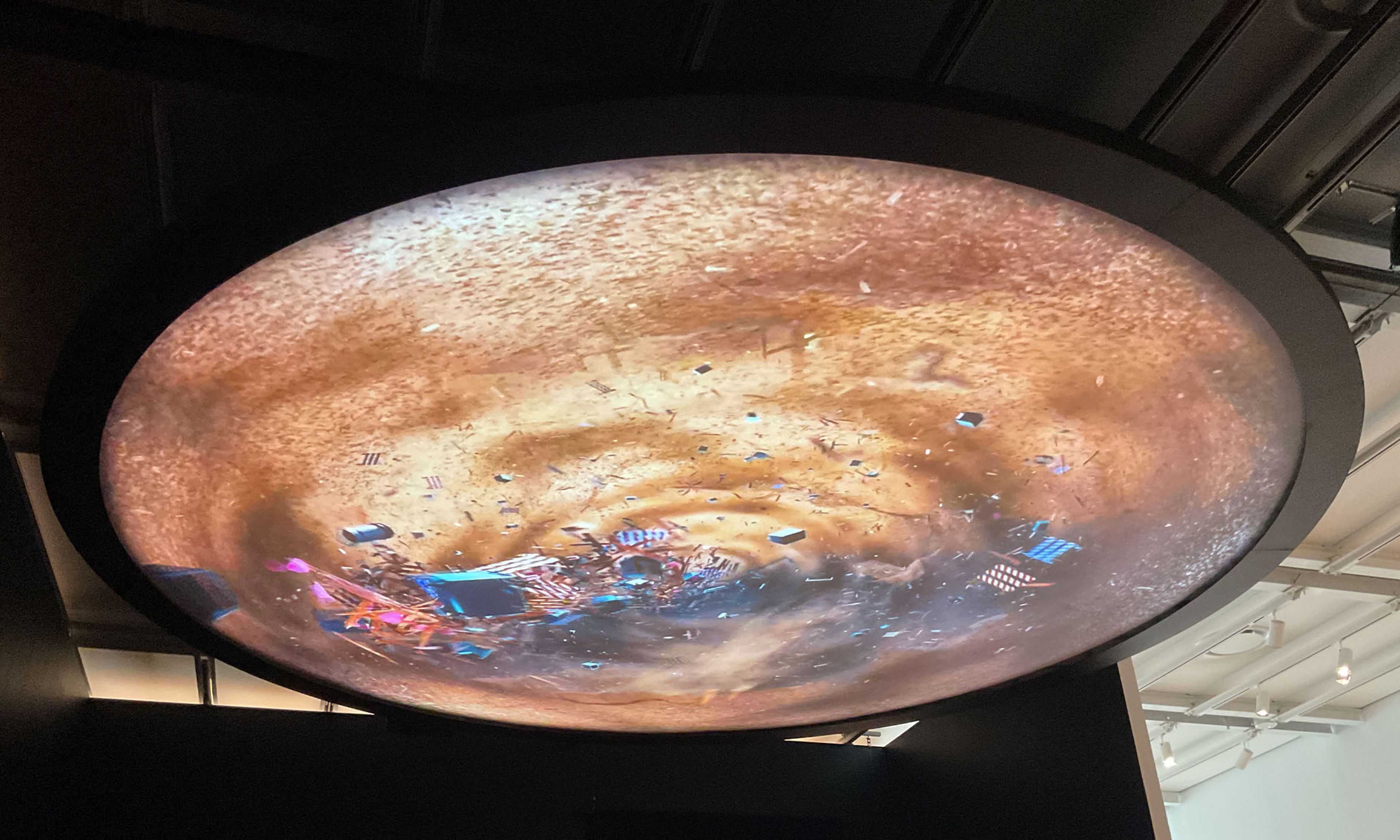
Last week, I visited, for the 20th or more time, the always much-anticipated Whitney Biennial -- wild and wacky, ponderous and beguiling, puzzling, depressing, sometimes beautiful, and sometimes infuriating. From Biennial to Biennial, the balance shifts. What is the Biennial, first of all? The Whitney says it’s the pulse of contemporary American art taken nationwide. This cycle’s Biennial -- it doesn’t have a title -- is murkier and more uneven than outright bad. Goodness, I thought, the curators made 300 studio visits to artists all across America, and this is what they found? Now, I’d just come from the IFPDA annual show of prints and drawings at the Armory, so I had recently seen lots and lots of wonderful art.
Let’s alternate between high and low points, accentuating the positive first. I did discover, with effort, some very appealing, surprising threads.
The Biennial does a lot of video art. Most of the videos are too long, seating is often uncomfortable, people going in and out of a lit gallery and a dark video space is a tort waiting to happen, and, call me a mossback, but most video art is really a film short with narrative, however convoluted or dreamlike, and belongs in a film series or a movie theater, popcorn served, rather than in an art-museum gallery. This said, I love Michelle Lopez’s Pandemonium, a twelve-minute round-ceiling video from 2025. It’s the best thing at the Biennial.
Lopez (b. 1970), from Philadelphia, made the video in part by filming pieces of newspapers and magazines, clothing, torn American flags, signs reading Send Help, some signs and headlines that are on screen too briefly to be read, and other debris as it’s tossed in the path of an industrial fan on the ground so the trash flies up against the sky and then disperses. She slows and speeds the film up, with moments of cello and electronic music at a low volume.
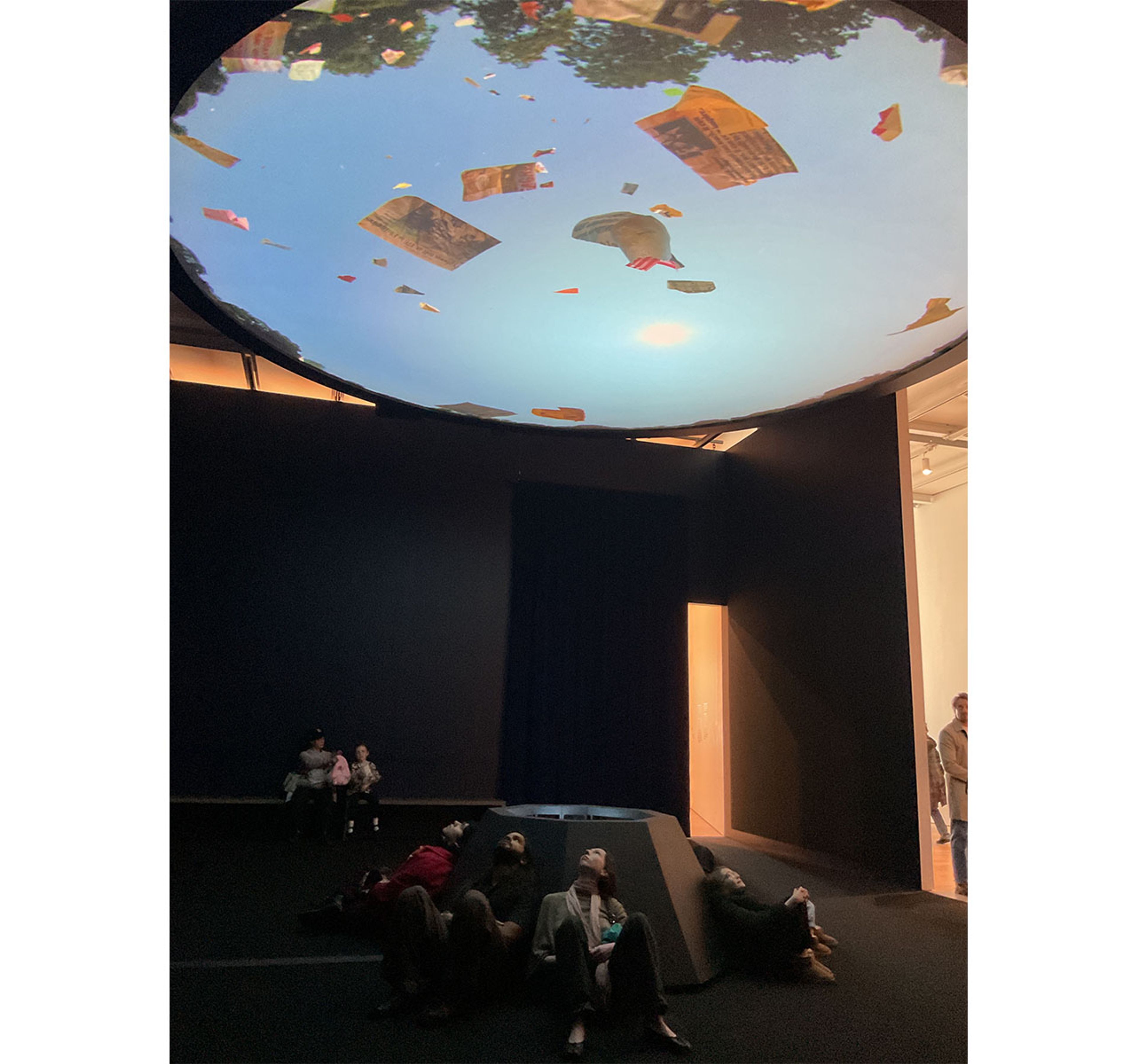
The video starts with a blue sky and a few puffy clouds, then views of a nighttime crowd in a circle holding lights as if they’re at a concert, and then we go to the inside of a brick beehive building. The interior is intact and looks very late Roman, when such things were built, often as tombs. The thing explodes and collapses as scenes of flying trash emerge from the gaping hole that’s left. There’s a starlit sky, too, that’s dazzling. I watched it from a deeply cushioned easy chair, but most under, say, 40, sat or lay on the floor.
Boy, Baciccio would have loved this, I thought. He’s the Italian illusionistic ceiling painter whose ceiling at Il Gesu, Rome’s Jesuit church, swirls like the early stages of smoothie-making, with putti, saints, and clouds -- everything aflutter but the kitchen wash bucket. That’s from 1679. Cyclonic ceiling paintings were a Baroque rage. In an interview that Lopez gave for the Biennial catalogue, she describes herself as an aggrieved Philippine American. Pandemonium, she says, is colonialism’s hangover. That’s why the American flag is among the debris. Lopez said what’s expected of her, Soviet style.
The video is too good to sully it with an empty pop grievance. It’s pure bravura art. And, its debt to Italian religious illusionistic ceiling painting aside, it’s very American. It’s big and epic, it gives trash a starring role, and it makes cinema art fit for a museum. It’s a twist on Thomas Cole’s Course of Empire but also the American disaster-movie genre.
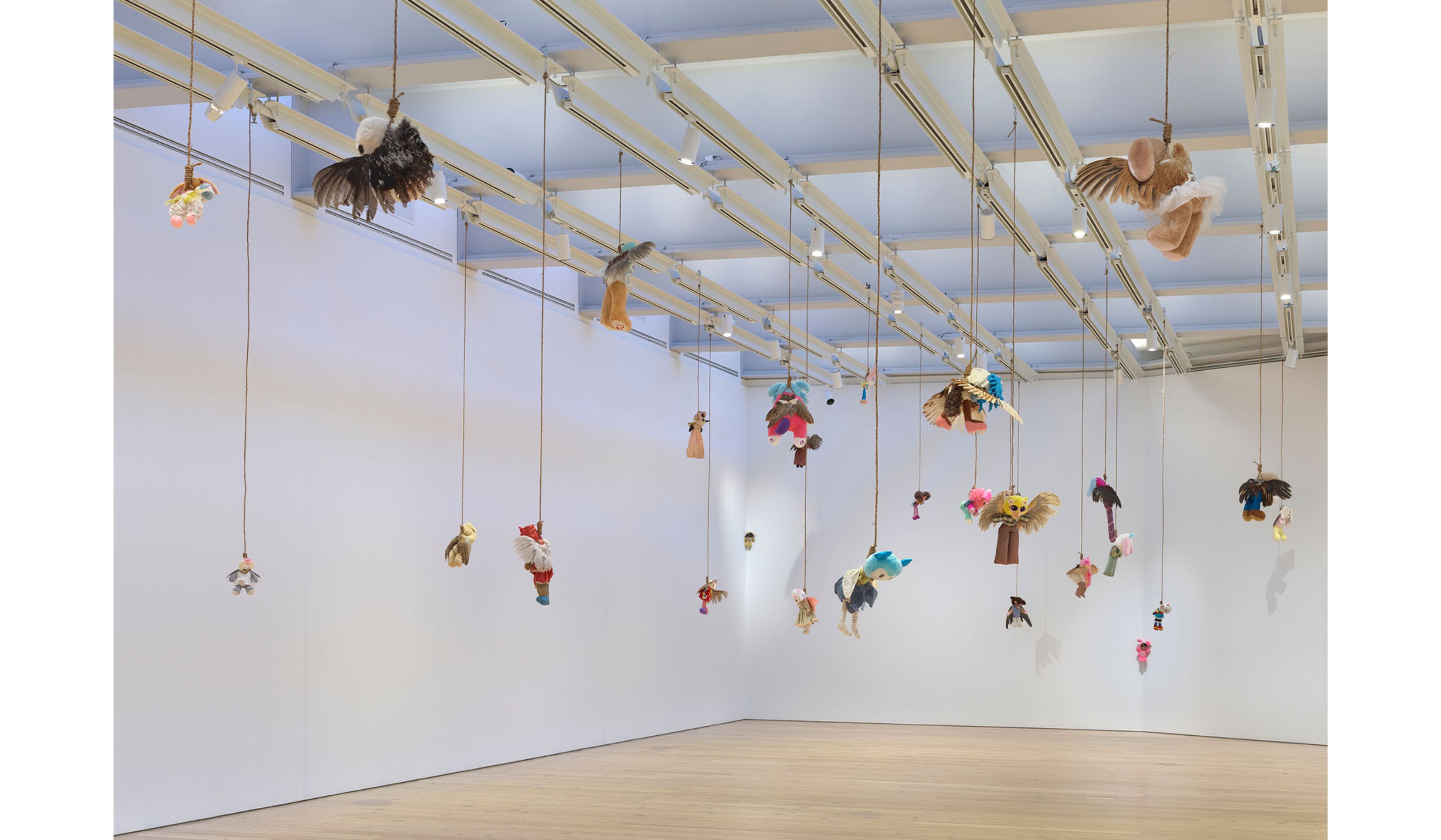
Now it’s time for a godawful work of art to rear its head and toss its curls. Let’s start at the very beginning, on the Whitney’s top floor, with Everything wants to kill you and you should be afraid, by Precious Okoyomon (b. 1993), a they/them Nigerian American based in New York. She fills an immense gallery with old stuffed toys, taxidermy bird wings, and blackface doll heads dangling from nooses attached to the ceiling, all “in reference to the history of racial violence in America,” the label notes for the benefit of the obtuse. Parents beware. Children might be scared witless.
I laughed. I’d just seen the Marcel Duchamp retrospective at MoMA, too. Duchamp was Dada’s daddy, the god of irony and nonsense in art, and the seminal joker and punster turned loose in the highfalutin world of establishment culture. Was Everything wants to kill you a joke? Surely no curator with a clear head would see this work of art, about the much-trod topic of lynching, as visionary, bleeding-edge, or revelatory of some hidden, denied, shake-us-to-our-core truth. The installation is so trite and so monosyllabic that it’s nearly somnolent. I wondered whether the Whitney was doing the unthinkable, the genuinely subversive: hoisting woke world with its own petard, mocking it for its mediocrity. Has all that preening and finger-wagging and hubris and political cannibalism become threadbare?
No such luck. It’s meant to be serious. Left-wingers have zero sense of humor. The dolls are victims and also angels burdened with grief, meant for flight but fettered, innocent but punished with death, blah, blah, a million blahs. Everything wants to kill you is a new kind of American art. It’s whiny art, coming from a therapy-oriented, guilt-ridden culture that sees fellow citizens as victims or oppressors. We cherish and cuddle our victimhood like it’s a security blanket or a doll. And shame on the Whitney and Precious Okoyomon. Isn’t there a doll shortage in Gaza?
The director of the Whitney and the curators of the Biennial are not without self-awareness. They admit that every Biennial seems to say we’re living in an “unprecedented” time, so the art emphasizes and supersizes woe, angst, rage, and oppression -- and other words breaking the clicker. “A desperate need for societal and earthly repair,” “polarized, desperate times,” uncertain, bitter, perpetually anguished, and yet another two-year spree of moral failure and a lack of nerve. But what’s that titanic moral failure, that canyon that some nerve and courage and common sense ought to fill? It’s the will to conform, the refusal to toss the old playbook, that menu of miseries. It’s failing to see that the country is definitely not the bubble called Manhattan -- and parts of Brooklyn.
Marcela Guerrero, one of the two Biennial curators, writes of 2026 that “in the midst of an ongoing genocide, the effects of a scorching planet, and the deprecations of late stage capitalism, things can only get worse.” Drew Sawyer, the other Biennial curator, writes about infrastructure in his catalogue essay, so, I thought, at least he was heading toward a solid subject for art; but, no, he meant social, economic, and political scaffolding and quickly turned to Gaza. Gaza has nothing to do with the pulse of American art.
Over the years, the Biennial has shown more and more work by artists who aren’t American. That’s probably because the museum’s curators, creatures of their time, place, education, and class, and, worse, creatures of convention, don’t believe in borders and think that an “American” show ought to embrace artists here illegally or who are living in Mexico or South America or just about any place where our country is envied and resented. Twenty-one of the 56 or so artists either weren’t born here, don’t live here, or live here part-time. About a third of the artists are Latino, a tribute to Guerrero’s covetousness since she’s the Whitney’s Latino art curator. Sawyer goes further, writing about artists “entangled with the tentacles of the U.S. empire,” which explains why artists from Afghanistan, Chile, Iraq, Germany, Vietnam, and that fantasy land called Palestine are in the show.
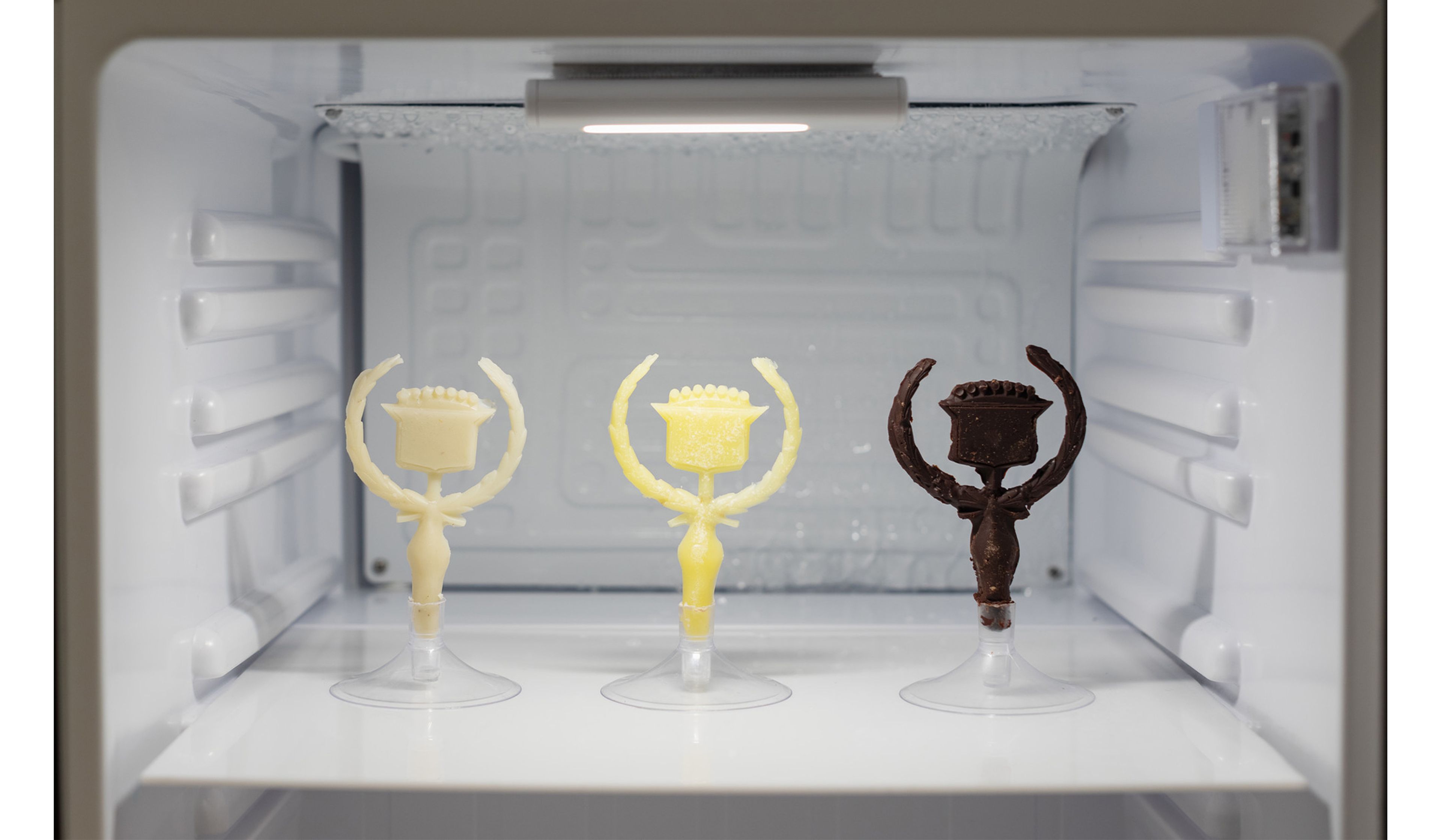
For all their apocalyptic rhetoric, Guerrero’s and Sawyer’s choices don’t infuriate. Rather, they’re either predictable or puzzling. I have an expansive view about what is actually art but still wonder about some of the things they picked. I didn’t know Ash Arder (b. 1988), a black artist who lives in Waawiyatanong, or what the Potawatomi called Detroit. She’s done a solar-powered refrigerator with a clear glass door in which she displays -- and preserves -- chocolate and butter Cadillac hood ornaments, symbols of excess and racism, because the company manipulated the Cadillac market in the 1930s so blacks couldn’t buy them. Arder loves cars, though, and her father worked for Cadillac and revered the company, though we are supposed to assume that he was oppressed. She hopes her work helps redefine the car as a surrogate home, a soundscape, babysitter, armor, and path to adventure and escape.
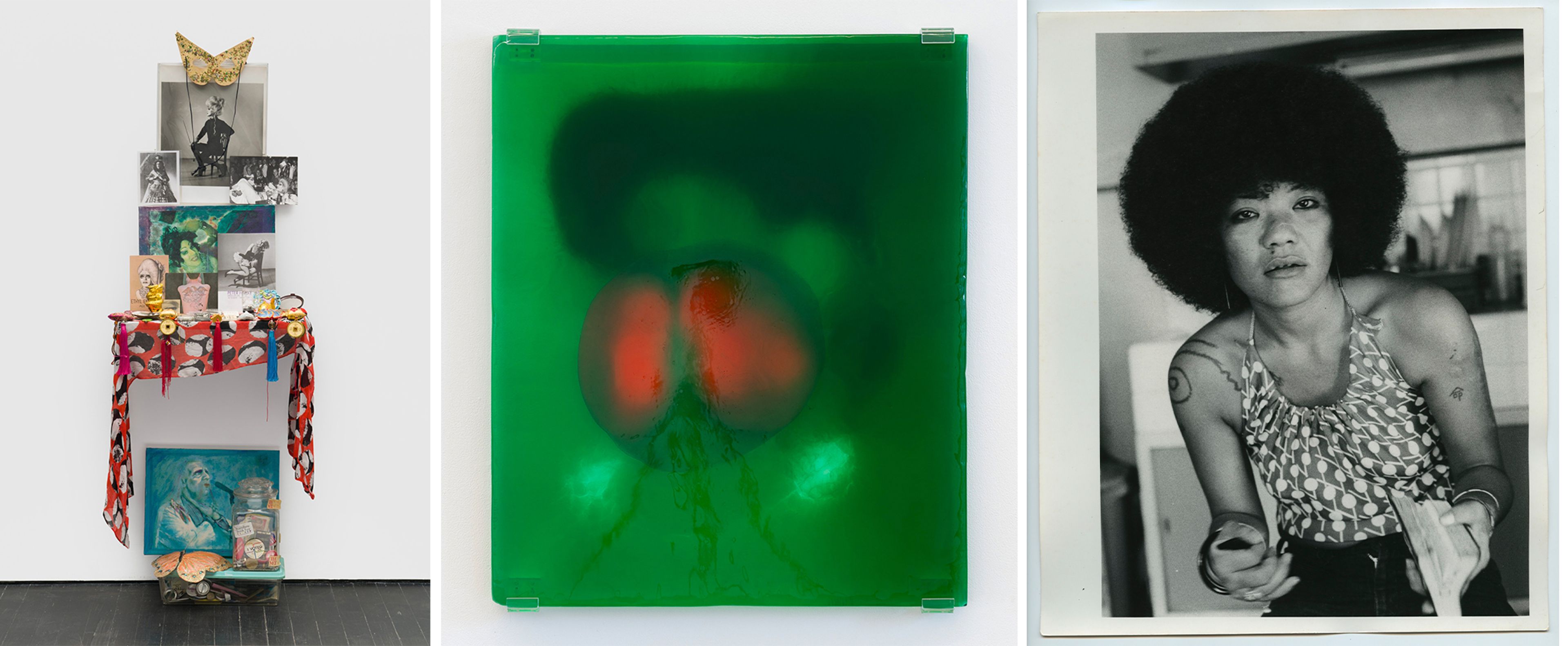
Her work is home economics, craft, and wishful thinking, so it seems very American. But is it art? Looking at sculpture by Raven Halfmoon, photographs of everyday life in Okinawa by Mao Ishikawa, the AIDS-related tchotchke house shrines by Agosto Machado, and Malcolm Peacock’s tree-stump portrait, I thought, Been there, done that. There are too many artists in the Biennial fixated on Gaza. Basel Abbas (b. 1983) and Ruanne Abou-Rahme (b. 1983) did a video and sound installation on love and longing among people living in folkloric Palestine, but it’s mostly boo-hoo Hamas propaganda. It also spotlights once more the Whitney’s antisemitism problem. Sawyer’s tentacle theme falls flat. The art is too convoluted.
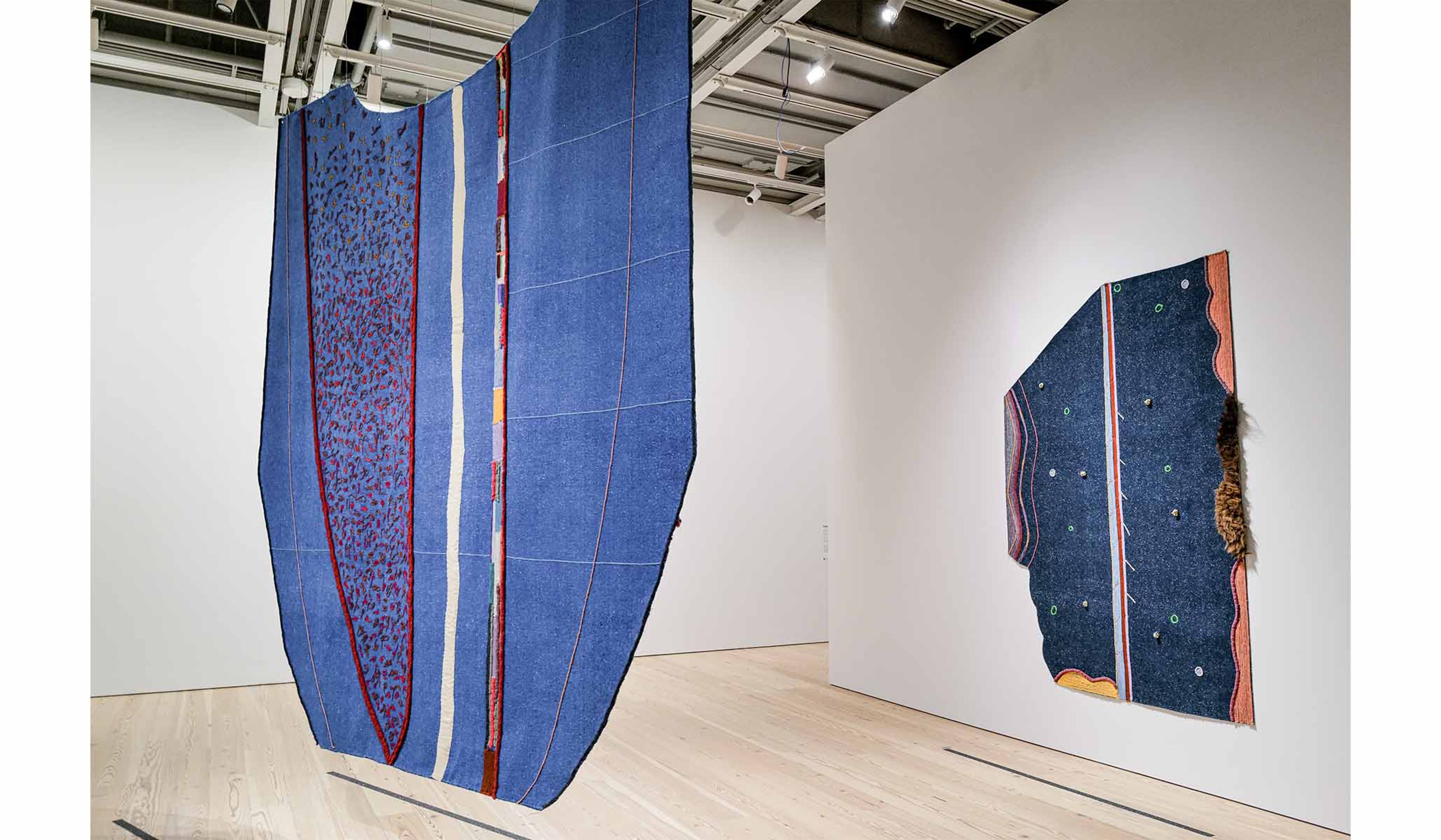
An entire floor of the Biennial seems devoted to beauty and, strange to discover, nurturing, motherhood, and companionship. Teresa Baker’s Astroturf wall hangings are beautiful. Certainly the material is different. Baker (b. 1985), though born and raised in North Dakota, lived in Los Angeles, where Astroturf is indigenous. She now lives in Montana. We can call her a regionalist artist. That’s what we like to see at the Biennial. We want to learn about artists in our great, big country expressing local styles and materials. They’re not fantastic, but they’re bold and fun.
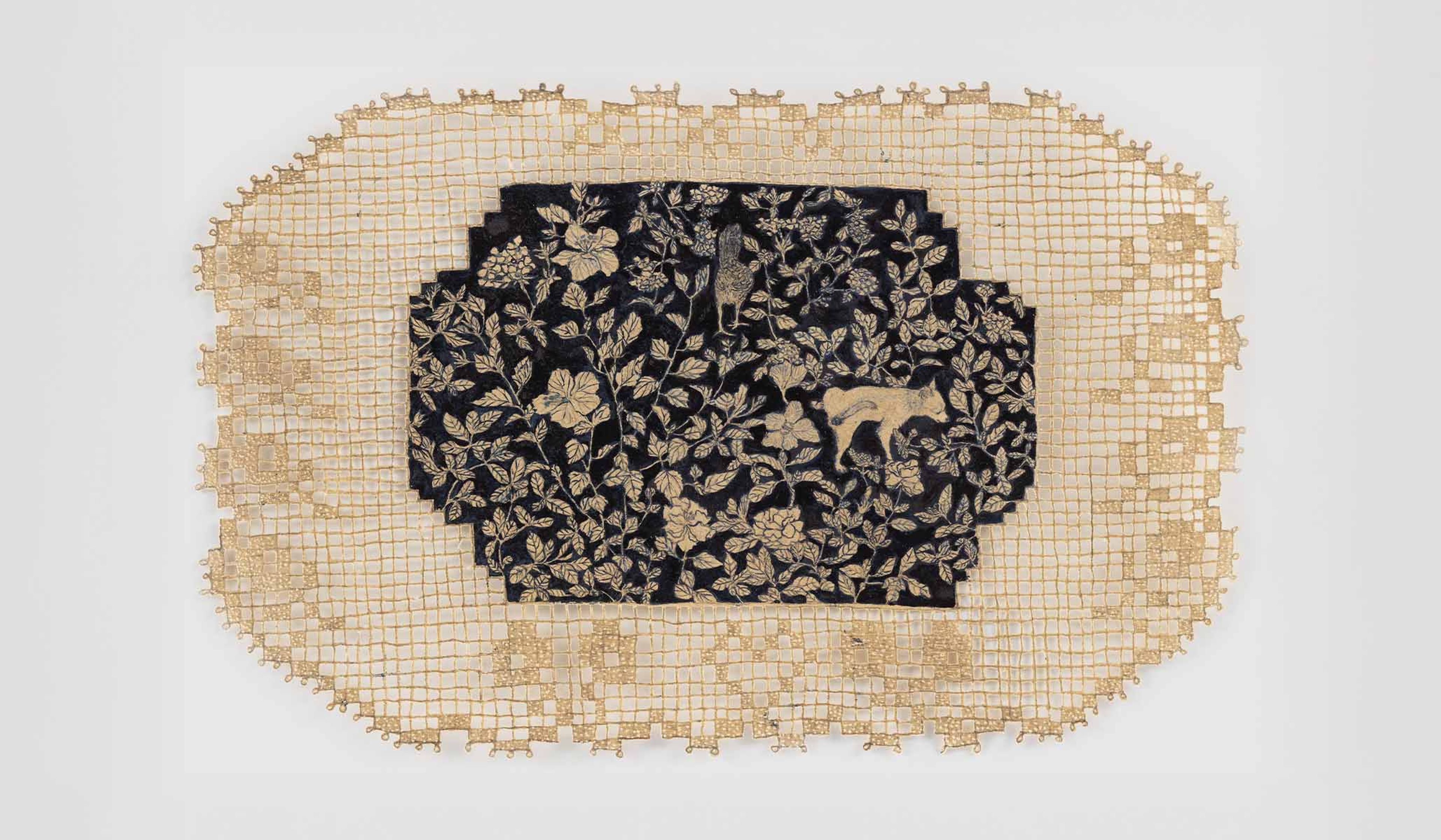
From Baker’s big and bold to precious perfection: Jasmin Sian (b. 1969), an artist from the Philippines who now lives in a tiny, 200-square-foot apartment in New York with her pet birds flying free. There’s a poo-poo problem, yes, but I don’t live there, so I think it’s charming. Starting with brown-paper deli and pastry bags, she makes the loveliest lace-like motifs cut with an X-Acto knife as frames. She paints the center with birds, plants, and animals, sometimes using brushes with one or two bristles. It’s very Victorian, but it also draws from medieval manuscripts. They’re lovely -- tiny, too, often 5 by 5 inches. Seeing her work was one of those moments when I thought that Guerrero and Sawyer weren’t entirely blinkered. It’s sweet, soulful, and almost Franciscan.
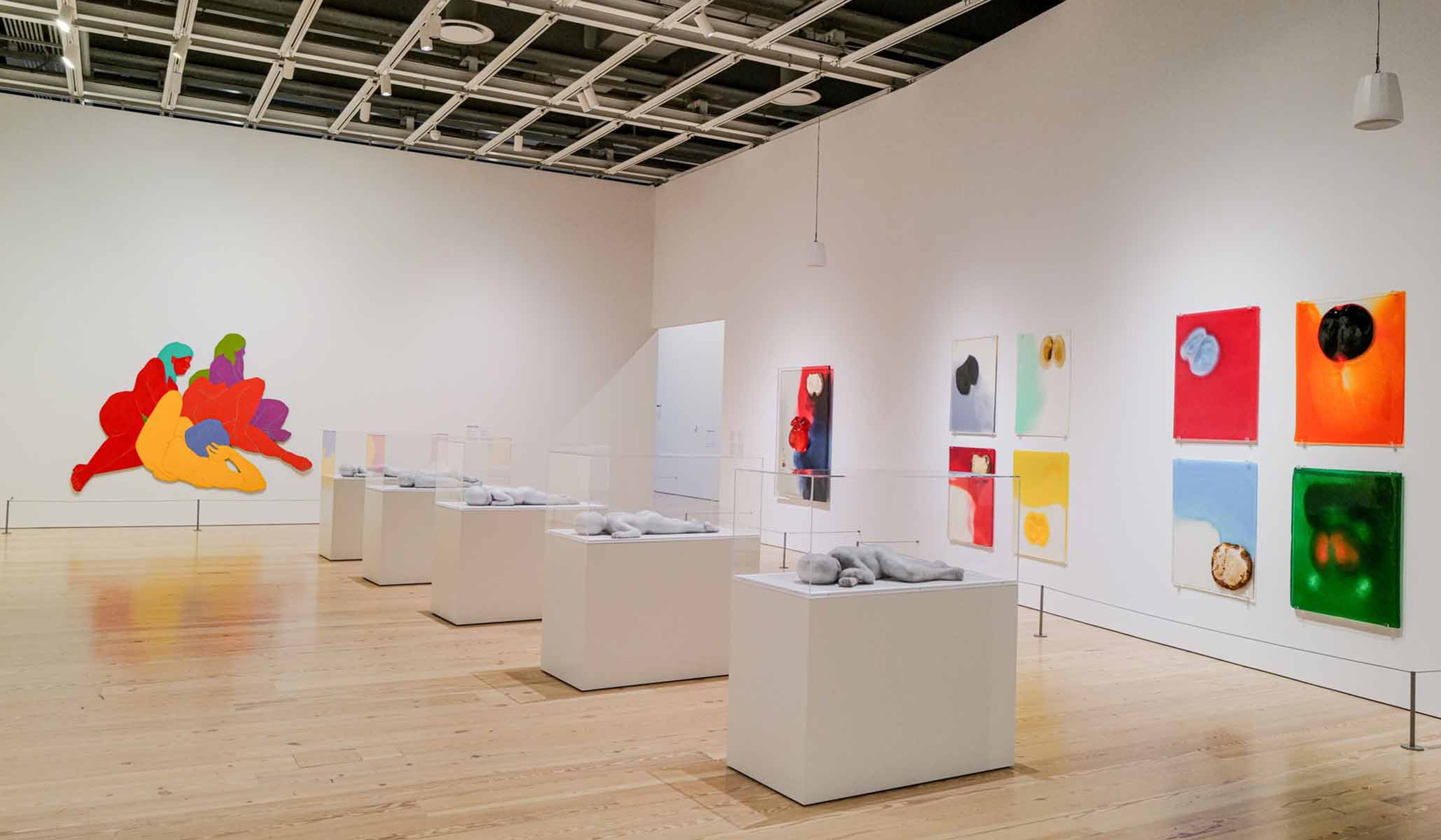
And then there’s the triumph of an old lady. Old people do have pulses and can quicken the pulse of American art. Every cycle, the Biennial includes dead artists -- okay, they have no pulse -- and art that’s 30 or 40 years old. Neither belongs there, but I see moves like these as honorary Oscars. Carmen de Monteflores (b. 1933) is prime 1960s, with her big nudes, often a man and woman, in bright, flat colors inspired by the years she lived in expansive Montana, where forms are few but big and direct. She’s indebted to Frank Stella’s work but also Tom Wesselmann’s and Diebenkorn’s. Her figures are mostly contour and evoke nostalgia. Mixed in with her paintings are pieces done by her daughter, Andrea Fraser (b. 1965) -- microcrystalline wax sculptures of toddlers lying flat. They’re weird but not bad. The mother-daughter theme is lovely.
Continuing the theme, we see Nour Mobarak’s casts of her pregnant torso. They’re unoriginal, given that they’re from the last two years and a large-with-child, nude Demi Moore belly filled the cover of Vanity Fair in 1991. Her other work, Broad’s Cast (Montage), from 2026, includes recordings she made from inserting a microphone into her vagina before, during, and after pregnancy. Mobarak (b. 1985) says she discovered “the almost industrial sounds of human life.” It’s 38 minutes, and I was able to soldier on for eight before feeling morning sickness.
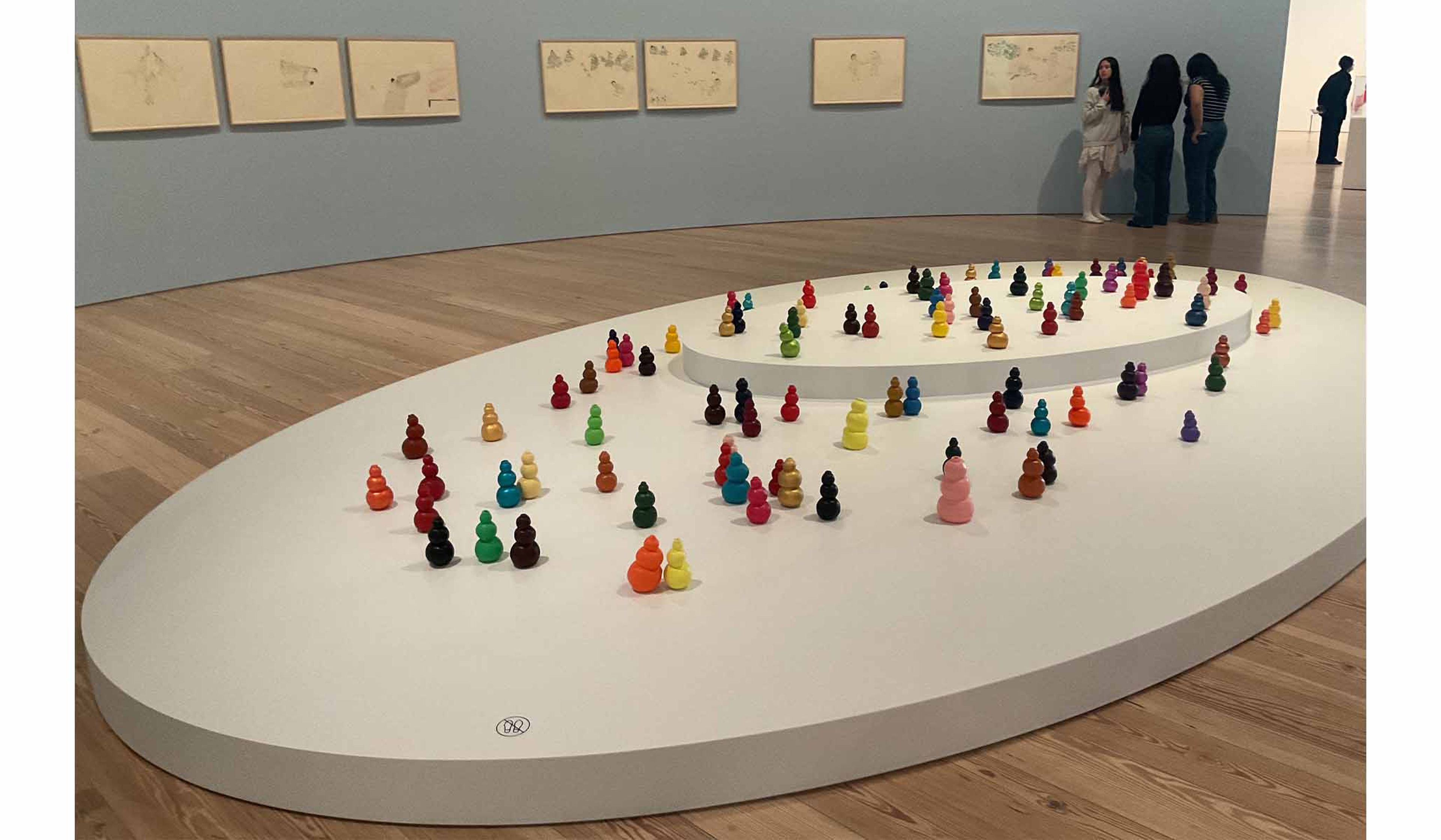
There’s more warm and fuzzy, convincing me that I’d seen worse Biennials. It grew easier for me to ignore the barmy blitz over Gaza, the hot weather, of all things, that bogeyman called “late stage capitalism,” and all the other apocalypse porn. It’s more rhetorical than visual. Emilie Louise Gossiaux’s Kong Play is a gallery-wide tribute to her guide dog, who died last year. Gossiaux (b. 1989) is from New Orleans, which explains a range of crazy behavior, and she’s mostly blind and deaf. She made dozens of Kong toys, from clay, not rubber, as a tribute to her dog and a send-off to eternity. They’re arranged on the gallery floor, while drawings on the gallery wall depict the love that people and dogs share.
Here’s a tip. In every Biennial I’ve seen, for the first half hour I think, the worst ever and bad beyond the scope of human imagination, but then rivet on one thing -- here it was Pandemonium -- that opened my eyes and mind. I then look for quality or at least beguilement and am able to ponder what’s bad, too, ignoring what’s merely banal or ranty.

About the Author
Brian T. Allen is National Review’s art critic.
Featured Tags
Advertisement
Advertisement
Comments