SPLC Indicted for Gain-of-Function Research into Racism
Written by Dan McLaughlin
The scurrilous left-wing group had to pay for racism to meet demand. But the criminal case may not stick.
Share this story
The federal indictment of the Southern Poverty Law Center (SPLC) for wire fraud and money-laundering conspiracy, in the Middle District of Alabama (which includes its headquarters in Montgomery), is a richly deserved humiliation and comeuppance for one of the most toxic organizations in American politics. It is also objectively hilarious. That said, we should bear in mind two things: that the allegations in the indictment have yet to be proven in court and might not be true (or at least may be missing crucial context) and that even if true, the charges may not stick legally.
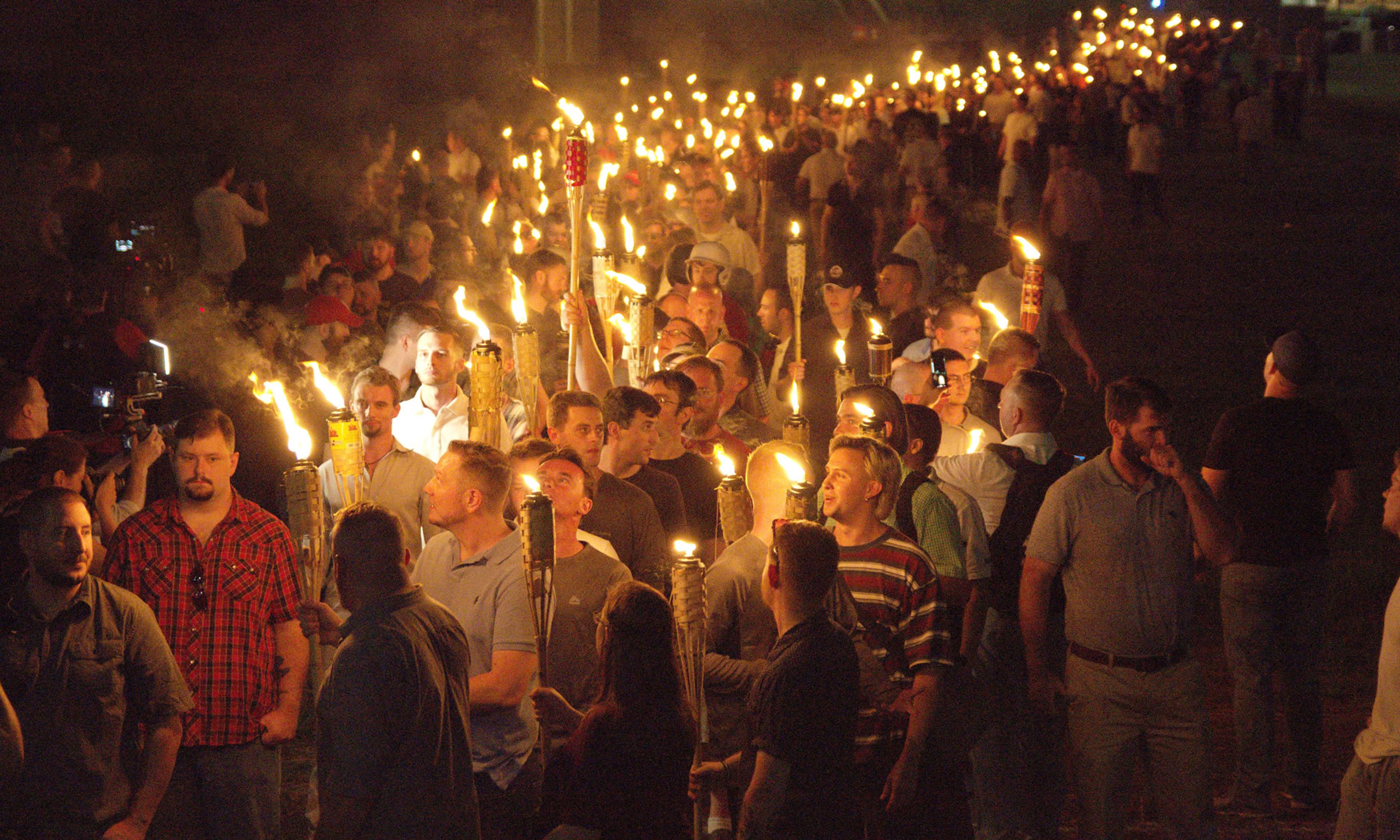
The story here is that the SPLC, which bills itself as an organization aimed at rooting out racism, was actually secretly bankrolling major figures in racist groups such as the Ku Klux Klan, the National Socialist (i.e., Nazi) Party of America, and a member of the leadership group that planned the 2017 “Unite the Right” rally in Charlottesville, Va. The indictment details just shy of $2 million in transfers to those figures over the past twelve years.
Supplying Racism to Meet Demand
Given the small and marginal nature of these groups, the obvious conclusion is that the SPLC found that demand for racism outstripped the supply, so it had to spread cash around to keep talking up these fringe groups. That got out of hand -- in ways helpful to the SPLC -- at the Charlottesville rally. In that sense, the story reeks of the same Frankenstein’s monster effect that we saw with the National Institutes of Health financing “gain of function” research on viral respiratory pathogens in Wuhan, China, and thereby recklessly contributing to a global pandemic.
Donald Trump, having repeatedly made a political mess for himself with his comments at the time on Charlottesville, would very much like to retail the narrative that the whole thing was a left-wing false-flag put-up job all along. For the SPLC’s political allies, Charlottesville was a gold mine: Joe Biden claimed that it was his reason for running for president, and the Lincoln Project even staged a famously failed stunt seeking to tie it to Glenn Youngkin in the fading days of the 2021 Virginia gubernatorial race.
The facts recited in the indictment, even if true, don’t go nearly as far as Trump would like, but they do allege that $270,000 (about $30,000 a year) was paid between 2015 and 2023 by the SPLC to a source who “was a member of the online leadership chat group that planned” the rally, “attended the event at the direction of the SPLC,” “made racist postings under the supervision of the SPLC,” and “helped coordinate transportation to the event for several attendees.” It seems noteworthy that the SPLC kept this person (unnamed, like all the recipients, in the indictment) on its payroll for six years after involvement in a racist rally that left a woman dead.
Other dubious recipients with leadership positions in extremist groups allegedly included a former “Imperial Wizard of the United Klans of America,” a person who “led the National Socialist Party of America” and “was the former director of a faction of the Aryan Nations,” a “former chairman of the National Alliance,” “the reported National President of American Front” who was “a convicted federal felon for his participation in a cross burning,” and a Klan member who was the spouse of “an Exalted Cyclops of the Ku Klux Klan.” (A marriage between two Klan members? Hey, love is love, right?)
In other words, this wasn’t just a matter of paying the small fish in these groups to rat out the big ones. The SPLC was allegedly bankrolling the leaders. While the money in most cases isn’t that much on an annual basis, it’s hard to argue that this played no role in helping such fringe organizations, which by their nature run on a financial shoestring and tend to be led by the kinds of people who are often not employed in prestigious fields.
Bad Actors
The indictment came as a public bombshell. But it’s far from the first example of the SPLC’s history of extremism, mendacity, and folly. The most infamous was when its labeling of the Family Research Council as a “hate group” inspired gay-rights activist Floyd Lee Corkins II to open fire in 2012 at FRC’s Washington, D.C., headquarters. The SPLC’s various tentacles, given the sheen of respectability by the journalistic-educational-business establishment, include a group that persuaded the Loudoun County, Va., school district in 2021 to ban Dr. Seuss, as well as less sinister but nonetheless misleading research reports on topics such as Confederate war memorials. Not content to spread lies and hatred, the SPLC also long harbored an internal culture of financial fraud, sexual harassment, and employment discrimination that was widely ventilated in the press in 2019. And this is just an abbreviated list of its sins. Whatever virtues the SPLC may have possessed in its early years during the civil rights movement, it has long since become a racket.
Making a Federal Case
Of course, just because the SPLC has done all sorts of unsavory things doesn’t necessarily mean it has committed a crime. I argued in 2023 that even the tiki-torch carriers themselves should not have been prosecuted under a dubiously constitutional Virginia statute, and while five people pleaded guilty, the first case to go to trial ended in a hung jury.
The centerpiece of the indictment is the wire fraud charges. While money-laundering conspiracy carries heavier penalties, the money-laundering charges are premised on a conspiracy to conceal “fraudulently obtained donated money,” so those charges are unlikely to survive if a court or jury throws out the wire fraud theory.
The essence of that theory is that the SPLC posed as the scourge of white supremacist and other racist groups, while secretly giving money to their leaders. This, the indictment charges, was a fraud on donors.
The First Amendment doesn’t preclude a charge of this nature; fraud in separating people from their money has never been protected speech. But because fundraising for political advocacy is clearly activity in the heartland of political speech, the government will need, both legally and as a practical matter in persuading a jury, to show that it has charged a clear fraud rather than an aggressive, Alvin Bragg–style assault on merely sketchy political tactics. For example, the 2020 federal charges against Steve Bannon involved a “We Build the Wall” group that was little more than a slush fund to bilk donors. A Bragg-esque right-wing prosecutor, by contrast, could have made out a vaguely plausible charge that the Biden 2024 presidential campaign was a fraud on donors by concealing the fact that the candidate was in no physical or mental state to complete the campaign -- but the remedy for that fraud was properly political rather than criminal.
Given how politically useful the Charlottesville charge in particular is to Trump, we should not discount the possibility that the facts in this indictment are not what they seem. The Justice Department has rarely been in the business of just making stuff up in indictments, but the reasons for trusting that the DOJ is above misleading in its charging documents has been fading for the past few presidential administrations, and the pattern of prosecutions of Trump political enemies in particular should give us pause.
Assuming the facts alleged are true, there are two main and related hurdles for the prosecution. The first is materiality, a core element of fraud that I’ve written about in many contexts. Lies are only fraudulent if they are material, i.e., if they are significant enough -- and unknown and unknowable enough to the target -- that a reasonable person in the victim’s position would be expected to consider the misrepresented or concealed fact to be important to one's decision. Here, the SPLC’s lawyers will doubtless note that even $2 million isn’t that big a portion of the group’s budget over a decade; that all nonprofits spend and even waste some money on things they don’t detail to their donors; and that even without these expenditures, these hate groups would still be in business.
The second defense would be that the SPLC, which allegedly has been making these kinds of payments since the 1980s, is doing what amounts to undercover journalism, and is getting more in information out of its sources than it is losing by getting in bed with them and paying them. The indictment itself notes that the SPLC was involved in stealing documentary records from the groups. Our donors would want us to do this, the SPLC will doubtless argue, and they would understand that the nature of these kinds of informant programs is that they need to remain clandestine.
The problem for the SPLC’s defense is not just that it was financing high-ranking figures with leadership roles, but that it was allegedly so hypocritical that it even ran profiles on its website of some of the hate figures it was secretly paying. The political problem is that a trial will air a lot of very dirty laundry that could turn people off, especially business donors who do not want their donations funneled to skinheads.
The case could carry very real risks to the SPLC. The indictment seeks forfeiture of the proceeds of fraudulent fundraising, and given the theory of fraud, that might mean that the government argues that all of its fundraising was tainted by fraud, not just the money that was directly routed to racists. At a minimum, the uncertainty is one more reason why this case could be very bad news for a group that is not composed of very fine people.

About the Author
Dan McLaughlin is a senior writer at National Review Online and a fellow at National Review Institute.
Featured Tags
Advertisement
Advertisement
Comments