Pulp Friction Between the Military and the Movies
Written by Armond White
How Secretary Hegseth strategized the war of cultural ownership
Share this story
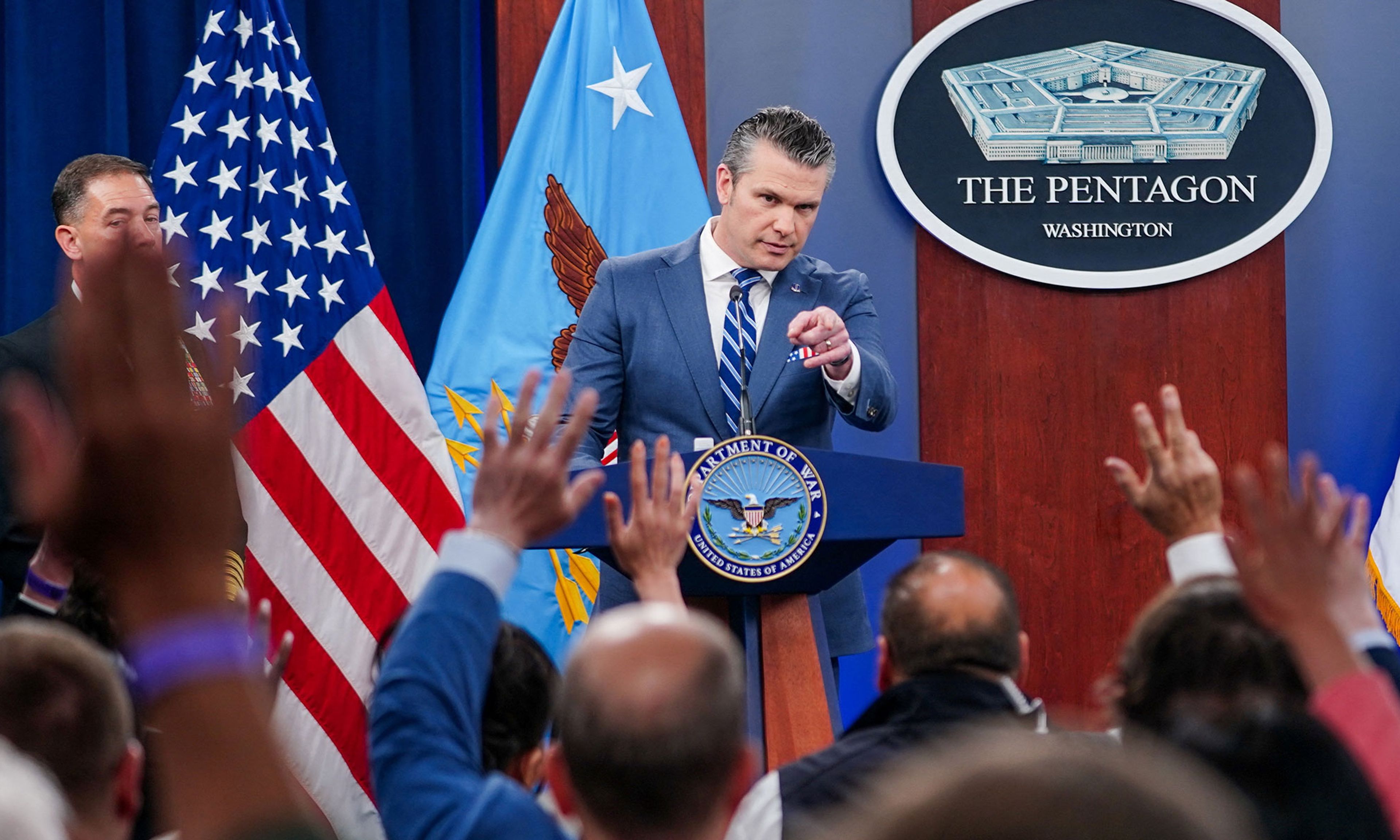
Can Quentin Tarantino be blamed for the media’s latest political agitation? After the April 15 Pentagon worship service in which Secretary of War Pete Hegseth quoted an internal military jest, most media reports attempted to embarrass Hegseth by revealing his source but without understanding its Tarantino origin. This is the latest example of the media’s petty bias and its cultural ignorance.
Hegseth gave thanks for the successful combat search and rescue (CSAR) mission of an Air Force pilot during Operation Epic Fury in Iran. He quoted a prayer used by the crew of the CSAR mission:
The path of the downed aviator is beset on all sides by the iniquities of the selfish and the tyranny of evil men. Blessed is he who, in the name of camaraderie and duty, shepherd the lost through the valley of darkness, for he is truly his brother’s keeper and the finder of lost children. And I will strike down upon thee with great vengeance and furious anger those who attempt to capture and destroy my brother. And you will know my call sign is Sandy-1 when I lay my vengeance upon thee. Amen.
That prayer was devout and deliberately clever. Film nerds might immediately recognize it from the famous and fondly celebrated execution scene in Tarantino’s 1994 crime-movie pastiche Pulp Fiction. Hegseth’s paraphrase drew a connection between pop culture and the warrior ethos he has revived in his position. It’s right there in the original speech co-written by director Tarantino and Roger Avary:
The path of the righteous man is beset on all sides by the inequities of the selfish and the tyranny of evil men. Blessed is he who, in the name of charity and goodwill, shepherds the weak through the valley of darkness. For he is truly his brother’s keeper and the finder of lost children. And I will strike down upon thee with great vengeance and furious anger those who attempt to poison and destroy my brothers. And you will know my name is the Lord when I lay my vengeance upon thee.
Although Samuel L. Jackson, portraying the film’s heartless black killer Jules, delivered that speech with memorable aplomb, it was both sacrilegious and inauthentically racial (he was posing as a profane preacher, and Jules omits the “Amen” conclusion). Yet hipster moviegoers embraced it, mistaking it for an actual biblical quote — which Hegseth did not — because they believed in its vengeful ethos, the violent sadism that became Tarantino’s trademark.
Viewers of Tarantino’s only military-set film, Inglourious Basterds, realized that Tarantino evidently had no actual military experience (that’s what made the WWII story an obnoxious comic book). His nastiness developed from the ending of the draft — the end of civic sacrifice — while Hegseth honestly sought tough, cool military camaraderie. Instead, class snideness erupted in the press.
Class bias also explains the media’s hostility toward Hegseth’s quote. But to feign offense at the Pulp Fiction reference is hypocritical. No journalists complained about a “fake biblical” speech when Pulp Fiction was released. (If reviewers were true aesthetes, they would have exploded over the John Travolta–Uma Thurman dance number that bowdlerized the transcendent “Madison” dance-of-alienation scene in Jean-Luc Godard’s Band of Outsiders, from 1964.) Now, the pretense that Hegseth was offending Christianity by altering what Jules facetiously called “Ezekial 25:17” into “CSAR 23:27” deliberately misses the wit and sophistication of Hegseth’s salute to contemporary military manners. The media’s secular, atheist, fake-ethical offense deserves to be called “butt-hurt,” that perfect dismissal of 2016 election resisters.
Hegseth exposed the real gap that exists between civilian and military awareness -- and media and military sympathy (all those enlistees raised on Top Gun, The Bourne Identity, and Pulp Fiction). The media class has pledged to Tarantino’s violent skepticism while Hegseth understands the soldierly humor that also underscored the 1970 movie Patton (which, according to film and military lore, accompanied Nixon’s Cambodia campaign, Operation Menu). If Operation Epic Fury sounds like a combo Stallone-Norris-Cruise film, we should realize that the real source of that operation’s name comes from the war game/film noir ethos that Tarantino made popular.
Fact is, most U.S. media also deny Hegseth the secretary-of-war rank, with most articles about Hegseth -- including in Forbes, USA Today, Yahoo!, Newsweek, Variety, Rolling Stone, The Wrap, People, the Los Angeles Times, and others (though not the Hollywood Reporter, US Magazine, or Entertainment Weekly) -- referring to Hegseth as “defense secretary.” This recalls the Associated Press stylebook refusing to use the executive-order designation “Gulf of America.” It all seems like ideological recalcitrance, an example of Tarantino’s stubbornly juvenile approach to life.
This is the friction between Tarantino’s cultural sea change and the seditious media. The left commandeers the culture and imagines ownership. Such friction should inspire epic cultural fury.
https://www.youtube.com/watch?v=qo5jnBJvGUs&t=2s
About the Author
Armond White is National Review’s culture critic and the author of New Position: The Prince Chronicles and Make Spielberg Great Again: The Steven Spielberg Chronicles.
Featured Tags
Advertisement
Advertisement
Comments