<i>Michael</i> Unwraps the Smear
Written by Armond White
A biopic’s machinations restore the charisma of a mass folk hero.
Share this story
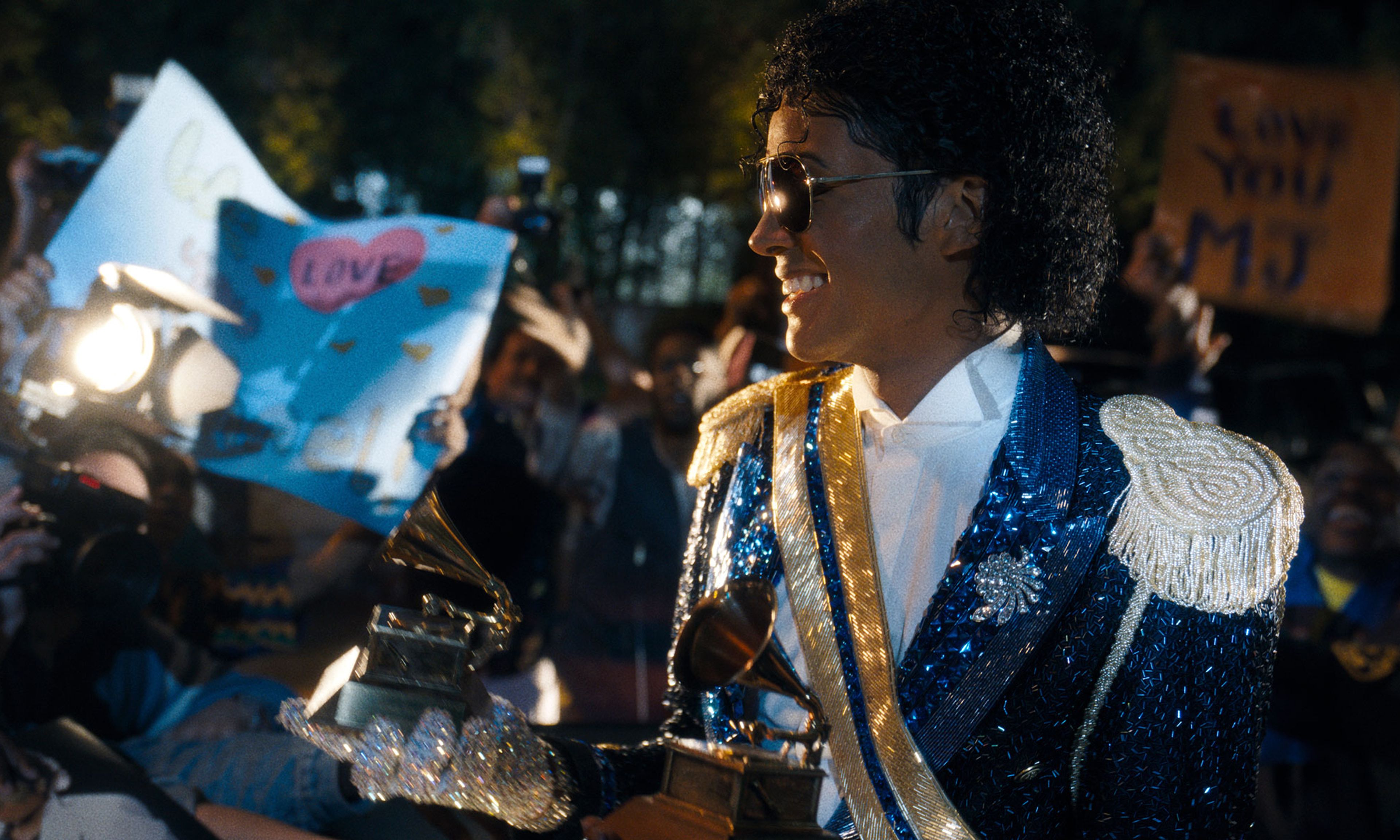
Michael Jackson haters don’t get to control the narrative in Michael, an adulatory biopic by action-movie hack Antoine Fuqua, who directed Denzel Washington in his notorious Oscar-winning role as the world’s worst, most evil black cop, in Training Day. The irony that a purveyor of violent trash with an ethnic spin should do a tribute to MJ is almost mind-boggling. It’s the ultimate example of hackery that Fuqua should helm a project about a nonviolent musical artist, especially well known to the public and beloved for pacifistic reasons, that challenges Hollywood’s standard racial stereotypes.
Fuqua’s name in the credits gives Michael superficial ethnic authentication, which indicates the film’s purpose as a political project, done with approval from some members of the Jackson family, to revive and redeem MJ’s legend that was tarnished by scandal — part of the media-motivated take-down that has become a standard of our polarized culture’s tabloid journalism. As a genre-practitioner in the Ridley Scott mode, Fuqua embarks on the biopic genre with a single-minded dedication implied by the film’s title — this narrative is both an identity and an endearment.
Michael follows the fame path of a talented black American kid who emerged from a working-class family, going from bubble-gum pop to songs about romantic yearning, songs creating an innocent pop-idol image, to songs reflecting isolation after showbiz success. MJ’s adult music addressed a frantic awareness of the recording industry and social problems — from being a legendary Motown artist to an independent, major-label solo creator -- and then reflected his own private turmoil and disenchantment in a series of phenomenal late-career albums (a topic I explored in the “Scream” chapters of Keep Moving: The Michael Jackson Chronicles).
The biography itself reinforces what’s known of Jackson’s talent, his unique charisma and artistry, sufficient to satisfy fans. No mere actor can portray this drama; real-life MJ nephew Jaafar Jackson (son of Jackson Five sibling Jermaine Jackson) performs the role with moments that offer an uncanny simulacra. Michael satisfies the unvanquished admiration inherent to a pop star who must also be recognized as a mass folk hero.
***
Anyone who is conflicted about “separating the art from the artist” is ignorant of art and has never had a significant art experience -- certainly nothing comparable to the delight MJ brought to the world from “I Want You Back,” “Ben,” “Off the Wall,” “Billie Jean,” Thriller, “Bad,” “Black or White,” “You Are Not Alone,” “They Don’t Care About Us,” to “Blood on the Dance Floor.” Those unfortunates, who pretend moral or political supremacy over human nature, should simply stop pretending to engage with any form of art — even the biopic. MJ-phobia avoids the most significant challenge: Michael’s audacity to claim his place in America’s Astaire-Kelly–James Brown tradition.
Fuqua submits to the legend told in Michael, written by industry hand John Logan, whose work on Oliver Stone’s Any Given Sunday, Scorsese’s The Aviator and Hugo, Ridley Scott’s Gladiator and Alien: Covenant, Sam Mendes’s two James Bond films Skyfall and Spectre, and Tim Burton’s Sweeney Todd adaptation suggests that both personal detachment and professionalism are involved in this Hollywood production. Skeptics who are obsessed with MJ’s various scandals might consider this film politically.
Michael Jackson’s tabloid scandals (a prevailing subject of his later work) can be best understood through the annals of political strategy as described in Nancy Pelosi’s infamous 2017 “wrap-up smear” speech that outlined the tactic of smearing someone’s character, getting the smear reported/repeated in the press (“merchandise” it), and then using media pressure to amplify and validate it (“wrap-up smear”). The Michael biopic counters the diversionary media tactics that attempted to ruin the artist’s King of Pop standing. The haters have not won; recall those acknowledgments of “Billie Jean” that enhance the humanizing revisionist documentary Melania.
Within the perimeters of biopic artifice, some famous actors enacting real-life people participate in an image rehabilitation that pays tribute to the main subject. Larenz Tate plays Motown founder Berry Gordy, Mike Meyers plays CBS Records magnate Walter Yetnikoff, and Nia Long plays Michael’s mother, Katherine. But Colman Domingo as Joe Jackson can’t match Lawrence Hilton-Jacobs’s moving portrayal in the TV movie The Jacksons: An American Dream (1992), about the agon of the former steelworker father who was responsible for driving and disciplining his brood through the demands of the entertainment business.
Fuqua and Logan supply familiar iconography: MJ’s always childlike, soft speaking voice, his quicksilver stage moves, music-video high spots, glittery spats, and adoring crowds. It flashes by like one of those Pepsi commercials. Though not equal to Kenny Ortega’s 2009 semi-doc extravaganza This Is It (a pop memorial featuring the real thing), Michael survives its own exploitation as a political ad aimed at conserving pop-music artistry that’s always up against the schemes of dullards and authoritarians.
https://www.youtube.com/watch?v=k-YAcjaLuSI
About the Author
Armond White is National Review’s culture critic and the author of New Position: The Prince Chronicles and Make Spielberg Great Again: The Steven Spielberg Chronicles.
Featured Tags
Advertisement
Advertisement
Comments