Maybe Society <i>Should</i> Go to the Dogs
Written by James Lileks
Making the case for ‘man’s best friend’
Share this story
It’s a good way to get clicks — the BBC asking the loaded question “How dog-friendly should we be?” People might read “England’s changing tastes: fewer terriers, more Sheepadoodles.” People will read “We needn’t like dogs so much” because a red curtain of rage will descend, and they’ll wonder what the BBC is banging on about now. Corgi carbon imprint? Toxic breeds? The inequity implicit in the idea of “pedigree”? Decolonizing dachshunds?
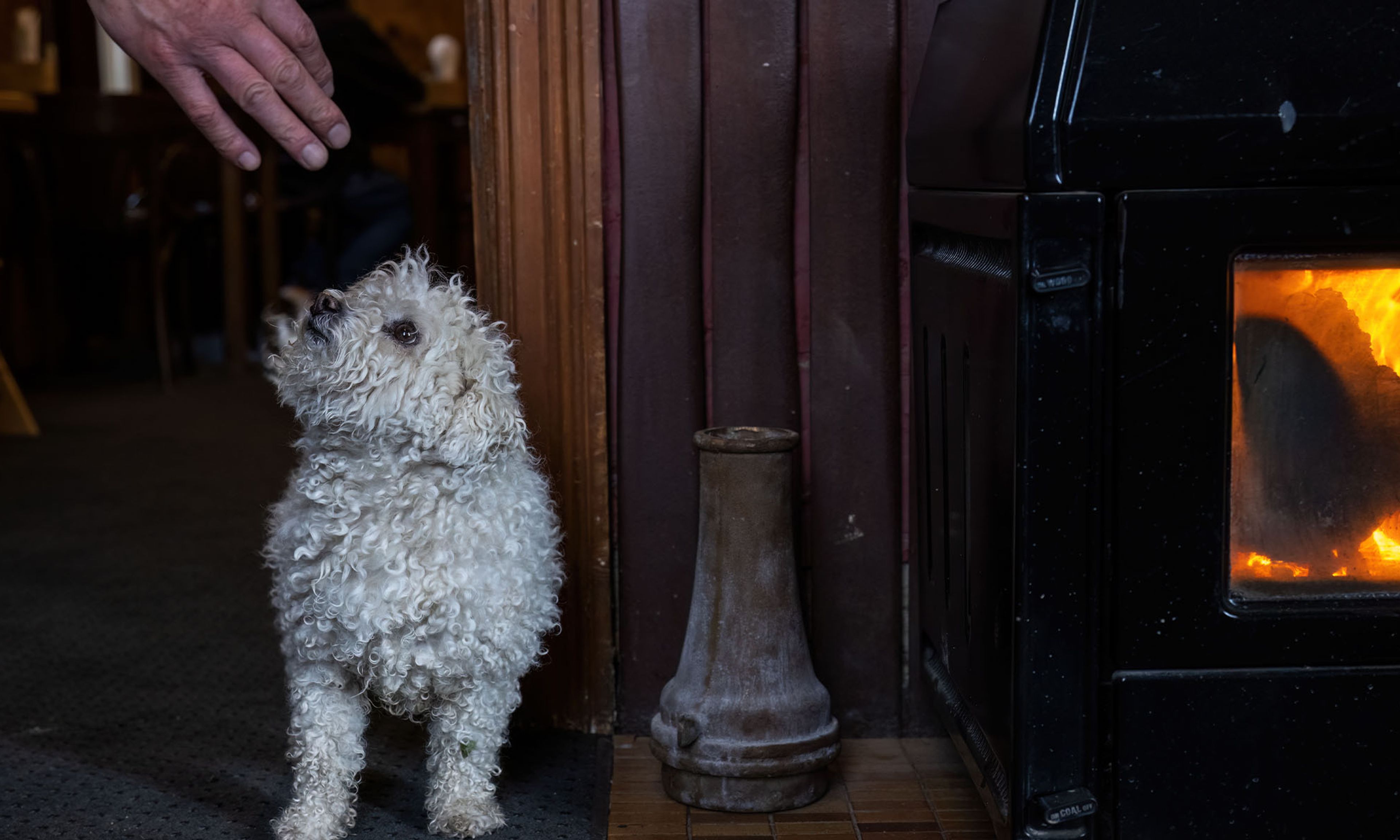
Summed up, the argument is this: A minuscule number of people want dog-free spaces. The article notes that lots of people like to take their dogs to shops and pubs, and this is true. One of the finest things about England is the assumption that you can drop by your local pub for a pint and bring your beast. My favorite pub, in Walberswick, Suffolk, always has dogs about. Mabel, the stone-blind terrier sitting on a cushion in the corner, or a shaggy wolfhound sitting quiescently on the floor by the fire. It’s part of village life. Given the decline in pub population due to Labour’s tax rates, the idea that you’d further erode this great tradition by discouraging man’s best friend is one of those symptoms of madness that has gripped the ruling and chattering classes. What has happened to you people? How long before you pull down Nelson’s statue in Trafalgar Square and replace him with Keir Starmer wearing a bondage mask?
Some people on X.com thought the BBC article was battlespace prep for a general discouragement of dogs to appease the island’s Islamic contingent. Dogs are unclean. Cultural sensitivity and all that. Perhaps, but it is more likely that the BBC was inclined to bow to the arguments of a demographic closer to its own heart: a woman with mental health issues. The article quoted a woman who was afraid of dogs and didn’t want to go places where there might be some vicious Pekingese lurking under a counter, ready to go for the jugular.
One can have sympathy for someone who has a crippling fear of dogs, but making public spaces reliably dog-free shouldn’t be at the top of the list for a functioning Western society. Attempts to reduce the harm caused by sudden dog manifestations, of course, will be seen as inclusive, even if the end result excludes ten times the number of people for whom the new rules will be made.
It brought to mind a passage in a book that made a deep impression on me as a kid. One of those thin Scholastic paperbacks you ordered in grade school. Its title was Follow My Leader, which you couldn’t get away with today. Any comparable book would be I’m My Own Leader and I’m Special and Great! The novel concerned a young boy who was blinded by a fireworks accident and was sent off to the School for the Newly Sightless. While talking with the headmaster, he bumped into a corner of a fireplace mantle and noted that it was quite sharp. They should put something on that so it didn’t hurt anyone. I’ve never forgotten the headmaster’s response: “‘We could,’ Mr. Weeks answered; then asked quietly, ‘Mr. Carter, do you expect the world to pad its corners for you just because you’re blind?’”
That was back when ADA meant “ain’t doing anything,” I guess. Anyway, the “leader” in the book was the boy’s Seeing Eye dog. I repeat: DOG. Not cat, not budgie, not badger. DOG.
Recent studies indicate that dogs bonded with humans even earlier than expected. For all we know, the earliest hominid who picked up a shin bone thought, “I could hit someone over the head with this and take his food,” then looked at the wolf standing a few yards away and thought, “But maybe if I threw this, the wolf would bring it back. No point in that, but it could be fun.”
No, it is not time to rethink anything about dogs. It is time to rebuke anyone who wants less dog in the world.

About the Author
James Lileks blogs at www.lileks.com.
Featured Tags
Advertisement
Advertisement
Comments