Mars Mission Is the Rocket Fuel NASA Needs
Written by Andrew Follett
The agency’s new Mars plan reverses the problem of entertaining vendor-driven wish lists that yield little benefit.
Share this story
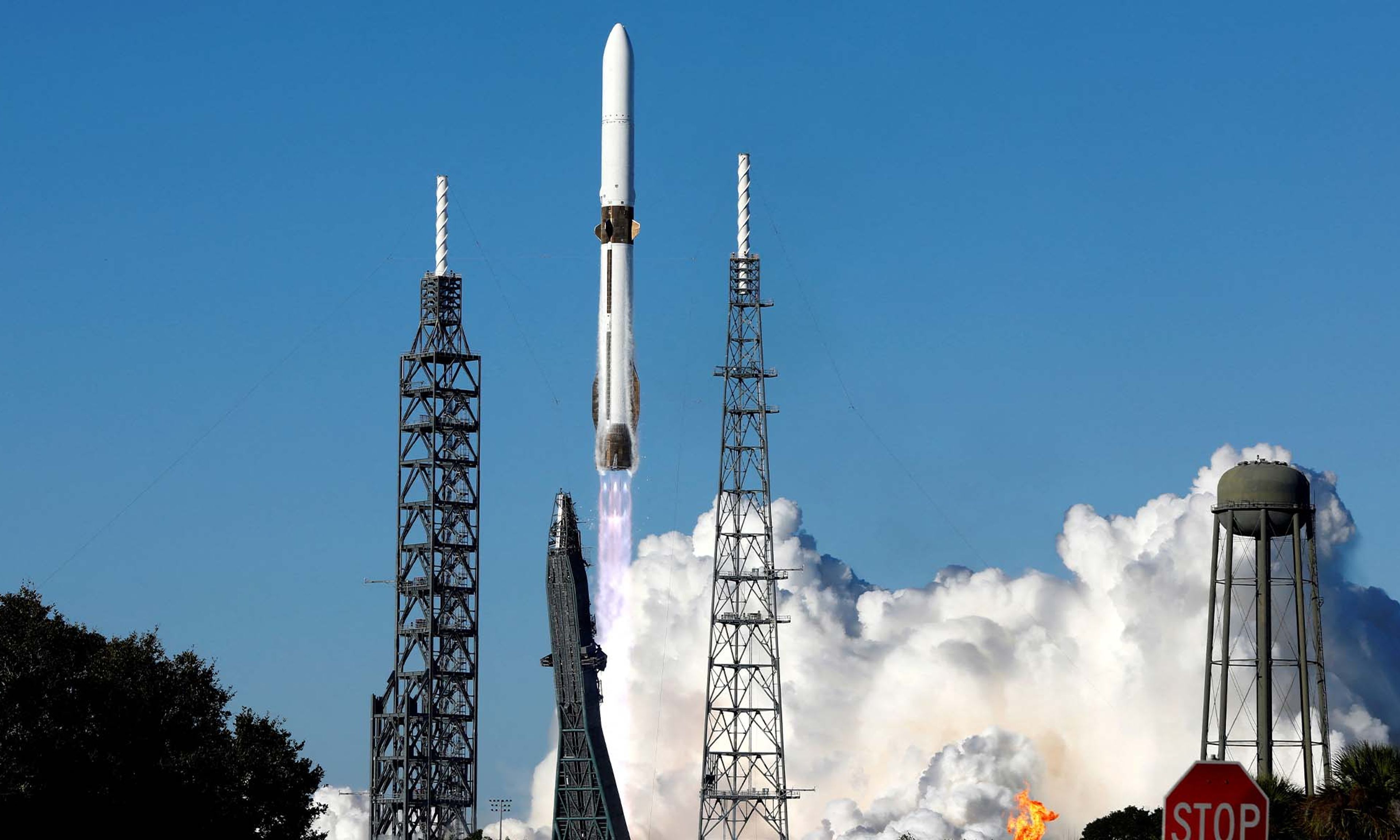
This week, NASA announced a focused vision to return to the Moon and send missions to Mars. The plan is part of a spending package that cuts out pet-project pork and divisive DEI initiatives, an immense improvement over the space agency’s previous modus operandi.
NASA plans to launch the nuclear-powered “Space Reactor-1 Freedom” spacecraft to Mars in 2028 with “Ignition” helicopters to explore our red neighbor in space. The craft, which will demonstrate “advanced nuclear electric propulsion in deep space,” notably boasts a highly simplified mission design — reversing the agency’s long-running problem of funding massive, vendor-driven wish lists rather than focused, mission-driven programs.
“NASA is committed to achieving the near-impossible once again, to return to the Moon before the end of President Trump’s term, build a Moon base, establish an enduring presence, and do the other things needed to ensure American leadership in space,” NASA Administrator Jared Isaacman said in a press statement. “This is why it is essential we leave an event like Ignition with complete alignment on the national imperative that is our collective mission.”
Previously, the only way the space agency could get each NASA field center to agree on a program was if every center’s pet technology was deemed critical, which caused missions to be designed around politics rather than effectiveness. As I wrote over a decade ago, this pattern is a horrible way to do engineering, as it inflated NASA’s annual budget to a degree that gave Congress sticker shock and caused lawmakers to reject the agency’s spending vision.
“For too long we tried to satisfy every stakeholder, and the results of that are very well documented in Office of the Inspector General reports,” Isaacman said when describing this problem. “Billions of dollars wasted. Years lost. Hardware that never launched. Fewer flagship science missions. And fewer astronauts in space, which means fewer kids dressing up as astronauts for Halloween. I don’t like it. The president doesn’t like it. The American people have waited long enough.”
As part of an attempt to maintain internal political consensus, NASA effectively funded everyone’s pet projects in previous years by dubbing each mission critical. As a result, costs per mission soared.
The best example of this mission creep was the James Webb Space Telescope, a darling of NASA’s politically powerful Science Directorate. It was originally supposed to cost just $1 billion and fly in 2007. It ended up with a total price tag of $10 billion and flew in late 2021 — ten times its original budget and 14 years behind schedule. The excuse offered by NASA’s science division was that the project had been hamstrung by budget cuts.
Ignition helicopters are different; this type of mission-oriented space program’s clear destination, well-grounded scientific goals, and private sector buy-in solve NASA’s political problem of deeming every center’s pet technology mission-critical.
Indeed, the Ignition program is a bargain. NASA’s overall fiscal year 2026 budget is only $24.4 billion, of which these programs will be a fraction.
The program is intended to serve as a precursor to eventual human Mars missions, aligning with the Trump administration’s broader National Space Policy priorities while emphasizing commercial partnerships, reusable hardware, and nuclear propulsion technology.
Coupled with NASA’s announcement that it was planning monthly payload deliveries to the Moon next year, this initiative is another strong indicator that Isaacman has fully pivoted to actual base-building in space, rather than just temporary “flags and footprints” missions that are more akin to photo ops than real scientific endeavors.
“The clock is running in this great‑power competition, and success or failure will be measured in months, not years,” Isaacman continued. “If we concentrate NASA’s extraordinary resources on the objectives of the National Space Policy, clear away needless obstacles that impede progress, and unleash the workforce and industrial might of our nation and partners, then returning to the Moon and building a base will seem pale in comparison to what we will be capable of accomplishing in the years ahead.”
Isaacman also confirmed that NASA will no longer construct its planned Moon-orbiting Lunar Gateway. Instead, the space agency will focus all its energy and resources on the lunar surface. The previous idea of a ridiculous and unnecessary space station orbiting the Moon, which Dr. Robert Zubrin dubbed the “Lunar Orbit Tollbooth,” would have cost a shocking $20 billion — more than triple the costs of the $6 billion new program.
By redirecting the space agency’s efforts toward what works — as opposed to what is politically popular in NASA centers — the new plan will leave us well positioned to ensure the first boots on Mars are American. President Trump’s vision for the space agency is to reorient it toward mission-focused exploration, redirecting it away from previous progressive priorities such as helping Muslim countries feel good about their historical role in science or global warming research.
Remarkably, NASA will do all of this with a reduced budget. This represents a decisive reversal from the Obama era, when NASA budgets reflected the agency’s desire to function as a second Environmental Protection Agency, rather than adhering to its actual mission of space exploration. During that period, the top scientific question that the space agency claimed it wanted to answer in its budget justification was, “How are Earth’s climate and the environment changing?” More typical space questions, such as, “Are we alone?” and, “How does the universe work?,” were at the very bottom of the list.
NASA’s updated, more focused mission approach that eliminates unnecessary side projects and avoids politically driven distractions is a welcome and promising change — one that will accelerate America’s plans for the Moon and Mars.

About the Author
Andrew Follett conducts research analysis for a nonprofit in the Washington, D.C., area. He previously worked as a space and science reporter for the Daily Caller News Foundation.
Featured Tags
Advertisement
Advertisement
Comments