In <i>Anaconda</i>, Hollywood Eats Itself — and Laughs
Written by Armond White
A reboot so true it’s funny
Share this story
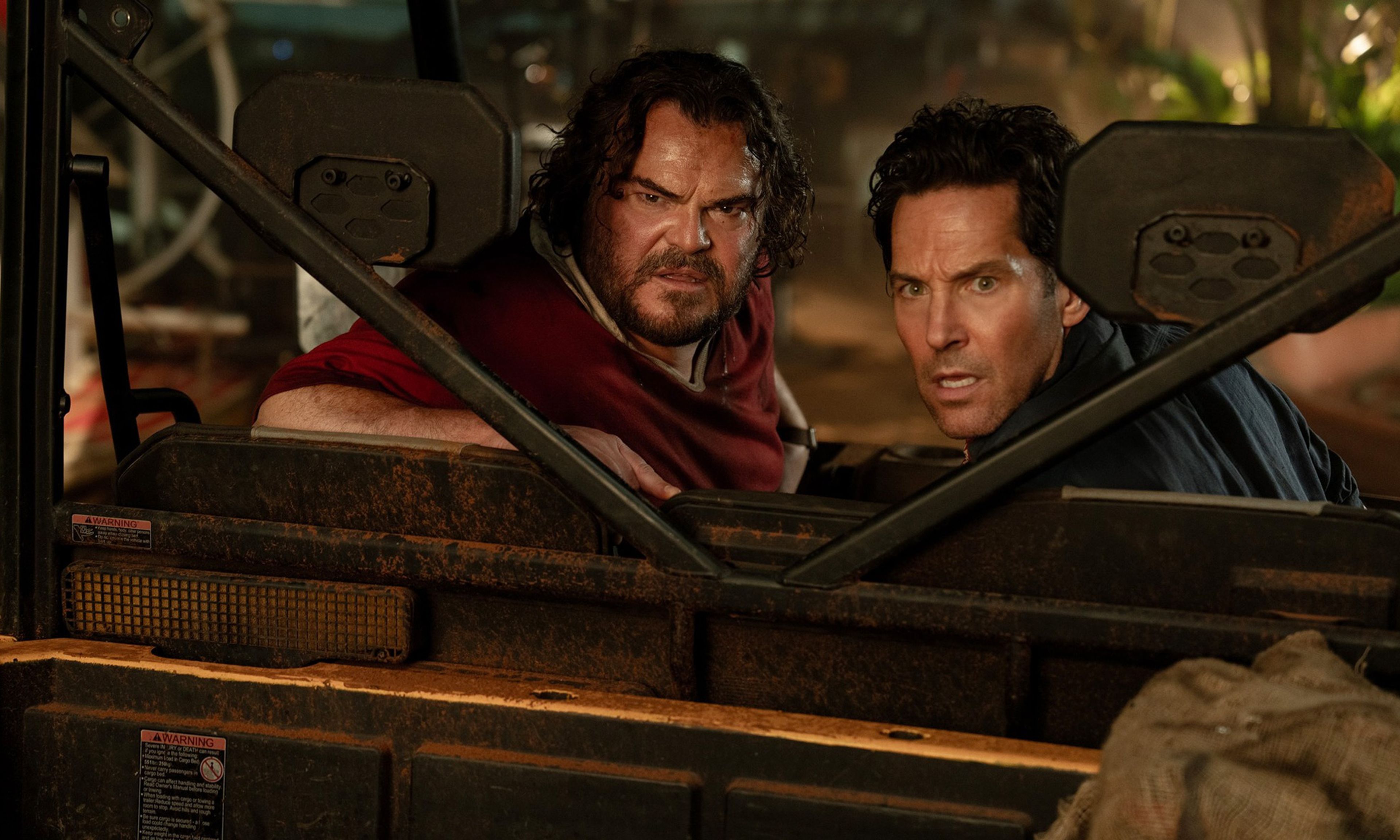
After five sequels, the Sony Pictures Anaconda action series finally arrives at parody with writer-director Tom Gormican’s Anaconda. Gormican goes back to the basics of movie junk when he observes fanboy-turned-wedding-videographer Doug McCallister (Jack Black) and Hollywood bit player Griff (Paul Rudd), both middle-aged sad sacks, chasing their dream of making a Hollywood blockbuster about a giant reptile.
The nutcase purity of their pursuit is the source of Anaconda’s unexpected likability. No matter the craven desperation behind the Hollywood trash that comes at us in unrelenting torrents, these natives of Buffalo, N.Y., join Hollywood’s shameless professionalism for meta-fun — their plot acknowledges gold-digging and gold-robbing.
Griff is seen on a Hollywood lot walking past studio-soundstage posters for Close Encounters of the Third Kind, All That Jazz, and the original 1997 Anaconda -- all equally respectable hits in Hollywood terms. That’s why he and Doug fly to Brazil for their film shoot, getting mixed up with other movie wannabes and a subplot featuring deadly gold smugglers and a killer anaconda.
Doug and Griff, protecting their egos, pretend to have a serious purpose -- they talk about “themes” and “metaphors.” But reliving youthful innocence is what they’re after. Collaborating with Griff’s high-school sweetheart Claire (Thandiwe Newton) and techie-druggie Kenny (Steve Zahn), with whom as teenagers they filmed The Quatch, a 16mm teenage Sasquatch project, they have one last chance to redeem their failures and missed opportunities.
Here’s where Anaconda evokes the profundity of Demon Lover Diary (1980), Joel DeMott and Jeff Kreines’s doc about the real-life, personal relationship that ambitious Americans have to kitsch, a culture that people can call their own. (Doug reminds Griff, “Damn, we’d been watching a lot of Scorsese!”) Griff promises to “reboot the thing, Indie style.” We’re confronted with the universally accepted fact that contemporary Hollywood repeats, devours, and regurgitates itself without shame.
Borrowing the Gen X Dawson’s Creek theme “I don’t want to wait, for our lives to be over” sentimentalizes Anaconda, but its best moments feel surprisingly real: Black, Rudd, Newton, and Zahn all look aged and worse for wear, yet they’re some of the best actors around, and their visible career fatigue gives this folly poignance. At a crisis moment, Rudd’s perfect look of fear and humility also parodies Indiana Jones. A surprise stunt by Newton recalls her sweetness in Norbit, and Zahn gets a singular scatological goof. But it’s Black’s crazed cinephilia (Doug lost in his mind-jungle of creativity) that justifies the film’s shifty mixture of spoof and populism. He dreams of making “a reboot, a reimagining, a spiritual sequel.”
In Anaconda, CGI monster gags meet the craven Jumanji sequels that meet Snakes on a Plane that then meet Tropic Thunder. Gormican imitates the excitement of Jaws by implicating an underwater threat as “one of the most important creatures of the herpetological world,” here called Heitor, the beloved pet of snake handler Santiago (Selton Mello).
Millennials may not remember that the first Anaconda was merely a refreshingly effective actioner, but at least Gormican avoids the too-smart ugliness of Blair Witch Project and The Disaster Artist. Neither matched Griff’s priceless warning: “Welcome to show business, baby. You’re not in it unless you’re getting screwed over by your friends.”
This pastiche teases Hollywood’s fake seriousness. When Griff enthuses, “This could be an awards play!,” it recalls and surpasses the artifice and pseudo-serious politics of The Secret Agent, Kleber Mendonça Filho’s Brazilian art film. Then Kenny cheers Doug, saying “The Academy loves social horror, right? You could be the white Jordan Peele!” Most reviewers dismissed Anaconda when it opened late last year, but now it’s got a second life through video streaming, and its funniest moments earn appreciation as an effective Hollywood satire.
https://www.youtube.com/watch?v=az8M5Mai0X4
About the Author
Armond White is National Review’s culture critic and the author of New Position: The Prince Chronicles and Make Spielberg Great Again: The Steven Spielberg Chronicles.
Featured Tags
Advertisement
Advertisement
Comments