How Catholics Shaped the American Tradition of Religious Liberty
Written by Lael Weinberger
Our Dear-Bought Liberty: Catholics and Religious Toleration in Early America, by Michael D. Breidenbach (Harvard University Press, 368 pp., $45)
Share this story
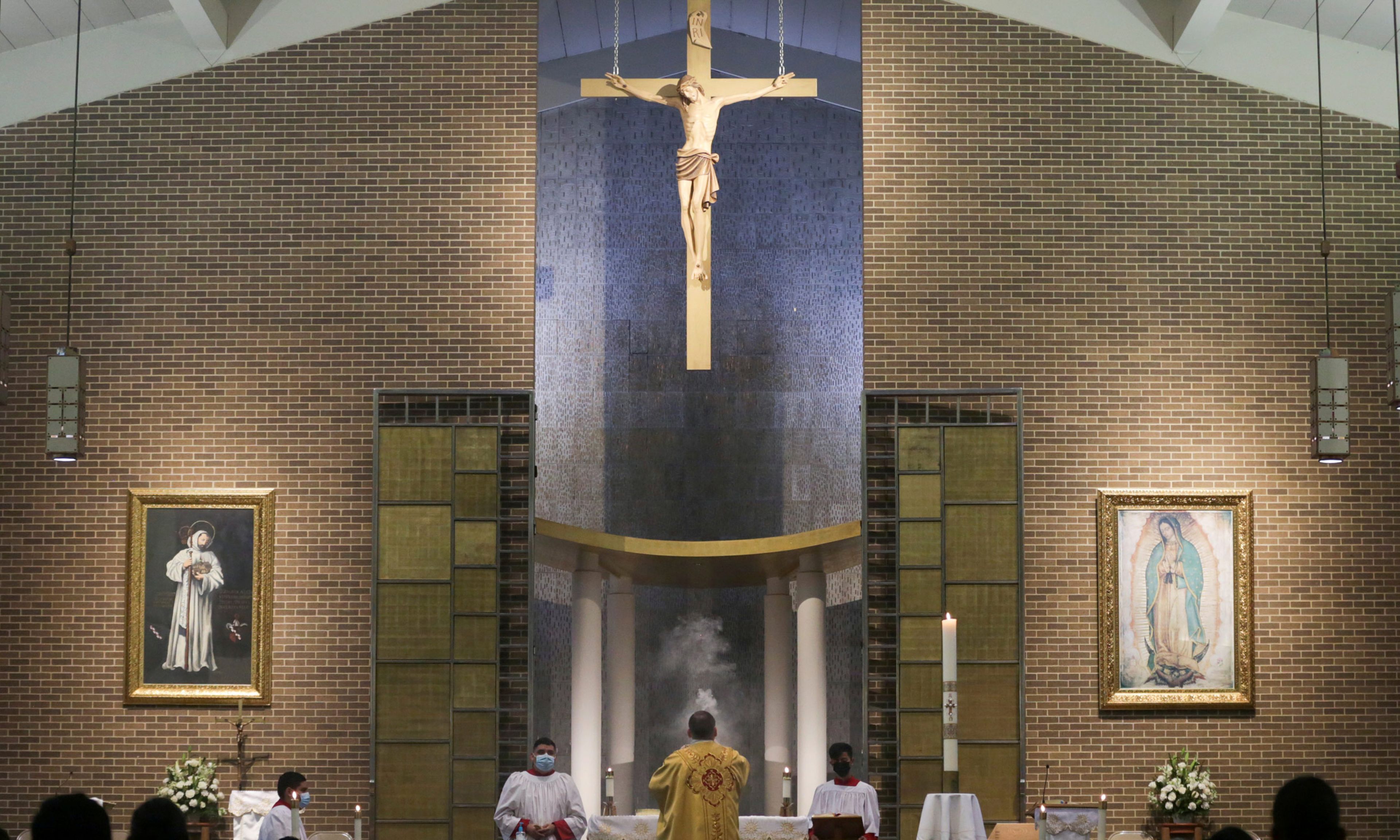
The United States has not always been welcoming to Catholics, who have been objects of mistrust and suspicion across the history of this Protestant-majority country. Yet when it comes to the history of early America (roughly 1600 to 1800), Michael Breidenbach’s new book argues, Catholics deserve a place alongside their better-known contemporaries, such as the Pilgrims in Massachusetts and the Quakers in Pennsylvania. Breidenbach also argues that the experiences of Catholics in the British Empire deserve credit for shaping the American tradition of religious liberty. Our Dear-Bought Liberty is an impressive work of historical scholarship that makes a persuasive case for the importance of American Catholics in the story of American religious liberty.
The story starts in England at the dawn of the 17th century, after a century of tumult in religion. The Catholic country had turned legally Protestant under Henry VIII in 1534, then Catholic again under Mary I, then back to Protestant under Elizabeth I. Each change brought persecutions. Now the question was whether Catholics could be trusted to be loyal to a monarch who claimed to be the head of the Church. The Protestant establishment assumed that the answer was no. The pope claimed the authority to depose kings and absolve Catholics of their duties to non-Catholic monarchs. Catholics were loyal to the pope. Catholics were all potential traitors. A Catholic’s attempt to blow up Parliament in the notorious gunpowder plot (1605) seemed to confirm English Protestants’ fears.
Young George Calvert buckled under the pressure. Raised a Catholic, he decided the penalties and discrimination against Catholics were too much to bear. Around age twelve, Calvert joined the Church of England, facilitating his rise in English government. He served in the House of Commons as a member of the Privy Council, and as King James’s secretary of state. His colleagues in government suspected him of Catholic sympathies. But he served his king well, and that was enough. Until 1625, that is, when Calvert resigned his position as secretary of state and publicly embraced the Catholic faith that he had presumably held privately for some time. King James treated his faithful adviser with respect, allowing Calvert to remain on the Privy Council and naming him Baron of Baltimore. But only a month later, James died and Charles ascended to the throne.
One of King Charles I’s first acts as king was to require privy councilors to take loyalty oaths. But oath-takers had to condemn as heretical “that damnable doctrine and position that princes excommunicated or deprived by the pope, or any authority of the see of Rome, may be deposed or murdered by their subjects.” Calvert refused to take the oath.
Calvert turned his attention to America. There, perhaps he and other Catholics could find a respite from the continual pressures and hostility they suffered in England. Charles granted him a broad proprietary charter, but Calvert died before he could travel to America. His son Cecil inherited the title of Baron of Baltimore and the proprietorship of extensive lands -- what would become Maryland. In 1634, two shiploads of settlers arrived at the new colony. A majority were Protestant, but there were many Catholics among them.
Still, the monarch wanted to ensure that his subjects in Maryland were loyal. This launched decades of political and theological controversies about loyalty oaths. Cecil Calvert tried to chart a course that honored both pope and king. Like his father, he was loyal to the king. The Calverts did not believe that popes could depose kings or that the ecclesiastical power ought to interfere with the civil power. Yet even as they disagreed with papal claims, they were unwilling to proclaim “something the pope had declared true” to be damnable heresy. The Calverts struggled to draft an alternative oath that could satisfy the king while still respecting the pope. Through painstaking research, Breidenbach pieces together this until now forgotten story of conscientious English Catholics navigating their loyalties to church and state. Over the tumultuous 17th century, Maryland Catholics tried to assure whoever was in power at the time that they were true and loyal Englishmen.
Cecil Calvert also introduced a toleration act (1649), the first of its kind in America. Maryland was a refuge for Catholics, but it was not a Catholic colony. Through toleration, Calvert sought to manage the colony -- and its relationship to England as well as to its Virginian neighbors -- so as not to give offense to Protestants while also giving Catholics space to worship according to their convictions. It was a landmark innovation in America.
The Calverts’ efforts were history-making. But their critics, Protestants in Maryland and neighboring Virginia, still used complaints about the Catholic proprietors as a weapon in political squabbles. After England’s Glorious Revolution, Maryland Protestants seized control of their colonial government. A crown governor was installed in 1692 (ending the Calverts’ proprietary government); in 1704, Catholics were barred from holding public office in the colony. The fourth Baron Baltimore, Benedict Calvert, abandoned Catholicism in favor of a safe conformity. Yet despite it all, the toleration strategy had preserved a Catholic presence in the colony. A number of Catholics remained leading figures in Maryland. This should count as at least a partial success for the toleration strategy.
Breidenbach finds that many leading figures in Catholic Maryland drew their ideas about church and state from a particular strand of Catholic political thought: conciliarism. The conciliar movement originated in the 14th century and asserted the primacy of councils in the Catholic Church. Conciliar theorists viewed the Church as a kind of corporation “in which the pope was a magistrate elected by the church’s representatives, limited in his spiritual jurisdiction by the authority of other bishops, and susceptible to doctrinal error.” This conciliar view contrasted with the “papalist” perspective, in which ultimate church authority was held by the pope. The conciliar position was controversial among Catholics (and would finally lose out to papalism in formal Catholic doctrine in the 19th century). But in America, the conciliar perspective was dominant among elite Catholics. This helped persuade Protestant observers that Catholics were loyal and trustworthy.
By the time of the American War of Independence, American Catholics had come a long way toward mainstream acceptance. Non-Catholic American elites were still suspicious of Catholicism in the abstract. But when it came to their Catholic peers and neighbors, they saw loyal, trustworthy compatriots who knew how to distinguish their duties to country from their ecclesiastical loyalty to the pope -- indeed, who believed that the pope’s authority ought to be limited, checked, and balanced.
This trust made it possible for Catholic Charles Carroll of Carrollton to ascend to national prominence as an advocate of independence. Despite the old prohibition on Catholic office-holding in Maryland, Carroll was selected as a delegate to the Annapolis Convention, Maryland’s revolutionary government from 1774 to 1776. It was a sign that the revolution would have significant religious-liberty implications. Carroll went on to become a member of the Continental Congress and the only Catholic signer of the Declaration of Independence.
Breidenbach’s story of American Catholics and their quest for acceptance continues into the new republic. Catholic polity in America was self-consciously shaped by republican politics. And Catholic experience informed the U.S. Constitution’s protections for religious liberty. Prior to the First Amendment, Congress’s most extensive consideration of religion was prompted by Catholics. In 1783, the “Holy See . . . requested Congress to approve the establishment of a Catholic bishop in the United States.” Congress replied that it had no jurisdiction in a purely spiritual matter. This foreshadowed the central message of the First Amendment.
The Constitution drafted in 1787 didn’t have a bill of rights, but it did conclusively resolve the issue of oaths that had troubled Anglophone Catholics for two centuries. The test clause prohibited any religious test for any office under the United States. The oath clause set out a nonreligious oath to the Constitution. Breidenbach suggests that the Framers knew very well what they were doing. In England just prior to the American Constitutional Convention, a coalition of “Protestant dissenters and Catholics [had] forced a debate in Parliament over the repeal of the test acts.” The American press covered this debate shortly before Constitutional Convention delegate Charles Pinckney introduced the no-religious-test clause.
The First Amendment’s religion clauses may not have been the product of the Catholic tradition, but they were consistent with the ideas American Catholics advocated: a jurisdictional separation of Church self-governance from civil government. This jurisdictional conception had developed within the conciliar tradition so prominent among American Catholics.
Breidenbach has written an important work that speaks to multiple aspects of American history. It focuses on a handful of leading figures in early American Catholicism, which will leave historians wanting more information on the lived experience of a broader selection of American Catholics. But one book can do only so much. And in this book, Breidenbach has broken new ground. For students of American religious history, he provides a rich account of how Catholics became American. For students of church–state issues, Breidenbach’s book provides new context for understanding the origins of America’s system of religious liberty. Even legal theorists might find this book thought-provoking. The historical context emphasizes a jurisdictional conception of religious liberty, an idea that remains relevant as religious institutions are again at the center of religious-liberty litigation in America. Occasionally, the book falls prey to the pitfalls of speaking to multiple audiences: Readers most interested in the Founding era or constitutional history might feel bogged down in the intricate details of the 17th-century oath debates. But it would be unfortunate if this limited the book’s readership to specialists. Whether one is seeking to understand American religious history, the First Amendment, or church–state relations, Our Dear-Bought Liberty is an important contribution. It will reward a careful reading.
About the Author
Lael Weinberger is a law professor at George Mason University.
Featured Tags
Advertisement
Advertisement
Comments