<i>Grimms’ Fairy Tales</i> Stand the Test of Time
Written by Sarah Schutte
Whatever type of story you prefer, fable or horror or romance, there’s something for everyone in these classics.
Share this story
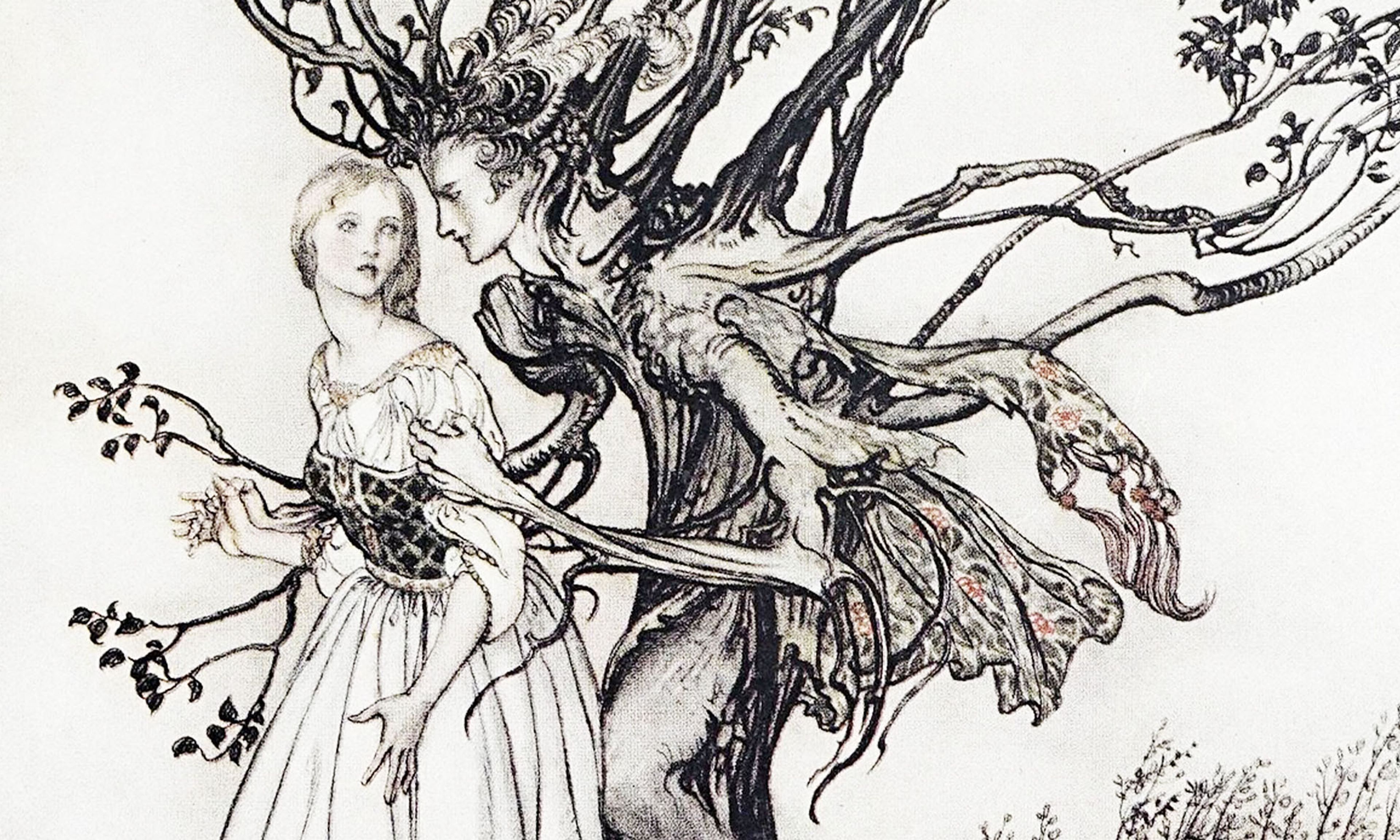
The term “fairy tale” has some pretty decided connotations. “Girly,” “frilly,” and “overly romantic” are all adjectives that come to mind. If, however, you’ve spent any time at all reading Grimms’ Fairy Tales, you’ll know that some better descriptors might be “preposterous,” “absurd,” “horrifying,” and “outlandish.”
The tales themselves range in genre everywhere from morality tales to fables to horror stories. A number of them, such as “Cinderella,” “Snow White,” “Rapunzel,” and “Little Red Riding Hood,” are inextricably woven into our cultural heritage. Disney, of course, is the most well-known re-teller and promoter of these stories, but hundreds of books (and maybe even thousands) have also helped anchor the basics of these tales in our minds. Beauty and the Beast may be a “tale as old as time,” but I don’t think Belle has had as many iterations as Cinderella, who has made appearances as, among others, a chicken, a javelina, a 1920s flapper, and a beautiful Mexican señora.
Sometimes though, you just want the basics -- to read the original tale (or close to it) and let it work its own kind of magic on your imagination. And when you do, you may just find a few other gems sparkling alongside these beloved classics.
Enter my three different editions of Grimms’. Actually, there are technically four, since my parents still have the edition I grew up reading. But we’ll start with the one I first acquired as an adult: the Puffin Classics edition. After quite a lot of searching and digging, I’m almost sure that this 2016 publication used the Edgar Taylor/David Jardine translation of the Grimm brothers’ original work. Honestly, this research into the versions and translations and editions of the fairy tales could be (and I’m sure has been) the work of years, as there have been numerous translations since the Grimms’ publication of the first volume of stories in 1812.
The Puffin edition has 55 stories, beginning with “Hans in Luck,” and ending with “The Juniper Tree.” If you flip to “King Grisly-Beard” or “The Goose-Girl,” you’ll find my penciled-in notes and comments, harking back the Children’s Lit class I took in college. I was led through these stories by Dr. Coupland, learning to pay attention to colors and descriptors (does it make a difference if the king is old? Yes, it does indeed), and pondering the virtues exhibited or lacking in each tale.
Grimm isn’t just the authors’ last name, it’s also a harbinger of what type of tale you’ll encounter in their works. Indeed, plenty of the tales (see “The Robber-Bridegroom” and “The Juniper Tree”) are rather gruesome. Come to think of it, “Ashputtel,” the Cinderella story, has a stark ending, if you’re one of the stepsisters. Another one I recently revisited, “Cherry, or the Frog-Bride,” is a silly tale, but it ends with a shocking amount of drowned dogs and women.
George Cruikshank, a British illustrator from the 19th century, provided the drawings for this Puffin edition, and while they aren’t as dramatic and stylized as H. J. Ford’s work for the Andrew Lang fairy-tale books, they’re still whimsical.
My second edition came as a gift from my sister a few Christmases ago, and this time, it was the full set of tales. All 200-plus and some children’s legends, brought to us by Flame Tree Publishing in their Collectable Classics line. This compact, unillustrated little volume contains all the Grimm tales, unabridged, and seems to be the Margaret Hunt translation. It’s very quaint and old-fashioned in its language, full of “thee” and “thou,” but I enjoy the elevated language and find it adds just the right touch of romance to the tales. We find the original language of Shakespeare and the King James Bible moving, and I believe this sort of vocabulary brings a heightened meaning and import to Grimm’s work as well.
The most recent addition to my Grimm collection is from Word on Fire’s Votive imprint. This version uses the Jack Zipes translation, and it’s illustrated by Abigail Halpin. The Zipes translation, while a popular one, isn’t my favorite, as it loses some of the language’s beauty through certain word choices. I do, however, greatly appreciate Votive’s decision to unobtrusively define various words throughout the book, as a help to readers who wouldn’t know what a “dovecot” or a “caul” is. Additionally, Halpin’s art evokes a charming woodcut aesthetic, which compliments these stories in a wonderful manner that’s different from the familiar Arthur Rackham illustrations seen in many other editions. I enjoy Rackham’s fairy-tale art, but Halpin’s simple, effective prints set just the right tone for this edition.
Votive’s story selection is also well-considered, since they choose a balanced mix of old favorites (“The Goose Girl,” “Rumpelstiltskin,” and “Snow White and Rose Red”) along with lesser-known tales such as “Maid Maleen” and “The Glass Coffin.” The attention to stories with strong virtues and an avoidance of overly gruesome ones is much appreciated – it makes for a lovely first introduction to the land of the Grimms.
And for those of you who believe that fairy tales are only for children, not so fast. As Haley Stewart, Votive’s editor, puts it in her introduction to the collection:
Good fairy tales point the way to wisdom, courage, loyalty, and most of all, hope. They remind us that with virtue, we can be the heroes of the story of our lives. . . . The Brothers Grimm stories are rich enough to be read at any age. They allow us to journey as the hero or to wrestle with evil, all for a cozy window seat or with a flashlight under the covers. They teach us the lessons we need to fight dragons within ourselves and face the sorrows and challenges of human life.
So whether you enjoy a dark and twisted story, a silly fable, or a charming fairy tale to read with your children before bed, there’s something for everyone in Grimms’ Fairy Tales.
About the Author
Sarah Schutte is the podcast manager for National Review and an associate editor for National Review magazine. Originally from Dayton, Ohio, she is a children's literature aficionado and Mendelssohn 4 enthusiast.
Featured Tags
Advertisement
Advertisement
Comments