For Banksy, Crime Does Actually Pay
Written by Christian Schneider
Vandalism shouldn’t get a free pass because the guy with a spray can is a famous artist.
Share this story
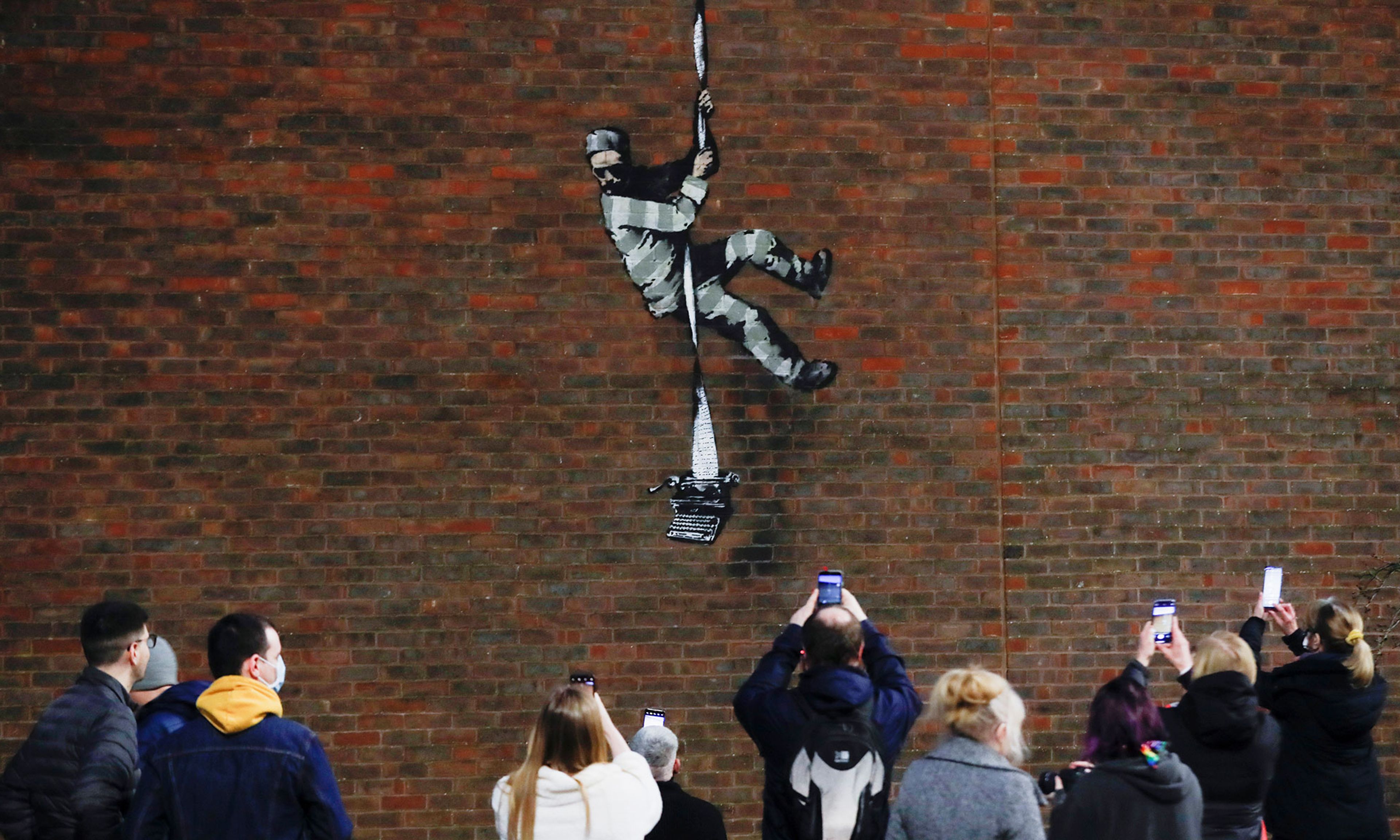
There is no crime less understandable than graffiti. Vandalism offers the perpetrator nothing — no material gain, no practical advantage, just the petty satisfaction of defacing someone else’s property. It is, almost by definition, the purest form of selfishness dressed up as self-expression.
That is, unless you are Banksy.
A Reuters investigation this week claims to have finally unmasked the pseudonymous U.K.-based street artist, who has earned global approbation for his spray-painted stencils. So after a quarter century of adorning public walls and private businesses without permission, he’s had the curtain pulled back. But what difference does it make if we now know his identity?
It is entirely possible to be torn about Banksy — to appreciate the wit of the work while disapproving of the method that produces it. He is cheeky and irreverent, a self-styled vigilante who has evaded accountability for virtually his entire career. His stencils are clever. Some are genuinely moving. But here is the uncomfortable truth his admirers rarely want to confront: art, like writing, matters only if it costs the artist something.
For Banksy, the ledger runs entirely in the other direction. Once viewed by authorities as a mere vandal, he has become a British entrepreneur, his work generating tens of millions of dollars in sales. He has made an Oscar-nominated documentary. He is celebrated by the very establishment his spray cans purport to mock. The danger that is supposed to animate his work — the transgressive thrill of the outlaw — has been entirely hollowed out by the fact that nobody with a badge was ever seriously interested in finding him.
His peers in the graffiti world have noticed. Some tell Reuters that they believe he unfairly evades the law. Graffiti is illegal whether you are a famous provocateur or an anonymous teenager with a Sharpie. The law does not carve out an exception for politically agreeable messaging delivered with artistic flair.
A 2014 article in Vice titled “Why Is Banksy the Only Person Allowed to Vandalize Britain’s Walls?” quoted other street artists frustrated by the Banksy double standard. “It’s very much one rule for him and another rule for everyone else,” said one such artist, David Speed. “When street artists do it, it’s vandalism. When Banksy does it, it’s an art piece.”
And that double standard is worth reflecting on. One can praise an activist’s cause while still objecting to illegal methods — whether that’s blocking traffic on a public highway or defacing private property. Vandalizing someone else’s wall is not a protest; it is a taking. It is claiming someone else’s property as your canvas without their consent. It is, in its own small way, no different in kind from looting — asserting dominion over what does not belong to you. (Not to mention the cost it imposes on the property owner or taxpayer to scrub the paint from the wall.)
Laws are on the books for a reason, and the choice to cease enforcing them for favored individuals smacks of the “For my friends, everything; for my enemies, the law” school of authoritarianism, in which individuals who suck up to a powerful politician can evade legal consequences.
Banksy’s lawyer argues that his anonymity serves “vital societal interests” by protecting freedom of expression and allowing creators to speak truth to power without fear of retaliation. That is a noble sentiment, and it would carry considerably more weight if Banksy had ever actually faced any retaliation worth fearing. The whole premise of his mystique is the danger — and the whole truth of his career is that the danger never really existed. Authorities could always shrug and say they didn’t know who he was. They no longer have that excuse.
Which brings us to the only question that matters now: Will he keep going?
If Banksy — or whatever name he is operating under this week — continues to put up stencils even though his identity is now a matter of public record, that would be a genuine act of defiance. That would mean accepting actual legal exposure, not performing rebellion for an audience of collectors who will pay millions to hang his freestanding art pieces in their living rooms. That would be the bravery his fans have always credited him with.
But don’t bet on it. The Banksy enterprise — a multimillion-dollar business empire operating through a network of British companies — has far too much to lose. Antiestablishment artists rarely stay that way once the establishment starts writing the checks.
Banksy isn’t an outsider anymore. He has become exactly what he claimed to be against. The only way he can retain his reputation is to keep defying the law as Joe Schmoe.
It can best be summed up by the character Super Hans, from the British comedy Peep Show, who explains why a candy bar tastes so much better when it’s been stolen: “The secret ingredient is crime.”
About the Author
Christian Schneider is a National Review contributor and writes the Anti-Knowledge newsletter. He is a co-host of the podcast Wasn't That Special: 50 Years of SNL.
Featured Tags
Advertisement
Advertisement
Comments